Street Fighter 6's AI Art Ban Signals Shift in Gaming's Creative Policy Landscape
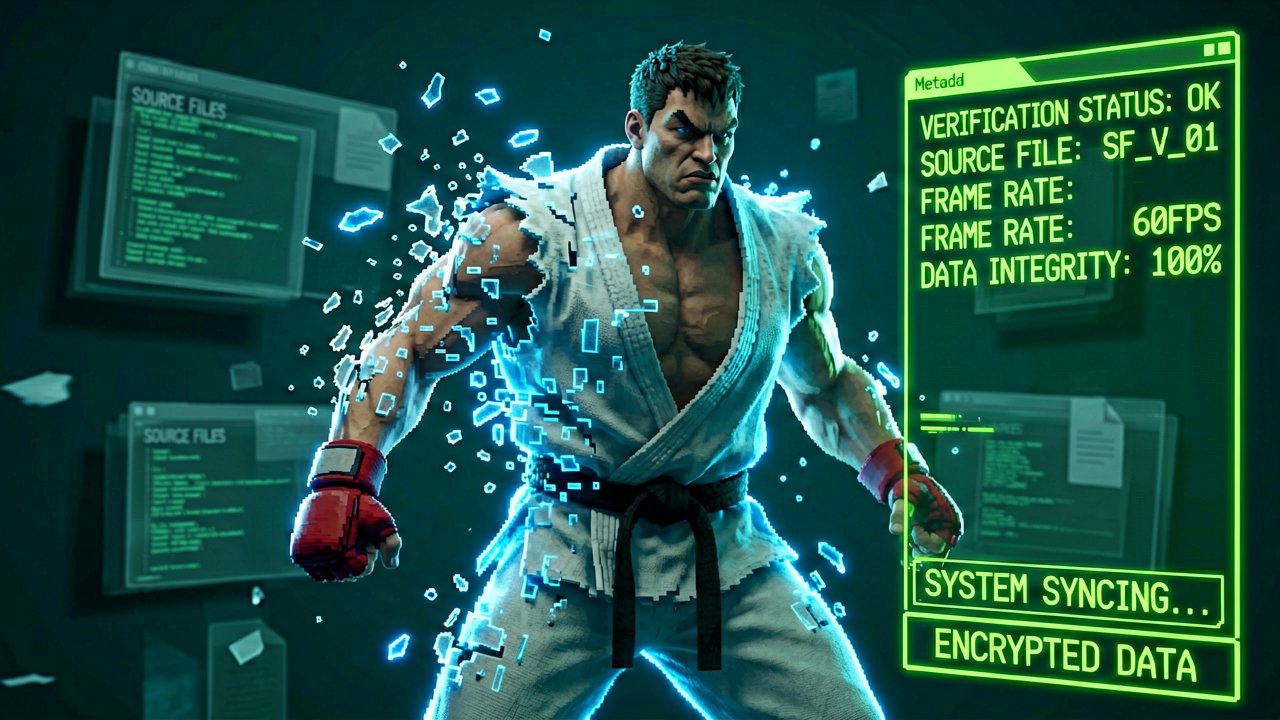
Capcom's decision to disqualify a winning entry from its Street Fighter 6 art contest over generative artificial intelligence violations underscores an industry-wide pivot toward tighter creative policing. The publisher swiftly removed the problematic asset following community scrutiny, reinforcing a strict policy that completely prohibits machine-assisted submissions. This high-profile enforcement reflects a broader trend among major video game publishers determined to safeguard the integrity of their intellectual properties while managing community backlash against synthetic media.
The incident highlights a growing friction point between hyper-accessible generative tools and the traditional human talent pipelines that studios rely on for community engagement. As detailed in coverage by Eurogamer, corporations face escalating legal and reputational risks when unvetted machine-learning imagery penetrates official promotional spaces. This friction has forced major brands to evolve past vague content guidelines, establishing aggressive verification protocols to ensure that public-facing collateral remains entirely human-authored.
From a market standpoint, the enforcement strategy represents a calculated defense mechanism against ongoing copyright volatility and trademark contamination. Publishers are increasingly formalizing these restrictions within their legal frameworks, signaling that the promotional benefits of open community submissions are no longer worth the risk of automated intellectual property dilution. For the wider gaming ecosystem, this case establishes a firm corporate precedent that prioritizes rigid human-creator authorship over the rapid output of generative software.
Escalating Corporate IP Risks and Legal Accountability
Major video game publishers operate under strict global licensing agreements that require ironclad ownership of all official collateral. Generative model outputs remain legally ambiguous, with unresolved global debates regarding copyright eligibility and data training ethics. By allowing machine-assisted entries into internal game environments, studios risk inheriting secondary liability for plagiarism or uncompensated dataset scraping. Consequently, removing synthetic assets mitigates these corporate vulnerabilities, standardizing an administrative shield against downstream legal challenges from intellectual property holders.
Community Trust and Talent Retention Strategies
Gaming communities hold immense promotional capital, often driving sustained player engagement through fan art, mods, and grassroots content creation. When synthetic submissions displace human creators in official competitions, publishers suffer sudden, severe drops in community trust and authentic organic engagement. Upholding rigorous enforcement protocols protects relationships with traditional artist networks, ensuring that consumer ecosystems remain enthusiastic and collaborative. This strategy also prevents a talent drain, as industry-standard illustrators increasingly refuse to participate alongside unmonitored machine-generation software.
Evolving Verification Workflows in the Publishing Pipeline
Detecting algorithmic anomalies has grown increasingly complex, prompting a strategic overhaul in how community-driven marketing campaigns are verified. Publishers can no longer rely on superficial visual inspections to identify non-human structural inconsistencies in digital assets. Forward-looking studios are implementing layered security checks, demanding layered project files, iterative progress sketches, and metadata trails before finalizing any contest placements. This transition to an active verification model changes internal production workflows, shifting the burden of proof entirely onto creators to confirm total human authorship.
The Hidden Architecture of Corporate Verification
Under the Hood of Digital Custody: The decision by Capcom to scrub machine-assisted assets from its celebratory campaigns exposes a complex operational vulnerability that modern gaming studios are scrambling to address. Behind public-facing statements of artistic solidarity lies a frantic scramble among legal departments to establish ironclad provenance pipelines. In the era of hyper-realistic generative tools, a simple visual inspection of community submissions is completely inadequate, forcing internal marketing teams to act as forensic data analysts. Publishers are quietly restructuring their submission frameworks to mandate the delivery of raw, layered source files, time-lapse recordings of the creation process, and valid cryptographic metadata before any community asset can be cleared for public display.
This operational pivot is heavily driven by the shifting compliance landscapes of global digital storefronts and platform holders. Major distribution networks are increasingly demanding formal disclosures regarding the use of machine-learning components within game builds and associated marketing materials. If a publisher inadvertently features unauthorized synthetic imagery within a game client, it risks violating platform terms of service, which can trigger temporary product delistings or prolonged compliance audits. The immediate administrative costs of auditing a contaminated live-service title far outweigh the resource investment required to implement aggressive, zero-tolerance verification filters at the intake level.

Furthermore, the historical context of fan engagement within fighting game communities adds a layer of cultural volatility to these corporate policies. For decades, the ecosystem thriving around titles like Street Fighter has been powered by grassroots illustrators, independent tournament organizers, and local subcultures that view creative ownership as a sacred marker of status. Allowing an algorithmic generation tool to claim an official prize over dedicated human labor damages a publisher’s cultural capital within its most loyal consumer base. By enforcing a strict binary barrier between human handiwork and synthetic generation, studios are attempting to preserve the fragile social contract that turns passionate players into lifelong brand advocates.
The Paradox of Automated Creative Ecosystems
Reading Between the Lines: The industry’s sudden rush to ban algorithmic assets exposes a profound structural contradiction in modern game publishing. Even as corporate legal teams aggressively disqualify community members for deploying generative software, internal development pipelines are quietly integrating the exact same automation technology to maximize efficiency. Studios routinely leverage machine-learning algorithms for procedural environmental generation, automated text localization, and mass-scale quality assurance testing. This creates a deeply fractured policy landscape where a studio can ethically justify using automated assets to lower overhead costs, yet labels a fan's identical technological shortcut as an existential threat to creative integrity.
This ideological dividing line relies on a highly fragile distinction between commercial development and promotional community engagement. Publishers are attempting to enforce an idealized vision of human artistry upon their player base to maintain brand authenticity, while simultaneously optimization-testing human labor out of their own internal payrolls. The systemic irony is that the data models powering these contested generative tools were trained on the decades of digital illustration and concept art produced by the very human communities currently fighting for recognition. By treating the symptom of fan-submitted synthetic art rather than the root cause of systemic data harvesting, major studios are merely delaying an inevitable reckoning with the automation of commercial culture.
Looking forward, the long-term viability of a total ban on synthetic submissions remains highly questionable as generative tools become seamlessly embedded into industry-standard software. When foundational creation suites universally incorporate machine-learning fills, upscaling algorithms, and automated geometry tools as native features, separating "pure" human artistry from machine assistance becomes an exercise in futility. Forcing external community creators to adhere to a rigid, Luddite-style standard of production while the industry at large transitions to hybrid automated pipelines will inevitably alienate tech-savvy artists. Ultimately, these aggressive public disqualifications may be remembered not as the moment corporations saved human artistry, but as the final, desperate attempt to control an ecosystem that had already evolved beyond traditional copyright frameworks.
The video game industry has successfully arrived at a fascinating ideological checkpoint: a world where a multi-billion-dollar publisher will enthusiastically use an algorithm to lay the bricks of a virtual city, but will immediately deploy a full legal team if a fan uses the exact same software to paint the graffiti on the walls.
Artūras Malašauskas is an AI Systems Integrator with 20+ years of production-grade web engineering experience. He has designed, shipped, and scaled enterprise Python/PHP systems for logistics, SaaS, and public-sector clients. For the past year, he has focused exclusively on AI integrations: deploying open-source LLMs, building generative media pipelines (image, audio, video), and engineering multi-agent workflows for real production environments. His standard: reproducibility, security, cost-efficient inference—no vaporware. He documents and evaluates emerging AI tooling, separating verified capabilities from marketing noise. Technical editor at: muza-ai.eu, ai-verslas.lt, ai-naujinos.lt Connect on LinkedIn
Comments