James Bond's New Era: How 007 First Light Redefines Interactive Gaming with AI Integration

The interactive entertainment sector is witnessing a major paradigm shift as independent powerhouse IO Interactive unleashes its highly anticipated espionage thriller, 007 First Light. Moving far away from the rigid, heavily scripted design paradigms that dominated previous licensed adaptations, this title leverages advanced AI systems to build a highly reactive sandbox environment. Early data reveals an explosive consumer appetite, with IGN reporting that the game shifted a record-breaking 1.5 million copies within its first 24 hours on sale.
This rapid commercial triumph signals a profound strategic pivot across the broader gaming market, where publishers have historically struggled to align prestigious, high-budget licensed properties with modern gameplay expectations. By choosing an original, standalone origin story rather than mapping closely to established movie scripts, the studio has circumvented creative constraints. The incorporation of a highly sophisticated, adaptive AI architecture allows non-playable characters to react dynamic to player infiltration strategies, effectively turning every sandbox level into an unpredictable systemic puzzle that challenges standard live-service models.
The Systemic Shift in Licensed Game Development
For over a decade, licensed franchise games relied heavily on predictable, cinematic action corridors to deliver mass-market appeal. 007 First Light breaks this cycle by prioritizing player agency through advanced environmental systems and emergent AI behavior. The proprietary Glacier engine allows enemies to coordinate search patterns, detect missing personnel, and alter defense postures organically based on perceived threat levels. This deep tactical integration forces players to improvise constantly, capturing the erratic, quick-thinking essence of a young, unrefined James Bond.
A Sustainable Monitization Model for Premium Single-Player Titles
The massive immediate sales footprint demonstrates that complex, premium single-player experiences remain highly lucrative when executed with high mechanical depth. By funding development directly through continuous recurring revenues from previous stealth trilogies, the studio has proved that single-player projects can thrive independently. The long-term commercial blueprint focuses heavily on regular post-launch gameplay updates and sandbox expansions, mimicking the high-retention structural elements of modern service platforms without relying on aggressive microtransactions.
Behind the Scenes of the Intelligence Sandbox
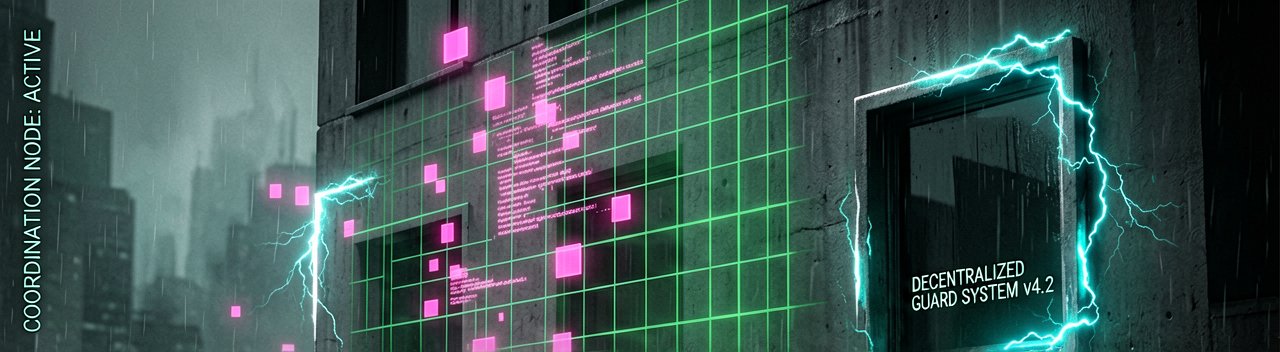
The technical architecture of 007 First Light represents a massive evolutionary leap for IO Interactive’s proprietary Glacier engine. Historically, stealth mechanics relied on predictable patrol routes and rigid line-of-sight cones that players could easily memorize and exploit. To shatter this predictability, developers replaced traditional pathfinding nodes with a decentralized utility-based AI system. Every non-playable character continuously calculates its own operational priorities based on noise level, environmental anomalies, and the proximity of allied units, creating an organic defensive grid that mimics genuine human tactical response.
This systemic complexity caught the attention of industry veterans who closely monitored the project's extended development lifecycle. Software engineers at the studio spent nearly four years perfecting the sensory perception modules of the AI, ensuring that enemies do not instantly know the player's location upon detecting a disturbance. Instead, guard units share fragmented radio data, establish containment perimeters, and execute systematic building searches. This subtle, multi-tiered escalation matrix accurately replicates high-stakes espionage, shifting the gameplay loop from passive pattern recognition to active, high-pressure improvisation.
From a stakeholder perspective, MGM and EON Productions took an unprecedented financial gamble by granting an independent studio complete creative control over the narrative foundation of the James Bond brand. Previous publishers were frequently bound by rigid cinematic release windows, forcing development teams to rush production to match theatrical marketing campaigns. By unshackling this title from the traditional cinematic calendar, executives allowed the development team to prioritize structural Polish and AI stability over superficial tie-in promotions. This strategic patience ultimately yielded a resilient intellectual property that stands independently from Hollywood's release schedules.
The long-term market implications of this release are already rippling through rival AAA development studios. The immediate financial success demonstrates to risk-averse publishers that investing heavily in advanced, player-driven AI logic can yield higher engagement metrics than generic open-world design patterns or predatory microtransactions. As production budgets continue to skyrocket across the interactive entertainment industry, this project serves as an essential blueprint for how prestigious entertainment licenses can be modernized through pure mechanical innovation rather than cinematic nostalgia.

Reading Between the Lines: The Reality of Autonomous Espionage
While the initial commercial victory of 007 First Light has been heralded as a death blow to rigid linear design, the long-term viability of this AI-driven approach demands a more critical evaluation. The industry’s sudden infatuation with decentralized, utility-based non-playable characters ignores the immense technical debt that such systems incur over time. Early player reports indicate that while the systemic reactivity is breathtaking during organized stealth incursions, the AI logic frequently buckles under chaotic, unplanned interactions. When players intentionally exploit unexpected environmental variables, the highly praised tactical coordination can quickly degrade into comical routing loops and broken asset behaviors.
This technical volatility exposes a fundamental contradiction in modern game design philosophy. Publishers are eager to champion emergent gameplay, yet the broader consumer market remains notoriously intolerant of software instability and erratic companion behavior. The studio's decision to forgo traditional scripted sequences means that narrative pacing is left entirely in the hands of the player's experimental choices. For every enthusiast who spends hours appreciating a realistic guard search pattern, a casual user may find the experience aimless, lacking the tightly choreographed, explosive cinematic beats that historically defined the James Bond franchise.
Furthermore, the financial blueprint underpinning this project may not be as easily replicated by the wider industry as optimistic market analysts suggest. IO Interactive operated as an independent entity utilizing a mature, highly specialized engine that was refined over a decade of iterative development. For a rival studio to construct an equivalent reactive framework from scratch would require a level of capital investment and developmental patience that public, shareholder-driven publishers rarely tolerate. The reliance on continuous sandbox expansions to sustain post-launch revenue also assumes that players will remain engaged with a single ecosystem indefinitely, ignoring an increasingly crowded marketplace competing for limited leisure time.
"Giving an AI secret agent total operational freedom sounds magnificent on paper, right up until the world's most sophisticated digital assassin spends twenty minutes repeatedly walking into a revolving door because a player left a cardboard box in the lobby."
Artūras Malašauskas is an AI Systems Integrator with 20+ years of production-grade web engineering experience. He has designed, shipped, and scaled enterprise Python/PHP systems for logistics, SaaS, and public-sector clients. For the past year, he has focused exclusively on AI integrations: deploying open-source LLMs, building generative media pipelines (image, audio, video), and engineering multi-agent workflows for real production environments. His standard: reproducibility, security, cost-efficient inference—no vaporware. He documents and evaluates emerging AI tooling, separating verified capabilities from marketing noise. Technical editor at: muza-ai.eu, ai-verslas.lt, ai-naujinos.lt Connect on LinkedIn
Comments