The Ghost in the Engine: Inside Modern Warfare 4’s Dynamic AI Evolution

The gaming world just felt a massive tectonic shift, and it is reverberating straight out of Activision’s development pipelines. On May 28, 2026, the publisher officially lifted the veil on its next flagship shooter, confirming that it is skipping previous-generation consoles entirely. While tech-hungry fans are naturally obsessing over the crisp performance target and native current-gen architectures, the real headline is quietly lurking beneath the hood: a massive, unprecedented commitment to generative AI tools and highly dynamic gameplay systems designed to completely reshape how we experience multiplayer environments.
It is not a secret that the studio ecosystem has been flirting with machine learning for a while now. Following strict transparency rules rolled out on PC storefronts, disclosure notes spotted by eagle-eyed players on platforms like Business Insider confirmed that developers had quietly begun integrating generative AI tools to build in-game assets. What started as a highly controversial experiment with cosmetic backdrops and minor ambient textures has rapidly matured into a core pillars-of-development strategy. With the newly announced shooter, those behind-the-scenes algorithms are finally stepping out of the concept art room and directly onto the virtual battlefield.
Chasing the Infinite Sandbox
The crown jewel of this technical transition is a brand-new multiplayer concept dubbed Westbridge Training Facility, though players will inevitably come to know it as Kill Block. According to early details shared by the design team, this experimental playground functions as a modular combat arena capable of shifting through more than 500 distinct environmental configurations. By blending algorithmic asset placement with real-time mechanical adjustments, the map dynamically alters lanes, vertical sightlines, and cover placements on the fly. It is a bold stab at curing the terminal map fatigue that plagues modern shooters, offering an unpredictable loop where muscle memory won’t save you anymore.
The Realities of the Automated Gunsmith
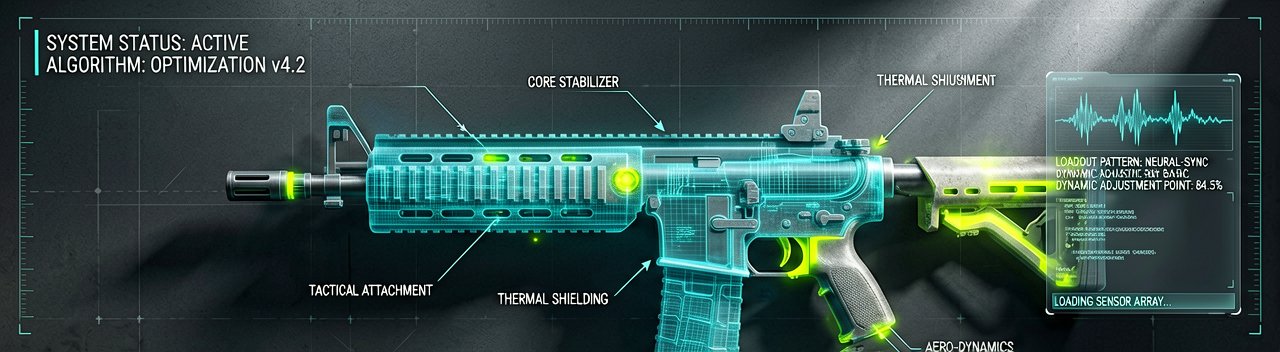
Beyond structural architecture, the integration stretches deep into user utility via an automated, AI-driven gunsmith assistant meant to analyze playstyles and dynamically optimize weapon loadouts for individual players. It represents a massive logistical leap for automated game production, yet it arrives under a heavy cloud of industry skepticism. Ever since early iterations of the tech famously birthed bizarre visual glitches—like the infamous "six-fingered zombie" asset that sparked community uproar—critics have fiercely debated whether algorithmic generation compromises artistic soul. Purists argue that procedural logic can feel sterile, stripping away the deliberate, hand-crafted lane philosophy that turned classic maps into competitive masterpieces.
Uncharted Ground and Regulatory Crosswinds
The timing of this aggressive rollout places the publisher right in the middle of a complex legal and ethical minefield. Because governing bodies like the United States Copyright Office have previously ruled that raw, unedited machine-generated content cannot be legally copyrighted, studios are forced to walk a razor-thin line. Dev teams are essentially utilizing these automation tools as rapid scaffolding, requiring human artists to jump in, repaint, and finalize assets to secure legal protections. It is a high-stakes balancing act of maximizing production speed while trying desperately not to trigger further labor disputes or community backlash. Whether this shift yields an endlessly replayable masterpiece or a hyper-optimized simulation remains to be seen, but the era of the static shooter is officially dead.
What the Mainstream Headlines Miss: The Human Friction in the Machine
Behind the corporate press releases championing infinite replayability lies a deeply fractured development culture struggling to adapt to this automated frontier. Veteran level designers, who once spent months obsessing over a single sightline or the exact placement of a piece of cover, now find their roles shifted from creators to curators. They are increasingly tasked with auditing thousands of algorithmic permutations, acting as quality assurance for an engine that generates geometry faster than any human team could ever playtest. This shift from manual craftsmanship to algorithmic oversight has sparked a quiet but palpable tension inside the studios, where many fear that the institutional knowledge of traditional map design is being systematically phased out.
The push toward this generative framework is not just an artistic experiment; it is an aggressive financial strategy aimed at curbing skyrocketing AAA development budgets. Industry analysts point out that the traditional cycle of producing high-fidelity assets has become unsustainable, with modern map packs requiring hundreds of environment artists and thousands of collective hours. By offloading the initial structural generation to machine learning models, leadership aims to slash pre-production timelines by half. However, this optimization comes with severe hidden costs, as engineering teams are forced to build massive, proprietary safeguards to ensure the engine does not accidentally generate game-breaking exploits or inappropriate environmental geometry during live matches.
From the perspective of competitive players and esports organizers, this shift toward a fluid, ever-changing battlefield represents a terrifying loss of control. Professional gaming thrives on absolute predictability, where competitive integrity relies on players knowing every pixel, spawn point, and grenade lineup perfectly. A map like Kill Block, which actively alters its lanes and cover mid-match, completely upends the foundation of tactical strategy. Tournament directors are already expressing concern over how to regulate a game that fundamentally refuses to remain static, hinting at a future split where competitive leagues may force developers to disable dynamic features entirely during official tournament play.

Historically, this transition mirrors the industry’s rocky adoption of procedural generation a decade ago, but with a far more volatile twist. While older titles relied on rigid, rule-based math to randomly scatter trees or rocks across a landscape, modern generative models predict and synthesize content based on massive troves of existing data. This has raised alarm bells among intellectual property lawyers, who warn that training these engines on decades of past game assets creates a complex web of derivative content. If the engine inadvertently replicates a trademarked layout or a copyrighted architectural style from a competitor's game, the publisher could face unprecedented legal challenges in a regulatory landscape that is still struggling to define machine ownership.
Ultimately, the success of this technological pivot will rely entirely on the community's willingness to accept an algorithm as their primary architect. Early focus groups indicate a sharp divide between casual players, who welcome the chaotic novelty of an unpredictable arena, and hardcore fans who view the technology as a gimmick that erodes the game's competitive soul. As the launch window approaches, the development team is working overtime to fine-tune the balance between machine efficiency and human intent, fully aware that if the algorithm feels too sterile, players will quickly abandon the infinite sandbox in favor of hand-crafted nostalgia.
Reading Between the Lines: The Illusion of Infinite Novelty
The marketing narrative surrounding this automated shift promises an endless playground of fresh experiences, but the fundamental math of machine learning suggests a far more repetitive reality. Generative models do not actually create new concepts from thin air; they rearrange existing data based on statistical probabilities. By relying on an algorithm to generate 500 different map configurations, the studio risks trading deeply memorable, hand-crafted masterpieces for a sprawling ocean of forgettable mediocrity. When every layout is slightly different, no single layout matters, transforming what should be an adrenaline-fueled tactical shooter into a blur of homogenized, procedurally generated corridors that all blend together after a dozen matches.
There is also a glaring contradiction in trying to use automation to fix consumer fatigue while simultaneously feeding the very live-service beast that caused it. Publishers have spent years conditioning players to demand a constant stream of new content, cosmetic skins, and battle pass tiers, pushing development teams to the brink of burnout. Turning the keys over to a generative engine is less of a forward-thinking artistic revolution and more of a desperate survival mechanism for an industry that has trapped itself in an unsustainable production cycle. The irony is that by automating the creative process to keep up with player demands, the industry risks stripping away the precise human eccentricities and happy accidents that made these franchises cultural phenomena in the first place.
Furthermore, the long-term technical implications for the player's hardware are being conveniently glossed over in the pre-launch excitement. Running complex, real-time generative algorithms alongside high-fidelity physics and networking systems demands an immense amount of local processing power, which explains the sudden abandonment of older console generations. However, even on cutting-edge hardware, this technical overhead raises serious concerns about performance stability, frame-rate drops, and server-side latency during chaotic matches. If the game's revolutionary dynamic map shifts trigger micro-stutters or disconnects in the middle of a critical firefight, players will dismantle the system on social media long before they stop to appreciate the mathematical brilliance of the engine.
We are witnessing a high-stakes gamble where the ultimate prize might just be a beautifully optimized ghost town. In its rush to build a self-sustaining content engine, leadership has prioritized the speed of production over the depth of the player experience, operating on the flawed assumption that more content automatically equals better engagement. If this algorithmic experiment falters, it will serve as a stark warning to the rest of the industry that while machines can easily replicate the geometry of a level, they still cannot synthesize the intangible magic that makes a game truly fun to play.
"We have finally achieved the corporate dream of a game that can build itself forever, seamlessly bypassing the messy bottleneck of human imagination to ensure that players can be bored by an entirely unique piece of geometry every single round."
Artūras Malašauskas is an AI Systems Integrator with 20+ years of production-grade web engineering experience. He has designed, shipped, and scaled enterprise Python/PHP systems for logistics, SaaS, and public-sector clients. For the past year, he has focused exclusively on AI integrations: deploying open-source LLMs, building generative media pipelines (image, audio, video), and engineering multi-agent workflows for real production environments. His standard: reproducibility, security, cost-efficient inference—no vaporware. He documents and evaluates emerging AI tooling, separating verified capabilities from marketing noise. Technical editor at: muza-ai.eu, ai-verslas.lt, ai-naujinos.lt Connect on LinkedIn
Comments