iOS 27’s Ambient AI Integration Redefines Mobile Architecture: Market Implications for Developers and Users
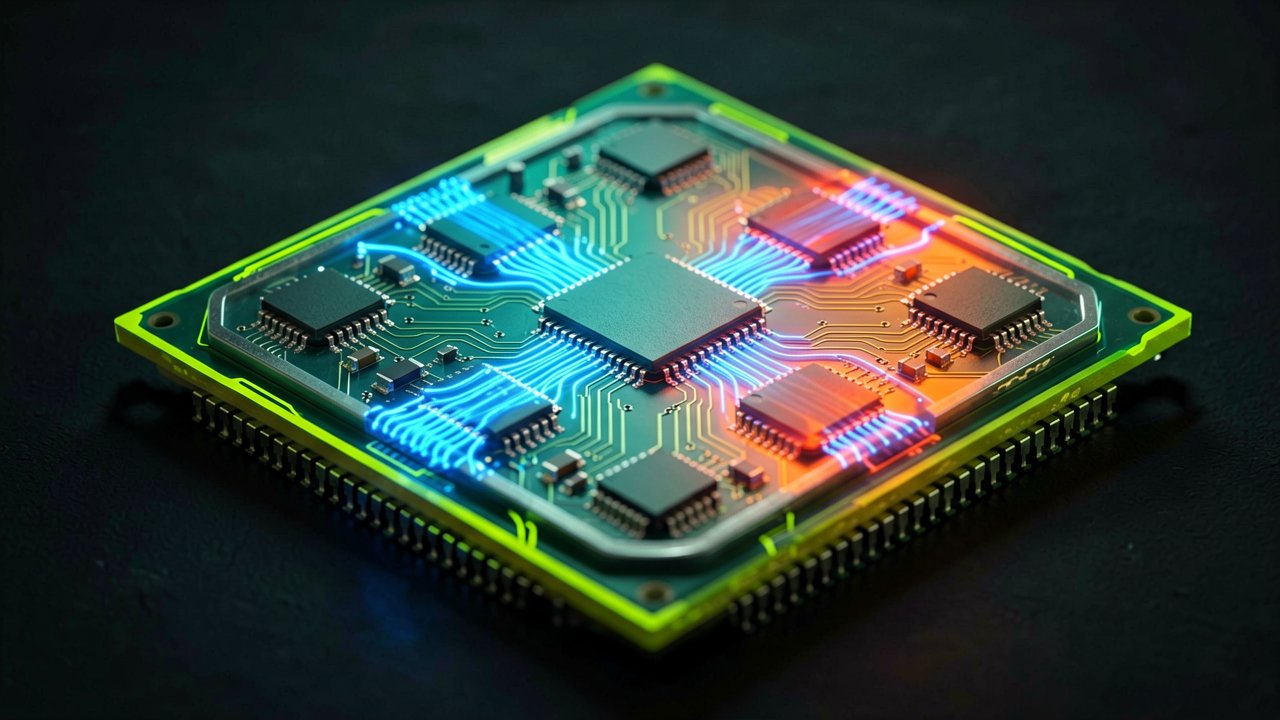
The impending arrival of iOS 27 signals a paradigm shift in the smartphone industry, moving past standalone application silos toward an ambient, foundational intelligence layer. For years, mobile software relied on user-initiated commands and cloud-dependent execution. Apple’s latest architectural overhaul changes this dynamic by embedding deeply contextual, local machine learning models directly into the core framework of the operating system. This systemic evolution transforms the iPhone from a collection of discrete digital tools into an active, predictive coordinator of the user's daily workflow.
This architectural shift carries significant market implications, driving a high-stakes hardware upgrade cycle. Because complex generative models require massive on-device computational power, older silicon footprints face immediate obsolescence. Apple is prioritizing local privacy and latency reduction, forcing enterprise developers and consumers to adapt simultaneously. Enterprises must re-engineer their software to leverage on-device hardware accelerators, while consumers are incentivized to invest in next-generation devices capable of executing these resource-intensive models natively without data leaving the device.
The Developer Imperative: Adapting to On-Device Foundation Models
The transition to iOS 27 completely rewrites the developer playbook, making traditional app development frameworks secondary to integrated model execution. Engineers can no longer rely purely on cloud API endpoints to power intelligent features. Instead, they must interface directly with native system capabilities, utilizing structural updates detailed on platforms like Apple Developer. This strategic shift commoditizes basic application functionality, requiring developers to build deeply integrated, cross-functional software extensions that feed directly into the system's ambient intelligence layer rather than operating as isolated destinations.
The User Evolution: Embracing Proactive Device Orchestration
For the consumer market, iOS 27 fundamentally alters the daily user experience by moving from reactive software to proactive assistance. Rather than opening multiple apps to complete a single complex workflow, users can rely on a deeply overhauled Siri and system-wide intelligence to orchestrate actions across the entire device ecosystem based on real-time environmental context. This transition minimizes friction, optimizes task execution, and establishes a new benchmark for consumer data privacy by processing highly personal telemetry data locally through Private Cloud Compute infrastructure.

The Hidden Architecture Driving the Ecosystem Pivot
Behind the Scenes: The actual engine powering this transformation is not the highly publicized consumer interface, but the fundamental restructuring of Apple's silicon allocation strategy. For the past decade, smartphone system-on-chip design prioritized peak graphics performance and raw single-core compute speeds to handle mobile gaming and high-resolution video rendering. With iOS 27, the internal engineering priority pivots completely toward dedicated neural execution blocks, sacrificing marginal GPU gains to secure massive bandwidth increases for local memory access. This hardware reality means that apps optimized for traditional computing pipelines face immediate performance penalties compared to those built around the new neural runtime.
This technical shift exposes a growing rift among major development houses regarding platform autonomy. Large enterprise developers who spent years building independent cloud infrastructures now face a stark strategic choice. They must either cede user data visibility to Apple's local models to remain deeply integrated into the OS, or remain outside the core system loop, risking irrelevance as users migrate to proactive, system-level automation. Internal engineering teams at major tech firms are reportedly split on this issue, balancing the preservation of proprietary backend data models against the immediate necessity of maintaining native, frictionless user engagement on millions of active premium handsets.
Historical precedent suggests that this level of platform control will permanently alter venture capital funding patterns within the mobile software sector. During the initial App Store boom, investors poured capital into single-utility utility apps that solved discrete problems, such as basic photo editing or calendar management. Under the iOS 27 paradigm, these standalone utilities are absorbed into the system's baseline capability layer, rendering hundreds of existing business models obsolete overnight. The next wave of software capitalization is instead targeting specialized domain-specific models that can securely hook into the central core, offering deep industry-specific expertise rather than generic interface solutions.
The consumer reaction to this shift is creating an unprecedented dynamic in the secondary smartphone market. Historically, older iPhone models retained high resale value due to prolonged software support lifecycles. However, the strict silicon requirements mandated by system-wide local intelligence are creating a sharp depreciation curve for legacy devices. Industry analysts note that consumers are being forced to choose between standard security updates on older hardware or purchasing premium upgrades just to access the proactive features that define the modern smartphone experience, marking a definitive end to the era of incremental device longevity.
The Reality Gap in the Ambient Intelligence Vision
Reading Between the Lines: The industry enthusiasm surrounding iOS 27 assumes a frictionless transition that glosses over a fundamental contradiction in Apple's business model. The promise of an ambient, proactive assistant relies on the system having unfettered, contextual access to every layer of a user's digital life. Yet, Apple has spent nearly a decade positioning itself as the ultimate defender of consumer privacy by restricting data collection. By shifting the heavy lifting to on-device models, the company attempts to bypass this ideological conflict, but it simultaneously introduces severe performance constraints. A smartphone operating within a restricted thermal and battery envelope simply cannot match the raw cognitive processing power of a warehouse-scale cloud data center, creating a massive gap between the marketing narrative and actual, day-to-day execution.
Furthermore, the claim that this architecture will democratize developer opportunities ignores the stark economic reality of the modern App Store ecosystem. While the technical frameworks allow small developers to hook into the system's core intelligence, the financial capital required to fine-tune proprietary models to run efficiently on-device remains prohibitive. Only the largest corporate entities possess the resources to optimize their software for Apple's strict local memory allocations. Consequently, instead of fostering a decentralized wave of innovation, this shift is highly likely to entrench a new tier of elite software monopolies, leaving independent developers to fight over the scraps of a system that favors massive scale over creative agility.
This structural shift also creates an institutional headache for enterprise IT departments and corporate compliance officers. For years, businesses managed data sovereignty by routing all corporate application traffic through secure, audited cloud environments. When a smartphone independently orchestrates workflows, synthesizes emails, and automates actions locally across multiple applications, it creates an entirely unmapped shadow IT environment on the device itself. Apple's insistence on local processing shields the data from external hackers, but it simultaneously blinds corporate security teams to how sensitive data is being cross-referenced and manipulated by the operating system’s autonomous agents.
The industry spent fifteen years convincing consumers that the future of computing lived in an infinite, omnipresent cloud, only to decide that the pinnacle of technological achievement is squeezing that entire cloud back into a glass rectangle that still occasionally overheats when you use it in the sun.
Artūras Malašauskas is an AI Systems Integrator with 20+ years of production-grade web engineering experience. He has designed, shipped, and scaled enterprise Python/PHP systems for logistics, SaaS, and public-sector clients. For the past year, he has focused exclusively on AI integrations: deploying open-source LLMs, building generative media pipelines (image, audio, video), and engineering multi-agent workflows for real production environments. His standard: reproducibility, security, cost-efficient inference—no vaporware. He documents and evaluates emerging AI tooling, separating verified capabilities from marketing noise. Technical editor at: muza-ai.eu, ai-verslas.lt, ai-naujinos.lt Connect on LinkedIn
Comments