SoftBank Bets Big on Sovereign AI with Milestone €75 Billion Investment in France
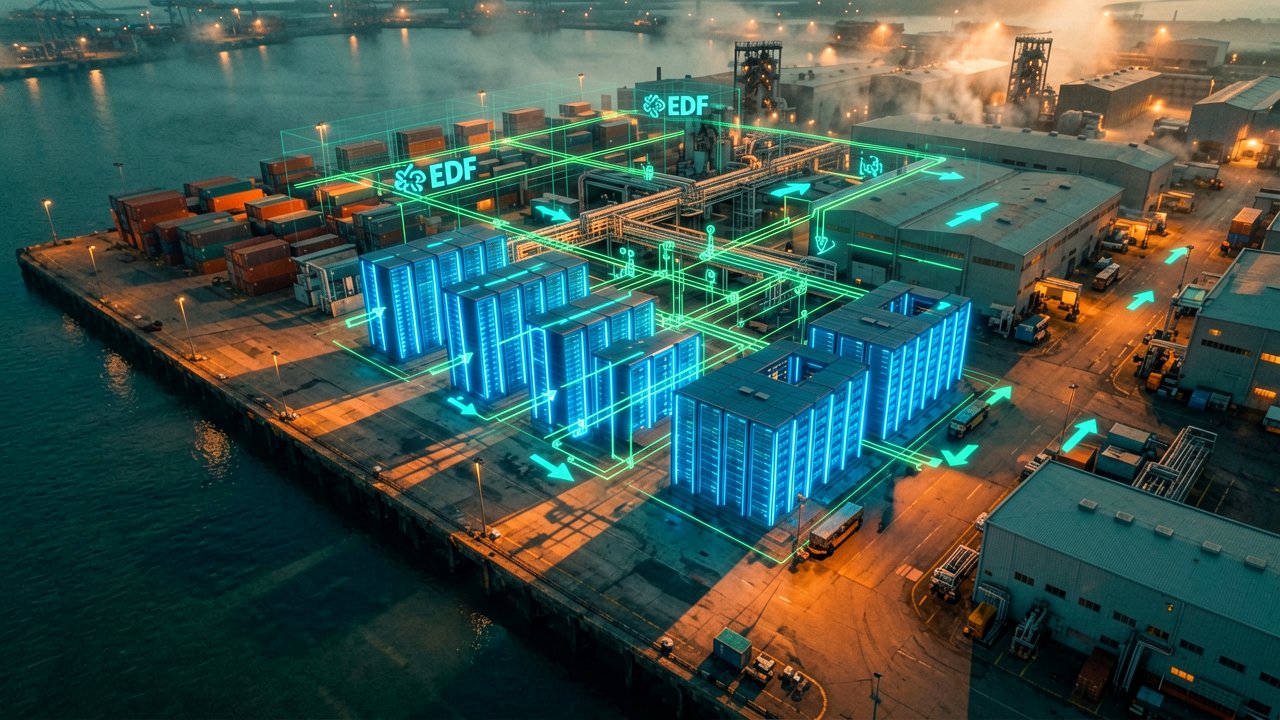
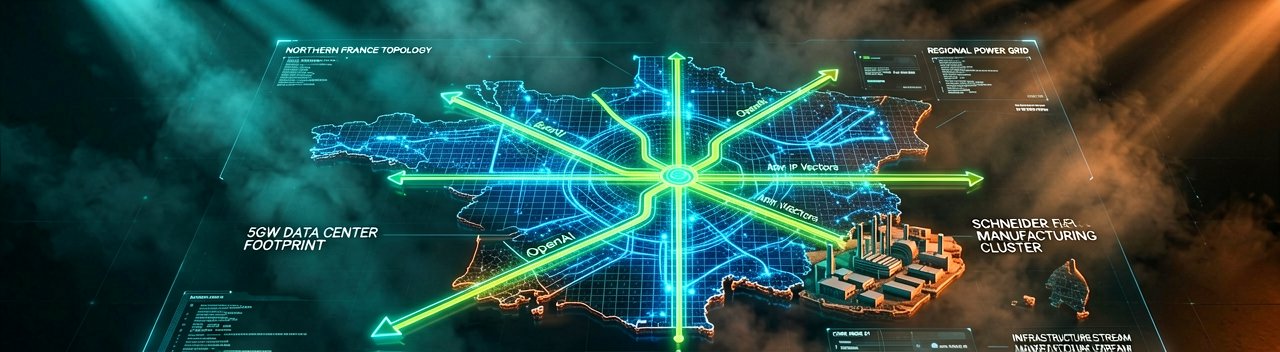
SoftBank Group Corp. has announced an expansive €75 billion plan to develop and operate 5 gigawatts of artificial intelligence data center capacity in France, signaling a massive geopolitical expansion for the Japanese conglomerate. In its initial phase, the company is committing €45 billion to deploy 3.1 gigawatts of infrastructure across the Hauts-de-France region by 2031. This unprecedented deployment, revealed during President Emmanuel Macron’s Choose France summit, focuses on initial critical facilities in Dunkirk, Bosquel, and Bouchain. The strategic move highlights a significant shift as capital-intensive tech giants prioritize regions with highly dependable, low-carbon power grids to overcome the growing electricity deficits slowing infrastructure progress in the United States.
For SoftBank, this mega-project marks its largest AI infrastructure investment in Europe to date. Founder Masayoshi Son is aggressively shifting the firm’s strategy from purely financing software applications to securing the underlying physical layers of computing power. According to a detailed report from TechCrunch, this investment comes at a time when data center builders face strict regulatory hurdles and severe power supply limitations across North America. By positioning this infrastructure closer to major European business centers, SoftBank intends to substantially reduce latency for upcoming AI enterprise applications and high-performance computing tasks.
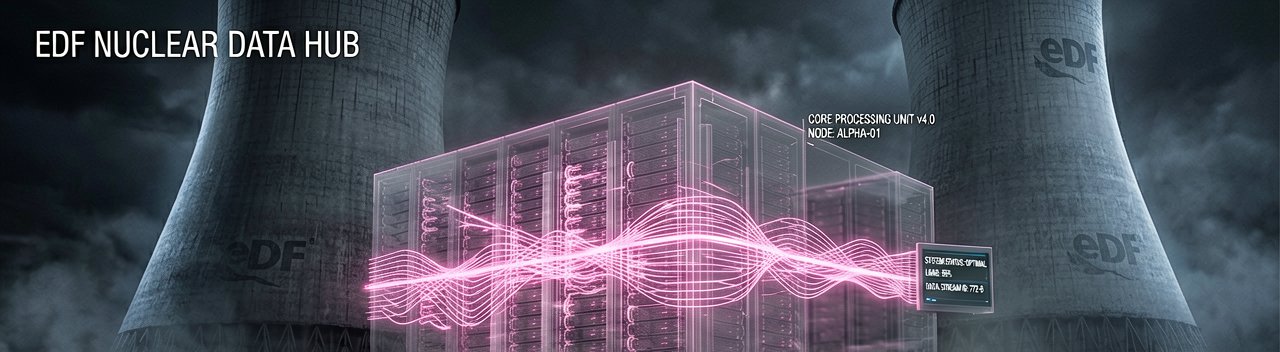
The industrial ecosystem around this initiative is designed to create a self-sustaining supply chain in Western Europe. SoftBank is partnering with Schneider Electric to establish a manufacturing and robotics cluster at the Port of Dunkirk, ensuring a domestic supply of essential server racks and power modules. Furthermore, state-backed utility giant EDF is actively involved in repurposing retired power generation assets into specialized digital hubs. Through these agreements, France positions itself as a dominant provider of sovereign AI infrastructure, providing a strong regional base that insulates international tech firms from shifting trade boundaries and volatile international energy prices.
The Power Dynamic: Nuclear Advantage and Infrastructure Securitization
The massive power requirement of a 5-gigawatt footprint highlights why France’s nuclear-heavy grid is a vital asset for future tech infrastructure. Artificial intelligence training clusters require an uninterrupted supply of baseline electricity that standard renewable sources struggle to guarantee without extensive battery storage. By anchoring these facilities in northern France, SoftBank ensures stable electricity prices and avoids the public pushback seen near gas-fired facilities elsewhere. This secure access to low-carbon energy directly addresses the environmental reporting mandates required of European enterprises.
A Shift Toward Concrete Assets and Sovereign Computing
This European push reflects a broader industry trend toward physical asset ownership and geographical diversification. SoftBank’s vast financial commitments, which include a substantial stake in OpenAI and massive investments in Arm server architectures, require a globally diversified footprint of operational data hardware. Rather than relying entirely on third-party cloud providers, the firm is building out its own foundational layer. This framework supports President Macron’s vision of European technological independence, ensuring that regional data processing happens locally under European regulatory oversight.
Behind the Scenes: Unlocking the Grid and the Geopolitical Chessboard
The scale of SoftBank’s commitment has caught many industry analysts by surprise, but the groundwork for this deal has been quietly building for years within the corridors of Élysée Palace. Securing 5 gigawatts of grid capacity is not merely a matter of signing a real estate lease; it requires deep state-level integration. French officials have spent the last three years streamlining the administrative approvals for high-voltage grid connections, specifically targeting the northern administrative zones. This proactive regulatory approach contrast sharply with the years-long queues choking power grids in Virginia and Dublin, turning France’s bureaucratic alignment into a primary competitive advantage.
Inside SoftBank, this initiative represents the realization of Masayoshi Son’s long-held vision of an interconnected AI ecosystem. Rather than viewing data centers as isolated real estate assets, the internal strategy treats them as the foundational layer for a vertically integrated technology stack. By controlling the physical infrastructure, the Arm-designed silicon architecture, and the actual AI models through various portfolio investments, SoftBank is attempting to build a closed-loop computing environment. This approach insulates the company from the pricing volatility of third-party cloud infrastructure providers and positions it as an indispensable gatekeeper for European enterprise compute.
Local political dynamics in the Hauts-de-France region also played a decisive role in finalizing the geographic layout. Dunkirk, Bouchain, and Bosquel were selected not just for their proximity to subsea internet cables, but because they sit at the intersection of major industrial revitalization zones. Local municipalities eagerly approved the rezoning requests, viewing the data centers as a vital economic replacement for declining heavy manufacturing. The promise of long-term infrastructure jobs, paired with Schneider Electric's new manufacturing cluster at the Port of Dunkirk, helped defuse the environmental and public resistance that often stalls massive digital infrastructure projects across Europe.
From a sovereign security perspective, the arrangement offers mutual benefits for both the tech giant and the European Union. European policymakers have grown increasingly uneasy about the region's reliance on American tech infrastructure for data processing. By routing this investment through a Japanese conglomerate that actively commits to localized supply chains and domestic manufacturing partnerships, France achieves its goal of technological strategic autonomy. The data generated and processed within these facilities remains firmly within European legal jurisdictions, satisfying strict regulatory mandates while attracting massive capital inflows.
Ultimately, this €75 billion blueprint creates a new model for how international technology investments are structured. The traditional playbook of building generic warehouse facilities and purchasing commercial power is no longer sustainable given current resource constraints. Success now requires deep collaboration with national utilities, localized industrial equipment manufacturing, and long-term sovereign alignment. As the first modules in Dunkirk prepare to go online, the project will serve as a critical test case for whether European industrial policy can successfully sustain the immense physical demands of the global artificial intelligence boom.
Reading Between the Lines: The Friction Between Virtual Ambition and Physical Reality
While the scale of this €75 billion announcement makes for impressive headlines, a realistic analysis reveals significant logistical challenges hidden behind the political optimism. Committing to construct 5 gigawatts of data center capacity by 2031 assumes that the physical supply chains for high-voltage electrical transformers, cooling systems, and specialized AI silicon can scale at an unprecedented rate. In reality, global lead times for critical grid infrastructure now stretch into multiple years, and SoftBank is competing for the exact same manufacturing capacity as every major cloud provider in North America and Asia. Announcing a multi-billion-euro budget is fundamentally different from securing physical delivery of the hardware required to make those investments operational.
Furthermore, the strategic reliance on France’s nuclear-heavy grid introduces its own set of long-term uncertainties. State-backed utility EDF is currently managing a complex, capital-intensive modernization program across its aging reactor fleet, alongside facing repeated delays on its next-generation EPR designs. Committing gigawatts of baseline power to digital infrastructure projects creates an inevitable tension with France's existing industrial sectors, which are also trying to decarbonize by electrifying their operations. If grid constraints tighten or reactor maintenance schedules drag out, political pressure may force regulators to prioritize domestic heating and traditional heavy industries over the immense power demands of foreign-owned AI training clusters.
There is also a clear strategic contradiction in SoftBank's pivot toward heavy infrastructure asset ownership. For over two decades, the conglomerate operated as a highly liquid venture vehicle, chasing rapid software valuations and avoiding capital-intensive hardware operations. Transitioning into a master builder of European real estate and power infrastructure requires a completely different operational skillset and carries significantly lower profit margins than software licensing. If the broader market's monetization of enterprise AI software slows down over the next three years, SoftBank risks finding itself heavily overleveraged, holding massive amounts of illiquid, half-completed concrete facilities across northern France.
Finally, the promise of true European digital sovereignty through this partnership remains highly debatable. While the physical server racks will reside on French soil and use components manufactured in Dunkirk, the underlying core intellectual property—ranging from Arm’s architectural designs to OpenAI’s proprietary algorithms—remains bound to international corporate entities and subject to foreign legal jurisdictions. Localizing the physical hardware layer provides European regulators with a sense of security, but it does little to alter the reality that the primary economic and intellectual value generated by the AI boom continues to concentrate outside the borders of the European Union.
Building five gigawatts of data center capacity on a continent notorious for its regulatory caution is an admirable exercise in optimism, proving that if you throw enough tens of billions of euros at a problem, even the most stubborn power grids suddenly find a way to plug you in. Let us just hope the local reactors enjoy processing matrix multiplications as much as they do keeping the lights on in Paris.
Artūras Malašauskas is an AI Systems Integrator with 20+ years of production-grade web engineering experience. He has designed, shipped, and scaled enterprise Python/PHP systems for logistics, SaaS, and public-sector clients. For the past year, he has focused exclusively on AI integrations: deploying open-source LLMs, building generative media pipelines (image, audio, video), and engineering multi-agent workflows for real production environments. His standard: reproducibility, security, cost-efficient inference—no vaporware. He documents and evaluates emerging AI tooling, separating verified capabilities from marketing noise. Technical editor at: muza-ai.eu, ai-verslas.lt, ai-naujinos.lt Connect on LinkedIn
Comments