SoftBank’s €75B AI Push in France Signals Europe’s Ambition to Challenge US-China Dominance
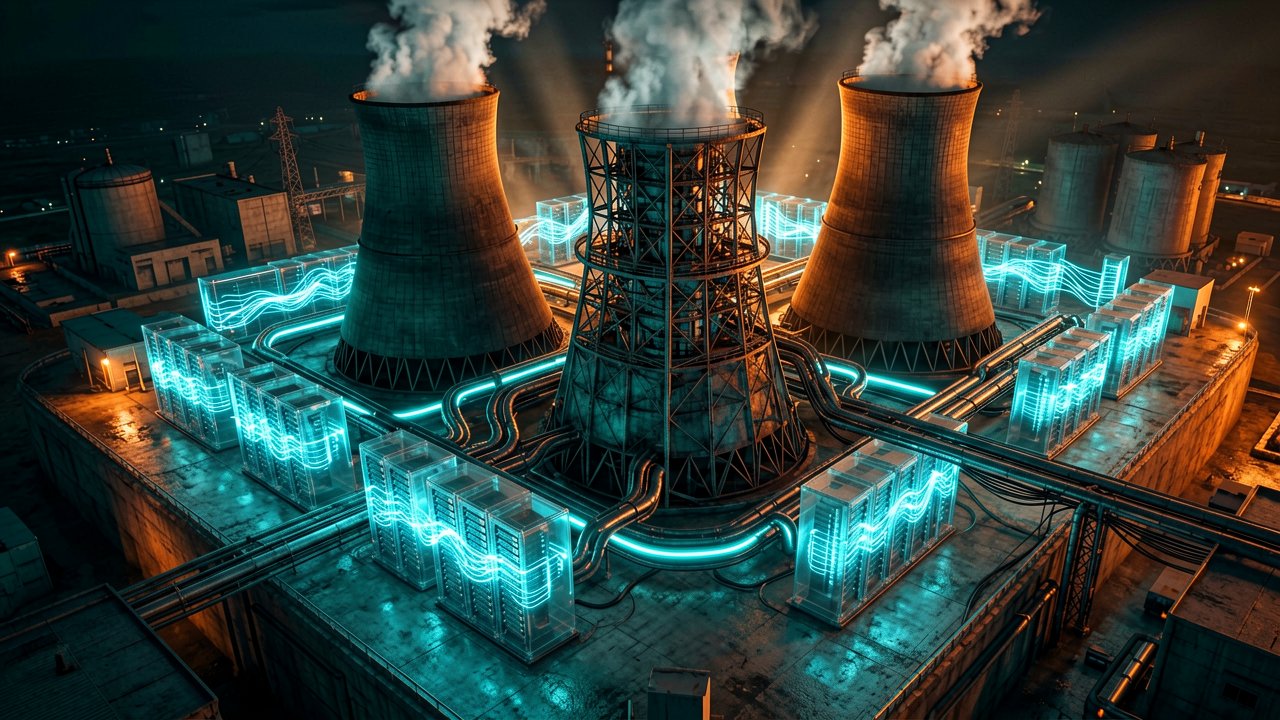
SoftBank Group’s monumental pledge to invest up to €75 billion ($87.5 billion) to build 5 gigawatts of artificial intelligence data center capacity in France represents a definitive shift in the global technology landscape. Formally unveiled ahead of President Emmanuel Macron’s annual Choose France business summit, this initiative stands as the Japanese conglomerate’s largest AI infrastructure deployment in Europe. By anchoring this massive digital cluster on European soil, SoftBank founder Masayoshi Son is positioning France as the premier continent-wide hub for next-generation sovereign computing power.
The deal reflects a deliberate strategic realignment away from overcrowded, politically contentious infrastructure pipelines in the United States and Asia. The first phase of the plan outlines an initial €45 billion allocation to deliver 3.1 gigawatts of capacity across northern locations like Dunkirk, Bosquel, and Bouchain by 2031. As reported by CNBC, Europe’s historically prohibitive energy prices have long crippled its ability to match the raw computing output of Washington and Beijing. However, SoftBank is betting heavily on France's stable, low-carbon nuclear energy grid to overcome this obstacle and safely scale power-hungry hyperscale architectures.
The Sovereign AI Imperative and Nuclear Advantage
For years, European policymakers have warned against a total dependency on American cloud monopolies and Chinese hardware supply chains. This mega-investment validates President Macron’s aggressive courtship of sovereign tech ecosystems, proving that regulatory stability and domestic energy security can attract premier capital. By partnering directly with state-owned energy giant EDF to repurpose legacy industrial power assets, SoftBank bypasses the grid connectivity bottlenecks currently stalling rival data center developments in North America.
Securing the Supply Chain via Localized Clusters
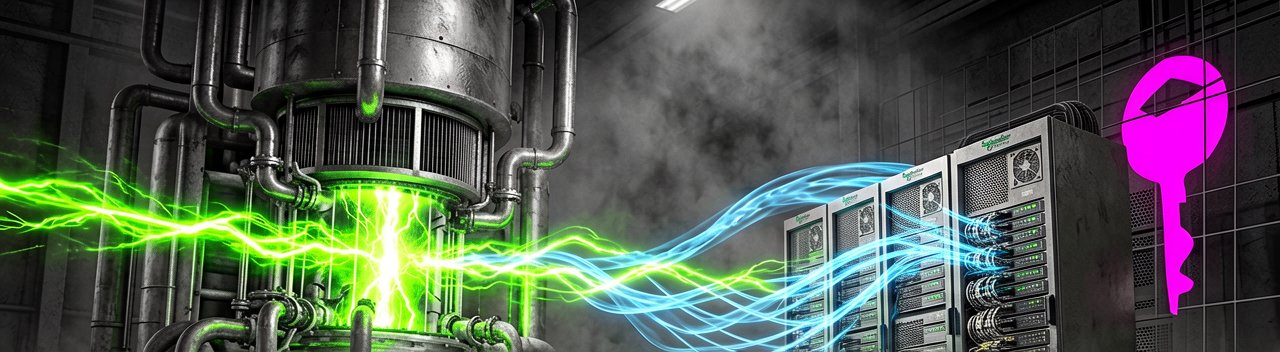
A critical component of this market entry is the mitigation of macroeconomic supply chain risks through immediate industrial integration. SoftBank has partnered with French heavy electric manufacturer Schneider Electric to establish a dedicated hardware and robotics manufacturing cluster at the Port of Dunkirk. This facility will integrate localized data center power modules and custom enclosures, insulating SoftBank's European operations from volatile global shipping lanes and tightening chip protectionist laws. This integration secures a reliable pipeline for high-performance server hardware essential for training advanced generative models.
Geopolitical Realignment of High-Performance Computing
The scale of this French layout indicates that SoftBank views Europe not merely as a consumer market, but as a critical buffer zone in the escalating US-China tech schism. While SoftBank continues to fund large-scale US projects, expanding its footprint into France diversifies its regulatory exposure amidst intensifying international compliance mandates. This massive injection of compute infrastructure provides European enterprises, research institutions, and foundational AI startups with the raw localized computing capacity needed to build competitive, legally compliant alternatives to foreign platforms.
Anatomy of a Mega-Deal: Power Politics and the Race for Compute
Behind the Scenes: This €75 billion blueprint did not materialize overnight, nor is it a simple real estate transaction for digital warehouses. It represents the culmination of a multi-year chess match between Masayoshi Son and European technocrats who realize that without domestic computational power, the European Union risks becoming a digital colony. Behind the public handshakes at Versailles lies a complex web of negotiations over guaranteed power pricing. SoftBank’s decision to drop anchor in northern France was heavily contingent on securing long-term power purchase agreements (PPAs) with EDF, effectively insulating the firm from the volatile European energy markets that wrecked tech margins during the previous energy crisis.
Industry insiders note that the selection of Dunkirk, Bosquel, and Bouchain is highly tactical, tracing the spine of France’s heavy industrial past and its modern nuclear infrastructure. By repurposing legacy industrial grid connections, SoftBank bypasses the standard five-to-seven-year waiting lists for grid modernization that have frozen hyperscale development in northern Virginia and Frankfurt. This spatial strategy turns France’s historically centralized, state-backed energy model into its greatest competitive asset. It allows SoftBank to deploy capital at a speed that American utilities, hamstrung by fragmented regulatory frameworks, simply cannot match.
For President Macron, the pact serves as a powerful validation of his "Choose France" doctrine just as his administration faces intensifying domestic scrutiny over economic sovereignty. Critics have long argued that Europe's stringent data privacy laws and regulatory burdens act as a deterrent to foreign tech capital. By landing the single largest tech investment in European history, the French government establishes a new template: compliance with European values does not preclude technological scale if the host nation can guarantee green, uninterruptible electrons at a massive scale.

The deal also reveals a profound shift in SoftBank’s corporate psychology, transitioning from a speculative venture capital fund into an industrial infrastructure operator. Having watched Nvidia capture the lion's share of the AI windfall, Masayoshi Son is aggressively pivoting toward the physical bottlenecks of the AI revolution: power, land, and cooling. This European push is less about financing the next viral software application and more about controlling the fundamental utility company of the twenty-first century, ensuring that whatever AI models emerge globally must pay a toll to SoftBank's underlying hardware infrastructure.
The Sovereign Illusion and the Realities of Capital
Reading Between the Lines: The triumphant rhetoric surrounding Europe’s newfound "digital sovereignty" obscures a stark geopolitical irony. While French officials celebrate the €75 billion commitment as a shield against foreign tech dominance, the underlying infrastructure remains entirely dependent on non-European entities. SoftBank is a Japanese conglomerate, the cutting-edge liquid-cooling systems are largely designed by American firms, and the high-performance accelerators powering these facilities are sourced from US-regulated silicon giants. True technological independence is not bought with real estate and concrete; it requires domestic ownership of the intellectual property at the very top of the computing stack.
Furthermore, the reliance on France’s nuclear grid introduces its own set of structural contradictions. By consuming 5 gigawatts of power—roughly equivalent to the continuous output of five nuclear reactors—SoftBank’s digital clusters will place an unprecedented strain on the state-backed utility, EDF. This creates a zero-sum game between fueling the computational demands of generative AI and meeting Europe’s broader industrial decarbonization targets. French taxpayers may soon find themselves questioning why domestic green energy is being diverted to train massive commercial models that offer no guaranteed economic return to the local populace.
Financially, Masayoshi Son’s pivot to heavy infrastructure is a high-stakes gamble on the permanence of the AI boom. Building data centers requires immense upfront capital expenditure with payback periods stretching over decades, a stark contrast to the rapid liquidity cycles of software venture capital. If the commercial demand for generative AI plateaus, or if algorithmic efficiencies drastically reduce the amount of compute required to train future models, SoftBank could find itself holding the world’s most expensive collection of specialized warehouses. Europe’s ambition to challenge US-China dominance may ultimately hinge on an asset class that is highly vulnerable to technological obsolescence.
"In its quest to escape the digital dominance of Washington and Beijing, Europe has essentially leased its digital frontier to Tokyo. We may finally get the sovereign AI we always wanted, provided we do not mind that the keys to the data center belong to a billionaire in Tokyo who views our nuclear grid as an exceptionally reliable battery."
Artūras Malašauskas is an AI Systems Integrator with 20+ years of production-grade web engineering experience. He has designed, shipped, and scaled enterprise Python/PHP systems for logistics, SaaS, and public-sector clients. For the past year, he has focused exclusively on AI integrations: deploying open-source LLMs, building generative media pipelines (image, audio, video), and engineering multi-agent workflows for real production environments. His standard: reproducibility, security, cost-efficient inference—no vaporware. He documents and evaluates emerging AI tooling, separating verified capabilities from marketing noise. Technical editor at: muza-ai.eu, ai-verslas.lt, ai-naujinos.lt Connect on LinkedIn
Comments