The Ultimate AI Stock Play: Analysts' Picks for Any Market

The artificial intelligence trade is transitioning from an era of speculative hype into a disciplined phase of infrastructure buildout. High-conviction semiconductor giants and physical hardware enablers are capturing the vast majority of institutional capital. Wall Street analysts are aggressively prioritizing companies with tangible capital expenditure protection and clear visibility into enterprise cash flows.
According to a recent sector research report published by CNBC, dominant tech leaders like Nvidia and Apple remain top institutional picks as the market run-up continues. This preference reflects a strategic market rotation toward high-moat platforms that control the proprietary silicon and distribution channels necessary for downstream deployment. Rather than betting on speculative software applications, portfolio managers are treating infrastructure providers as defensive safe havens capable of weathering macro volatility.
The Silicon Foundation and Custom ASIC Dominance
Semiconductor design firms and specialized foundries represent the most resilient tier of the artificial intelligence value chain. Nvidia maintains an estimated 80% to 85% market share in the advanced accelerator segment, making it the default foundation for institutional portfolios. Meanwhile, hyper-scale cloud operators are ramping up internal engineering efforts to design custom Application-Specific Integrated Circuits (ASICs).
This dynamic benefits diversified infrastructure plays like Broadcom, which co-designs proprietary AI processors for major cloud data centers. Analysts view these silicon providers as secular winners because their order books are locked in quarters in advance. The long lead times create a predictable financial cushion that insulates these equities from short-term shifts in broader macroeconomic sentiment.
Data Center Scale and Hard Asset Infrastructure
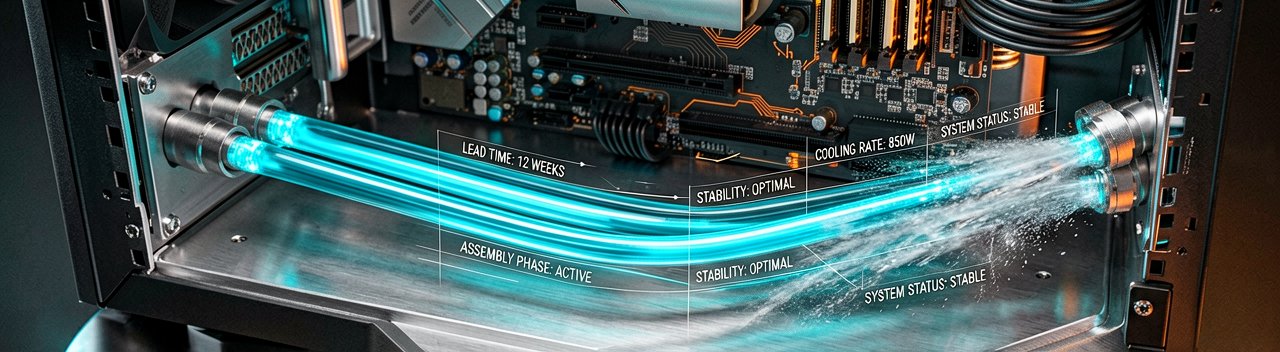
The secondary layer of the ultimate artificial intelligence playbook focuses entirely on physical deployment bottlenecks. Massive compute clusters require an unprecedented amount of power, cooling systems, and specialized hardware architecture to function efficiently. This reality has driven a structural surge in demand for liquid-cooling technology, high-density server racking, and electrical grid components.
Enterprise server manufacturers and infrastructure engineering firms are capitalizing on this capital expenditure cycle by delivering integrated turnkey server solutions. Analysts favor these physical hardware providers because their revenue growth is tied directly to the construction of physical hyperscale facilities. As tech conglomerates continue to allocate billions toward expanding their global digital footprints, these hardware enablers offer a reliable mechanism to capture AI upside regardless of which specific software model eventually gains market dominance.
The Hidden Architecture of the AI Capital Cycle
What Most Reports Miss: The actual velocity of institutional capital is shifting away from generalized cloud compute toward highly specific, geographically constrained physical infrastructure bottlenecks. While retail investors remain fixated on quarterly software subscriptions and public model benchmarks, venture capitalists and tier-one asset managers are tracking the unglamorous logistics of power allocation and transformer manufacturing lead times. The reality facing the tech sector is that software cannot scale without massive physical footprints, and the race to secure these sites has created a secondary real estate and utility boom that mirrors the railroad expansions of the nineteenth century.
This physical constraint has fundamentally changed how hyperscale cloud providers negotiate long-term agreements. Securing a reliable 100-megawatt power allocation from local utility grids is now a far greater competitive advantage than developing a slightly more efficient algorithmic architecture. Consequently, forward-looking market analysts are quietly shifting their definitions of "moats" in the technology sector, evaluating tech companies not just by their software engineering talent, but by their long-term energy procurement strategies and partnerships with independent power producers.

The geopolitical dimension of the semiconductor supply chain also introduces a layer of volatility that standard market analyses frequently overlook. As governments worldwide race to onshore advanced packaging facilities, the capital expenditure required to build redundant supply chains is skyrocketing. This dual-track spending—where companies must simultaneously fund cutting-edge research and expensive domestic manufacturing facilities—means that only corporate balance sheets with massive cash reserves can survive the consolidation phase of this market cycle.
Ultimately, the current market dynamic is weeding out speculative software firms that rely entirely on rented infrastructure with low margins. The ultimate winners are proving to be the gatekeepers of the physical stack: companies that control proprietary silicon designs, specialized cooling systems, and advanced power management technologies. As the enterprise sector demands proof of investment returns, the market is punishing unmonetized hype and rewarding the hardware backbone that makes the digital transformation possible.
The Capital Expenditure Paradox and the Reality of AI Returns
Reading Between the Lines: The prevailing Wall Street consensus rests on the highly precarious assumption that hyperscale capital expenditure can expand indefinitely without triggering a cyclical correction. Institutional analysts routinely treat massive infrastructure spending as a pure positive indicator of future growth, largely ignoring the historical precedent of overbuilding in technology cycles. When the multi-billion-dollar investments made by cloud giants fail to yield a corresponding explosion in enterprise software revenue, the market will inevitably face a painful valuation reckoning that exposes the difference between infrastructure capacity and actual consumer demand.
This discrepancy highlights a stark contradiction at the very center of the artificial intelligence narrative. While hardware providers are generating record-breaking revenues by selling the building blocks of data centers, the enterprise software companies purchasing this computing power are struggling to prove that their clients are willing to pay a premium for AI-assisted tools. Many corporate buyers are discovering that basic automation features do not justify the massive price increases demanded by software vendors, leading to a quiet stagnation in actual enterprise adoption rates. The current ecosystem relies on a circular investment loop where a handful of tech conglomerates are essentially funding each other's growth through cross-cloud agreements and hardware procurement.
Furthermore, the physical limitations of the electrical grid present a hard barrier that no amount of software optimization can bypass. Technology executives frequently pitch a future of limitless digital intelligence, yet their immediate roadmaps are constrained by the reality of aging electrical grids, overextended copper supply chains, and regulatory hurdles in securing regional power permits. This infrastructure deficit means that the projected timelines for artificial intelligence scaling are structurally flawed, as the energy grid simply cannot support the exponential power demands of next-generation training clusters at the speed the market currently expects.
As the initial wave of enthusiasm transitions into a mature economic cycle, the broader market will likely experience a sharp bifurcation. High-conviction hardware champions with strong cash flows and defensive moats will survive the consolidation phase, while speculative software firms that lack proprietary infrastructure will face severe margin compression. The long-term investment play belongs not to the companies making the loudest public promises about algorithmic breakthroughs, but to the disciplined capital allocators who treat computing power as a scarce, tangible commodity that must be managed with strict fiscal sobriety.
Building the infrastructure of the future is an incredibly lucrative business, right up until the moment everyone realizes they have spent hundreds of billions of dollars constructing the world's most sophisticated digital engines just to help corporate employees summarize emails that they never intended to read in the first place.
Artūras Malašauskas is an AI Systems Integrator with 20+ years of production-grade web engineering experience. He has designed, shipped, and scaled enterprise Python/PHP systems for logistics, SaaS, and public-sector clients. For the past year, he has focused exclusively on AI integrations: deploying open-source LLMs, building generative media pipelines (image, audio, video), and engineering multi-agent workflows for real production environments. His standard: reproducibility, security, cost-efficient inference—no vaporware. He documents and evaluates emerging AI tooling, separating verified capabilities from marketing noise. Technical editor at: muza-ai.eu, ai-verslas.lt, ai-naujinos.lt Connect on LinkedIn
Comments