Navigating the AI Valuation Reset: Strategic Playbooks for Volatile Markets

The artificial intelligence investment landscape has officially transitioned from a phase of speculative euphoria to a disciplined period of structural realignment. Market fluctuations have exposed a temporary divergence between heavy infrastructure expenditures and tangible corporate adoption, prompting investors to look past broader sector labels. As forward earnings projections continue to point upward despite macroeconomic pressures, the overarching market sentiment focuses heavily on fundamental execution. Capital allocations are migrating away from undifferentiated application wrappers toward enterprises capable of generating durable cash flow margins.
A major shift in capital distribution has widened the gap between market leaders and late entrants across both public and private equities. According to recent research from Goldman Sachs , a massive capital expenditure push continues to dominate the tech sector, with hyperscale companies projected to allocate $754 billion globally this year alone. However, this massive infrastructure buildout has triggered intense pressure on public stock valuations and heightened dispersion across software assets. To successfully navigate this backdrop, institutional allocators are executing targeted strategies designed to isolate actual technological value from peripheral noise.
Prioritizing Agentic Workflows Over Basic Automation
The initial wave of AI investing heavily favored generic large language models and basic software automation. Current venture and equity strategies prioritize autonomous agentic systems capable of executing complex, multi-step enterprise workflows without continuous manual oversight. Rather than relying on simple productivity tools, enterprises are directing capital toward specialized software architectures that capture proprietary domain intelligence. This focus ensures that software investments result in verifiable cost reductions and measurable net new annual recurring revenue.
Securing the Data Center Supply Chain and Energy Grid
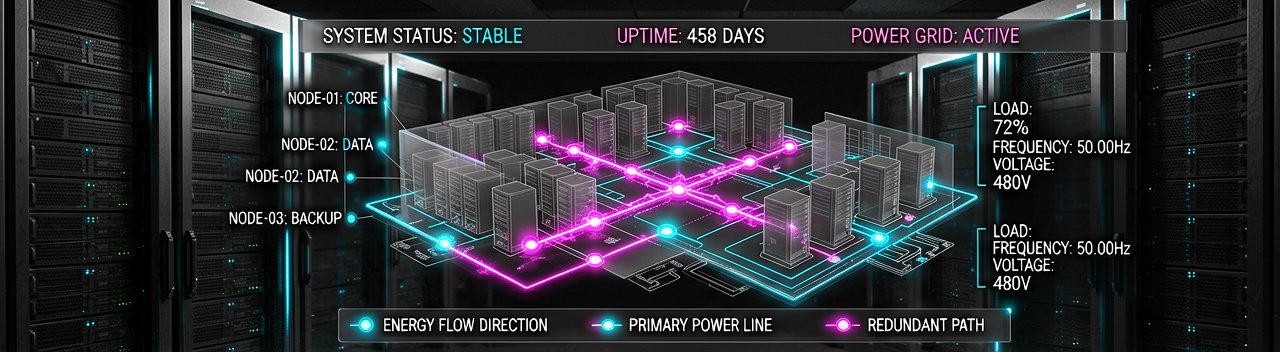
Physical bottlenecks have replaced algorithmic design as the primary operational constraint for AI scalability. Strategic capital is flowing directly toward companies that control the foundational computing stack, advanced high-bandwidth memory, and physical infrastructure. Furthermore, data center construction has run into strict energy constraints, causing major technology companies to secure independent, reliable power grids. Backing components of the utility and physical hardware supply chain provides an effective defensive layer against software valuation adjustments.
Identifying Industry-Specific Vertical Applications
Horizontal software solutions face compounding headwinds from rapid technical obsolescence and intense price competition. Conversely, vertical AI platforms tailored for deeply regulated industries like healthcare, corporate finance, and heavy manufacturing retain immense pricing leverage. Startups and mid-cap tech firms that embed machine learning into specialized industry workflows maintain highly defensible data moats. These specialized applications remain insulated from broader software sector volatility because they are integrated directly into core enterprise operations.
Under the Hood of the Infrastructure Boom
Behind the Scenes: The massive capital expenditure cycle driving the artificial intelligence market conceals a fierce battle for data center supremacy that extends far beyond corporate boardrooms. Tech executives find themselves caught in a difficult position, forced to invest heavily in advanced hardware to avoid falling behind competitors, even as Wall Street demands near-term profitability. This ongoing tension has transformed data center procurement from a standard IT operational cost into a high-stakes geopolitical race. Major technology firms are now bypassing traditional real estate brokers to negotiate power purchase agreements directly with nuclear facility operators and regional energy grids.
This intense focus on physical infrastructure closely mirrors previous technological transformations, specifically the fiber-optic buildout of the late 1990s. While early investors in that era suffered during the subsequent market correction, the physical network laid the groundwork for the modern digital economy. Current institutional strategies are adapting to this historical pattern by shifting capital away from speculative software applications toward businesses that supply necessary hardware components, specialized liquid cooling systems, and custom semiconductors. This practical approach protects investment portfolios from shifting software trends while capturing value from the ongoing buildout of physical computing facilities.
At the same time, enterprise buyers are changing how they evaluate software vendors after a year of testing various proof-of-concept projects. Corporate technology officers are actively consolidation their software spending, moving away from experimental tools in favor of platforms that integrate directly into existing workflows. This shift in corporate purchasing behavior has created a clear divide between standard software applications, which face severe pricing pressure, and deeply integrated enterprise platforms that can show immediate efficiency gains. Consequently, the next stage of market growth will likely favor companies focused on specialized industry solutions that possess defensible data advantages and deep operational integration.

The Paradox of AI Capital Efficiency
Reading Between the Lines: The prevailing market narrative insists that massive infrastructure spending will naturally translate into corporate profitability, yet this assumption ignores a fundamental economic contradiction. Tech giants are currently trapped in a capital expenditures race where the cost of developing and maintaining frontier models grows exponentially, while the marginal cost of serving those models crashes toward zero. This rapid deflation in raw computing costs creates a difficult environment for software startups attempting to build defensible business models. Portfolio managers are beginning to realize that hyper-scaled efficiency might actually commoditize the very technology intended to generate premium returns.
Furthermore, a clear disconnect has emerged between enterprise marketing claims and actual operational deployment. While corporate earnings reports frequently highlight artificial intelligence initiatives to satisfy public market expectations, internal usage data reveals a much slower adoption rate among non-technical employees. Rigid corporate compliance frameworks, valid data privacy concerns, and the unpredictable output of generative models have stalled many corporate rollouts at the pilot stage. This slower deployment timeline suggests that the anticipated surge in enterprise software revenue will take significantly longer to materialize than current optimistic stock valuations imply.
As the market adjusts to these operational realities, the venture capital ecosystem faces its own internal structural reckoning. The traditional playbook of funding rapid user growth with massive capital injections is failing when applied to foundation models that require hundreds of millions of dollars just for basic training runs. Strategic investors are shifting their focus from broad user metrics to strict unit economics and customer retention rates. This transition from speculative expansion to disciplined financial scrutiny will likely separate enduring tech enterprises from businesses that merely rebranded existing software during the peak of market enthusiasm.
"Investing in the current technology boom resembles funding a high-stakes railway expansion where the tracks melt every six months, the trains run at near-light speed, and the passengers are still trying to figure out if they actually need to leave the station."
Artūras Malašauskas is an AI Systems Integrator with 20+ years of production-grade web engineering experience. He has designed, shipped, and scaled enterprise Python/PHP systems for logistics, SaaS, and public-sector clients. For the past year, he has focused exclusively on AI integrations: deploying open-source LLMs, building generative media pipelines (image, audio, video), and engineering multi-agent workflows for real production environments. His standard: reproducibility, security, cost-efficient inference—no vaporware. He documents and evaluates emerging AI tooling, separating verified capabilities from marketing noise. Technical editor at: muza-ai.eu, ai-verslas.lt, ai-naujinos.lt Connect on LinkedIn
Comments