The Screenless Gamble and the 8,000 mAh Monster: How Google and Realme Just Rewrote the Mobile Playbook
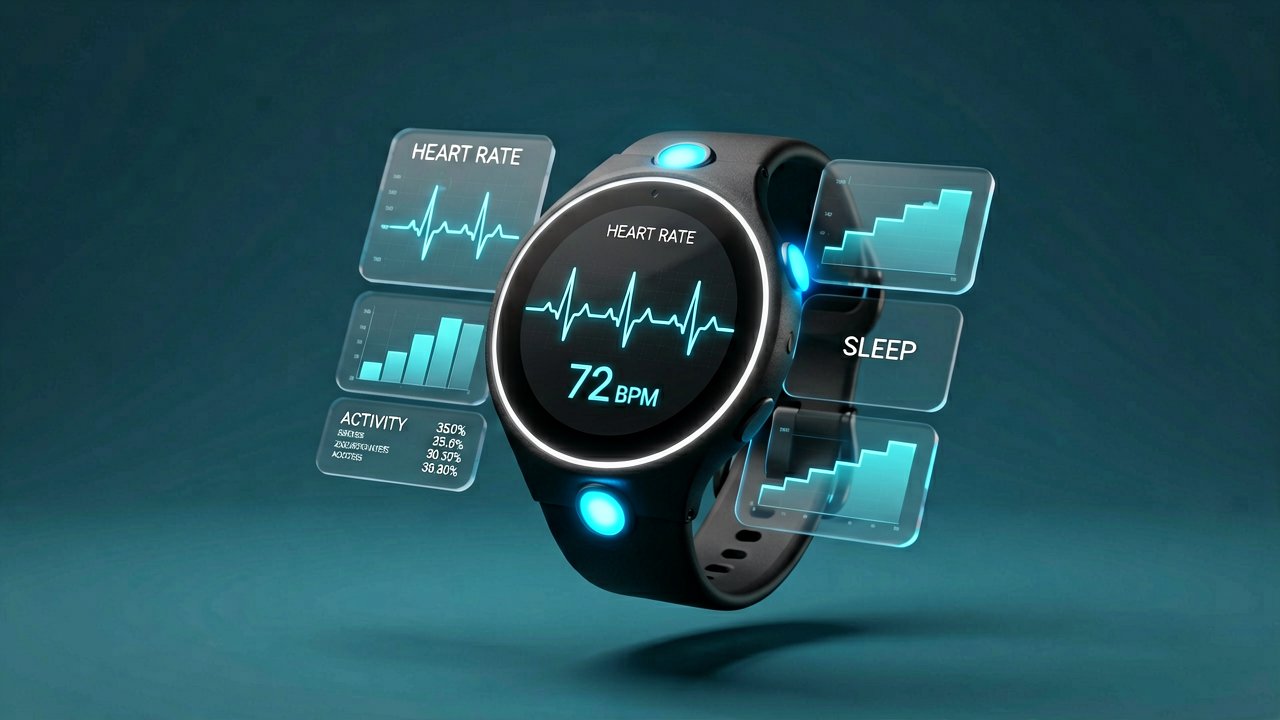
The tech industry rarely behaves itself when two major players decide to upend the status quo on the exact same weekend. In a double-whammy of hardware reveals that rolled out in late May 2026, Google and Realme dropped two devices that feel less like standard iterative updates and more like aggressive philosophical statements. Google launched the minimalist, entirely screen-free Fitbit Air wristband, making an overt play for the premium health-tracking crown. Meanwhile, Realme went the absolute opposite direction in terms of scale, dropping the Realme 16T smartphone—a budget-friendly beast defined by a massive, borderline-absurd 8,000 mAh battery.
What makes this dual release fascinating is how both companies are tackling modern user fatigue. Google wants you to look at your wrist less, while Realme wants to make sure you never have to scramble for a wall charger again. By moving away from typical mid-tier hardware templates, these releases signal a sharp market shift where hyper-specialization is winning out over the traditional jack-of-all-trades strategy.
Google’s Fitbit Air Lowers the Digital Noise
Instead of slapping another distracting AMOLED panel onto your wrist, Google took a page from the minimalist playbook to target deep, unobtrusive wellness tracking. The tracker strips away the screen entirely, operating as a tiny, lightweight plastic pod that snaps seamlessly into a variety of fabric and sport bands. By offloading the entire visual interface to the newly updated Google Health smartphone app, the hardware focuses entirely on background telemetry like 24/7 heart rate monitoring, AFib detection, and highly detailed sleep architecture tracking.
According to initial data from PCMag, this $99 wearable directly challenges premium subscription-heavy platforms by pairing its hardware with an optional Gemini-powered AI coach. It offers a week of battery life, fast charging that yields a full day of use in five minutes, and a subtle LED notification system that blinks red only when power dips below 20 percent. It is a calculated bet that users are willing to trade real-time wrist notifications for a lighter, distraction-free fitness journey.
Realme 16T Proves Size Matters in the Battery Wars
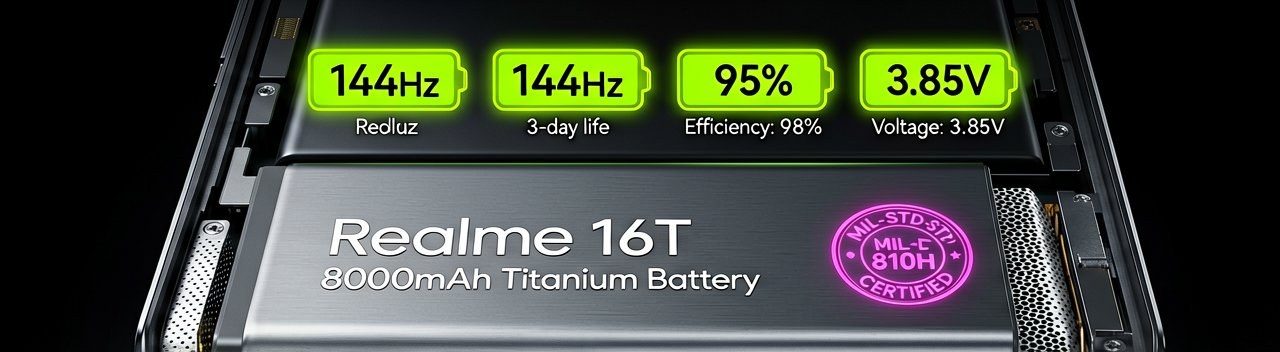
If Google is preaching digital minimalism, Realme is delivering sheer utility with a smartphone built to outlast a multi-day blackout. The brand officially launched the Realme 16T, a device built around an enormous 8,000 mAh "Titan" battery pack that somehow manages to keep the phone’s profile down to a remarkably manageable 8.88 mm thickness. It targets heavy media consumers and mobile gamers who prioritize uninterrupted uptime over flagship-tier pricing.
As detailed by GSMArena, the device compromises intelligently to keep costs down, featuring a MediaTek Dimensity 6300 chipset and a 6.8-inch HD+ LCD panel that nevertheless boasts a fluid 144Hz refresh rate. To offset the inherent weight of the massive battery, Realme reinforced the chassis with MIL-STD-810H military-grade drop protection and an IP69 water-resistance rating. Priced competitively for the South Asian market starting at INR 29,999, the phone treats battery anxiety not as an occasional nuisance, but as a solved problem.
The New Tech Battleground
These two products highlight an emerging truth in the consumer tech space: users are getting tired of identical, incremental upgrades. By stripping the display from the Fitbit Air, Google created a hyper-focused health companion that avoids competing with its own flagship Pixel Watch. On the flip side, Realme looked at the mid-range smartphone landscape and realized that a three-day battery life is a much stronger selling point than a slightly faster processor. As these devices hit global retail shelves, they lay down a challenging marker for competitors who are still playing it safe with standard designs.
Beneath the Surface of the Spec Sheets
What Most Reports Miss: The simultaneous arrival of the Fitbit Air and the Realme 16T is not just a coincidence of the spring product cycle; it represents a coordinated retreat from the standard smartphone-centric ecosystem that has dominated the last decade. For years, hardware manufacturers operated under the assumption that every new accessory needed to mimic a phone, and every budget phone needed to mimic a flagship. By breaking those unwritten rules, both Google and Realme are acknowledging that the modern consumer is no longer swayed by Swiss Army Knife design philosophies. Instead, they are courting users who want single-purpose tools that excel at one specific, painful friction point.
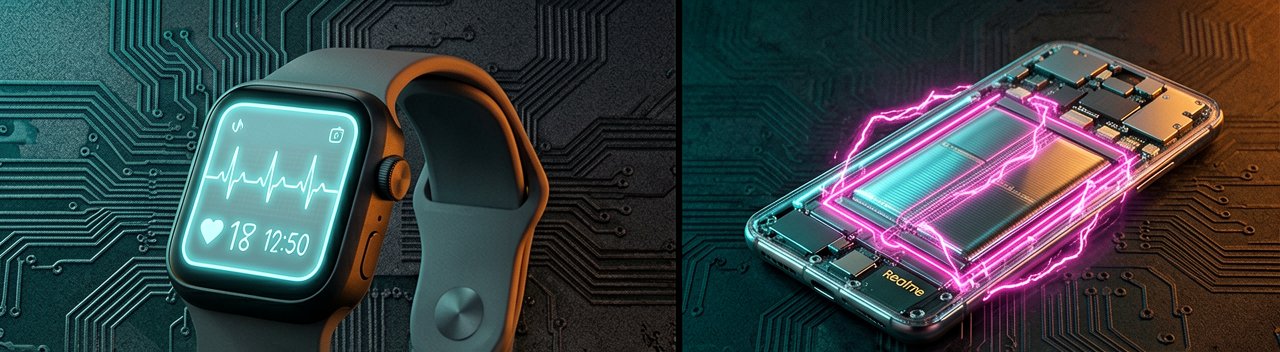
Google’s decision to rip the screen off the Fitbit Air solves a glaring identity crisis that has plagued the brand since Alphabet acquired it. Inside the Mountain View headquarters, product teams had to find a way to keep Fitbit relevant without cannibalizing sales of the premium Pixel Watch lineup. By shifting the display to the phone and focusing purely on sensor accuracy, Google effectively pivoted Fitbit from a smartwatch competitor into a medical-grade telemetry pod. Industry insiders note this move aligns perfectly with Google's broader strategy to feed its Gemini health models high-fidelity, continuous biometric data that is uncorrupted by the erratic charging cycles of power-hungry smartwatches.
Meanwhile, the engineering gymnastics required to jam an 8,000 mAh cell into the Realme 16T without turning the handset into an unholdable brick reveals a major shift in supply chain priorities. Realme leveraged a new silicon-carbon anode battery chemistry, a technology previously reserved for ultra-premium tier devices, to achieve a higher energy density within a tighter physical footprint. This allowed their design team to maintain an ergonomic 8.88 mm profile while essentially doubling the battery capacity of standard competitors. It is a calculated gamble that targeting gig-economy workers, mobile gamers, and regional markets with unreliable power grids will yield higher volume sales than chasing the tech enthusiast crowd.
This dual evolution points toward a fragmented future where hardware becomes increasingly specialized based on lifestyle demands rather than income brackets. Supply chain data indicates that the manufacturing cost savings achieved by removing displays or using mid-range chipsets are finally being reinvested into structural durability and battery longevity rather than marketing fluff. As other tech giants watch these market experiments play out, the pressure to abandon incremental updates in favor of high-utility, hyper-focused hardware is only going to intensify.
The Price of Specialization
Reading Between the Lines: While tech enthusiasts routinely celebrate "disruptive" hardware form factors, a cynical glance at the ledger suggests these design choices are as much about margin preservation as they are about user-centric innovation. Google’s sleek, screenless Fitbit Air is marketed as a Zen-like escape from the tyranny of digital notifications, but it conveniently removes the most expensive component of a wearable—the display. By charging $99 for what is essentially a plastic housing for basic biometric sensors, Google successfully shifts the computational and visual burden back onto the user's phone, all while locking them into a subscription-primed Gemini AI ecosystem. It is a brilliant monetization pivot masquerading as a wellness philosophy.
A similar contradiction anchors the Realme 16T. The promise of an 8,000 mAh battery is undeniably alluring to anyone who has watched their phone die before dinner, but pairing that massive reservoir with a low-tier MediaTek Dimensity 6300 processor creates a strange hardware bottleneck. Realme has built a fuel tank capable of driving across a continent, but hooked it up to a moped engine. The heavy weight of the battery necessitates a reinforced, rugged chassis, meaning buyers are trading everyday ergonomic comfort for a multi-day battery life they may only occasionally need. It forces a compromise between performance and endurance that many mainstream consumers might find grating after the initial novelty wears off.
Projecting forward, this trend toward hyper-specialized, asymmetrical hardware threatens to fracture the consumer electronics market into hyper-niche silos. If the middle-tier device dies, consumers will be forced to choose between ultra-minimalist accessories that do almost nothing without a companion phone, or bulky, single-feature monsters designed for extreme utility. While this variety looks good on store shelves, it risks alienating the everyday buyer who simply wants a well-rounded device that does everything reasonably well. Hardware manufacturers are betting that fragmentation will drive repeat purchases, but they may instead find that buyers dig their heels in and hold onto their older, balanced devices even longer.
It seems the tech elite have finally decided our future: we can either buy a $100 pebble that politely refuses to tell us the time, or a brick-heavy smartphone that will easily survive a three-day camping trip but might take just as long to render a complex mobile game.
Artūras Malašauskas is an AI Systems Integrator with 20+ years of production-grade web engineering experience. He has designed, shipped, and scaled enterprise Python/PHP systems for logistics, SaaS, and public-sector clients. For the past year, he has focused exclusively on AI integrations: deploying open-source LLMs, building generative media pipelines (image, audio, video), and engineering multi-agent workflows for real production environments. His standard: reproducibility, security, cost-efficient inference—no vaporware. He documents and evaluates emerging AI tooling, separating verified capabilities from marketing noise. Technical editor at: muza-ai.eu, ai-verslas.lt, ai-naujinos.lt Connect on LinkedIn
Comments