Apple Validates India as Key Smartphone Battleground With Early iPhone 18 Pro Launch Confirmation
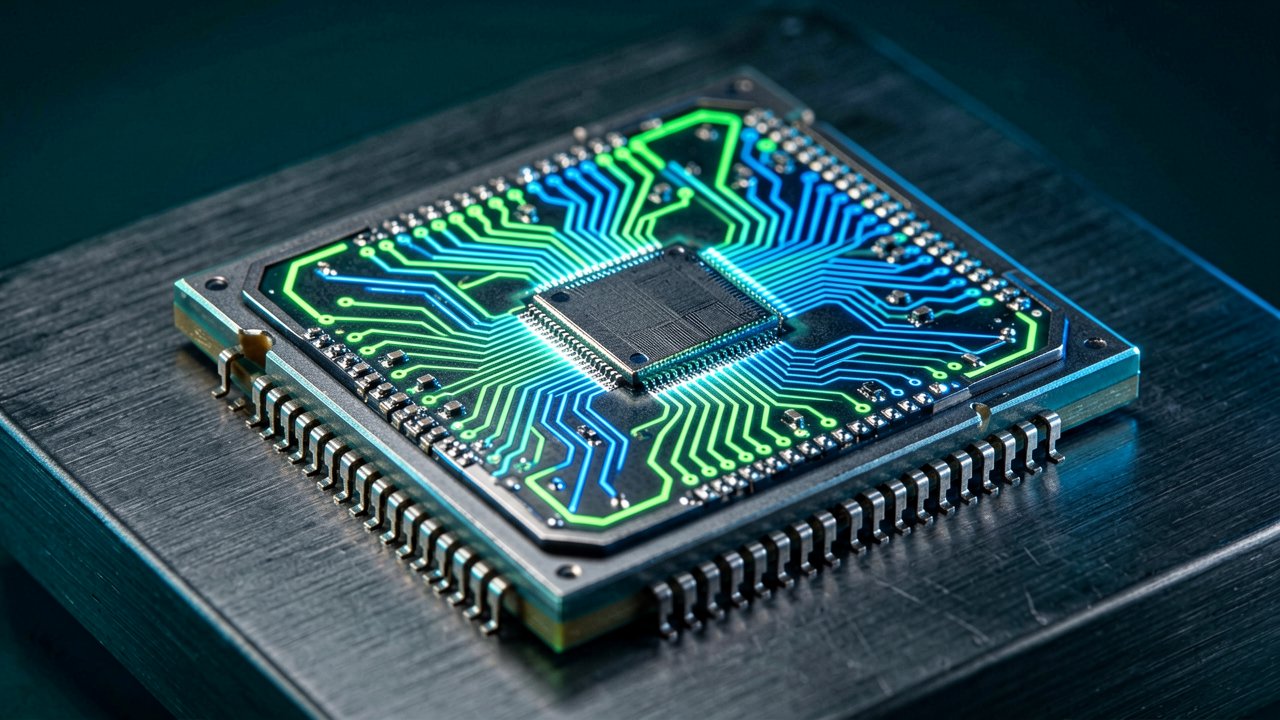
Apple has officially confirmed that the highly anticipated iPhone 18 Pro lineup will launch in India, solidifying the South Asian subcontinent as a critical pillar in its global smartphone strategy. According to reports tracked by India Today , the Cupertino tech giant plans to roll out its next-generation premium flagships during its traditional September 2026 announcement window. This targeted release underscores a dramatic shift in how the premium smartphone segment operates in the region, bringing cutting-edge hardware to Indian consumers simultaneously with Western markets.
The move represents far more than a standard retail expansion; it is an aggressive defensive play in an increasingly crowded arena. Local and international rivals have steadily eaten away at the margins of premium hardware, forcing Apple to re-evaluate how it positions its most expensive devices. By anchoring the high-end iPhone 18 Pro and Pro Max in the local ecosystem early, the company hopes to secure its premium market share before Android competitors can solidify their own luxury offerings.
Chasing Premium Market Dominance
The domestic premium smartphone landscape is undergoing a massive shift as local buyer demographics lean increasingly toward high-end luxury devices. Historically, tech manufacturers viewed India as a volume-driven market where budget-friendly tiers ruled, but disposable income growth has completely rewritten that playbook. Apple intends to leverage this trend, with initial pricing projections published by The Economic Times suggesting that the upcoming Pro models will sustain a premium starting baseline of approximately Rs 1,34,900.
The introduction of the upcoming Pro models also marks a distinct bifurcation in Apple's historical release schedule. While the elite Pro and Pro Max models are locked in for the autumn of 2026, industry rumors indicate that the vanilla, budget-friendly baseline models may be held back until early 2027. This deliberate choice allows the brand to capture maximum consumer attention and high-margin revenue from early adopters who are willing to spend top dollar for top-tier silicon.

Manufacturing Realities and Supply Chain Ties
Behind the retail availability lies a complex manufacturing reality that makes an early regional launch possible. Apple has been aggressively diversifying its global manufacturing base to insulate its operations from geopolitical friction and steep import duties. According to supply chain analysts cited by Moneycontrol, India is on track to assemble nearly 28% of all global iPhone shipments by the end of 2026, an exponential climb from previous years.
This localized assembly ecosystem, fueled by mega-facilities run by manufacturing partners like Foxconn and the domestic conglomerate Tata Electronics, changes the math entirely. Local assembly drastically reduces the logistical friction of shipping premium glass and aluminum across borders, allowing Apple to meet localized demand without the typical customs delays. Building the ecosystem on the ground ensures that when the device debuts, the company can back up its marketing promises with actual physical inventory on retail shelves.
The Hardware Leap Against Local Rivals
To justify its high-end price tag against aggressive competitors, the iPhone 18 Pro series is betting heavily on bleeding-edge component upgrades. Leaks suggest the devices will feature an advanced A20 Pro chipset built on a pioneering 2nanometer process, delivering massive gains in energy efficiency and raw performance. Furthermore, early design leaks aggregated by CNET hint at a redesigned, narrower display profile, a significantly scaled-down Dynamic Island, and sophisticated variable-aperture primary camera lenses to lure in mobile photography enthusiasts.
This concentrated influx of advanced technology will serve as the company's ultimate competitive moat. Rival brands are already deploying high-refresh displays and specialized imaging sensors at highly competitive prices, making pure brand loyalty a precarious strategy. By delivering an uncompromised spec sheet at launch, Apple is drawing a clear line in the sand, betting that local consumers will continue to view the Pro badge as the definitive status symbol in mobile tech.

The Geopolitical Gambit Behind the Silicon
Beyond the Retail Glitz: Apple’s aggressive positioning of the iPhone 18 Pro in the Indian market represents a high-stakes chess move in a broader geopolitical realignment. For years, the Cupertino giant relied almost exclusively on a centralized manufacturing apparatus, a strategy that yielded historic margins but left the company dangerously exposed to shifting international trade dynamics. By embedding its top-tier, high-margin Pro lineup into the fabric of domestic retail and assembly simultaneously, the company is signaling that the region is no longer just an alternative production hub, but a primary engine of its economic future.
This transition has forced a massive cultural and operational shift within Cupertino’s notoriously secretive supply chain management teams. Moving the production and launch synchronization of a 2-nanometer architecture device requires an unprecedented transfer of technical expertise to local facilities. Industry insiders note that engineering teams from across the globe have spent the past eighteen months auditing domestic infrastructure to ensure that local assembly lines can match the rigorous quality tolerances required for the complex variable-aperture camera modules and advanced titanium chassis.
The stakes are equally high for domestic policymakers, who have wagered significant political capital on transforming the nation into a global tech manufacturing powerhouse. Bureaucrats in New Delhi view Apple's deepened commitment as the ultimate validation of their production-linked incentive schemes, which were designed specifically to lure electronics giants away from traditional manufacturing strongholds. The presence of the iPhone 18 Pro on local assembly lines serves as a powerful marketing beacon, effectively demonstrating to other Silicon Valley firms that high-tech, premium manufacturing is viable within the subcontinent.
Navigating the Premium Consumer Psyche
As the hardware landscape matures, the battle for consumer wallets has shifted from basic functionality to pure status and ecosystem lock-in. Historically, the local market was dominated by value-seeking consumers who favored mid-tier alternatives, but a rapidly expanding upper-middle class has created an insatiable appetite for true luxury commodities. This demographic shift explains why Apple is comfortable prioritizing the premium Pro and Pro Max models in autumn, calculating that the sheer aspirational pull of the device will outweigh any macroeconomic headwinds or pricing friction.
However, this strategy faces a sophisticated challenge from established Android competitors who have spent nearly a decade tailoring their software and ecosystem ecosystems to local nuances. Brands like Samsung and a cohort of premium Chinese manufacturers are not conceding the luxury territory easily; they have countered with aggressive trade-in programs, localized artificial intelligence features, and foldable form factors that appeal to tech-forward buyers. Apple’s counter-strategy relies entirely on the premise that the unified integration of its A20 Pro silicon and its increasingly localized services ecosystem will create a user experience sticky enough to resist rival allure.
Ultimately, the rollout of the iPhone 18 Pro will serve as a definitive case study in how global tech brands must adapt to survive in an era of decentralized globalization. The company can no longer afford to treat emerging economic powerhouses as secondary markets for older-generation hardware. Success in this new paradigm requires a synchronized execution of cutting-edge product design, localized supply chain resilience, and an acute understanding of a consumer base that demands the absolute best the tech world has to offer, exactly at the moment it becomes available globally.
The Friction Between Aspiration and Infrastructure
Reading Between the Lines: The triumphant narrative surrounding a synchronized launch masks a fundamental contradiction in Apple’s market arithmetic. On paper, projecting that nearly a third of all global iPhones will hail from local assembly lines by the end of the year sounds like a flawless victory for diversification. Yet, the economic reality of selling a Rs 1,34,900 luxury device in an economy with a starkly stratified per-capita income distribution suggests a profound mismatch. Apple is effectively treating a hyper-niche luxury segment as a mass-market catalyst, betting that the sheer velocity of aspirational consumer credit can bridge the massive gap between average earnings and five-figure tech investments.
Furthermore, the strategic decision to split the launch timeline—shelving the standard, entry-level iPhone 18 models until early 2027 while forcing the ultra-premium Pro models out of the gate first—reveals an unexpected vulnerability. It suggests that despite boasting massive manufacturing footprints, the supply chain cannot yet simultaneously sustain high-yield production of both complex, cutting-edge 2-nanometer silicon and high-volume consumer models. By starving the market of the more affordable baseline option, Cupertino is less engaging in a masterclass of brand positioning and more making a virtue out of necessity to protect its fragile early margins.
This logistical balancing act also exposes the company to intense, calculated counter-attacks from rival ecosystems. Android flagships have spent years optimizing localized, language-diverse artificial intelligence features that run natively on less temperamental silicon architectures, offering tangible utility that often eludes Apple’s tightly controlled ecosystem. If the highly anticipated A20 Pro chip experiences any thermal throttling or software optimization bottlenecks upon its autumn debut, the premium consumer base may quickly realize that paying a massive premium for localized assembly does not inherently guarantee a flawless user experience.
Looking ahead, the long-term sustainability of this regional pivot hinges on a factor Cupertino rarely discusses publicly: the volatility of local fiscal policy. The massive capital investments required to build out these high-tech assembly lines were heavily incentivized by state-backed tax holidays and protective import duties on fully built electronics. Should those protectionist policies shift, or should domestic infrastructure struggle to maintain the continuous, uninterrupted power grids required for precision semiconductor testing, the financial math underpinning Apple's entire decentralized manufacturing strategy could erode surprisingly fast.
Building a multi-billion-dollar supply chain fortress to escape global trade friction is a masterful corporate achievement, provided one conveniently ignores the fact that selling a phone that costs more than a year's average local salary requires a master's degree in consumer psychology and an endless supply of low-interest financing plans.
Artūras Malašauskas is an AI Systems Integrator with 20+ years of production-grade web engineering experience. He has designed, shipped, and scaled enterprise Python/PHP systems for logistics, SaaS, and public-sector clients. For the past year, he has focused exclusively on AI integrations: deploying open-source LLMs, building generative media pipelines (image, audio, video), and engineering multi-agent workflows for real production environments. His standard: reproducibility, security, cost-efficient inference—no vaporware. He documents and evaluates emerging AI tooling, separating verified capabilities from marketing noise. Technical editor at: muza-ai.eu, ai-verslas.lt, ai-naujinos.lt Connect on LinkedIn
Comments