When the Market Soars, Why is This AI Stock Crashing? Experts Weigh In
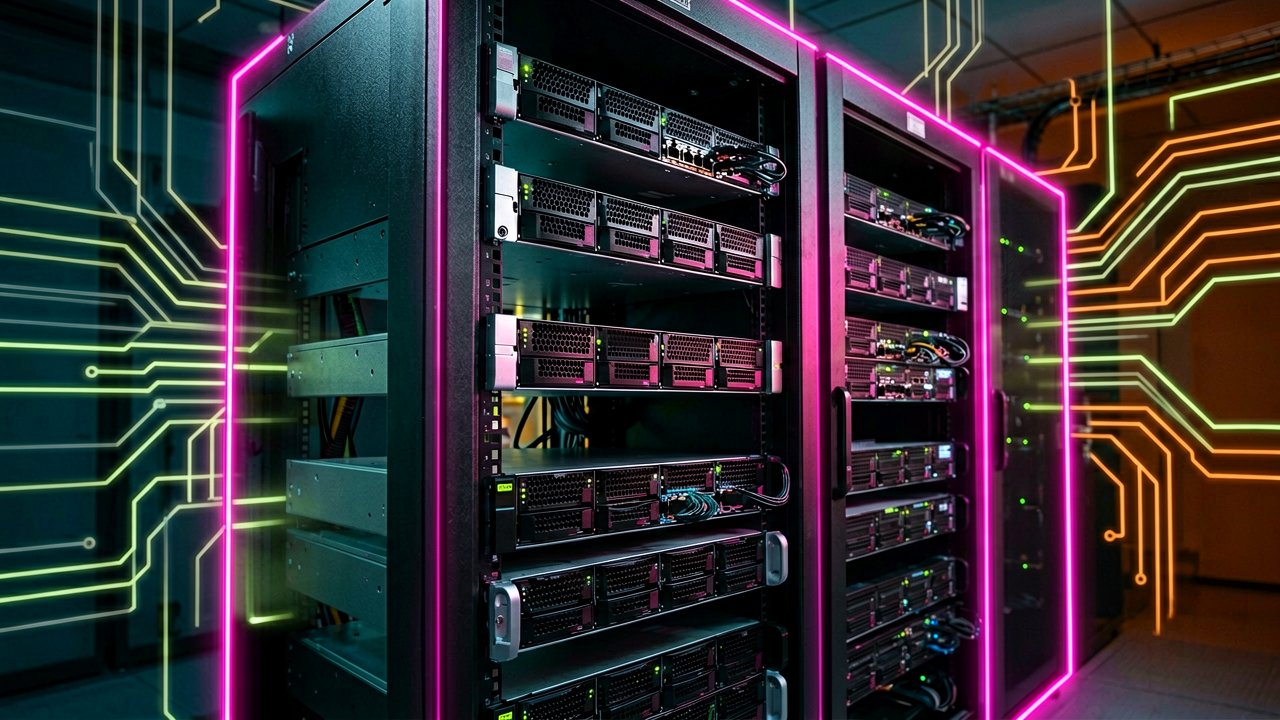
The broader markets are throwing a celebration, but nobody invited the AI infrastructure sector's former darlings. While the S&P 500 continuously flirts with fresh record highs this May, a jarring disconnect has emerged on Wall Street: prominent hardware providers and secondary chip stocks are suddenly losing their footing. Tech giants continue to pledge astronomical sums toward digital infrastructure, yet a growing chorus of analysts warns that the initial wave of unbridled hype is hitting a brick wall of reality. According to recent market analysis from MarketWatch , investment strategists are tracking a necessary normalization where investors begin to aggressively recalibrate their growth expectations for hyper-scalers.
The Reality of Supply Chains and Shrinking Margins
The core issue isn't a lack of interest in artificial intelligence, but rather the grueling logistics of delivering it. Companies like Intel have faced severe production constraints, leaving them temporarily unable to ramp up server chip manufacturing fast enough to satisfy enterprise demand, as reported by Reuters . When infrastructure players miss their lofty execution targets due to component bottlenecks, a hyper-sensitive market punishes them instantly. Experts point out that while first-movers captured the initial capital injection, the broader sector is now navigating a transition toward physical buildout realities like power grids, localized cooling solutions, and raw data center space.
A Shift Toward Valuation Sanity
Institutional investors are actively rotating capital away from high-multiple, speculative tech plays and moving toward proven industry pillars. Even dominant forces face intensifying competition from custom in-house chips developed by their own largest cloud customers, a trend highlighting shifts in market sentiment documented by The Japan Times . As margins inevitably contract across the hardware landscape, the market is separating the foundational winners from the businesses that merely rode the coattails of a sector-wide frenzy.
An Analytical Deep-Dive into the Silicon Standoff
Beyond the Headlines: The real friction in the market right now stems from a silent civil war playing out between legacy hardware manufacturers and their most lucrative customers. For the past two years, cloud giants bought every piece of AI silicon they could get their hands on, regardless of price or efficiency. That era of indiscriminate spending has officially ended, replaced by an aggressive corporate pivot toward capital efficiency. Hyperscalers are no longer willing to pay astronomical premiums for off-the-shelf components when they can design tailored chips optimized strictly for their own proprietary software ecosystems.

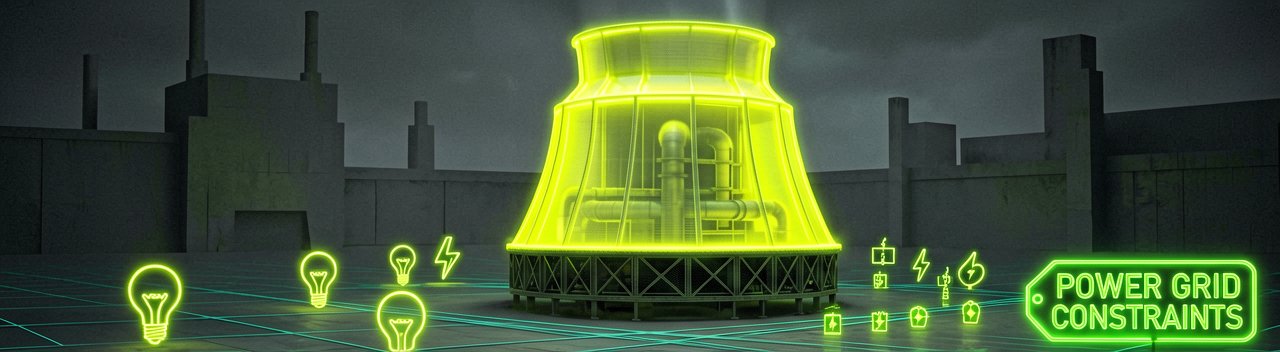
This structural shift has caught mid-tier infrastructure providers completely off guard. While institutional investors previously valued these hardware companies based on perpetual exponential growth, the reality of hardware lifecycles is catching up to the balance sheets. Data centers require immense power and cooling, resources that are facing severe grid constraints globally. Industry veterans note that a company cannot monetize AI chips if they lack the physical electricity required to turn them on, creating an artificial ceiling on short-term deployment capabilities.
Historical context suggests this cooling period is a healthy, albeit painful, rite of passage for any foundational technology. The current market correction closely mirrors the telecommunications buildout of the late 1990s, where massive overcapacity in fiber-optic cables initially crashed stock prices before laying the groundwork for the modern internet economy. The current pullback is less about a collapse in AI demand and more about an optimization phase, as enterprises realize that raw compute power without specific software application leads to diminished returns on investment.
Internal stakeholders within these struggling firms point to a deeper narrative involving engineering talent retention and rising research and development costs. As stock prices slide, stock-based compensation packages lose their luster, prompting top-tier AI engineers to defect to nimble software startups or well-funded hyperscale labs. This brain drain further complicates the recovery timeline for companies trying to innovate their way out of manufacturing bottlenecks, leaving them vulnerable to nimbler competitors who are unburdened by legacy foundry dependencies.
Skepticism and the Illusion of Perpetual Growth
Reading Between the Lines: The prevailing market narrative insists that every company mentioning machine learning will inevitably mint money, but the hard math of corporate balance sheets tells a vastly different story. Wall Street has spent quarters treating AI hardware vendors as software businesses, assigning them astronomical valuation multiples that ignore the brutal realities of physical manufacturing. When a software company scales, its marginal costs approach zero; when a hardware provider scales, it must still buy raw silicon, secure scarce fabrication facility time, and ship heavy boxes across fragile global supply chains. The current crash is not a rejection of the technology, but a painful awakening to the fact that depreciation schedules and capital expenditures still exist.
A glaring contradiction lies at the heart of the current tech rally: the very giants fueling the broader market indexes are quietly undermining the junior players they rely on. Major cloud providers are aggressively marketing their commitment to third-party hardware, while simultaneously filing patents for their own application-specific integrated circuits. This dual-track strategy allows tech behemoths to squeeze their suppliers on pricing, creating an environment where the hardware middle class gets crushed. Investors who assumed that a rising tide would lift all boats failed to realize that the largest ships are perfectly content to starve the smaller vessels of fuel.
Projecting forward, the implications of this valuation reset will likely trigger a wave of forced consolidation across the semiconductor and infrastructure landscape. Stripped of their inflated equity currency, struggling AI firms will find it increasingly difficult to fund the massive research budgets required to stay competitive. This creates a feedback loop where only the massively capitalized incumbents can afford to play the game, ultimately stifling the exact grassroots innovation that sparked the boom in the first place. The market is transitioning from an open gold rush into a tightly controlled corporate monopoly, leaving late-stage investors holding the bag on overvalued infrastructure.
Building the future of human intelligence turns out to be remarkably dependent on the same old boring things that have plagued capitalism for centuries: electricity bills, shipping delays, and the fact that you cannot pay your engineers in unvoted boardroom enthusiasm.
Artūras Malašauskas is an AI Systems Integrator with 20+ years of production-grade web engineering experience. He has designed, shipped, and scaled enterprise Python/PHP systems for logistics, SaaS, and public-sector clients. For the past year, he has focused exclusively on AI integrations: deploying open-source LLMs, building generative media pipelines (image, audio, video), and engineering multi-agent workflows for real production environments. His standard: reproducibility, security, cost-efficient inference—no vaporware. He documents and evaluates emerging AI tooling, separating verified capabilities from marketing noise. Technical editor at: muza-ai.eu, ai-verslas.lt, ai-naujinos.lt Connect on LinkedIn
Comments