The Vatican’s Silicon Valley Whisperers: Inside the Catholic Crusade for Soulful AI

Silicon Valley has spent the last few years sprinting headlong into the generative AI boom, operating under the well-worn tech mantra of breaking things first and sweeping up the debris later. But as algorithms begin to dictate everything from credit scores to criminal sentencing, a quiet counter-revolution is brewing, and its headquarters isn't a sleek glass tower in Cupertino. It is the Vatican. For the past several years, the Catholic Church has been staging a remarkably sophisticated intervention in the tech world, trading ancient dogma for algorithmic accountability. They are demanding that an industry obsessed with optimization start accounting for the human soul.
At the heart of this movement is "algorandhics"—a term coined to describe the urgent marriage of ethics and algorithms. This isn't just a abstract theological exercise or a superficial public relations campaign. Through the landmark Rome Call for AI Ethics, an initiative led by the Pontifical Academy for Life, the Church has successfully brought tech titans like Microsoft and IBM to the table to sign a pledge committing to transparency, inclusion, and accountability. It is a striking sight: tech executives, who usually answer only to shareholders, standing alongside robed prelates to declare that human dignity must remain the absolute center of software development, as detailed by coverage on Vatican News.
The Human Imperative in a Digital Age
The Church's critique of modern AI cuts straight through the marketing hype. While venture capitalists marvel at efficiency gains, faith-driven ethicists are asking who gets left behind when automated systems inherit human biases. When a machine learning model decides who qualifies for a mortgage or flags a resume for rejection, it lacks the capacity for mercy, context, and redemption—core tenets of Catholic social teaching. Pope Francis has consistently leveraged his global platform to warn against a "technocratic paradigm" where data value supersedes human value, urging developers to build systems that serve the marginalized rather than further enriching the digital elite.
This faith-driven framework fills a critical void that secular corporate guidelines often miss. While standard corporate ethics panels focus heavily on legal compliance and risk mitigation, the Catholic approach introduces a radical moral obligation: the common good. By forcing a dialogue on how automated tools impact the poorest and most vulnerable populations, these religious scholars are injecting a dose of profound humanism into a field that frequently reduces human experience to mere data points. The goal is to ensure that as machines grow smarter, humanity does not grow colder.

The true battlefield for the future of artificial intelligence is no longer found in the lines of raw code, but in the depths of human conscience. As tech developers aggressively push toward artificial general intelligence, the Vatican has quietly upgraded its moral toolkit. Moving beyond localized pledges, Rome has recently thrown its full theological weight into global tech policy. The recent release of the major papal encyclical Magnifica Humanitas positions the Church as a formidable regulatory force, fiercely challenging the unbridled commercial and military race currently driving the sector, as analyzed by Vatican News. This intervention deliberately mirrors Rerum Novarum, the historic 1891 treatise that defended workers' rights during the Industrial Revolution, framing AI as a parallel paradigm shift that threatens to birth a new era of digital slavery if left entirely unchecked.
This escalating crusade has dramatically widened its net, transforming a fringe academic discussion into a diverse, global coalition. The original alliance with early signers has rapidly expanded, pulling massive enterprise infrastructure giants into the fold. Global technology mainstays including Cisco, Qualcomm, and Salesforce have formally appended their names to the Rome Call framework, signaling that ethical design must be baked directly into hardware and cloud ecosystems alike. Far from a purely Christian effort, a historic gathering in Hiroshima successfully united leaders from eleven world religions to endorse the framework, turning "algorandhics" into a universal, multi-faith mandate representing a massive majority of the global population.
The Frontier Collaboration for Human Agency
What makes this theological intervention genuinely fascinating is how deeply it is penetrating the actual engineering trenches. Frontier labs, hyper-aware of the competitive and geopolitical pressures forcing their hands, are actively seeking out the Vatican as an independent moral referee. A striking example surfaced during a recent Vatican assembly where Christopher Olah, the co-founder of safety-focused lab Anthropic, engaged in direct dialogue with Church ethicists. The partnership underscores a vital realization within Silicon Valley: companies trapped inside commercial incentive structures need thoughtful, external critics completely unaligned with profit margins to help anchor their safety research.
Ultimately, the Church is playing a sophisticated game of long-term cultural chess, attempting to reshape the foundational philosophy of tech creators before their algorithms become entirely unmanageable. By fiercely opposing autonomous weaponry, corporate surveillance, and the deceptive anthropomorphization of software, this faith-driven perspective acts as an essential emergency brake on pure optimization. It serves as a persistent, sobering reminder to the architects of the digital age that access to vast quantities of data must never be confused with actual human wisdom, and that an anthropological regression occurs the moment we allow automation to strip away our fundamental capacity for genuine relationship and love.
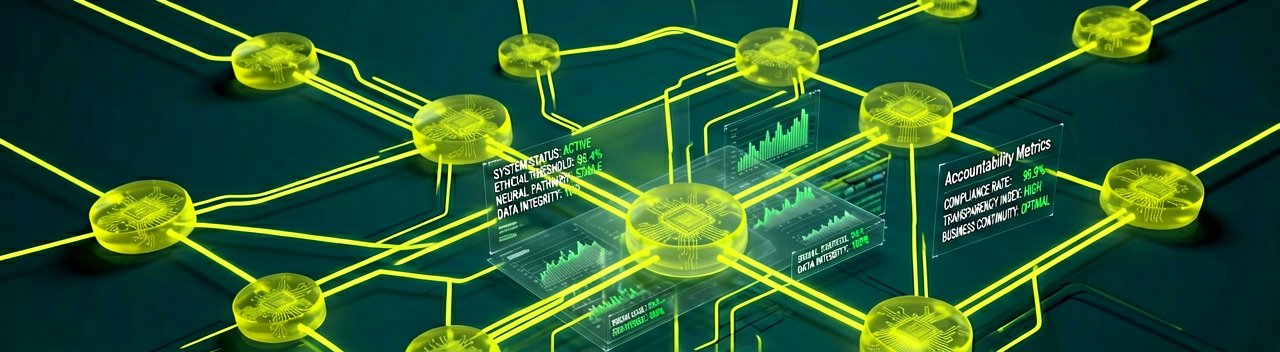
Silicon Valley’s grand tech utopia has officially run out of runway, forcing an industry built on rapid disruption to reckon with the slow, deliberate pace of moral accountability. For decades, the tech sector operated under the illusion that progress was purely a function of processing power and parameter counts. Today, that illusion is shattering against the hard realities of algorithmic bias, automated displacement, and the existential anxiety of a society automated by default. The Vatican's surprisingly agile intervention has proved that the ultimate antidote to technological hubris is not more code, but a stubborn, unyielding insistence on human dignity.
This intersection of ancient faith and cutting-edge software completely redefines the landscape of global tech regulation. While governments in Washington and Brussels struggle to pass meaningful legislation that outlasts the next product cycle, the Rome Call framework offers a timeless set of guardrails that adapt to changing architectures. It shifts the burden of proof back onto the creators of artificial intelligence, demanding they demonstrate how their systems elevate humanity before deploying them into the wild. By establishing a universal baseline for digital ethics, this unlikely coalition has successfully transformed corporate responsibility from a toothless marketing phrase into an active, engineering requirement.
The Soul of the Machine
As the industry marches steadily toward more autonomous and pervasive systems, the lessons of this theological dialogue become matters of societal survival. The true danger of the current AI boom was never a sci-fi rogue intelligence taking over the grid, but rather human beings voluntarily surrendering their agency to predictive models. By demanding that mercy, context, and the common good be integrated into algorithmic design, faith-driven ethics provide a vital buffer against a cold, hyper-rationalized future. The ongoing collaboration proves that tech titans and religious leaders can find common ground when the stakes are nothing less than the preservation of human consciousness.
The legacy of this crusade will not be measured by the number of signed pledges or high-profile papal audiences, but by the quiet choices made by developers in the trenches of software design. When an engineer decides to pull back a flawed model, or a corporation prioritizes user well-being over raw engagement metrics, the influence of this moral awakening becomes real. It is a reminder that technology is never neutral; it reflects the values of its creators, and those creators desperately need a compass that points toward something grander than next quarter's earnings report.
"We spent the first quarter-century of the internet era teaching machines how to mimic human intelligence, only to realize we had forgotten to teach them how to value human life; the ultimate irony of the digital age is that Silicon Valley had to look to the world's oldest institution to remember how to build a future worth living in."
Artūras Malašauskas is an AI Systems Integrator with 20+ years of production-grade web engineering experience. He has designed, shipped, and scaled enterprise Python/PHP systems for logistics, SaaS, and public-sector clients. For the past year, he has focused exclusively on AI integrations: deploying open-source LLMs, building generative media pipelines (image, audio, video), and engineering multi-agent workflows for real production environments. His standard: reproducibility, security, cost-efficient inference—no vaporware. He documents and evaluates emerging AI tooling, separating verified capabilities from marketing noise. Technical editor at: muza-ai.eu, ai-verslas.lt, ai-naujinos.lt Connect on LinkedIn
Comments