The AI Paradox: Why America’s Tech Edge Hinges on More Than Just Innovation
Silicon Valley has always operated on a comforting, near-religious myth: build a better algorithm, and the world will beat a path to your digital door. Right now, American tech giants are winning the sprint to build the largest, smartest neural networks on Earth, trading blows with billion-dollar computing clusters. Yet, a quiet anxiety is creeping into the upper echelons of tech leadership, because inventing the future is no longer the hardest part of the equation. The real battleground is no longer just inside the research labs; it has shifted to the messy, slow-moving realities of physical infrastructure and global supply chains.
The paradox staring America in the face is that you can possess the most brilliant code on the planet, but it is utterly useless if you cannot plug it into a wall. AI models are famously ravenous beasts, demanding staggering amounts of electricity and specialized hardware that the current American grid and domestic manufacturing pipelines simply cannot support. While venture capitalists pour billions into software startups, the actual foundation of the AI boom relies on a fragile, hyper-centralized network of overseas chip foundries and aging local power grids. Innovation is a spectacular engine, but it is running out of fuel and road.
The Electricity Bottleneck
Data centers are rapidly evolving from mere server warehouses into industrial-scale power drains that threaten to overwhelm regional energy grids. Tech companies are suddenly realizing that securing enough gigawatts of electricity is a far more pressing bottleneck than hiring the next wave of computer science PhDs. This desperate scramble for juice has led to unprecedented moves, including tech giants striking deals to revive mothballed nuclear reactors just to keep their data centers humming. Without a massive, systemic overhaul of how energy is generated and transmitted domestically, the most advanced AI models will remain grounded by a crumbling 20th-century grid.
The Hardware Chokehold
Beyond the power lines lies an equally daunting vulnerability in the physical production of the silicon itself. The design of cutting-edge AI chips may happen in California, but the specialized machinery and extreme ultraviolet lithography required to print them remain heavily dependent on foreign supply chains, as highlighted by deep policy analyses from the Brookings Institution. This geographical disconnect means that geopolitical friction or a single localized natural disaster could instantly freeze America's technological momentum. True tech supremacy requires domestic resilience, which means building factories, securing rare earth elements, and training an industrial workforce—tasks that take decades, not the length of a software development cycle.

The Deployment Gap
Finally, America’s tech edge is blunted by a stark divide between the creators of AI and the traditional industries meant to adopt it. While tech hubs live in the year 2030, critical sectors like healthcare, education, and public administration are still bogged down by legacy software and bureaucratic red tape. True economic dominance happens when technology diffuses deeply into the fabric of everyday commerce, boosting productivity across the board, rather than remaining trapped in a handful of wealthy corporate laboratories. Innovation is merely the starting gun; the real victory belongs to the nation that can actually figure out how to integrate these tools into the boring, day-to-day machinery of the real world.
The unvarnished truth of the digital gold rush is that brilliant software cannot compensate for empty physical foundations. In the race to dominate artificial intelligence, the United States has operated on a dangerously lopsided playbook, supercharging its algorithmic brains while neglecting the industrial muscles required to sustain them. Silicon Valley continues to celebrate historic breakthroughs in generative models, yet these digital triumphs are increasingly crashing against a hard wall of physical scarcity. If the nation fails to bridge the chasm between software innovation and physical infrastructure, its hard-won technological lead will simply evaporate.
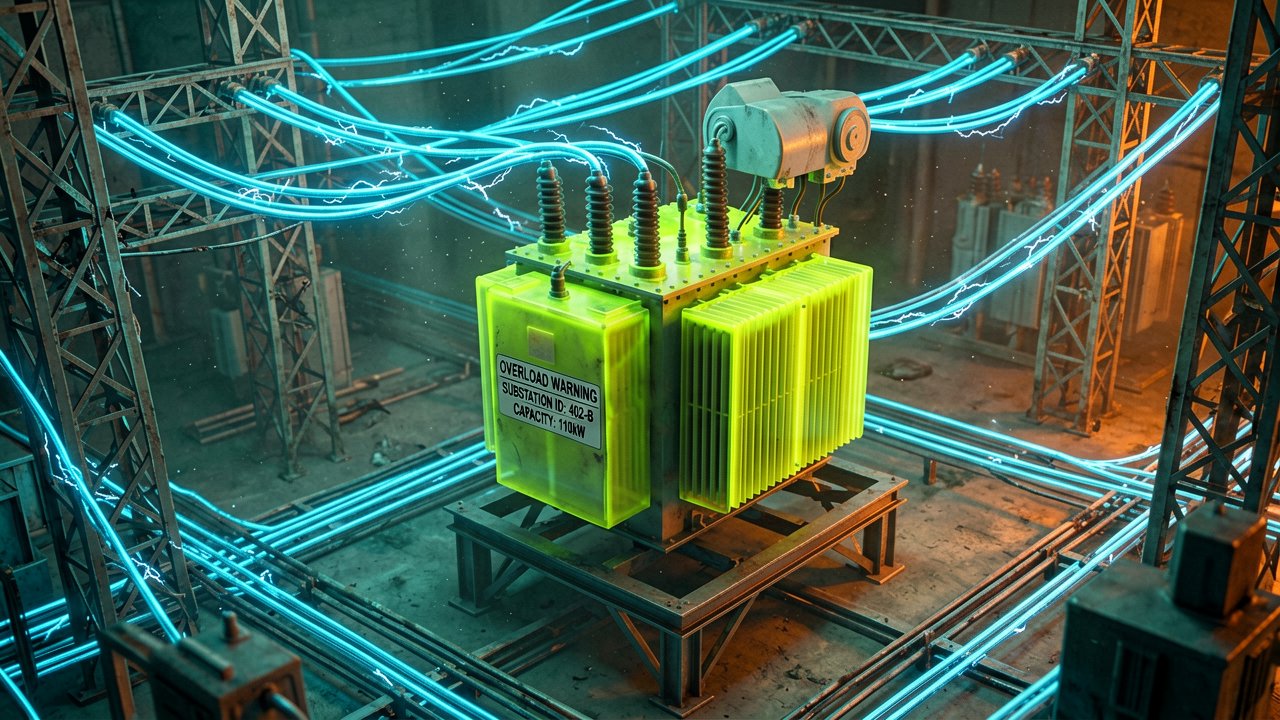
This reality is hitting home across regional energy grids, where the sheer power density of modern computing architecture is triggering an unprecedented infrastructure crisis. Traditional server setups used to operate comfortably within predictable, air-cooled limits, but new AI-optimized hardware racks now demand an order of magnitude more electricity. Data from an EnkiAI Intelligence Report indicates that rack-level requirements have surged from historical norms of 5–15 kilowatts to upwards of 110 kilowatts. This explosive jump has turned grid availability, rather than corporate capital or intellectual property, into the definitive bottleneck for deploying next-generation technology.
The Real-World Gridlock
The consequences of this energy squeeze are no longer theoretical; they are actively reshaping corporate strategies and stalling vital industrial expansions. Major tech companies are discovering that while an advanced data center can be erected in under two years, securing a stable utility connection to power it can drag out for five to seven years. Energy sector tracking by Bessemer Venture Partners reveals that more than a quarter of the hyperscale data center projects slated to come online recently were derailed by severe power, permitting, and construction constraints. This friction has forced tech giants to pivot toward a "bring your own power" model, experimenting with dedicated on-site generation and private energy contracts to bypass failing public networks.
The Human Capital Shortage
Even if the power lines are secured, America’s technological ambitions face an equally devastating headwind inside the factories meant to produce the core physical hardware. The ambitious push to onshore advanced semiconductor fabrication has unlocked hundreds of billions in private and public investments, but money alone cannot build a highly technical workforce overnight. Comprehensive labor studies published by the Semiconductor Industry Association project an intense workforce deficit of approximately 67,000 skilled technicians, computer scientists, and engineers across the domestic ecosystem by 2030. The sophisticated machinery required for extreme ultraviolet lithography and advanced 3D chip packaging demands years of hyper-specialized training that traditional educational pipelines simply are not producing fast enough.
Ultimately, a nation's true technological edge is measured by its holistic resilience, not just the sophistication of its research papers. If the United States continues to treat physical manufacturing, heavy infrastructure, and technical vocational training as secondary priorities, it will remain fundamentally dependent on foreign supply chains to execute its domestic genius. True leadership in the era of artificial intelligence demands a deliberate return to industrial fundamentals. The future will not be won by the culture that writes the best code, but by the society that builds the strongest foundation to run it.
The ultimate irony of the algorithmic age is that the digital future will be won by the nation that masters the physical past. For all the lofty rhetoric surrounding sovereign intelligence and autonomous software, the geopolitical scoreboard does not count abstract breakthroughs; it counts operational capacity. The United States has spent the better part of a decade operating under the illusion that outsourcing the heavy, dirty work of manufacturing and power generation was a harmless byproduct of a post-industrial economy. Now, as the computational demands of artificial intelligence push global supply chains and domestic infrastructure to their absolute limits, that illusion has completely shattered.
Sustaining a technological edge in this unforgiving landscape requires a massive, structural departure from standard venture-capital orthodoxy. It means recognizing that the multi-billion-dollar large language models grabbing front-page headlines are only as potent as the transformers, substations, and transmission lines that keep them alive. The romanticized image of the lone, brilliant software engineer has been replaced by the gritty reality of industrial-scale scaling, where progress is dictated by lead times on copper wire and the regulatory bureaucracy of interstate energy grids.
The Architecture of Dominance
True dominance will ultimately belong to whichever power successfully synchronizes its digital aspirations with its physical capabilities. While the American tech sector excels at generating explosive, paradigm-shifting ideas, its global competitors are systematically building the unglamorous, vertically integrated ecosystems designed to scale those ideas efficiently. If Washington and Silicon Valley fail to coordinate a massive reinvestment in basic infrastructure, domestic chip foundries, and raw energy production, the United States risks becoming a nation that merely designs brilliant blueprints for other empires to execute and monetize.
This is not a call to stifle the creative chaos that makes the American tech ecosystem so uniquely vibrant, but rather a warning to anchor that creativity in reality. The transition from software-defined tech to hardware-constrained AI means that the playground rules have changed permanently. The winner of the AI race will not simply be the entity with the most elegant neural architecture, but the one capable of building a stable, resilient civilization around those machines.
"We spent forty years believing that the world could be run entirely from a screen, only to discover that the most advanced minds we ever created are completely dependent on a steady supply of gravel, copper, and nuclear fission."
Artūras Malašauskas is an AI Systems Integrator with 20+ years of production-grade web engineering experience. He has designed, shipped, and scaled enterprise Python/PHP systems for logistics, SaaS, and public-sector clients. For the past year, he has focused exclusively on AI integrations: deploying open-source LLMs, building generative media pipelines (image, audio, video), and engineering multi-agent workflows for real production environments. His standard: reproducibility, security, cost-efficient inference—no vaporware. He documents and evaluates emerging AI tooling, separating verified capabilities from marketing noise. Technical editor at: muza-ai.eu, ai-verslas.lt, ai-naujinos.lt Connect on LinkedIn
Comments