Mizoram Steps into the Future, Launching the Northeast’s First New Age Tech Skills Centre for School Students
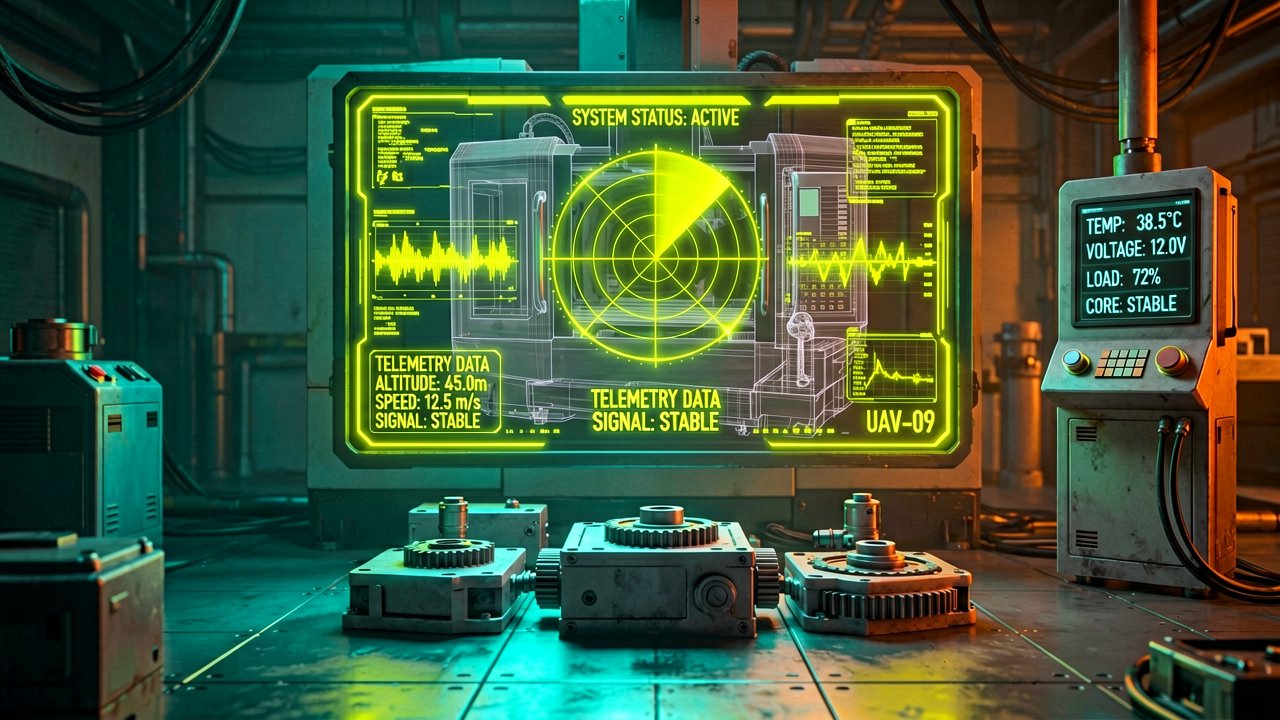
Mizoram is rewriting the playbook for public education in Northeast India by shifting focus from rote learning to cutting-edge technology. On May 29, 2026, Mizoram School Education Minister Dr. Vanlalthlana officially inaugurated the region’s very first school-level "New Age Tech Skills Centre." Housed at the Government Comprehensive Model School in Model Veng, Aizawl, this laboratory represents a departure from traditional textbook frameworks, targeting early technical fluency for young minds.
This initiative bridges the gap between conventional school education and the highly technical requirements of modern industrial workforces. Instead of waiting until higher university studies to experiment with advanced hardware, secondary school students will now have direct, weekly access to industrial simulators, manufacturing setups, and software suites. This development is built in close alignment with India's landmark National Education Policy (NEP) 2020, aiming to embed practical vocational training directly into mainstream curricula.
Industrial Collaboration Drives Local Innovation
The tech hub did not appear overnight; it stems from a Corporate Social Responsibility (CSR) workshop organized back in June 2025 by the Confederation of Indian Industry alongside Mizoram’s dedicated local CSR Cell. Automotive and defense manufacturing giant Bharat Forge Limited stepped forward to fund and establish the facility, while technical execution was handled by specialized partner SimuSoft Technologies. According to operational briefs reported by Northeast Today, the technical partner went a step further, deploying tailored artificial intelligence textbooks and curriculum materials during the grand launch event.
A Curriculum Built for Tomorrow's Workforce
The facility features distinct learning tracks managed through hands-on laboratory modules, which were proven via live student demonstrations during the opening ceremony. The primary learning domains engineered into the classroom environment include:
- Artificial Intelligence & Machine Learning: Practical logic building and automation applications.
- Robotics & Internet of Things (IoT): Hardware sensory engineering and connected network architectures.
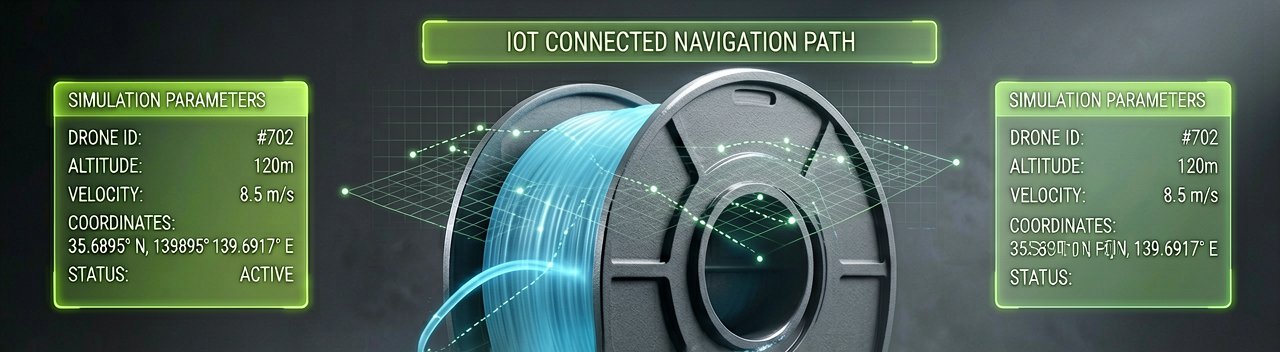
- Drones & Autonomous Systems: Real-time mechanical drone operation and navigation tracking.
- 3D Printing & CAD Design: Computer-aided modeling transitioning into rapid physical manufacturing.
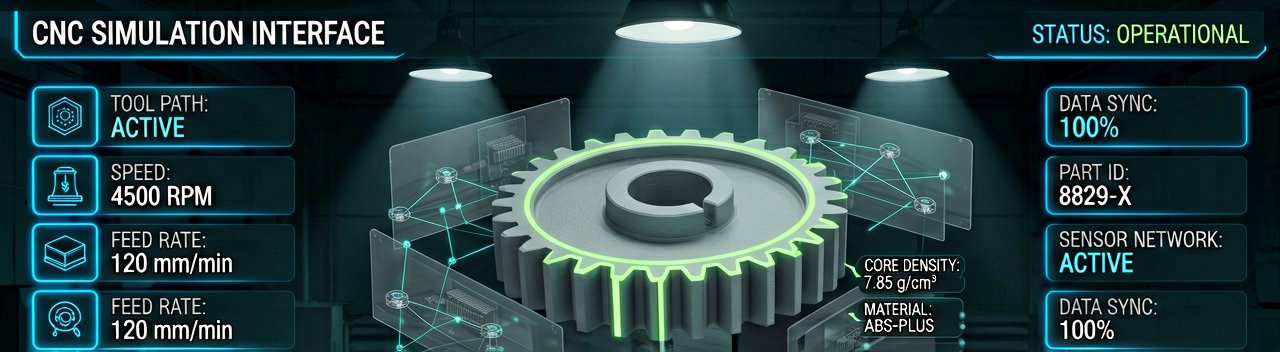
- CNC Simulation: Industrial-grade manufacturing replicas for heavy machinery control training.
By installing specialized manufacturing replicas within school walls, local education officials seek to level the playing field for young learners across Mizoram. As confirmed in a regional brief by India Today NE, the platform serves as an expandable infrastructure model designed to gradually elevate tech literacy across other districts in the territory. Transitioning public education from a passive listening model to an active building lab may set a vital precedent for how smaller states prepare the next generation for an AI-centric world.
Behind the Architectural Blueprint: Why Mizoram's Tech Gambit Matters Now
What Most Reports Miss: While standard press briefs treat this launch as a routine corporate social responsibility handout, the reality points to a calculated geopolitical and economic pivot. Northeast India has historically wrestled with the "tyranny of distance"—a geographical isolation that often starved local youth of prime industrial internships concentrated in southern manufacturing hubs like Bengaluru or Chennai. By compressing industrial-grade machinery into virtual simulators and benchtop formats, Aizawl is bypassing decades of heavy infrastructure deficits. The state is betting that software literacy and advanced digital design skills can travel over fiber-optic cables infinitely faster than physical goods can navigate treacherous mountain highways.
This technical infusion addresses a systemic friction point within India's broader educational landscape. For decades, the country’s engineering colleges complained about receiving students who possessed immaculate memorization skills but froze when confronted with a basic breadboard or Linux terminal. Mizoram Education Department insiders hint that introducing these technologies at the high school level is deliberately intended to break this mental rigidity early. By putting drone telemetry controllers and CAD software into the hands of teenagers, the curriculum transforms technology from an intimidating, abstract luxury into a mundane, everyday tool of creation.
The strategic involvement of Bharat Forge Limited adds a layer of hard-nosed pragmatism that sets this project apart from typical underfunded government lab initiatives. Defense and heavy automotive firms are facing acute shortages of technicians who understand the intersection of physical metallurgy and digital automation. For a conglomerate of this scale, funding a specialized laboratory in Mizoram is less about localized charity and more about cultivating an untapped, highly loyal talent pipeline. If a student in Aizawl can master complex CNC simulations before graduation, they instantly become an attractive prospect for modern defense manufacturing ecosystems nationwide.
On the ground, local educators are already dealing with the complex logistics of maintaining such a high-tech ecosystem in a region prone to seasonal monsoon disruptions and power fluctuations. The state's tech cell has quietly engineered the hub with redundant power backups and localized server setups to ensure that AI and machine learning simulations do not grind to a halt when the external grid fails. Furthermore, SimuSoft Technologies is utilizing a "train-the-trainer" framework, deeply embedding technical expertise into the local faculty so the facility does not become an expensive museum piece once the initial corporate engineers depart.
Ultimately, this initiative positions Mizoram as an unexpected pioneer in the race to democratize the fruits of the fourth industrial revolution. If the model at the Government Comprehensive Model School succeeds in elevating student performance and engagement, it provides a blueprint for resource-strapped school districts across other Himalayan states. By shifting the pedagogical paradigm from passive consumption to aggressive, hands-on fabrication, the region is actively seeking to rewrite its economic destiny, one line of code and one 3D-printed prototype at a time.
Reading Between the Lines: The Friction Between Tech Ambition and Hard Reality
Reading Between the Lines: The celebratory ribbon-cutting in Aizawl obscures a glaring contradiction that frequently plagues high-tech educational initiatives in developing regions. While exposing school students to artificial intelligence and autonomous drone telemetry sounds undeniably progressive, it risks creating a top-heavy system where advanced specialized skills are grafted onto fragile foundational literacy. Educational data across rural India consistently highlights ongoing struggles with basic mathematics and science proficiencies. Forcing teenagers to navigate neural network logic when local school systems are still battling foundational numeracy challenges represents a risky pedagogical gamble that could easily alienate average students.
Furthermore, the long-term sustainability of corporate-sponsored tech labs remains notoriously volatile once the initial public relations spotlight fades. Corporate Social Responsibility funding is notoriously fickle, often tied to quarterly budget reallocations or shifting corporate board priorities rather than the decades-long funding cycles required to sustain public school infrastructure. The complex hardware powering these labs—such as multi-axis CNC simulators and precision 3D printers—requires specialized maintenance, expensive proprietary consumables, and continuous software license renewals. Without a dedicated, permanent budget carve-out from the Mizoram state government, today's cutting-edge innovation hub risks transforming into tomorrow's room of dusty, obsolete electronics.
The human resource bottleneck presents an even steeper hill to climb than the physical hardware upkeep. It is one thing to have corporate engineers fly in from technology centers to conduct smooth, choreographed demonstrations for ministers and journalists; it is an entirely different challenge to expect underpaid local teachers to troubleshoot broken drone code or recalibrate misaligned 3D printer beds on a rainy Tuesday morning. Elite tech talent rarely seeks out teaching positions in remote government schools when private tech firms pay exponential premiums, meaning the burden of instruction will inevitably fall on existing school staff who are already overwhelmed by administrative duties and traditional curricula.
The broader economic implication also warrants measured skepticism regarding local job creation. If this tech hub genuinely succeeds in turning out highly proficient, tech-savvy high school graduates, Mizoram currently lacks the localized digital economy or venture capital ecosystem to absorb them. Without a parallel state-wide effort to attract tech startups, digital agencies, or light manufacturing plants to Aizawl, the state may simply end up subsidizing a highly efficient talent pipeline that immediately migrates to major technology corridors elsewhere in the country, worsening the regional brain drain under the guise of progress.
"We have officially entered an era where a student in a mountain town can code a simulated drone swarm before they are legally allowed to drive a scooter; now we just have to hope the local electrical grid stays online long enough for them to hit the save button."
Artūras Malašauskas is an AI Systems Integrator with 20+ years of production-grade web engineering experience. He has designed, shipped, and scaled enterprise Python/PHP systems for logistics, SaaS, and public-sector clients. For the past year, he has focused exclusively on AI integrations: deploying open-source LLMs, building generative media pipelines (image, audio, video), and engineering multi-agent workflows for real production environments. His standard: reproducibility, security, cost-efficient inference—no vaporware. He documents and evaluates emerging AI tooling, separating verified capabilities from marketing noise. Technical editor at: muza-ai.eu, ai-verslas.lt, ai-naujinos.lt Connect on LinkedIn
Comments