LumeFlow AI’s Structural Shakeup: How GPT Image 2 and Agent Overhauls Are Fixing Video Production’s Worst Bottlenecks
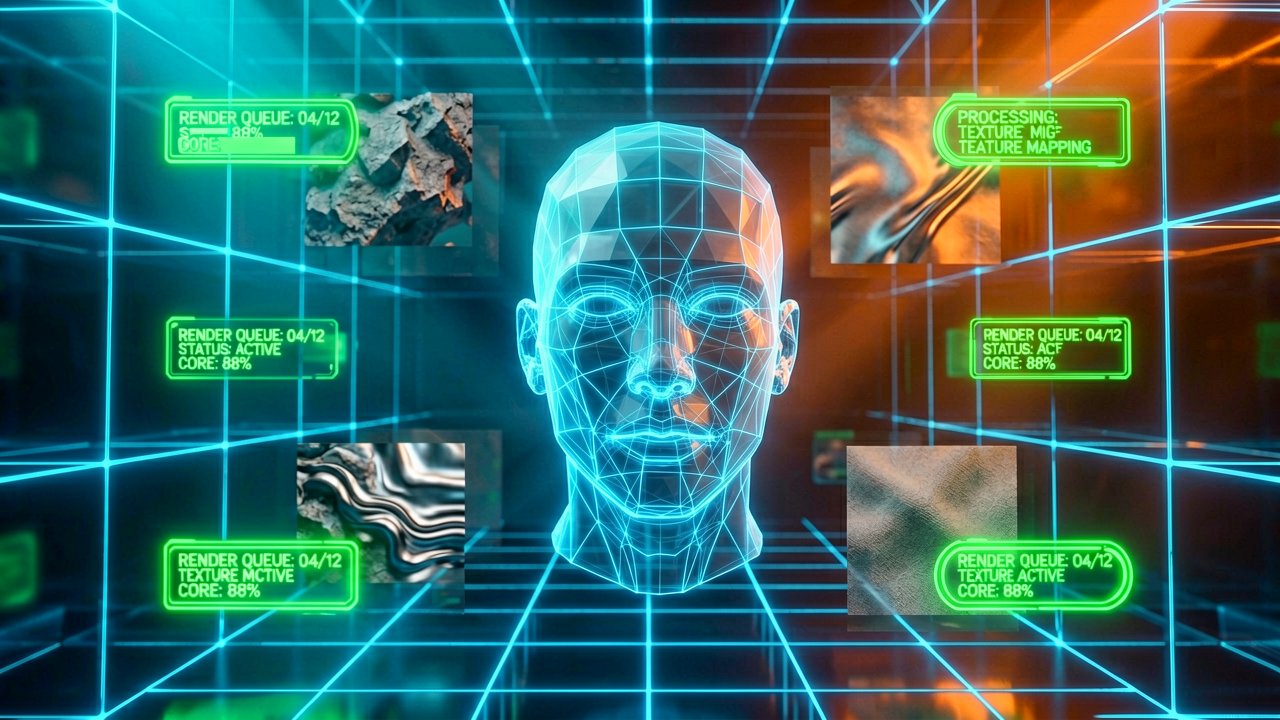
Anyone who has tried to piece together a cinematic narrative using generative AI knows the crushing disappointment of style drift. One frame your protagonist is wearing a leather jacket, and the next, they are sporting a completely different face and a windbreaker. It is a messy, fragmented workflow that has kept AI video generation trapped in the realm of experimental short clips rather than studio-grade storytelling. However, a major architectural shift announced by The Bakersfield Californian reveals that LumeFlow AI is systematically dismantling these traditional limitations by integrating GPT Image 2 and unleashing an autonomous AI Agent workflow overhaul.
By transforming from a basic, single-prompt asset generator into a fully integrated, enterprise-grade AI production house, the platform bridges the gap between text concepts and visual continuity. The magic happens under the hood where the newly embedded GPT Image 2 engine operates in lockstep with LumeFlow's Seedance 2.0 Omni Reference system. Instead of treating every single frame as an isolated computational guess, advanced context-retention algorithms maintain pixel-perfect alignment for character features, clothing textures, and environmental assets across an entire project lifecycle. Directors can now independently alter camera angles, change aspect ratios, or tweak lighting parameters without accidentally warping the underlying character models.
The Orchestration Engine under the Hood
Moving beyond simple image generation, LumeFlow’s newly deployed developer Skill API brings genuine multi-agent orchestration directly into the rendering pipeline. It acts as an automated technical director for large-scale content generation. When a complex script is ingested, autonomous agents like Claude Code work natively within the system to decompose text into synchronized prompt sequences, orchestrate parallel rendering queues, and automatically flag or fix stylistic anomalies on the fly. This level of system automation eliminates the grueling manual overhead that has historically plagued independent digital creators.
Quantifying the Pipeline Efficiency
The performance metrics accompanying this architectural overhaul demonstrate that these updates are not just minor, superficial tweaks. By decoupling the spatial layout from core character configurations, the platform provides granular cinematic control that shrinks traditional pre-production timelines by a staggering 70 percent. This massive optimization curve was put to the test during the recently concluded Seedance 2.0 Creators Challenge, proving the infrastructure's ability to handle high-volume rendering without collapsing under the weight of character drift. As the studio prepares to launch its global AI Film Challenge, the pipeline stands as a mature blueprint for how automated, agent-driven ecosystems will scale future multimedia production.
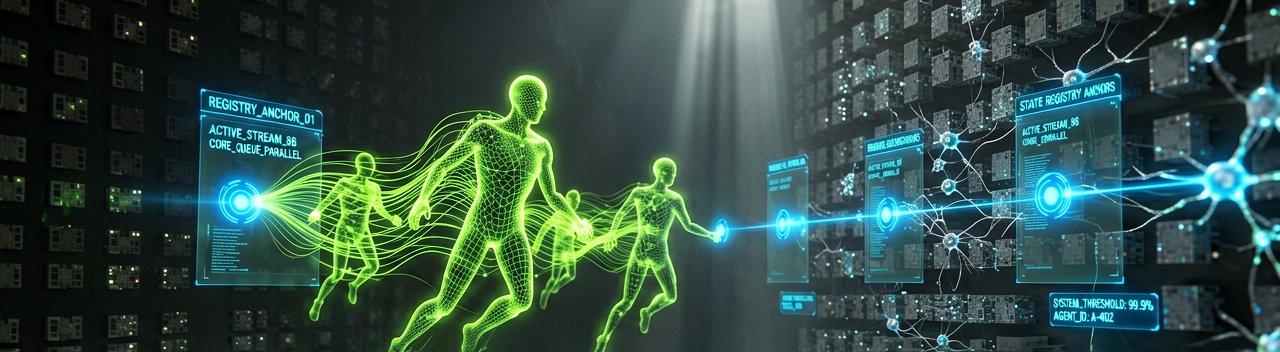
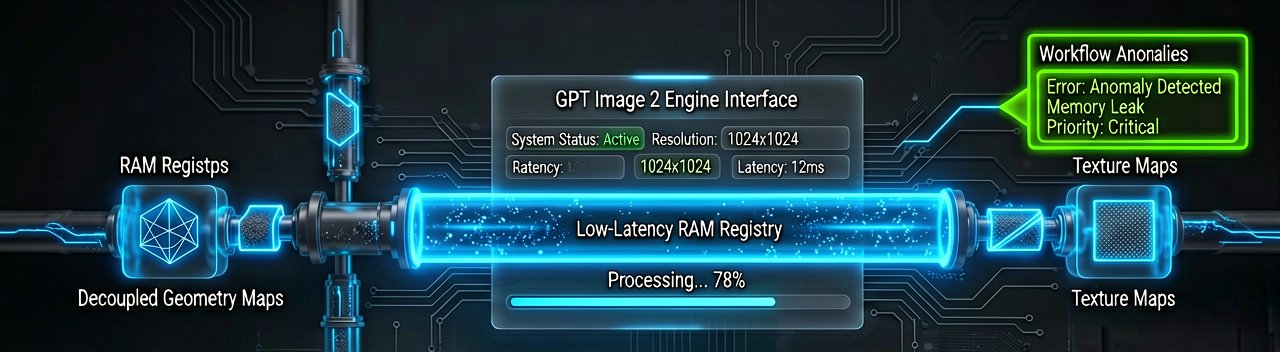
Behind the Scenes: The structural brilliance of LumeFlow AI’s architecture lies in its departure from monolithic inference models toward a decoupled, multi-tier execution pipeline. At the system layer, the platform handles the immense computational load of GPT Image 2 by isolating spatial geometry calculations from high-frequency style and texture maps. This prevents the GPU memory saturation typically caused by processing long video context windows in a single pass. Instead, an optimization layer dynamically compresses latent space vectors before they hit the rendering queue, utilizing custom tensor-slicing techniques to distribute the workload across available hardware threads without losing a single pixel of character continuity.
State Management and Memory Allocation
To keep character drift from destroying a scene, LumeFlow engineers built an aggressive caching layer known as the Omni Reference Registry. This subsystem acts as a persistent, high-speed state-management database that stores multi-angle facial vectors and material maps in low-latency RAM. When an autonomous agent triggers a scene transition or a dramatic camera angle shift, the pipeline does not re-evaluate the character from scratch. It pulls the verified structural anchors from the cache, executing a localized delta update that only calculates the newly exposed geometry and lighting angles, which drastically reduces redundant floating-point operations.
This state-heavy approach is managed by an orchestration layer that communicates via a highly optimized, low-overhead Skill API. When a user requests a complex visual modification, the request is broken into a dependency graph of micro-tasks. The system runs asynchronous validation scripts that check for stylistic parity across separate rendering nodes before any final pixels are written to disk. If an agent detects a localized deviation in texture or wardrobe that exceeds a pre-set mathematical threshold, it immediately halts that specific node, adjusts the prompt weights using historical seed data, and re-renders the corrupted frames before the human director ever notices a flaw.
Predictive Task Scheduling
The backend also incorporates a predictive scheduling algorithm that dynamically allocates compute resources based on scene complexity. Action sequences with rapid camera motion require heavier optical flow calculation, so the pipeline automatically routes those frames to higher-bandwidth tensor cores while giving static dialogue scenes lower priority. By maintaining a real-time feedback loop between the agent orchestration layer and the low-level rendering engines, LumeFlow prevents the pipeline bottlenecks that typically plague high-resolution AI video generation, turning what used to be an unstable, experimental framework into a predictable, factory-like production line.
Reading Between the Lines: While a 70 percent reduction in pre-production timelines makes for a spectacular marketing headline, a sober look at LumeFlow AI’s underlying architecture reveals a delicate compromise between automated efficiency and creative freedom. The platform’s reliance on rigid, state-managed registries like the Omni Reference system solves the character drift problem by essentially turning creative assets into tightly bound mathematical anchors. This creates a hidden trade-off: the more locked-in a character's facial geometry and material maps are to ensure continuity, the harder it becomes for a creator to introduce organic, unexpected visual improvisation without breaking the system's strict parity thresholds.
The Autonomous Oversight Paradox
There is also an inherent tension in relying on multi-agent orchestration layers to act as automated technical directors. When autonomous agents are tasked with correcting stylistic anomalies on the fly, they operate based on statistical probability and predefined mathematical thresholds, not artistic intuition. If an independent creator intentionally pushes a scene toward surrealism or jarring lighting shifts for thematic effect, the predictive task scheduling layer risks misinterpreting these avant-garde choices as technical errors, quietly sanitizing the director's unique vision back into a homogenized, mathematically compliant template.
Furthermore, the infrastructure's massive computational dependency exposes a widening gap between well-funded studios and independent digital creators. Running persistent, low-latency RAM registries alongside real-time tensor core load balancing requires an immense amount of high-end hardware infrastructure. While LumeFlow promises an egalitarian revolution for indie filmmakers, the sheer cost of keeping these multi-tiered AI pipelines active suggests that the technology may ultimately reinforce the same gatekeeping patterns it claims to dismantle, favoring those who can afford the premium API credit tiers necessary to keep the complex multi-agent ecosystem spinning.
It turns out that removing human error from the cinematic pipeline simply replaces it with algorithmic stubbornness, leaving modern directors to realize that bargaining with an unyielding AI memory cache to get a specific camera angle feels remarkably similar to arguing with a stubborn Hollywood studio executive—only the AI doesn't stop for lunch.
Artūras Malašauskas is an AI Systems Integrator with 20+ years of production-grade web engineering experience. He has designed, shipped, and scaled enterprise Python/PHP systems for logistics, SaaS, and public-sector clients. For the past year, he has focused exclusively on AI integrations: deploying open-source LLMs, building generative media pipelines (image, audio, video), and engineering multi-agent workflows for real production environments. His standard: reproducibility, security, cost-efficient inference—no vaporware. He documents and evaluates emerging AI tooling, separating verified capabilities from marketing noise. Technical editor at: muza-ai.eu, ai-verslas.lt, ai-naujinos.lt Connect on LinkedIn
Comments