The Autonomous Grid: How Sigenergy Is Turning Passive Solar Hardware into Active Partners
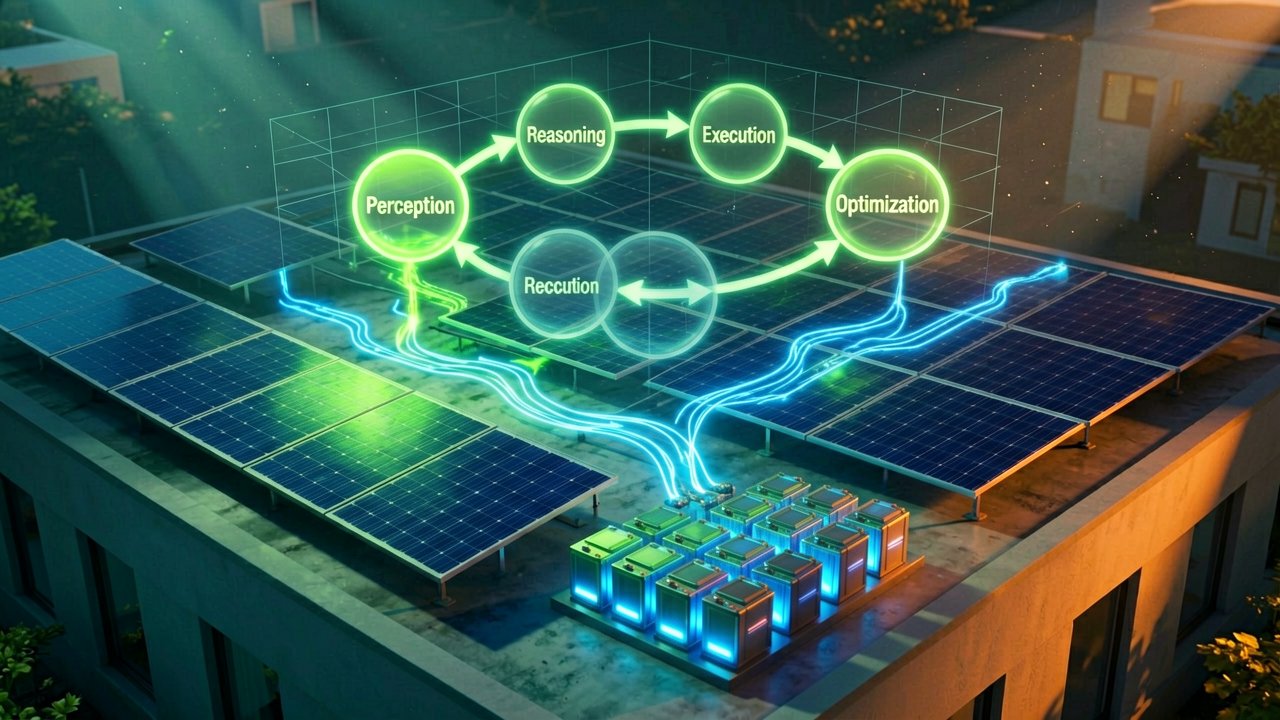
For years, managing residential and commercial renewable energy has felt like a second job. You check the weather, look at fluctuating utility rates, and manually tweak your battery storage settings, hoping you made the right call. But as grids become increasingly volatile and consumption models grow more complex, manual management is officially hitting a wall. Sigenergy is ready to take the wheel with SigenAgent, an all-domain AI agent designed to replace reactive software patches with absolute operational autonomy.
Unveiled during the global "AI in All" launch event, this next-generation architecture bridges the gap between digital intelligence and physical execution. Built directly into Sigenergy’s ecosystem, the software operates on a continuous, four-step loop: perception, reasoning, execution, and optimization. Rather than forcing users to understand the nuances of a Virtual Power Plant, the core logic is reduced to three straightforward beats: the user sets a macro goal, the AI thinks, and the device acts. It treats your entire energy system—from rooftop photovoltaic panels and stacked storage modules to high-speed electric vehicle charging networks—as a singular, synchronized machine.
From Smart Logic to Seamless Execution
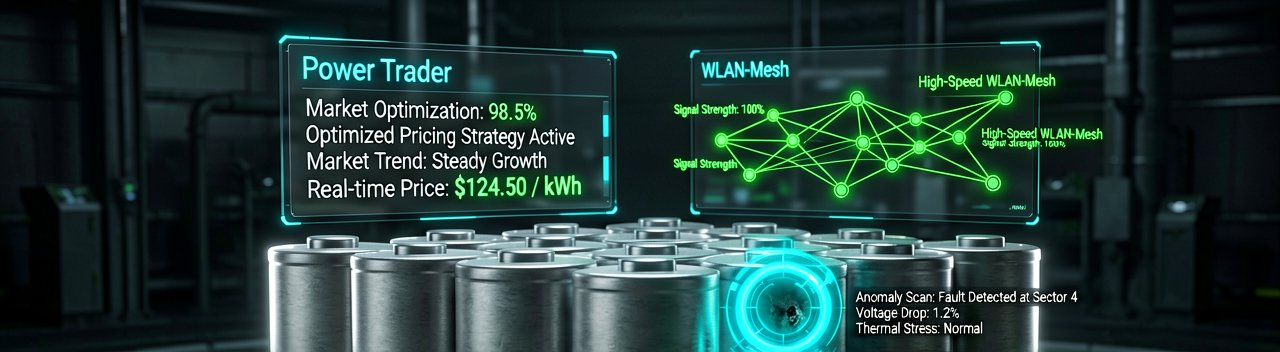
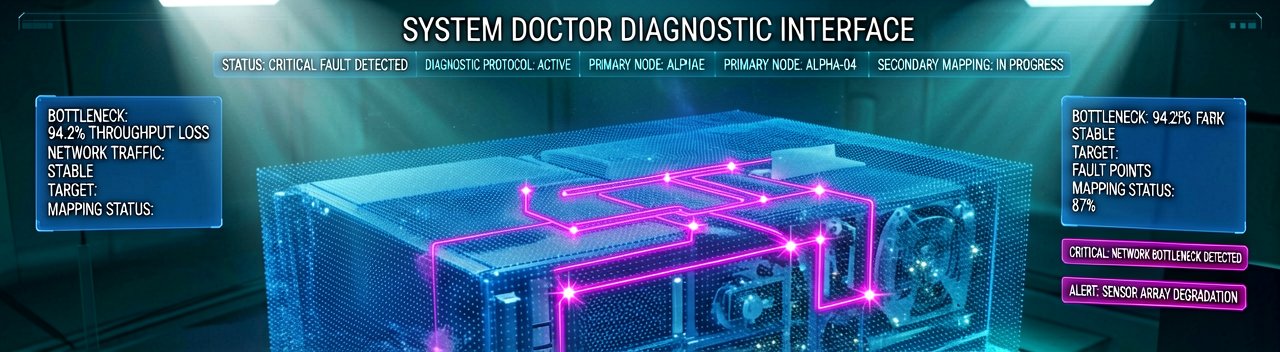
To handle these cross-domain demands, SigenAgent deploys four specialized autonomous capabilities. The Energy Manager brings a flavor of autonomous driving to home systems, allowing homeowners to set high-level objectives like minimizing bills or securing maximum backup power before letting the hardware auto-configure its daily operations. For commercial enterprises, the System Doctor replaces dense, tedious manual error logs with a second-level diagnosis tool, scanning an entire station at the press of a button to pinpoint physical anomalies. Meanwhile, the Power Trader tackles complex trading markets, optimizing real-time battery storage responses to maximize asset revenue during peak demand spikes, while the Business Assistant links directly to corporate data lakes to break down operational information silos.
Crucially, this AI isn't an isolated cloud chatbot playing pretend; it relies on a rock-solid, distributed physical foundation. According to data published by GlobeNewswire, Sigenergy hardware currently runs across more than 200,000 global power stations while maintaining an ultra-low 0.24% annual hardware failure rate. This hardware layer utilizes all-domain sensing across generation, storage, charging, and grid access points, communicating over 100M high-speed networks and WLAN-Mesh configurations to prevent communication bottlenecks. For existing setups, access to these new agent features will arrive via seamless, over-the-air software updates.
Allowing an AI agent to execute real-world electrical decisions naturally sparks safety concerns, but the system enforces incredibly strict architectural boundaries. SigenAgent operates explicitly under a user-authorization model, meaning critical parameter changes require a green light from the owner, and built-in dynamic backup strategies guarantee offline resilience even during total network outages. The typical "AI black box" problem is solved via a transparent user interface that maps out a precise 24-hour visualization of exactly why the hardware is charging or discharging. Furthermore, data security is kept tight through localized storage distributed across six global data centers to satisfy regional privacy laws, proving that letting an artificial agent manage your power bill doesn't mean sacrificing control over your digital footprint.
Reading Between the Lines: The promise of a fully autonomous energy footprint is intoxicating, but the industry’s pivot toward AI agent architecture invites a healthy dose of engineering skepticism. For years, the clean energy narrative has revolved around physical efficiency—squeezing another half-percent of efficiency out of a silicon wafer or increasing the energy density of a lithium-iron-phosphate pack. By shifting the battlefield to software orchestration, Sigenergy is betting that the biggest bottleneck in renewables isn't physics, but human operational error. It is a compelling thesis, yet it introduces a fundamental contradiction: we are attempting to stabilize an increasingly volatile, unpredictable physical grid by introducing non-deterministic software agents into the loop.
The core tension lies in the trade-off between absolute autonomy and liability. When an algorithmic trader in a commercial microgrid miscalculates variable utility structures and drops thousands of dollars on ill-timed battery discharges, who holds the bag? Software agreements traditionally shield developers from consequential damages, leaving the asset owner to absorb the financial hit of a misaligned machine learning model. Furthermore, while the system touts localized data storage and authorization layers, the reality of running deep cloud-learning workloads means a constant, unyielding telemetry stream from private residences and corporate facilities. We are effectively trading energy independence for software interdependence.
The Real-World Friction of Automated Grids
We must also look closely at the scalability of these multi-agent ecosystems when interacting with legacy utility infrastructure. Mainstream electrical grids were engineered for highly predictable, centralized generation, not for digesting millions of decentralized, AI-driven power injections shifting on millisecond timelines. If thousands of localized agents simultaneously decide to dump battery capacity into a neighborhood substation to exploit a momentary price peak, they risk triggering localized voltage spikes. Until regional utilities upgrade their own substations to match the high-speed processing capabilities of edge hardware, these brilliant autonomous agents will inevitably find their ambitions throttled by analog infrastructure.
Ultimately, the transition from passive hardware to active autonomous agents represents a profound paradigm shift in how we value clean tech. Hardware commoditization has turned the inverter market into a race to the bottom on price, forcing forward-thinking manufacturers to redefine themselves as enterprise software firms. Sigenergy’s architecture is a technically impressive leap toward solving the distributed energy puzzle, but its true test will not be passed in a controlled laboratory environment. The real trial lies in enduring the chaotic, unstandardized reality of global grids, erratic weather patterns, and the unpredictable nature of human energy consumption.
Perhaps the ultimate irony of the modern green transition is that after spending decades trying to break our dependence on a centralized grid, we are now happily handing the keys over to a centralized algorithm. At least when the machine learning model inevitably glitches and turns off the hot water during a winter storm, it will be able to explain its reasoning in flawless, grammatically correct prose.
Artūras Malašauskas is an AI Systems Integrator with 20+ years of production-grade web engineering experience. He has designed, shipped, and scaled enterprise Python/PHP systems for logistics, SaaS, and public-sector clients. For the past year, he has focused exclusively on AI integrations: deploying open-source LLMs, building generative media pipelines (image, audio, video), and engineering multi-agent workflows for real production environments. His standard: reproducibility, security, cost-efficient inference—no vaporware. He documents and evaluates emerging AI tooling, separating verified capabilities from marketing noise. Technical editor at: muza-ai.eu, ai-verslas.lt, ai-naujinos.lt Connect on LinkedIn
Comments