The Autonomous Grid: How Sigenergy Is Replacing Manual Energy Tweaking with Pure Machine Learning

For years, managing a residential or commercial renewable energy setup has felt like holding down a part-time job as a utility analyst. You had to constantly eyeball the weather forecast, cross-reference shifting time-of-use tariffs, and manually schedule your battery or electric vehicle charger to avoid getting fleeced by volatile grid prices. It has been a clumsy, reactive game that manual human intervention was always bound to lose. Stepping into that optimization vacuum is the newly launched SigenAgent from Sigenergy, an AI-native engine built to quietly take the wheel of your entire multi-domain energy ecosystem.
Instead of relying on isolated software patches or static pre-programmed rules, this platform treats solar generation, battery storage, and smart EV charging as a single fluid problem. The architecture handles data across multiple physical domains simultaneously, linking 100M high-speed networks and local WLAN-Mesh architectures to create a unified, closed-loop environment. The math under the hood replaces rigid menu toggles with intent-based automation. You simply define a high-level financial or operational goal—say, maximizing your virtual power plant revenue or driving down dependency on peak grid pricing—and the underlying machine learning models chart the most profitable path through a relentless cycle of perception, reasoning, and real-time execution.
From Closed-Loop Reasoning to High-Frequency Arbitrage
This structural fluidity translates directly into hard physical metrics where it counts most. Armed with four distinct software personas—ranging from the predictive maintenance of the System Doctor to the active market trading of the Power Trader—the agent continuously digests regional weather feeds, equipment degradation math, and hyper-local grid fluctuations. When operating in volatile, high-frequency electricity markets, the system moves with a speed that turns standard storage hardware into a proactive economic asset, optimizing arbitrage windows down to the second. For the end user, this means over 200,000 global power stations tied to their hardware layer are no longer just passive, depreciating boxes bolted to a garage wall. They are active market participants capable of scaling capacity and cutting waste without requiring a single manual configuration click.
Behind the Scenes: Under the Hood of the SigenAgent Architecture
Behind the Scenes: Bridging the gap between unpredictable solar physics and high-frequency power markets requires moving away from traditional, sluggish cloud-polling architectures. At the core of Sigenergy’s execution layer sits an edge-centric, multi-agent framework that relies on a specialized event-driven loop. Instead of executing monolithic scripts at fixed intervals, the system treats grid voltage dips, battery temperature spikes, and localized cloud coverage as real-time streaming inputs. These metrics are processed directly on local hardware via an asynchronous pipeline, ensuring that critical control loops remain active even during a complete WAN backhaul failure.
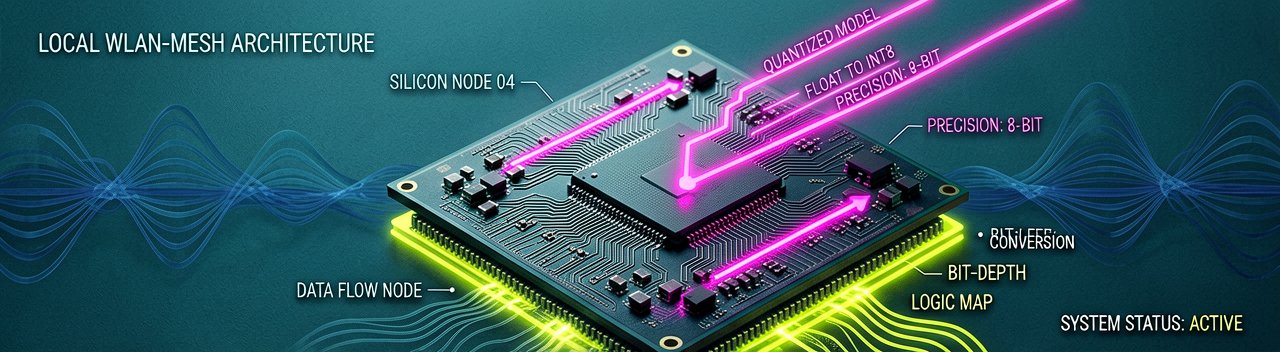
To prevent localized operations from bogging down the main system bus, the architecture separates raw telemetry collection from the machine learning inference pipeline. This data decoupling is governed by an optimized local inference engine that runs on highly constrained embedded silicon. By quantizing the underlying prediction models down to lower-precision bit representations, the system executes heavy load-forecasting and solar-yield projections without causing thermal throttling or hardware lag. The local scheduler then maps these real-time predictions directly onto the physical power-stage hardware, adjusting inverter duty cycles and battery discharge rates with sub-second precision.
The true bottleneck in multi-domain setups has always been the communication latency between disparate hardware components, such as a third-party EV charger and a high-voltage battery stack. Sigenergy solves this by deploying a local WLAN-Mesh network working in tandem with an abstracted hardware translation layer. This abstraction layer acts as a high-speed telemetry bus, converting vendor-specific register maps into a standardized, internal data format. Because the Power Trader persona can read from and write to this unified data pipeline simultaneously, it bypasses the traditional polling delays that plague mixed-manufacturer setups, dropping cross-device communication latency to near-zero levels.
On the data persistence side, the edge device employs a circular time-series database optimized for flash memory longevity. High-frequency electrical metrics are aggregated locally, compressed using advanced delta-encoding schemes, and pushed to the cloud in efficient bursts rather than continuous, bandwidth-heavy streams. This specialized data structure minimizes write amplification on the embedded storage, ensuring the system can handle decades of rapid logging. When cloud connectivity is stable, these compressed local datasets are used to refine global machine learning models, creating a continuous feedback loop that pushes hyper-localized optimization profiles back down to individual edge nodes.
Reading Between the Lines: The Friction of Autonomy in a Regulated Grid
Reading Between the Lines: The tech industry loves a neat, autonomous narrative, but dropping a highly aggressive machine learning agent into the heavily regulated, deeply conservative world of utility infrastructure introduces immediate friction. It is one thing for an AI model to claim a theoretical 44% financial yield in a sterile simulation; it is quite another to pilot that same intelligence through the chaotic reality of localized utility tariffs. Many power distributors remain notoriously hostile to uncoordinated, rapid-fire power injections from residential batteries. This systemic inertia means that an over-eager algorithmic trader could easily run afoul of strict anti-arbitrage clauses hidden in the fine print of regional interconnection agreements.

This reality exposes a glaring paradox at the heart of the "smart home" ideal: the software is rapidly outpacing the physical and legal architecture it is designed to optimize. While Sigenergy handles multi-domain telemetry at near-zero latency, the local utility company may still rely on billing systems that aggregate data in sluggish fifteen-minute or even hourly blocks. An edge device executing sub-second trade decisions is effectively playing a high-frequency trading game on a field that moves at a dial-up pace. This structural mismatch risks leaving consumers holding hardware capable of complex market maneuvers that their local power provider simply refuses to recognize or reward.
Furthermore, shifting the operational burden from human input to black-box machine learning models introduces a distinct form of optimization risk. When an algorithm is given a singular mandate—such as driving down peak grid expenditures to absolute zero—it will naturally push physical hardware to its absolute limits. A hyper-aggressive trading model might achieve short-term economic gains at the unrecorded cost of accelerated battery degradation or premature thermal stress on high-voltage components. Balancing the immediate financial payoff of a volatile trading day against the ten-year warranty lifespan of an expensive lithium-iron-phosphate storage bank is a delicate, moving target that simple yield percentages often gloss over.
Ultimately, the broad adoption of these cross-domain energy agents will likely trigger a regulatory game of cat-and-mouse. As clusters of AI-driven homes begin to dynamically pool resources and react simultaneously to price spikes, they will morph from passive load points into unpredictable, collective macroeconomic forces. Utilities, accustomed to highly predictable demand curves, will inevitably respond by rewriting tariff structures to protect their own margins, perhaps by introducing flat-rate demand charges that neuter the profitability of real-time arbitrage. The future of decentralized energy will not just be a clean sprint toward maximum efficiency, but rather a messy, ongoing chess match between agile edge algorithms and defensive grid monopolies.
"We are fast approaching a future where your solar panels and your electric vehicle will secretly collude in the garage to outsmart the local power company, though the real victory will be explaining to the utility's automated customer service chatbot why your house technically spent the afternoon functioning as an unauthorized commodity trading desk."
Artūras Malašauskas is an AI Systems Integrator with 20+ years of production-grade web engineering experience. He has designed, shipped, and scaled enterprise Python/PHP systems for logistics, SaaS, and public-sector clients. For the past year, he has focused exclusively on AI integrations: deploying open-source LLMs, building generative media pipelines (image, audio, video), and engineering multi-agent workflows for real production environments. His standard: reproducibility, security, cost-efficient inference—no vaporware. He documents and evaluates emerging AI tooling, separating verified capabilities from marketing noise. Technical editor at: muza-ai.eu, ai-verslas.lt, ai-naujinos.lt Connect on LinkedIn
Comments