Crayfish Crisis? Tsinghua's AI Tool Steals the Feast, Leaves Industry Shell-Shocked
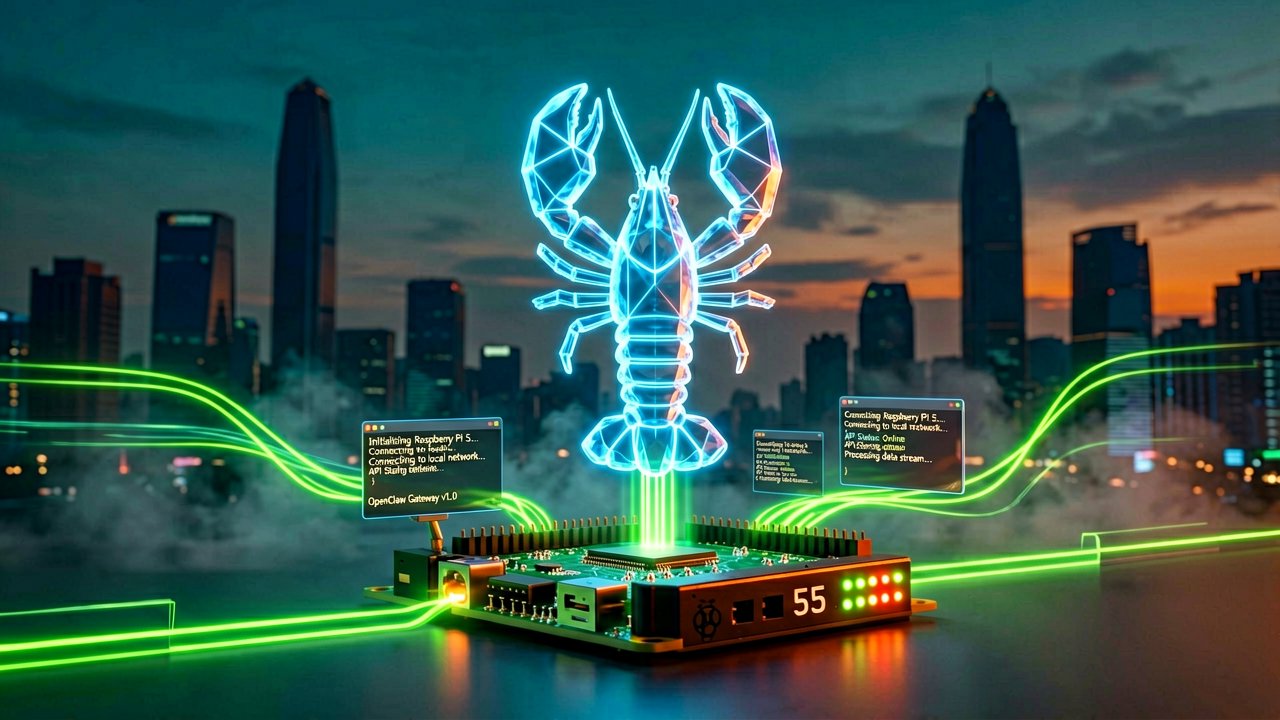
What began as an academic experiment has quickly spiraled into a disruptive economic force, shaking up service sectors and tech corridors across China. The catalyst is an open-source autonomous agent framework known as OpenClaw, recognizable by its distinct lobster or "crayfish" logo. Originally conceptualized as a flexible backend architecture, the project recently went hyper-viral after premium collaborative iterations like EdgeClaw—co-developed by Tsinghua University (THUNLP) alongside Renmin University of China and OpenBMB—brought elite local-cloud AI orchestration straight to everyday desktop setups.
Unlike conventional chatbots that merely trade text prompts for static replies, this software proactively interacts with system-level files, APIs, and communication platforms like WeChat and Enterprise WeChat. By effectively acting as an independent, always-on employee, OpenClaw has triggered a rapid democratization of automation in Chinese tech hubs like Shenzhen and Beijing since early 2026. However, its explosive grassroots adoption has simultaneously blindsided traditional operations, leaving legacy workplace models entirely shell-shocked.
The Architecture of an Autonomous Upheaval
What Most Reports Miss: The underlying anxiety here isn't just about software replacing manual data entry; it's about the sheer velocity at which an open-source, model-agnostic gateway can bypass standard commercial enterprise software ecosystems. Because OpenClaw allows users to self-host their automation hub on simple local machines, micro-businesses are scaling up overnight without enterprise overhead. By linking API keys from frontier models or using local frameworks via Ollama, individuals are crafting fully operational workflows that handle client outreach, triage thousands of backlogged emails, and execute complex code blocks.
This radical efficiency shift has fueled the sudden emergence of what local tech ecosystems describe as "one-person companies." While massive software-as-a-service corporations historically dominated the productivity marketplace, individual operators are now using OpenClaw's extensible agent skills to replicate entire departments. In tech corridors like Shenzhen, local municipal bodies have even begun introducing subtle infrastructure subsidies to foster this agent economy, viewing it as a critical engine for lean entrepreneurial growth according to reports from Reuters.

Friction in the Framework
Yet, this explosive evolution has exposed deep friction points within corporate and state architectures. Giving a self-hosted agent deep terminal access, file read-write capabilities, and constant internet connectivity naturally introduces a labyrinth of security vulnerabilities. Security researchers have repeatedly pointed out that improper sandboxing can turn these highly efficient virtual assistants into open backdoors for remote system control and localized data leaks.
The backlash has already materialized at higher institutional levels. Worried about data exfiltration and uncontrolled digital diffusion, several state-run institutions and government agencies have issued strict internal directives prohibiting the deployment of OpenClaw on official networks or workplace computers. This creates a fascinating paradox where grassroots developers and regional tech hubs are racing ahead to capitalize on the agent's productivity boom, while central data guardians scramble to erect regulatory guardrails before the digital "crayfish" completely re-wires the infrastructure.
The Illusion of Infinite Autonomy
Reading Between the Lines: The prevailing narrative surrounding the OpenClaw boom frames it as an egalitarian triumph—a clean break from corporate gatekeeping that hands enterprise-grade power to the solitary developer. This enthusiastic projection, however, glosses over a glaring systemic contradiction. While self-hosted agents eliminate immediate subscription fees, they substitute them with hidden technical debt and astronomical compute costs. For an independent shop, running continuous, multi-agent loops across heavy, open-source models rapidly translates into massive cloud utility bills or hardware deterioration, making the "one-person enterprise" far less sustainable than the initial viral hype suggests.
Furthermore, the legal and ethical framework supporting these autonomous networks rests on incredibly shaky ground. Because OpenClaw integrates directly with proprietary ecosystems like WeChat to automate client management, it relies on a delicate web of web-scraping patches, reverse-engineered APIs, and fragile automation workarounds. Legacy tech giants have spent decades aggressively litigation-proofing their walled gardens against unauthorized automated scripts. It is highly naive to assume these digital gatekeepers will quietly allow a decentralized crustacean to syphon away user engagement and data traffic without unleashing wave after wave of account bans and platform updates designed specifically to break OpenClaw's architecture.

Ultimately, the true crisis facing the industry is not that artificial intelligence is becoming too powerful, but rather that human organizations are fundamentally unequipped for the erratic nature of agentic workflows. When an autonomous loop misinterprets a client request or executes a corrupted terminal command, assigning liability becomes an impossible game of corporate finger-pointing between the model providers, the university researchers, and the local end-user. As regional governments rush to subsidize this unvetted ecosystem, they risk building an entire economic sub-sector on top of a highly volatile foundation where one bad software patch could instantly paralyze thousands of automated micro-businesses.
"We wanted an artificial intelligence that could solve the grand mysteries of the cosmos, but instead, we built an army of highly caffeinated digital crayfish that excel at arguing with our enterprise email servers and accidentally deleting the company database by dinner time."
Artūras Malašauskas is an AI Systems Integrator with 20+ years of production-grade web engineering experience. He has designed, shipped, and scaled enterprise Python/PHP systems for logistics, SaaS, and public-sector clients. For the past year, he has focused exclusively on AI integrations: deploying open-source LLMs, building generative media pipelines (image, audio, video), and engineering multi-agent workflows for real production environments. His standard: reproducibility, security, cost-efficient inference—no vaporware. He documents and evaluates emerging AI tooling, separating verified capabilities from marketing noise. Technical editor at: muza-ai.eu, ai-verslas.lt, ai-naujinos.lt Connect on LinkedIn
Comments