Lotto Genius AI Launches Blockchain-Backed Lottery Predictions, Shaking Up Gambling Industry

The boundary between blind luck and statistical strategy just got significantly fuzzier. In a bold move targeting the multi-billion dollar gambling sector, tech innovators have rolled out an update for the Lotto Genius platform. This latest release integrates advanced machine learning models with a decentralized blockchain architecture to deliver audited, historically informed lottery predictions. By timestamping and verifying mathematical models on a public ledger, the platform attempts to remove the smoke and mirrors often associated with traditional gambling systems.
For decades, gaming regulators and mathematics experts have insisted that lotteries are purely random. However, technical developers are betting that minor hardware biases or long-term dataset variations can be modeled effectively. Rather than promising guaranteed overnight wealth, this blockchain-backed approach works by analyzing historical draw anomalies and generating strategic distributions to optimize user budgets.
Disrupting the Randomness Paradigm
The technology behind the upgrade leverages historical draw data from major global lotteries like Powerball and EuroMillions. By feeding thousands of past drawing sequences into a deep-learning algorithm, the software seeks out subtle non-random patterns that are invisible to human observers. While individual lottery machines are engineered to ensure complete randomness, subtle physical wear or minor imperfections over thousands of draws can theoretical introduce statistical skews. The core value of these modern tools isn't in guessing the exact future, but in moving the needle from pure coincidence to statistically informed probability.
Blockchain Verification: Fact vs. Fiction
What sets this current release apart from older "quick-pick" applications is its cryptographic accountability. In an industry saturated with unverified loopholes and dubious win streaks, utilizing a decentralized ledger allows every algorithmic prediction to be permanently etched into a public database. This transparency prevents the system developers from altering prediction histories after the results are announced, forcing the AI models to stand by their public track records. It provides a level of integrity that consumer advocates have long demanded from independent gaming software.
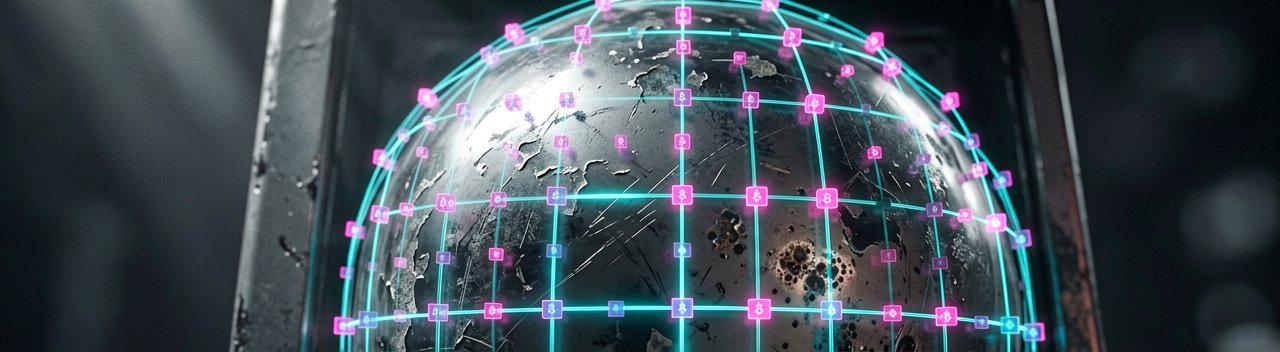
Skeptics within mainstream programming communities remain highly cautious about the long-term efficacy of AI in predicting random numbers. Many researchers argue that true random number generators cannot be modeled, meaning an algorithm's output will inherently mirror standard mathematical chance. Despite the pushback, consumer interest in smart generation tools has grown steadily, signaling a major cultural shift where modern players prefer data-driven strategies over traditional lucky numbers.
What Most Reports Miss: The Friction Between Chaos Theory and Code
The intersection of advanced artificial intelligence and decentralized architecture presents a fascinating paradox for the tech sector. While traditional software engineers view lottery operations as the ultimate expression of true mathematical chaos, data scientists look at the physical limitations of mechanical drawings. Every ball machine relies on physical gravity, specific air currents, and slight variances in the weight of painted spheres. Over decades of operation, these microscopic variables leave a digital fingerprint. This baseline data is exactly where machine learning algorithms find room to maneuver, turning what seems like pure luck into a complex field of micro-probabilities.
Industry insiders suggest that this technological shift is less about cracking the lottery and more about altering consumer behavior. For generations, enthusiasts bought tickets based on family birthdays or pure intuition, which frequently led to clusters of shared prizes on low numbers. By implementing algorithmic distributions, users are systematically pushed toward underutilized combinations, maximizing the theoretical payout value if those numbers hit. The real innovation lies in optimizing the mathematical strategy behind ticket combinations rather than claiming to predict a single, definitive winning sequence.
The regulatory response to these tools remains complex and highly protective of state revenues. Traditional gaming commissions rely on complete unpredictability to maintain public trust and prevent structural exploitation. If a machine learning model managed to consistently predict even a minor edge, it would threaten the entire financial structure of public gaming funds. Consequently, legal compliance experts are watching how these platforms market their capabilities, ensuring they do not breach the strict guardrails regarding misleading consumer software claims.
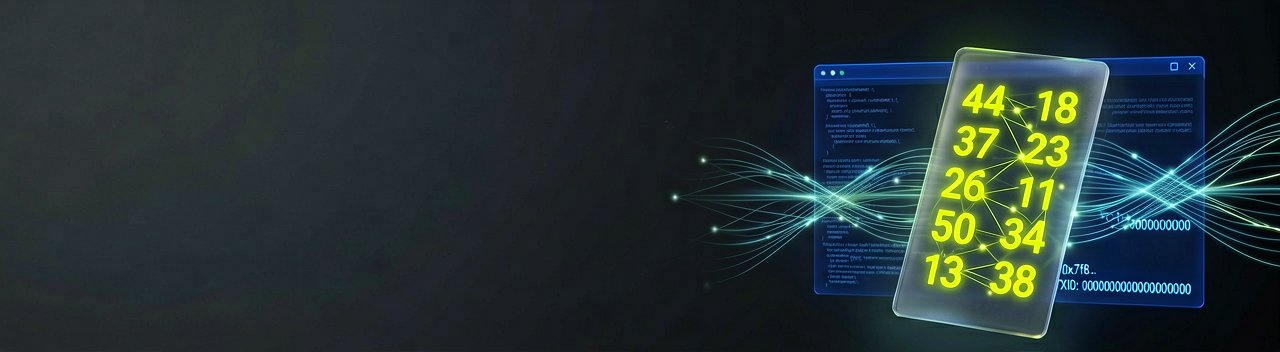
From a technical standpoint, the choice to anchor predictive models to a blockchain ledger serves as a defensive mechanism against standard corporate skepticism. In the past, vendors of prediction systems manipulated historical records to make their previous estimates look incredibly accurate in retrospect. Cryptographic timestamping eliminates this avenue of deception entirely. By registering every prediction on an immutable ledger before the official drawing occurs, developers are forced into an unprecedented level of public accountability that exposes exactly how well, or how poorly, their code performs under real-world pressure.
Ultimately, the long-term impact of this development will be determined by user retention and algorithmic refinement over hundreds of draw cycles. If the predictive models perform no better than a standard random number generator over a multi-year timeline, the novelty will fade into standard gambling folklore. However, if the combination of big data and blockchain validation manages to continuously identify structural anomalies in physical drawing systems, it could force state lotteries to completely overhaul their hardware infrastructure to maintain true randomness.
Reading Between the Lines: The Illusion of Certainty in a Random Universe
The core tension of this technological experiment lies in a fundamental contradiction between the nature of blockchain and the realities of mathematics. Blockchain excels at recording absolute truths, while lottery predictions remain firmly rooted in complete uncertainty. By pairing an unchangeable public ledger with a highly speculative machine learning model, developers have created an elaborate architecture of trust around an inherently unpredictable outcome. This juxtaposition raises a critical question about whether the technology is genuinely solving a mathematical problem or simply elevating the marketing apparatus of the digital gambling industry to a higher level of sophistication.
Furthermore, the claim that AI can exploit physical wear and tear on lottery equipment ignores the massive operational shifts happening inside modern gaming facilities. Most high-tier lotteries now utilize digital pseudo-random number generators or frequently rotate pristine, highly calibrated ball sets to systematically eliminate the exact physical biases these algorithms rely on to function. When the physical variables are continuously reset to zero, the historical dataset compiled by an AI model effectively loses its predictive utility. This leaves the software in a perpetual cycle of chasing historical patterns that have already been engineered out of existence by gaming commissions.
The broader sociological implication of this rollout centers on how players perceive risk when it is wrapped in technical jargon. Traditional lottery players understood they were buying a dream driven by pure, unadulterated luck. When complex terms like neural networks, decentralized validation, and cryptographic transparency are introduced into the equation, they create a false sense of control over an uncontrollable environment. This psychological shift can inadvertently encourage users to increase their spending under the mistaken belief that a sophisticated algorithm has somehow shifted the house edge in their favor.
If this trend toward algorithmically guided wagering continues to expand, it will likely trigger a reactive arms race from gaming software regulators. Governments depend on the predictable, massive profit margins of lotteries to fund public infrastructure and educational programs. If decentralized predictive tools ever achieved a demonstrable statistical advantage, regulatory bodies would not hesitate to outlaw the commercial use of predictive software or implement heavy digital jamming protocols on drawing data. The survival of the traditional lottery system hinges entirely on its unpredictability, meaning the state will always possess a vested interest in keeping the player completely in the dark.
"The ultimate irony of the modern tech boom is our relentless desire to apply cutting-edge data science to systems designed explicitly to defy logic. While the blockchain guarantees that the algorithm's predictions are entirely honest, it unfortunately cannot guarantee that the falling plastic balls care even a single bit about the code."
Artūras Malašauskas is an AI Systems Integrator with 20+ years of production-grade web engineering experience. He has designed, shipped, and scaled enterprise Python/PHP systems for logistics, SaaS, and public-sector clients. For the past year, he has focused exclusively on AI integrations: deploying open-source LLMs, building generative media pipelines (image, audio, video), and engineering multi-agent workflows for real production environments. His standard: reproducibility, security, cost-efficient inference—no vaporware. He documents and evaluates emerging AI tooling, separating verified capabilities from marketing noise. Technical editor at: muza-ai.eu, ai-verslas.lt, ai-naujinos.lt Connect on LinkedIn
Comments