Why Sony Just Rewrote the Home Theater Script with the BRAVIA 9 II and 7 II
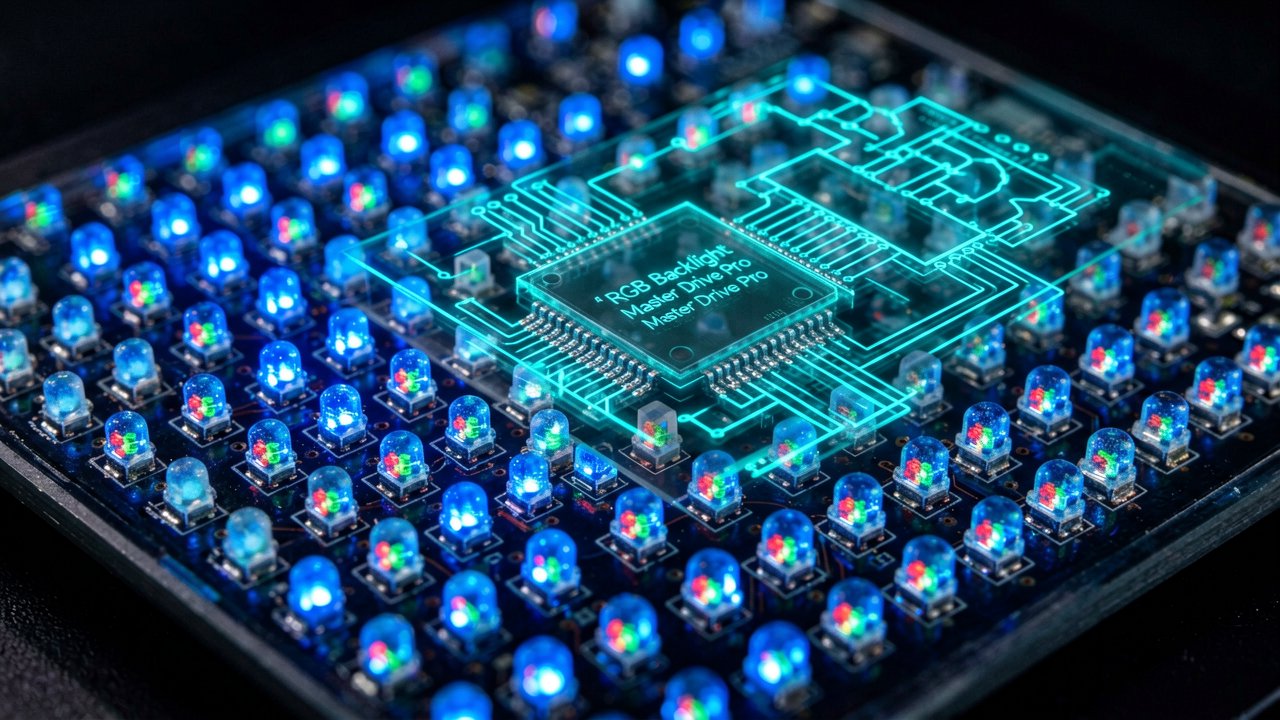
For years, the premium television playbook followed a predictable rhythm. If you wanted absolute color accuracy and inky, pitch-black shadows, you bought an OLED; if you wanted searing brightness to combat a sunlit living room, you opted for Mini-LED. But on May 27, 2026, tech giant Sony completely shifted the narrative. By officially introducing the BRAVIA 9 II and BRAVIA 7 II, the company chose to entirely bypass releasing a new flagship OLED this year. Instead, they placed their bets on a massive engineering breakthrough called True RGB Mini-LED technology, a development detailed extensively by Engadget. It is a bold, deliberate pivot that positions these new displays not just as high-end LCDs, but as genuine rivals to the best self-emissive screens on the market.
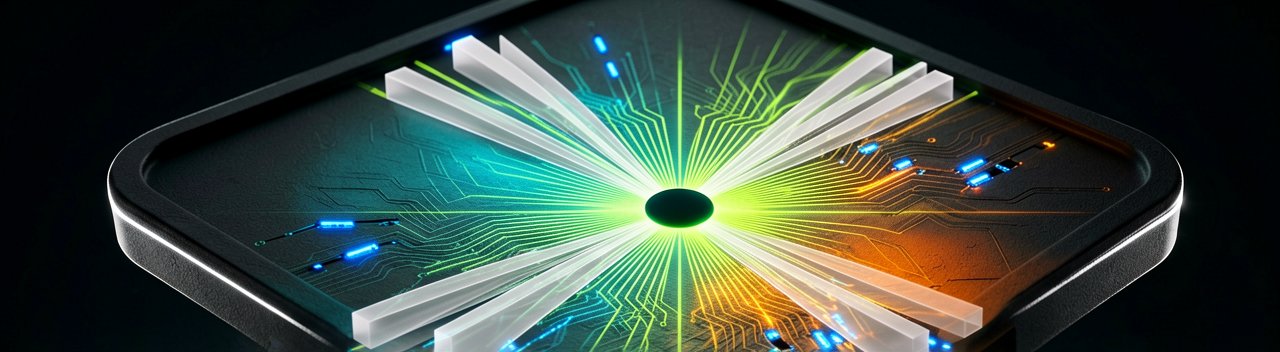
To understand why this is a massive deal, you have to look beneath the glass. Traditional Mini-LED televisions, including Sony’s previous flagships, rely on blue LEDs coated with a quantum dot film to filter out white light, which then passes through an LCD panel to form the final picture. It works well, but it is fundamentally a game of compromise. The BRAVIA 9 II and 7 II throw out that old blueprint entirely. Sony’s new True RGB architecture deploys an intricate web of independently driven, native red, green, and blue mini-LED elements. This allows the backlight itself to construct the color foundation from scratch, bypassing the restrictive filters that usually choke color volume and dim peak performance.
The Magic of the RGB Backlight Master Drive Pro
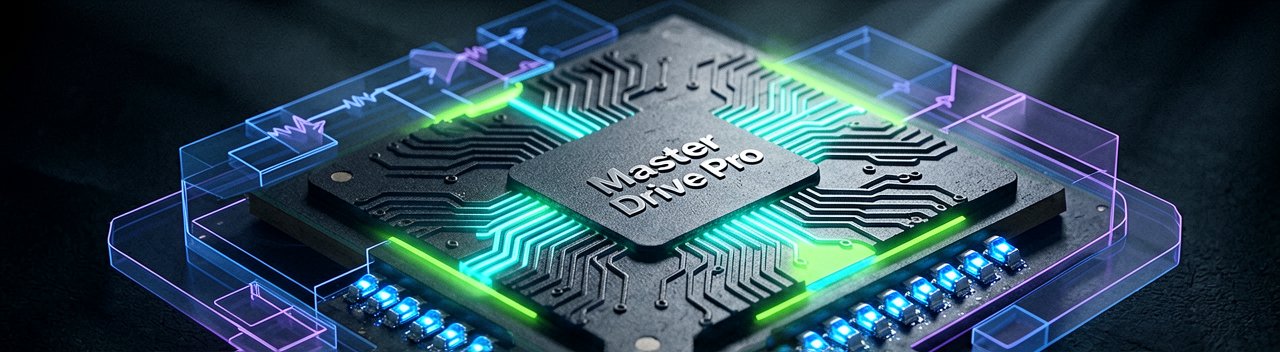
Controlling millions of microscopic, individual red, green, and blue light sources simultaneously sounds like an operational nightmare. To tame this beast, Sony developed the RGB Backlight Master Drive Pro processor. According to reporting from Forbes, this silicon powerhouse uses an advanced feedback loop monitoring system that eliminates cross-talk between colors. When a bright red laser blasts across a dark night sky on screen, the processor dials in the exact voltage required for the red sub-pixels while holding the green and blue nodes in complete stasis. The result is an explosive leap in color volume—up to four times that of traditional QD-OLED panels—without the bleeding artifacts that plague cheaper displays.
The premium BRAVIA 9 II pairs this unprecedented processing power with a new panel layer called Immersive Black Screen Pro. Early hands-on testing highlighted by CNET confirms that this unique matte coating absorbs ambient room light with shocking efficiency. It preserves deep, structural blacks even when the sun is pouring through the window, addressing a historic vulnerability of high-brightness displays. Furthermore, the combination of native RGB emission and Sony's X-Wide Angle Pro optics solves the classic off-axis washing effect. You can sit at a harsh angle on the edge of the sectional sofa and still experience the exact same saturation and contrast enjoyed by whoever snagged the middle seat.
Diverging Paths: Flagship Power vs. Attainable Luxury
While both models share the core True RGB DNA, Sony has engineered a clear hierarchy between the two siblings to satisfy different budgets and physical setups. The flagship BRAVIA 9 II is a masterclass in raw, uncompromised performance, pushing boundaries with an optional, gargantuan 115-inch model alongside its standard 65, 75, and 85-inch variants. It is built to mimic the behavior of a $40,000 professional Hollywood studio mastering monitor, clocking in near a blinding 4,000 nits of peak brightness. It also gets an upgraded audio suite featuring Acoustic Multi-Audio+ with specialized up-firing beam tweeters, turning the entire frame of the TV into a localized Dolby Atmos speaker system.
On the other hand, the BRAVIA 7 II serves as an aggressive play for mainstream adoption, scaling down from a massive 98 inches all the way down to a bedroom-friendly 50-inch option. It dials back the maximum nit ceiling and features a slightly less complex speaker arrangement, but it refuses to compromise on the primary color pipeline. Both tiers inherit a striking physical design overhaul, highlighted by a transparent center base stand that uses lenticular lenses to bend light, making unsightly cables routed behind the display completely disappear from view. Sony didn’t just iterate on old formulas this year; they reinvented the hardware stack, proving that the traditional LED backlight still has plenty of magic left to show us.
Reading Between the Lines: The Structural Gamble of Native Colors
Reading Between the Lines: Stripping the quantum dot and phosphorus filters out of a modern display pipeline is a triumphant engineering feat, but it introduces a volatile set of manufacturing and longevity challenges that Sony is uncharacteristically quiet about. Historically, the entire industry opted for blue LEDs with passive filters because individual red, green, and blue diodes degrade at drastically different velocities. Blue sub-pixels burn out and dim far faster than their red and green counterparts, a physical reality that has plagued emissive technologies for over a decade. By moving to a native True RGB backlight system, Sony has essentially shifted the stabilization burden entirely onto its new silicon. The RGB Backlight Master Drive Pro must constantly recalibrate voltage curves over the lifespan of the display to prevent the white balance from drifting into a sickly green or warm sepia tone after a few thousand hours of heavy use.
There is also an inescapable financial contradiction hidden inside this premium rollout. Sony is positioning True RGB Mini-LED as the ultimate alternative to high-end OLED, yet the pricing structure suggests they are forcing consumers to pay a steep premium to act as early adopters for an unproven hardware architecture. Industry analysts point out that fabricating discrete native RGB mini-LED modules yields far lower efficiency rates on the assembly line compared to uniform blue-LED backlights. This means consumers are absorbing the cost of manufacturing defects. While a QD-OLED or WOLED panel offers pixel-level contrast control out of the box, the BRAVIA 9 II still relies on local dimming zones—granted, thousands of them—meaning the laws of physics dictate that some degree of blooming or macro-zone lag will still occur during torturous HDR torture tests.
Furthermore, this aggressive pivot highlights a fascinating strategic schism within Sony's broader corporate ecosystem. Sony Pictures and its premier post-production masterers have spent the last few years validating dual-cell LCDs and expensive OLED reference monitors for color grading. By declaring that True RGB Mini-LED is now the definitive home theater standard, the hardware division is subtly decoupled from the literal production pipelines of the entertainment industry. It forces a complex question about accuracy versus presentation. The BRAVIA 9 II may achieve an astonishing 4,000 nits of peak brightness, but very few master files are encoded beyond 1,000 or 2,000 nits today, leaving this massive hardware headroom functioning primarily as an impressive spec-sheet flex rather than a tool for cinematic fidelity.
Sony has spent years telling us that OLED was the irreplaceable crown jewel of the living room, only to pivot and suggest that what we actually needed all along was a stadium-lighting rig shrunk down into a chassis that fits over the fireplace. Whether this True RGB revolution represents the true future of television or just an incredibly expensive way to dodge paying panel licensing fees to rival manufacturers remains to be seen, but at least your living room will be bright enough to read a book by when the screen is on.
Artūras Malašauskas is an AI Systems Integrator with 20+ years of production-grade web engineering experience. He has designed, shipped, and scaled enterprise Python/PHP systems for logistics, SaaS, and public-sector clients. For the past year, he has focused exclusively on AI integrations: deploying open-source LLMs, building generative media pipelines (image, audio, video), and engineering multi-agent workflows for real production environments. His standard: reproducibility, security, cost-efficient inference—no vaporware. He documents and evaluates emerging AI tooling, separating verified capabilities from marketing noise. Technical editor at: muza-ai.eu, ai-verslas.lt, ai-naujinos.lt Connect on LinkedIn
Comments