AI in Cybersecurity Under Scrutiny: House Panel Examines Regulatory Crossroads
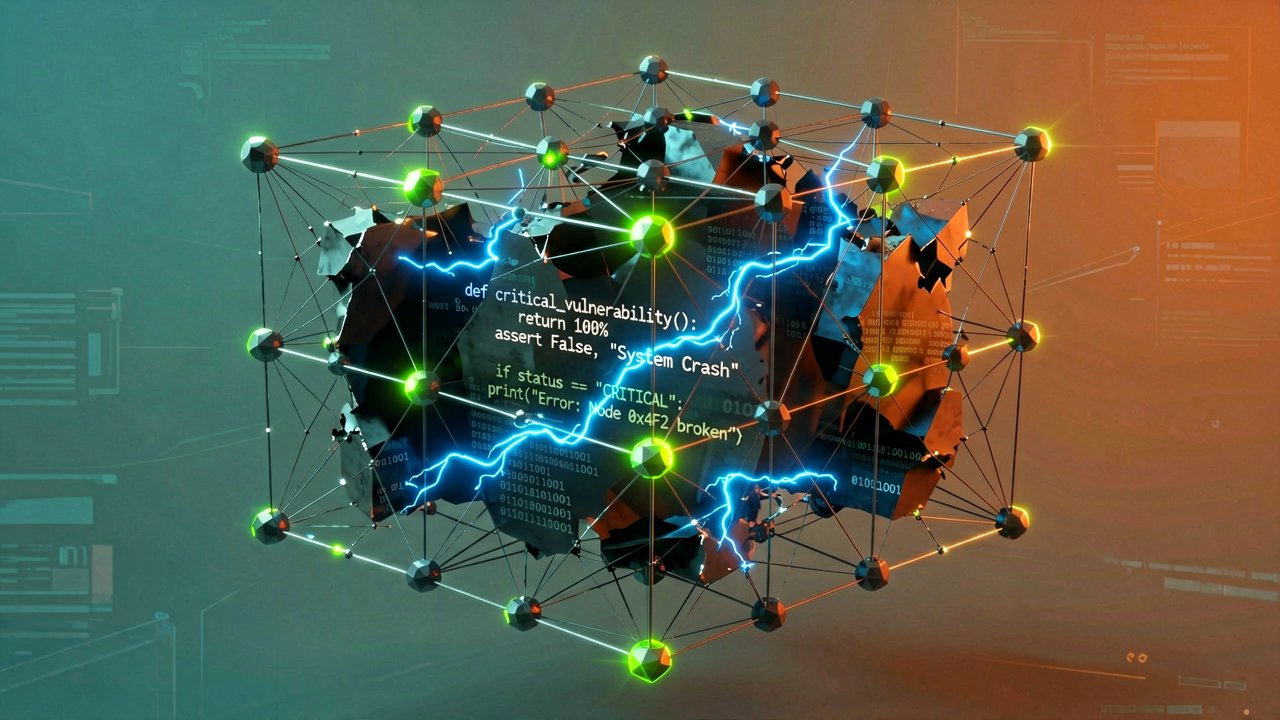
Capitol Hill is locked in a high-stakes debate over the dual-use nature of machine learning, forcing lawmakers to confront a complex paradox. During a crucial series of congressional sessions, including a prominent hearing by the House Subcommittee on Cybersecurity, Information Technology, and Government Innovation, policy experts and federal representatives gathered to dissect the rapidly evolving intersection of artificial intelligence and national defense. The proceedings underscored a sharp tension: while generative models offer revolutionary capabilities for automated threat detection, they simultaneously arm adversarial nation-states and independent cybercriminals with unprecedented tools to scale their attacks.
The legislative scrutiny intensified following revelations that advanced large language models could be manipulated to optimize malicious code and streamline complex intrusion campaigns. Leaders like Subcommittee Chairwoman Nancy Mace emphasized the critical imperative for the United States to maintain technological dominance, drawing parallels to historic space and nuclear races. Meanwhile, security officials warned that restrictive, overreaching domestic regulations could inadvertently stifle private sector innovation, effectively handing a strategic advantage to foreign competitors like China.
The Innovation vs. Defense Dilemma
Behind the Scenes: The real debate playing out in Washington isn't whether to regulate artificial intelligence, but how to do so without dismantling the defensive capabilities of American tech firms. While public reporting frequently centers on the abstract fears of autonomous malware, industry insiders are focused on a far more immediate threat: the weaponization of commercial frontier models by sophisticated threat groups. Security researchers have repeatedly demonstrated that actors backed by hostile states are actively probing these public architectures to discover structural vulnerabilities, automate spear-phishing campaigns, and accelerate software exploit development.
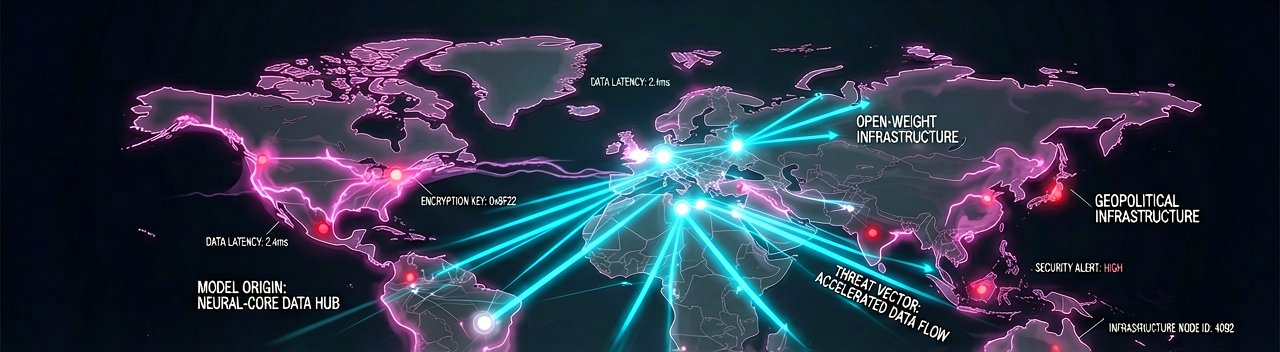
This reality has forced a dramatic shift in how Capitol Hill views the defensive perimeter. Cybersecurity is no longer just about deploying firewalls; it is increasingly about securing the sprawling, multi-layered data supply chains that feed AI models. For instance, recent joint investigations spearheaded by House panel leaders have targeted major corporate entities over their reliance on open-weight models originating from geopolitical rivals, illustrating how deeply embedded foreign code can become within standard corporate infrastructure. This raises alarms that passive commercial decisions are creating backdoor vulnerabilities within American digital ecosystems.
Striking a balance between fostering technical agility and enforcing rigid compliance remains an incredibly steep hill to climb. Technology leaders testify that over-regulation threatens to paralyze the software industry with bureaucratic red tape, which could halt the deployment of predictive security patches. Conversely, federal agencies push for standardized risk assessments to prevent flawed or easily manipulated code from being integrated into critical civilian networks. Ultimately, the consensus building inside the halls of Congress suggests that a unified national strategy—rather than a fractured patchwork of state-level mandates—presents the only viable path to protecting infrastructure while sustaining global competitiveness.
The Illusion of Total Security
Reading Between the Lines: The prevailing political narrative suggests that a flawless regulatory framework can somehow insulate national networks from AI-driven threats while keeping the economic engine of Silicon Valley running at full speed. This is a comforting illusion, but it ignores the fundamental realities of open-source software distribution. Lawmakers frequently treat advanced software models as if they were physical, quantifiable assets—like nuclear material or advanced fighter jets—that can be effectively contained within national borders by strict export controls and heavy compliance penalties. In practice, code is inherently leaky, and trying to restrict its flow often hampers the very white-hat researchers who rely on open collaboration to dismantle global botnets.
There is an inherent contradiction at the heart of these congressional hearings: the government is demanding absolute corporate accountability for AI vulnerabilities while remaining heavily dependent on those same private-sector platforms to bolster its own aging defense networks. Federal agencies are eager to deploy automated patch-management systems to fix legacy software, yet they lack the in-house technical expertise to independently audit the proprietary algorithms doing the work. This creates a dangerous feedback loop where the state delegates its sovereign security duties to corporate tech giants, blindly trusting their automated assurances until a massive, unexpected failure exposes the systemic rot underneath.
Looking further down the road, the long-term danger is not a sudden, cinematic cyber-apocalypse, but rather a slow, creeping erosion of digital trust across everyday society. As machine learning tools continue to lower the financial barrier to entry for executing hyper-personalized social engineering campaigns, the traditional indicators used to verify digital authenticity will become entirely obsolete. If every piece of incoming data—from official government communications to corporate emails—can be flawlessly faked at zero marginal cost, the resulting paranoia could easily paralyze bureaucratic decision-making and stall economic activity far more effectively than any direct, brute-force attack on physical hardware networks.

"Ultimately, watching Congress try to regulate the hyper-accelerated frontier of artificial intelligence feels a bit like watching a regional traffic court attempt to write the rules of engagement for interstellar travel—by the time the committee agrees on where to place the stop signs, the vehicles have already leaped into a completely different dimension."
Artūras Malašauskas is an AI Systems Integrator with 20+ years of production-grade web engineering experience. He has designed, shipped, and scaled enterprise Python/PHP systems for logistics, SaaS, and public-sector clients. For the past year, he has focused exclusively on AI integrations: deploying open-source LLMs, building generative media pipelines (image, audio, video), and engineering multi-agent workflows for real production environments. His standard: reproducibility, security, cost-efficient inference—no vaporware. He documents and evaluates emerging AI tooling, separating verified capabilities from marketing noise. Technical editor at: muza-ai.eu, ai-verslas.lt, ai-naujinos.lt Connect on LinkedIn
Comments