The Superintelligent Loop: Why CoreWeave’s Unified Agentic Platform Changes Everything
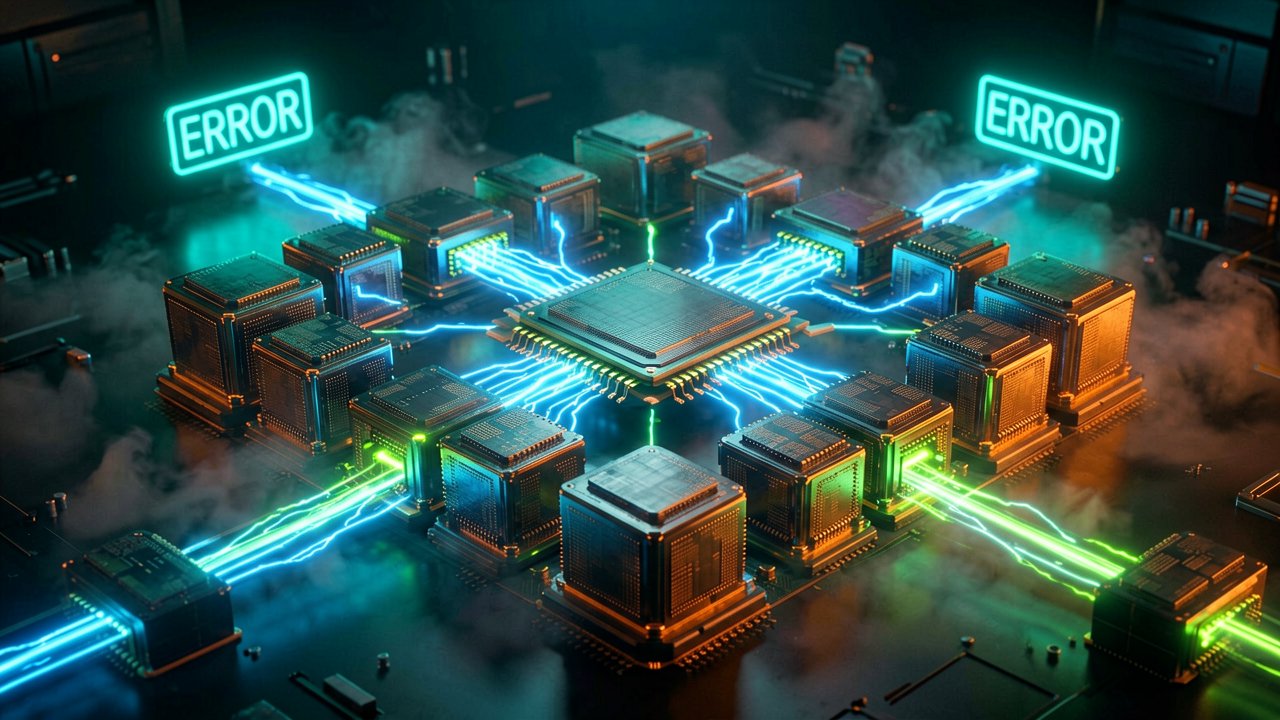
For years, the artificial intelligence pipeline has been broken. Developers would train a large language model on massive datasets, push it out into the wild for inference, and cross their fingers that it behaved under real-world traffic. If something went wrong, the process started over—offline, expensive, and frustratingly slow. But that traditional wall separating training and inference has officially collapsed. On Thursday, Yahoo Finance reported that the specialized AI hyperscaler CoreWeave launched an integrated suite of agentic capabilities designed to let AI agents autonomously learn, adapt, and repair themselves directly within production environments.
By transforming what used to be a fragmented toolchain into a continuous closed loop, the company is attempting to unlock true recursive self-improvement. Built on top of their specialized GPU infrastructure and engineered alongside their Weights & Biases division, this release aims squarely at enterprise fleets. This isn't just a marginal infrastructure update. It's a calculated move to shift the industry from static copilots to self-evolving software systems that actively work to become smarter while on the job.
Closing the Feedback Gap with Serverless RL
At the center of this architectural shift is CoreWeave's Serverless Reinforcement Learning (RL). Historically, fine-tuning an agent via RL meant spinning up complex, incredibly expensive simulated environments that drained engineering hours and compute budgets. CoreWeave bypasses this entirely by letting models learn continuously from real user data streams. The underlying math makes a compelling case: this elastic orchestration cuts overall training costs by up to 40% while accelerating development cycles by nearly 1.4x. Because training and live inference are managed on separate, always-on parallel instances, iteration cycles that previously dragged on for hours are down to mere seconds.
Observability Tailored for Agentic Fleets
You can't fix what you can't see, and debugging a multi-agent workflow is notoriously difficult when systems begin passing tasks back and forth. To address this, the company deployed new custom-built tracing and evaluation tools through W&B Weave. Instead of relying on rigid offline testing, specialized classifier models analyze production workloads in real-time, instantly flagging performance anomalies and structural failure modes. When an agent stumbles, the system automatically scores the error, routes the edge case to human reviewers, and feeds that data back into the training cycle. It creates a self-strengthening ecosystem where every operational misstep directly informs the next optimization phase.

When AI Becomes the Engineer
The most fascinating aspect of this paradigm shift is the deployment of autonomous improvement tools like W&B Skills. By embedding these capabilities directly with Model Context Protocol (MCP) servers, general-purpose coding agents are effectively transformed into automated AI researchers. These systems don't just execute pre-written scripts; they monitor live workflows, run independent optimization experiments, and engineering their own tooling. When an enterprise agent encounters a novel bottleneck, a specialized meta-agent can spin up an isolated sandbox to test prompt modifications, discover new domain-specific tools, and safely implement upgrades without breaking live applications.
The Hidden Plumbing of Self-Evolving Systems
Beneath the Marketing Gloss: The true battleground for autonomous AI isn't the raw size of the model, but the radical orchestration of data moving between silicon blocks. For the past decade, the tech industry has operated on a rigid dual-mode architecture: you either spent millions training a static model, or you spent millions running it at scale. Bridging these two distinct compute profiles in real-time has historically been a distributed systems nightmare. CoreWeave’s infrastructure play succeeds by quietly turning this engineering friction into an automated pipeline, allowing live inference workloads to seamlessly feed telemetry back into active training clusters without causing severe latency spikes for end users.
Industry insiders note that this unified framework solves a massive, unglamorous problem plaguing enterprise rollouts: data drift. When a customer service or coding agent encounters unexpected human behavior out in the wild, its performance inevitably degrades over time. By embedding autonomous reinforcement learning directly into production servers, the ecosystem turns these edge cases into valuable training data on the fly. This architecture effectively shifts the burden of model maintenance away from human engineering teams, transferring the tedious tasks of tracing errors, collecting logs, and retraining systems directly to the software itself.
This paradigm shift has sparked intense discussion among cloud providers and venture capitalists alike. Traditional hyperscalers have built their massive business models on predictable, long-running virtual machines, which are fundamentally ill-suited for the chaotic, bursting workloads of self-improving agent fleets. By optimizing their bare-metal infrastructure specifically for rapid, elastic scaling, the specialist cloud provider is forcing legacy tech giants to reconsider how they provision compute. Analysts suggest this structural advantage could fundamentally rewrite the economics of corporate AI deployment by slashing long-term maintenance overhead.
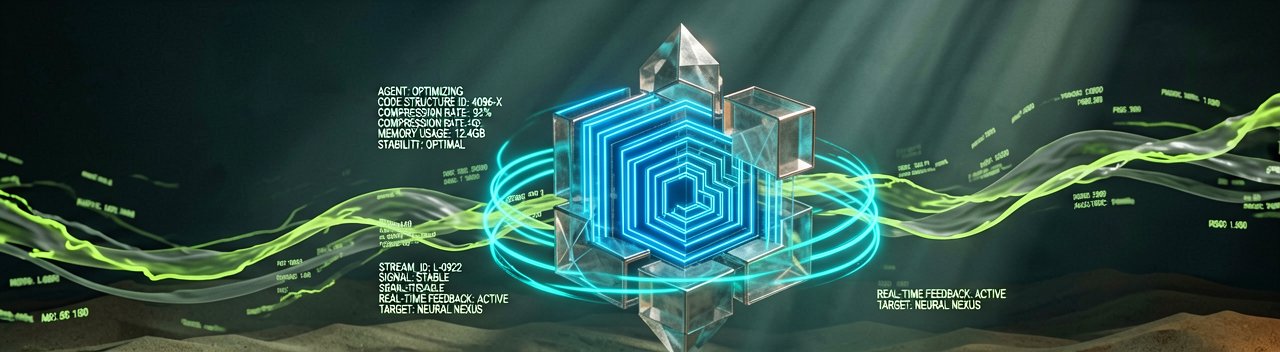
However, seasoned developers remain cautiously optimistic about giving software the keys to its own source code. The concept of an agent autonomously writing new tools and implementing its own upgrades raises critical questions regarding safety, predictability, and compliance. If a code-generation agent alters its own processing pipeline to optimize for speed, tracing a subsequent system failure becomes an incredibly complex puzzle for human auditors. To mitigate this risk, enterprise architects are emphasizing the absolute necessity of the platform's isolated sandbox environments, ensuring that automated experiments are rigorously vetted before they ever touch critical live systems.
Looking at the broader horizon, this evolution signals the beginning of the end for static software applications. We are rapidly moving toward a world where enterprise platforms are living, breathing digital organisms that adapt to their users in real-time. By providing the underlying compute engine for this level of automation, the platform layer is no longer just a passive vendor selling GPU hours. Instead, it has become the fundamental bedrock for a new class of resilient, hyper-efficient digital workers capable of continuous, autonomous evolution.
The Reality Check for Self-Improving Silicon
Reading Between the Lines: The industry’s sudden obsession with self-improving agent ecosystems conveniently glosses over a glaring economic contradiction. Hyperscalers love to pitch autonomous optimization as a massive cost-saving miracle for the enterprise, yet these very systems require an unceasing, circular burn of high-end GPU compute to function. True recursive self-improvement means running inference, monitoring anomalies, spinning up sandbox environments, and execution-level fine-tuning simultaneously and indefinitely. For all the talk of slashing developer overhead, companies may simply find themselves trading a predictable human payroll for an unpredictable, compounding cloud invoice.
There is also a profound engineering paradox embedded in the idea of software that fixes itself. Traditional software engineering relies on deterministic outcomes; developers write code precisely so they can predict exactly how a system will behave under stress. By handing the wrenches over to autonomous optimization agents, enterprises are introducing a level of fluidity that corporate IT departments are thoroughly unprepared to handle. When an agent autonomously rewrites its own tooling or fine-tunes its classifier models over a weekend, it creates a moving target, fundamentally complicating regression testing and turning regulatory compliance into a game of whack-a-mole.
Furthermore, the reliance on synthetic data loops and automated reinforcement learning risks creating an algorithmic echo chamber. If autonomous agents primarily learn from data generated by other agents within the same ecosystem, the threat of model collapse or localized optimization loops becomes dangerously real. Without diverse, messy, and expensive human friction in the loop, these fleets risk perfecting highly specialized, incredibly efficient ways to fail. The platform’s robust observability tools are designed to catch these drift patterns, but monitoring a closed-loop system with another automated model introduces an institutional layer of grading one's own homework.
Ultimately, the transition to autonomous agent platforms will likely expose a widening divide between tech-forward disruptors and legacy industries. Silicon Valley startups will eagerly let code-generation agents patch themselves live in production, accepting occasional instability as the price of blistering speed. Meanwhile, highly regulated sectors like banking, healthcare, and critical infrastructure will view the concept of self-evolving software with absolute horror, likely keeping human engineers chained to code reviews for years to come. CoreWeave has built an undeniably impressive race car, but the actual speed of adoption will depend entirely on how many enterprise legal teams are willing to take off the seatbelts.
"We are rushing toward an era where software will tirelessly debug itself, optimize its own code, and aggressively manage its own infrastructure, finally freeing human engineers to spend their entire day sitting in meetings trying to figure out what the software actually did."
Artūras Malašauskas is an AI Systems Integrator with 20+ years of production-grade web engineering experience. He has designed, shipped, and scaled enterprise Python/PHP systems for logistics, SaaS, and public-sector clients. For the past year, he has focused exclusively on AI integrations: deploying open-source LLMs, building generative media pipelines (image, audio, video), and engineering multi-agent workflows for real production environments. His standard: reproducibility, security, cost-efficient inference—no vaporware. He documents and evaluates emerging AI tooling, separating verified capabilities from marketing noise. Technical editor at: muza-ai.eu, ai-verslas.lt, ai-naujinos.lt Connect on LinkedIn
Comments