The Fractured Promise of Automation: Why Game Devs Are Turning on Generative AI
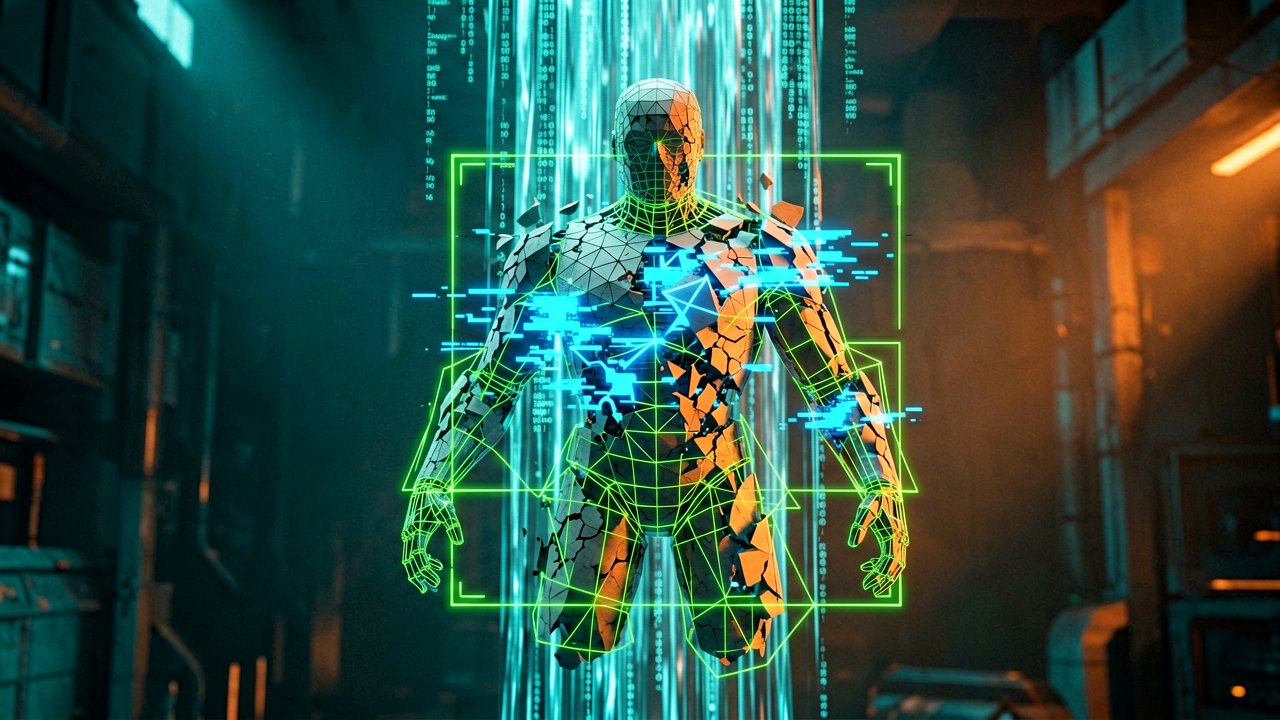
The gaming industry has always flirted with cutting-edge tech, but its relationship with generative AI is hitting a massive rough patch. According to the recent State of the Game Industry report published by the The Verge, a staggering 52% of game industry professionals now believe generative AI is having a negative impact on the business. That is a massive spike from the 30% who felt that way in 2025, and a mere 18% in 2024. The data paints a clear picture of a workforce increasingly pushy about the realities of automation.
What we are looking at is not just a philosophical debate over artistic integrity, but a practical bottleneck. While executive suites champion these tools to optimize pipelines and compress development timelines, the actual infrastructure of game development is feeling the strain. Creative teams are finding that sorting through AI-generated clutter, fixing flawed code, and wrestling with massive data pipelines often creates more work than it saves. This friction is causing a distinct corporate-creative divide across major studios.
The Reality of the Developer Backlash
The resistance is coming loudest from those closest to the engine. Technical artists, narrative designers, and programmers are leading the skepticism. Data compiled by Game Developer reveals that 64% of visual and technical artists view the technology unfavorably, closely followed by 63% of game designers. They are the ones dealing with the "hallucinations" and the technical debt left behind by uncurated machine learning outputs.
Meanwhile, the actual usage of these tools tells a more nuanced story. Only about 36% of developers admit to using generative AI in their daily workflows, and the vast majority of that usage is restricted to backend productivity tasks. Think brainstorming, writing basic code scripts, or drafting emails. Only a tiny fraction, roughly 5%, actually allow AI-generated assets to make it into the final product that players see. The fear of player backlash and copyright litigation has kept most commercial studios incredibly cautious about letting machine learning touch the final game files.
Market Shifts and Structural Strain
This technological pushback comes at a fragile moment for the global gaming economy. Studios are grappling with tightening budgets, a brutal wave of industry-wide layoffs, and a dramatic shift toward self-funding. Executives are desperately searching for a silver bullet to lower production costs, yet the tools they are leaning on require massive engineering support to be useful.
Instead of acting as a seamless shortcut, generative AI is currently functioning as an additional layer of technical infrastructure that engineering teams must maintain. Curating specific tools, building secure internal data pipelines, and establishing studio-wide AI policies—which have jumped from 51% in 2024 to 78%—requires significant human oversight. The dream of a streamlined, automated development pipeline is proving to be a high-maintenance reality that the current workforce is simply too exhausted to bear.
What the Executive Summaries Miss: The Engineering Reality of Automated Debt
Beneath the glossy corporate slides pitching generative AI as an immediate cost-cutter lies a brutal engineering reality that seasoned developers call the "cleanup tax." When an automated tool generates a 3D asset or a block of code in seconds, it shifts the labor rather than eliminating it. Senior technical directors are finding that their highest-paid engineers are spending an inordinate amount of time debugging unoptimized, hallucinated code or fixing broken asset geometry that does not align with the game engine’s physics parameters. It is a new form of technical debt that accumulates faster than teams can pay it off.
Historically, game development has evolved through predictable tool shifts, from the transition to 3D graphics in the 1990s to the adoption of commercial game engines like Unreal and Unity in the 2010s. Those shifts succeeded because they provided deterministic, reliable tools that gave creators absolute control over their output. Generative AI, by contrast, is fundamentally probabilistic. It introduces a variable randomness into a production pipeline that requires strict precision, turning what should be a straightforward engineering task into a chaotic game of trial and error.

This unpredictability is creating a profound cultural rift between studio executives and the production floor. Leadership, facing immense pressure from investors to shrink budgets after years of post-pandemic over-expansion, looks at AI as a macroeconomic shield. Mid-level producers and leads, however, are caught in the middle. They are tasked with hitting aggressive milestones using downsized teams, while dealing with the reality that the automated tools meant to help them actually introduce a high volume of corrupted data into the main development branch.
Furthermore, the infrastructural strain extends straight into studio server architecture and data governance. Large-scale studios cannot simply use public, consumer-facing AI models due to catastrophic risks regarding intellectual property contamination. Building proprietary, walled-garden models requires immense computational power, continuous dataset curation, and constant legal auditing. The massive investments required to stand up these secure internal systems are actively draining capital that could otherwise fund traditional, human-led prototyping and creative pre-production.
Ultimately, the industry is discovering that game development is a highly interconnected web where changing one variable breaks ten others. When automated tools flood a project with rapid, unvetted iterations, the downstream departments—like quality assurance, optimization, and localization—are completely overwhelmed. Until the technology can respect the rigid dependencies of game architecture, the push for automation will continue to generate more friction than actual fuel for the creative process.
Reading Between the Lines: The Myth of the Push-Button Video Game
The great paradox of the current AI gold rush in game development is that the very executives championing automation are inadvertently devaluing the product they sell. For decades, the primary justification for a $70 price tag on a modern blockbuster game has been its sheer, undeniable human scale—the meticulous craft, the intentional world-building, and the thousands of hours poured into every pixel. By loudly broadcasting their desire to automate these processes away, publishers are conditioning their audience to view the final product as a cheap commodity. It is a marketing contradiction that will inevitably collide with consumer willingness to pay premium prices for machine-churned content.
This push also exposes a profound misunderstanding of how creative breakthroughs actually happen in the medium. Historically, the most iconic mechanics and artistic styles in gaming emerged not from smooth, optimized pipelines, but from human developers wrestling with technical limitations and making happy accidents. Generative models, trained entirely on existing data, can only ever regurgitate a statistical average of what has already been built. The structural implication is a looming era of creative stagnation, where games look increasingly uniform, polished to a fault, but completely devoid of the idiosyncratic friction that makes art memorable.
Furthermore, the assumption that AI will democratize game development and allow tiny indie teams to compete with massive publishers is falling apart under scrutiny. While a solo developer can use machine learning to quickly generate concept art or boilerplate code, the massive AAA studios are the ones with the capital to build private, high-speed model pipelines trained on decades of proprietary, high-quality data. Instead of leveling the playing field, the infrastructure strain is widening the gap. Small studios are left using generic, publicly available models that invite legal risks, while industry giants solidify their monopolies behind walled data gardens.
Looking ahead, the industry is likely heading toward a sharp correction rather than a seamless integration. As the initial hype cycle cools and investment capital demands actual returns on efficiency, the hidden costs of AI oversight will become impossible to ignore. Studios will be forced to reckon with the fact that they have traded a predictable workforce of passionate creators for an unpredictable network of algorithms that require a permanent army of human editors, lawyers, and system engineers just to keep the project from collapsing under its own automated weight.
"We were promised a future where machines would handle the grueling, tedious infrastructure math so humans could spend all their time dreaming up wild new worlds. Instead, we have ended up with machines desperately trying to do the dreaming, while human engineers spend eighty hours a week cleaning up the technical equivalent of an automated living room flood."
Artūras Malašauskas is an AI Systems Integrator with 20+ years of production-grade web engineering experience. He has designed, shipped, and scaled enterprise Python/PHP systems for logistics, SaaS, and public-sector clients. For the past year, he has focused exclusively on AI integrations: deploying open-source LLMs, building generative media pipelines (image, audio, video), and engineering multi-agent workflows for real production environments. His standard: reproducibility, security, cost-efficient inference—no vaporware. He documents and evaluates emerging AI tooling, separating verified capabilities from marketing noise. Technical editor at: muza-ai.eu, ai-verslas.lt, ai-naujinos.lt Connect on LinkedIn
Comments