The Sovereign Social Graph: How Farcaster Is Redefining Digital Privacy and Platform Control
For over a decade, our digital lives have been held hostage by a handful of corporate boardrooms. Every update, algorithmic tweak, and policy shift on mainstream networks reminds us that we do not own our online presence; we merely rent it. However, a profound structural shift is quietly altering the landscape as decentralized architectures challenge the status quo.
At the center of this movement stands Farcaster, an open-source protocol built on the Optimism blockchain that treats identity as a portable asset rather than a corporate commodity. By separating the underlying social graph from the applications used to view it, the network fundamentally alters how we think about user autonomy. It is an ambitious attempt to restore the open spirit of the early internet while addressing modern security needs.
Breaking the Corporate Stranglehold on Identity
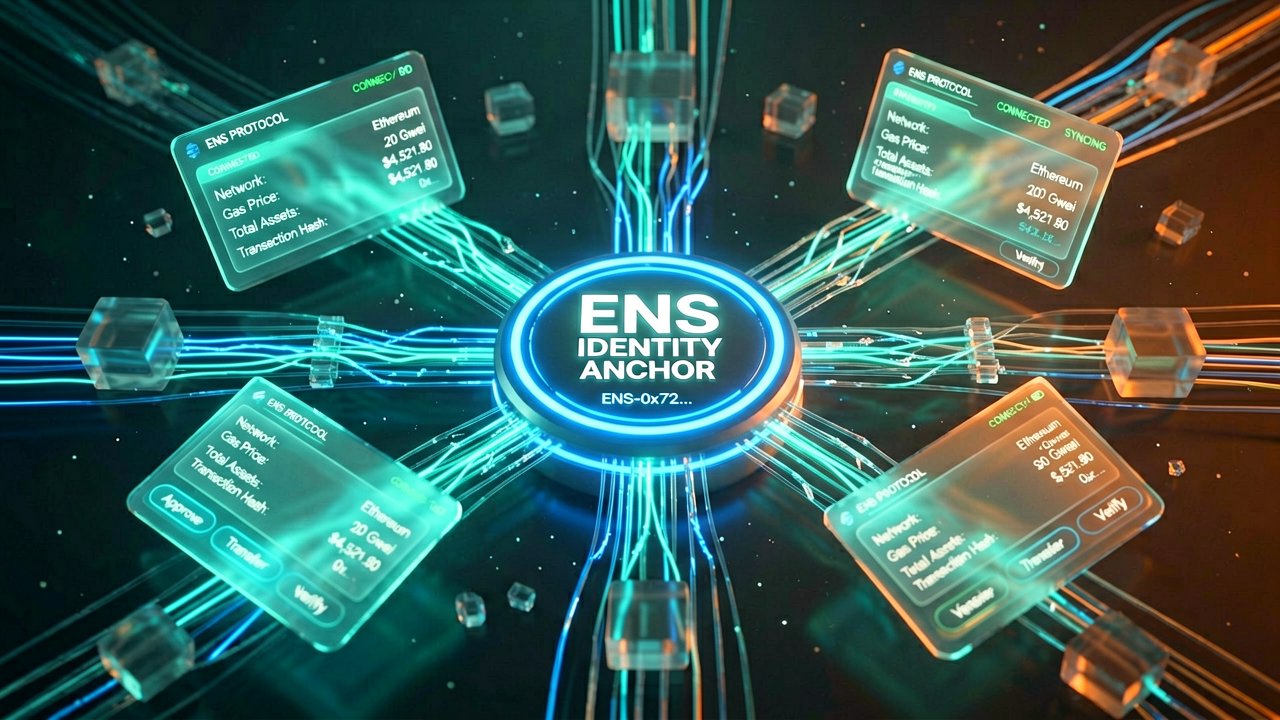
In the traditional Web2 model, your followers, content history, and digital reputation belong entirely to the platform hosting them. If a centralized entity decides to change its monetization rules or suspend your account, your entire digital footprint vanishes overnight. Farcaster dismantles this monopoly through a hybrid architecture that anchors your unique identity on-chain via the Ethereum Name Service (ENS), while off-chain data hubs handle everyday interactions like posts and reactions.
This design choice delivers genuine data portability. If you become dissatisfied with the flagship interface, Warpcast, you can seamlessly migrate your entire audience and history to any other application built on the same protocol. Detailed architectural reviews on DappRadar emphasize how this framework creates an ecosystem where developers must compete on user experience rather than relying on locked-in data moats.

A Privacy Paradigm Shift
Mainstream networks rely on massive data centers to track your clicks, location, and private habits to power invasive ad networks. Conversely, decentralized networks minimize corporate data harvesting by removing the central middleman entirely. Because interactions occur across a distributed web of hubs, there is no single target for data breaches or state-sponsored surveillance operations.
Furthermore, the protocol utilizes delegated cryptographic keys to authorize specific mini-apps without exposing your primary wallet or identity to vulnerabilities. This mechanism keeps your core digital footprint secure while granting the freedom to experiment across the ecosystem. As explained in documentation from Gate Learn, this cryptographic foundation ensures that users maintain absolute sovereignty over their personal information and content distribution.
Market Transitions and Long-Term Viability
The transition toward decentralized social spaces has not been without growing pains. After an initial surge of mainstream hype driven by interactive features like "Frames," the ecosystem underwent a necessary phase of stabilization and restructuring. Industry analysis from CoinDesk notes that operational management and core infrastructure responsibilities shifted to dedicated providers like Neynar, signaling a move from speculative venture hype to sustainable, utility-focused growth.
This maturation highlights a broader trend where success is measured by developer innovation and infrastructure resilience rather than volatile user metrics. By building an open environment that natively supports digital payments, decentralized governance, and cross-application identity, the protocol lays the groundwork for an internet where users, not corporations, dictate the rules of engagement.

Deep-Dive: The Infrastructure Gamble and the Fight for Protocol Neutrality
What Most Reports Miss: The true battlefield for the future of decentralized social networks is not the user interface, but the grueling, low-margin world of data storage and relay infrastructure. In the early days of Farcaster, running a data hub—the software that stores and syncs the entire network's history—was a badge of honor for individual crypto-idealists. However, as millions of images, text posts, and interactive mini-apps flooded the network, the hardware requirements quietly ballooned. This stealthy escalation created an architectural bottleneck that few outside the developer community anticipated, forcing a quiet centralization of data handling.
This technical pressure catalyzed a major market transition as third-party infrastructure providers stepped in to bear the burden. When independent nodes found the storage costs prohibitive, managed infrastructure services became the backbone of the ecosystem, handling the heavy lifting of indexing and data delivery. This shift introduces a fascinating paradox for a network built on the promise of absolute decentralization. While it allows small developers to launch feature-rich apps overnight without managing complex server stacks, it also creates new, centralized choke points that could theoretically be targeted by regulators or corporate acquisition.
Early-stage developers and protocol purists view this evolution with a mix of pragmatism and anxiety. On one hand, offloading server maintenance to dedicated infrastructure firms has dramatically accelerated application performance, bringing the user experience closer to the seamless speed of legacy platforms. On the other hand, it introduces a layer of platform dependency that mirrors the Web2 ecosystems Farcaster set out to replace. If a handful of infrastructure giants control the data pipelines, the theoretical portability of the social graph faces practical limitations, as migrating to a new provider remains technically daunting for average creators.
Simultaneously, the economic model governing this data storage introduces a unique form of digital real estate management. Unlike legacy networks that monetize user attention to pay for data centers, this protocol requires users to rent storage space on the network annually via small cryptographic payments. This economic friction naturally deters automated spam bots and low-value content, resulting in higher-quality interactions. Venture capital firms and Web3 strategists track this experiment closely, recognizing that shifting storage costs directly to the consumer could either pioneer a sustainable financial model or serve as a permanent barrier to mass-market adoption.
Ultimately, the ongoing maturation of the network highlights a broader philosophical debate regarding what platform control truly means in a post-corporate internet. The core protocol remains radically open, ensuring that no single entity can revoke a user's digital identity or steal their audience graph. However, the operational realities of scaling a global network mean that total independence is an illusion; users simply trade corporate gatekeepers for infrastructure partners. The survival of this new paradigm depends entirely on maintaining a competitive marketplace among these backend providers, ensuring that no single firm gains the leverage to dictate terms to the broader ecosystem.
Reading Between the Lines: The Reality of Cryptographic Sovereignty
Reading Between the Lines: The intoxicating promise of absolute platform control ignores a fundamental truth about human behavior: convenience almost always triumphs over ideology. For all the praise heaped upon portable social graphs, the vast majority of users do not actually want to manage their own cryptographic keys or pay annual storage fees just to post internet memes. The industry often mistakes the enthusiasm of an insular, tech-literate elite for a mass-market mandate. In reality, the moment a decentralized application requires a multi-step onboarding process or a baseline understanding of blockchain gas fees, it alienates the very casual users needed to build a vibrant social ecosystem.
This friction exposes a glaring contradiction in the narrative of decentralized privacy. To bypass these UX hurdles and capture a broader audience, developers routinely build centralized web gateways that abstract away the blockchain entirely. While this makes the platform look and feel exactly like a slick legacy network, it quietly reintroduces the exact vulnerabilities users are trying to escape. If an ordinary user interacts with a decentralized protocol through a heavily mediated web interface that manages their keys and stores their preferences on centralized servers, the cryptographic revolution becomes little more than a marketing gimmick running on an expensive backend database.
Furthermore, the celebrated absence of a central content moderator is a double-edged sword that platform purists rarely like to confront. While protocol-level neutrality prevents corporate censorship, it also means the underlying network cannot easily purge malicious actors, coordinated disinformation campaigns, or illegal content. Legacy networks spend billions of dollars annually on content moderation teams and automated filtering systems to keep their feeds advertiser-friendly. By shifting the burden of filtering entirely onto individual application developers, decentralized protocols create a fragmented landscape where the user experience is highly unpredictable and enterprise advertisers are deeply hesitant to spend money.
This economic hesitation points to a precarious financial reality for the entire movement. Without a robust, predictable advertising model or a massive, sustained influx of user subscription fees, the long-term viability of these networks remains highly speculative. Venture capital can subsidize the infrastructure and development costs during the initial growth phases, but eventually, the network must pay for itself. If the mainstream public refuses to adopt paid storage models, and brands refuse to advertise in unmoderated spaces, the ecosystem risks turning into an expensive ghost town populated primarily by automated bots and crypto traders talking to one another.
Ultimately, the true impact of this decentralized shift will not be a sudden, dramatic collapse of legacy social media giants, but a slow, quiet re-engineering of developer expectations. The protocol's architectural triumphs will likely be absorbed into the broader tech ecosystem as a feature rather than an entirely separate internet. The corporate gatekeepers of today will simply adapt, adopting the underlying database technologies to lower their own operational costs while maintaining tight control over the user experience and ad revenue. True digital sovereignty, it turns out, is a luxury that requires more effort than the average internet user is willing to invest.
We spent a decade begging tech giants to respect our data privacy, only to build an open alternative where we cheerfully pay out of our own pockets for the privilege of hosting our own data, managing our own security, and moderating our own feeds—proving that the ultimate frontier of digital liberation looks suspiciously like a second full-time job.
Artūras Malašauskas is an AI Systems Integrator with 20+ years of production-grade web engineering experience. He has designed, shipped, and scaled enterprise Python/PHP systems for logistics, SaaS, and public-sector clients. For the past year, he has focused exclusively on AI integrations: deploying open-source LLMs, building generative media pipelines (image, audio, video), and engineering multi-agent workflows for real production environments. His standard: reproducibility, security, cost-efficient inference—no vaporware. He documents and evaluates emerging AI tooling, separating verified capabilities from marketing noise. Technical editor at: muza-ai.eu, ai-verslas.lt, ai-naujinos.lt Connect on LinkedIn
Comments