The Real Stakes Behind the Screenless Push: Decoupling Wearable AI from the Smartphone
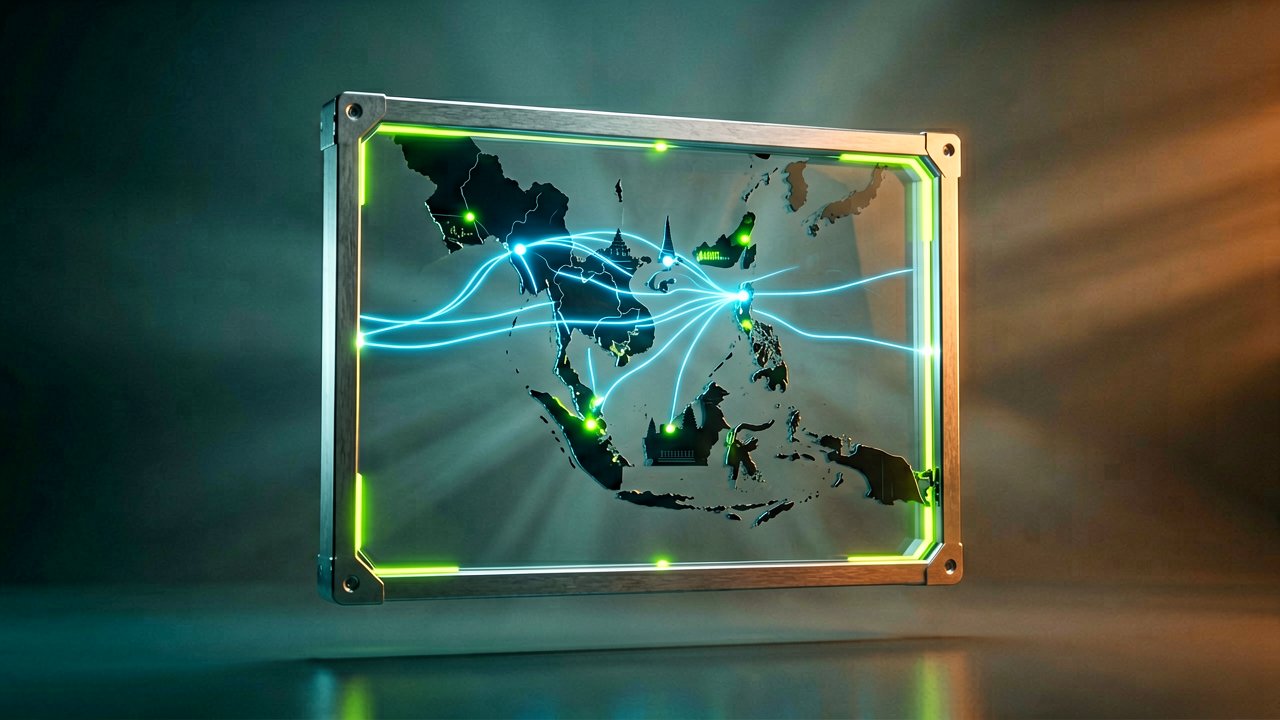
What Most Reports Miss: The hardware arms race in smart eyewear is quietly shifting away from immersive holographic displays toward pure, unadulterated audio-and-perception computing. When hardware pioneer Rokid stripped the screen entirely from its 38.5-gram Style model earlier this year, it wasn't just trying to shave off manufacturing costs. By opting for a design that mirrors classic fashion frames rather than a sci-fi visor, the brand made a calculated bet that the immediate future of consumer artificial intelligence is meant to be heard and felt, not necessarily seen. This strategic pivot bypasses the strict thermal and battery limitations that have plagued augmented reality for a decade, moving the battlefield to regional ecosystem adaptability.
In Southeast Asia, a region characterized by mobile-first economies and highly fragmented digital payment infrastructure, this screenless approach solves a massive logistical headache. Stripping out complex optical waveguides allows these devices to plummet in price, landing in consumer hands through regional partnerships like Indonesia's PT Denka Pratama Indonesia. More importantly, it turns the glasses into a frictionless conduit for local services. Instead of trying to force users into a proprietary app store, the hardware serves as a neutral framework capable of running localized agentic workflows and cross-border fintech integrations right out of the box.
The Localized AI Battleground
While Western tech giants focus heavily on deep integration with their own closed software ecosystems, the expansion into markets like Indonesia and the Philippines relies on a completely different playbook. Success in these territories demands an open-door policy for large language models, allowing devices to fluidly alternate between global tools and localized platforms like Alibaba's Qwen or regional systems. This architectural openness means a user navigating a bustling night market can receive real-time, ultra-low-latency translation or contextual voice prompts tailored to local dialects, something rigid, mono-model ecosystems struggle to deploy efficiently.
Furthermore, the physical footprint of these rollouts highlights a major shift toward mainstream lifestyle retail. Moving away from specialized electronics hobby shops, hardware brands are occupying high-traffic consumer hubs, exemplified by expansive pop-up operations at the SMX Mall of Asia in the Philippines. By treating smart eyewear as an everyday fashion accessory that happens to possess a 12-megapixel camera and a localized AI brain, the industry is successfully lowering the psychological barrier to entry for the average consumer.
Beyond the Toy Phase
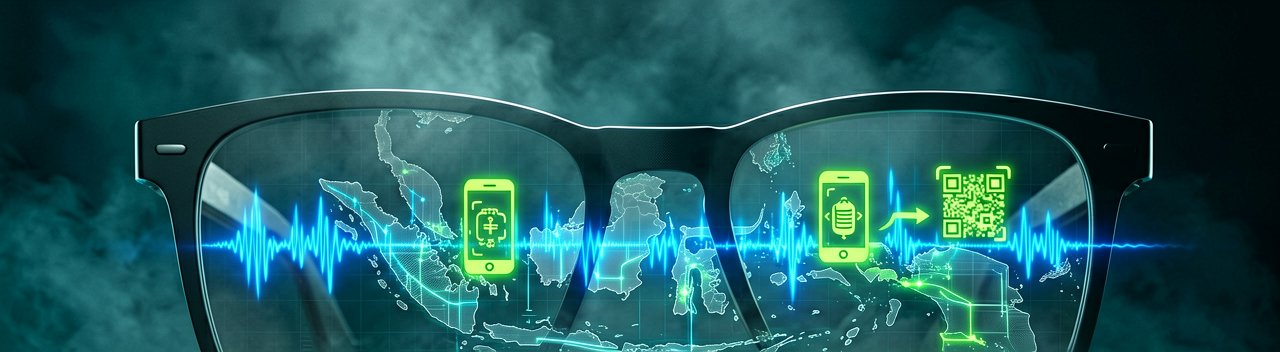
The ultimate goal of this hardware evolution is the total decoupling of wearable intelligence from the smartphone. For years, smart glasses have acted as expensive, glorified Bluetooth headsets tethered entirely to the processing power in a user's pocket. The latest push toward independent spatial computing platforms aims to establish eyewear as the primary interface for daily life. This means handling everything from voice-activated navigation to hands-free biometric payments via global financial networks entirely on the face.
As developer communities build thousands of localized micro-agents for these open wearable platforms, the focus is firmly on practical utility over novel entertainment. The technology is rapidly transitioning from a luxury plaything for early adopters into a lightweight, accessible utility. For the rapidly evolving consumer base across Southeast Asia, these screenless devices are positioning themselves not as a secondary accessory, but as the inevitable successor to the mobile screen.The Tethered Illusion of Independence
Reading Between the Lines: The industry’s triumphant narrative surrounding screenless AI glasses conveniently glosses over a glaring technical contradiction. Hardware manufacturers loudly celebrate the decoupling of eyewear from the smartphone, yet these featherweight frames remain entirely dependent on cloud-based neural networks to perform even basic contextual analysis. Stripping the display out of the chassis solves the immediate issues of battery drain and thermal throttling, but it shifts the computational burden onto a wireless data pipeline that is only as reliable as the nearest cellular tower. In a region where high-speed 5G infrastructure remains heavily concentrated in major urban centers, the dream of seamless ambient computing frequently stumbles into the reality of intermittent connectivity.
This reliance on cloud infrastructure exposes a deeper economic friction regarding data monetization and operational costs. Processing thousands of voice queries and image tokens through sophisticated large language models requires immense server power, a recurring expense that a one-time hardware purchase cannot sustain indefinitely. While brands aggressively expand their physical retail footprints across emerging markets to drive initial device sales, the long-term viability of these platforms hinges on a transition toward premium subscription tiers or targeted audio advertisements. The average consumer may eagerly embrace a stylish, affordable pair of smart glasses, but their enthusiasm is likely to sour the moment a monthly payload invoice arrives to unlock the device's full analytical capabilities.
Privacy in the Age of Invisible Lenses
Furthermore, the push to camouflage AI technology inside conventional fashion frames introduces an unsettling social dynamic that regulators are completely unequipped to handle. Unlike bulkier mixed-reality headsets that clearly signal when a user is recording or processing their environment, screenless smart glasses are explicitly designed to blend in unnoticed. The inclusion of subtle recording indicators does little to mitigate the privacy anxieties of bystanders in crowded public spaces. As these devices proliferate across public transit and retail hubs, the boundary between casual observation and continuous data harvesting becomes entirely invisible, setting the stage for inevitable legislative pushback.

Ultimately, the rapid adoption of screenless wearables might not represent a permanent shift in consumer behavior, but rather a temporary compromise born of current hardware limitations. Tech companies are betting that audio-first interfaces will train the public to accept head-worn computers as a permanent fixture of daily life. However, once the engineering hurdles of power consumption and waveguide transparency are inevitably solved, the screen will return, and the industry will pivot back to visual overlays. For now, consumers are being asked to buy into an intermediate ecosystem that strips away the most transformative elements of augmented reality under the guise of minimalist design.
It turns out the bridge to the cybernetic future isn't a dazzling holographic display, but a pair of overgrown sunglasses that politely whisper instructions on how to pay for your morning coffee while quietly hoping the local cellular network doesn't drop the call.
Artūras Malašauskas is an AI Systems Integrator with 20+ years of production-grade web engineering experience. He has designed, shipped, and scaled enterprise Python/PHP systems for logistics, SaaS, and public-sector clients. For the past year, he has focused exclusively on AI integrations: deploying open-source LLMs, building generative media pipelines (image, audio, video), and engineering multi-agent workflows for real production environments. His standard: reproducibility, security, cost-efficient inference—no vaporware. He documents and evaluates emerging AI tooling, separating verified capabilities from marketing noise. Technical editor at: muza-ai.eu, ai-verslas.lt, ai-naujinos.lt Connect on LinkedIn
Comments