AI Agents Take Center Stage: Base’s MCP Transforms Onchain Operations Landscape

The intersection of artificial intelligence and web3 just found its universal standard. With the official rollout of the Base Model Context Protocol server, Coinbase's layer-2 network has successfully bridged the gap between LLMs and decentralized networks. By deploying this architecture, developers can now grant popular AI clients like Anthropic's Claude Desktop and development environments like Cursor direct, secure access to the blockchain. This eliminates the siloed, custom codebases that previously throttled autonomous agent development.
Historically, building an intelligent agent capable of moving funds, deploying smart contracts, or interacting with decentralized finance protocols required a tedious web of custom APIs and rigid, hardcoded rules. The introduction of the Base MCP server leverages the open-source communication layer originally introduced by Anthropic. This approach transforms how language models interact with external data environments, serving essentially as a plug-and-play USB-C port for crypto tooling. The development shifts the narrative away from speculative chat bots toward highly capable digital assistants operating autonomously within the onchain economy.
The Architecture of Onchain Autonomy
What Most Reports Miss: The true breakthrough of this deployment lies not in the mere execution of transactions, but in the structural standardization of the agent-to-blockchain communication layer. By formalizing these interactions, the Base framework empowers an LLM to dynamically determine when to query a balance, transfer assets, or trigger third-party protocols like Morpho vaults. The underlying protocol handles the structural friction, converting natural language intent into valid JSON-RPC requests without compromising security boundaries.
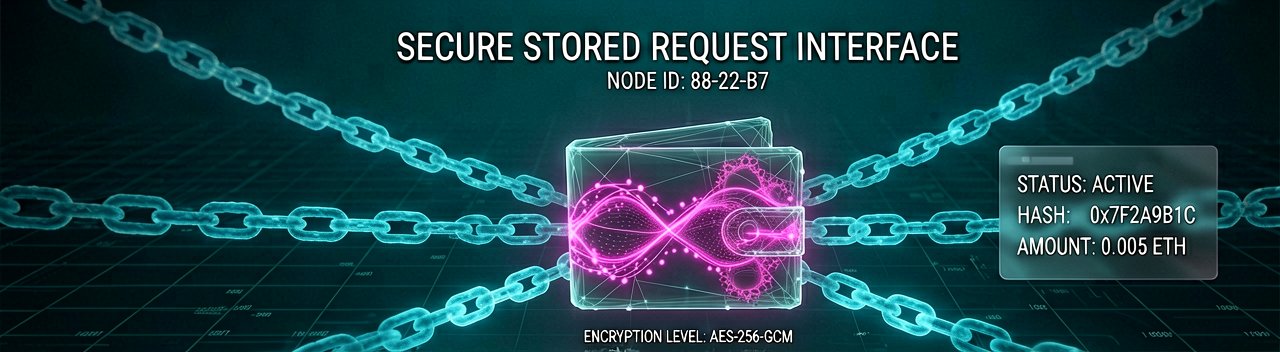
This operational paradigm thrives on a critical abstraction mechanism. Rather than granting an AI model direct custody of a user's master keys, the authentication pipeline relies on secure stored requests. When an agent determines that a web3 action is necessary, it initiates a transaction request that generates a unique identification link. This dynamic routing allows users to retain final signing authority via clear-text transaction variables, ensuring that autonomous efficiency does not come at the expense of sovereign asset control.
Market Shifts and Ecosystem Implications
The broader tech landscape is rapidly pivoting toward an agentic economy where software operates independently on behalf of individuals and enterprises. By positioning its layer-2 network as the native environment for these digital entities, Coinbase is fundamentally rewriting the playbook for blockchain adoption. Infrastructure projects listed on the MCP Market demonstrate an immediate broadening of utility, stretching from basic wallet monitoring to full-scale automated asset distribution.
As these systems mature, the friction of interacting with decentralized protocols will likely fade entirely into the background of user interfaces. Instead of manually navigating complex dashboards, users will simply delegate multi-step operational objectives to specialized assistants. This structural evolution signals a profound market shift, establishing a standard where liquid capital and autonomous intelligence natively converge on a unified ledger.
The intersection of artificial intelligence and web3 just found its universal standard. With the official rollout of the Base Model Context Protocol server, Coinbase's layer-2 network has successfully bridged the gap between LLMs and decentralized networks. By deploying this architecture, developers can now grant popular AI clients like Anthropic's Claude Desktop and development environments like Cursor direct, secure access to the blockchain. This eliminates the siloed, custom codebases that previously throttled autonomous agent development.
Historically, building an intelligent agent capable of moving funds, deploying smart contracts, or interacting with decentralized finance protocols required a tedious web of custom APIs and rigid, hardcoded rules. The introduction of the Base MCP server leverages the open-source communication layer originally introduced by Anthropic. This approach transforms how language models interact with external data environments, serving essentially as a plug-and-play USB-C port for crypto tooling. The development shifts the narrative away from speculative chat bots toward highly capable digital assistants operating autonomously within the onchain economy.
The Architecture of Onchain Autonomy
What Most Reports Miss: The true breakthrough of this deployment lies not in the mere execution of transactions, but in the structural standardization of the agent-to-blockchain communication layer. By formalizing these interactions, the Base framework empowers an LLM to dynamically determine when to query a balance, transfer assets, or trigger third-party protocols like Morpho vaults. The underlying protocol handles the structural friction, converting natural language intent into valid JSON-RPC requests without compromising security boundaries.
This operational paradigm thrives on a critical abstraction mechanism. Rather than granting an AI model direct custody of a user's master keys, the authentication pipeline relies on secure stored requests. When an agent determines that a web3 action is necessary, it initiates a transaction request that generates a unique identification link. This dynamic routing allows users to retain final signing authority via clear-text transaction variables, ensuring that autonomous efficiency does not come at the expense of sovereign asset control.
Market Shifts and Ecosystem Implications
The broader tech landscape is rapidly pivoting toward an agentic economy where software operates independently on behalf of individuals and enterprises. By positioning its layer-2 network as the native environment for these digital entities, Coinbase is fundamentally rewriting the playbook for blockchain adoption. Infrastructure projects listed on the MCP Market demonstrate an immediate broadening of utility, stretching from basic wallet monitoring to full-scale automated asset distribution.
As these systems mature, the friction of interacting with decentralized protocols will likely fade entirely into the background of user interfaces. Instead of manually navigating complex dashboards, users will simply delegate multi-step operational objectives to specialized assistants. This structural evolution signals a profound market shift, establishing a standard where liquid capital and autonomous intelligence natively converge on a unified ledger.
The Friction of Algorithmic Governance
Reading Between the Lines: The corporate enthusiasm surrounding standardized agent protocols deliberately glossses over a glaring architectural contradiction. Industry leaders champion the vision of autonomous code running complex financial strategies, yet the underlying language models remain notoriously prone to logical drift and hallucinations. Entrusting a multi-step DeFi liquidation loop to a system that occasionally forgets basic arithmetic introduces a layer of systemic volatility that no standard security audit can easily patch.
Furthermore, the current mitigation strategy of requiring human-in-the-loop verification introduces its own structural bottleneck. If a human supervisor must manually review every complex transaction payload generated by an AI agent, the promised speed and scaling advantages of an automated onchain economy essentially evaporate. We are left with a paradox where the system is only truly efficient when it is entirely unchecked, yet entirely terrifying to deploy without constant manual surveillance.
This tension exposes a deeper misalignment between the deterministic nature of blockchain ledgers and the probabilistic chaos of neural networks. Blockchains are designed to be immutable, unforgiving environments where an invalid opcode or a misdirected transfer results in immediate, irreversible financial loss. Language models, conversely, operate on statistical approximations and fluid context windows. Forcing these two fundamentally opposing philosophies into a tight technical marriage via MCP servers creates a fascinating, high-stakes sandbox where a minor software update on the LLM side could radically redefine how an agent interprets a smart contract parameter.
"We are rapidly entering an era where your digital assistant can accidentally drain your corporate treasury while confidently explaining the macroeconomic brilliance of its investment strategy in flawless natural language."
Artūras Malašauskas is an AI Systems Integrator with 20+ years of production-grade web engineering experience. He has designed, shipped, and scaled enterprise Python/PHP systems for logistics, SaaS, and public-sector clients. For the past year, he has focused exclusively on AI integrations: deploying open-source LLMs, building generative media pipelines (image, audio, video), and engineering multi-agent workflows for real production environments. His standard: reproducibility, security, cost-efficient inference—no vaporware. He documents and evaluates emerging AI tooling, separating verified capabilities from marketing noise. Technical editor at: muza-ai.eu, ai-verslas.lt, ai-naujinos.lt Connect on LinkedIn
Comments