The Agentic Shift: Why Base’s AI Wallet Push Has Crypto Purists on Edge
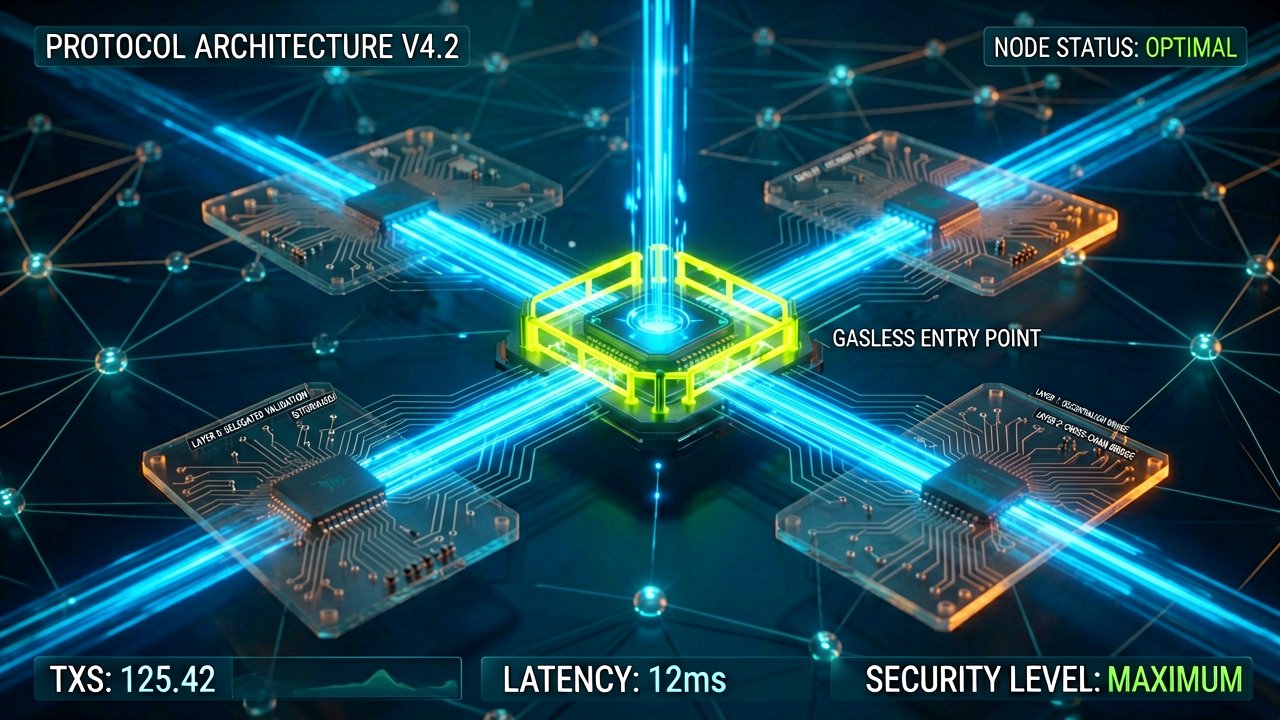
The line between human intention and machine autonomy on the blockchain just got thinner. In February 2026, Coinbase-backed Layer-2 network Base shook up the developer ecosystem by introducing a suite of native developer toolkits designed to spin up autonomous AI agents with fully integrated onchain wallets. Spearheaded by core infrastructure teams at the Coinbase Developer Platform, these tools aim to turn code into independent economic actors capable of spending, earning, and launching tokens natively on the network.
While tech evangelists hail this as the dawn of the "Agentic Web," the release has sparked an intense, polarized debate throughout the web3 community. Optimists view it as a massive engine for transaction volume and network utility. Skeptical purists, conversely, argue that flooding the network with programmatic bots threatens to distort the organic economy, dilute human-to-human interactions, and introduce unpredictable systemic risks to the decentralized ecosystem.
A Network Built for Non-Human Wallets
At the center of this technological leap is the deployment of specialized infrastructure engineered specifically for software processes rather than human fingers. Instead of clunky browser extensions or seed phrases, these AI agents utilize automated, gasless architecture built directly into the protocol level. This framework enables continuous, round-the-clock decentralized finance operations without needing manual sign-offs for every micro-transaction.
Developers are already utilizing these tools to create autonomous liquidity providers, algorithmic sentiment traders, and automated digital-art creators that sell their work and reinvest the proceeds. By removing user-experience friction for software code, the network is aggressively prioritizing a future where machines handle the heavy lifting of liquidity management, transforming how protocols capture value.

The Decentralized Economy at a Crossroads
The pushback from critics highlights a deeper philosophical divide regarding the ultimate purpose of blockchain technology. Many old-school decentralized finance participants fear that a market dominated by lightning-fast AI workflows will squeeze out retail users, creating an asymmetric playground optimized solely for high-frequency algorithms. There are also looming concerns about accountability; when an autonomous agent triggers a catastrophic cascading exploit or deploys a problematic smart contract, pinpointing liability becomes an elusive task.
Despite these criticisms, proponents argue that machine-to-machine payments represent the most logical path forward for global economic expansion. As digital ecosystems scale, human intervention becomes a literal bottleneck. By giving artificial intelligence a native wallet, the industry might finally bridge the gap between abstract computing power and tangible onchain financial utility.
What Most Reports Miss: The tension surrounding this launch is not just about rogue algorithms or server costs; it is an existential battle over the liquidity layer itself. For years, the crypto industry has struggled to sustain active web3 user metrics, but the introduction of programmatic consumers radically alters that equation. By shifting the target demographic from human retail traders to autonomous digital software agents, infrastructure providers are effectively designing an alternative, self-sustaining loop of transaction demand.
This structural change heavily alters how networks compete for dominance. While traditional layer-2 systems rely on speculative governance token incentives and complex loyalty points programs to retain human capital, the new paradigm relies entirely on raw developer tooling and execution speed. Algorithms care nothing for community hype or decentralized governance voting rights; they migrate purely to whichever environment offers the lowest latencies, the sturdiest API infrastructure, and frictionless, gasless execution pathways.

Consequently, the real risk to the ecosystem is a subtle form of economic distortion. If the majority of transaction volume on a network originates from automated bots trading with other automated bots, the traditional metrics used to evaluate network health—such as total value locked or unique active wallets—become highly decoupled from genuine human adoption. Analysts are left parsing a digital funhouse mirror, trying to distinguish authentic economic utility from an insular echo chamber of machine-generated velocity.
Furthermore, this rapid evolution places immense pressure on security audit frameworks, which were fundamentally built around predictable human interaction speeds. Autonomous agents running on advanced language models do not wait for weekly community reviews before executing strategic multi-hop swaps or interacting with newly deployed, unverified smart contracts. The speed at which an algorithmic exploit could ripple through interconnected decentralized finance pools now demands a completely new class of real-time, AI-driven defensive security guardrails.
The Hidden Cost of Automated Volume
Reading Between the Lines: The celebration of soaring transaction metrics ignores a fundamental paradox at the heart of this automated expansion. Network advocates frequently point to skyrocketing wallet creation as proof of ecosystem vitality, yet this metric loses all meaning when a single developer can programmatically deploy thousands of economic agents in an afternoon. Measuring the health of a financial network based on machine interactions creates an inflation of activity that looks impressive on investor slide decks but tells us remarkably little about real-world utility or sustainable adoption.
This discrepancy exposes a glaring contradiction in the current regulatory and compliance narrative. Major exchange-backed networks have spent years building strict compliance frameworks and identity verification systems to satisfy global regulators and institutional capital. Now, by intentionally streamlining the pipeline for completely anonymous, self-directed code blocks to handle financial assets, the industry is building a massive backdoor around the very guardrails meant to legitimize it. The assumption that regulators will treat an autonomous software script differently than an unverified human user is a dangerous gamble that could invite swift, heavy-handed policy crackdowns.
Moreover, the long-term economic sustainability of an economy built on machine-to-machine micro-payments remains entirely unproven. AI agents operate on cold math, optimizing every interaction to the absolute fraction of a cent, which means they will instinctively drain every drop of inefficiency out of decentralized markets. While this hyper-efficiency sounds ideal in theory, it completely destroys the yield opportunities and retail spreads that attract human participants in the first place. By optimizing the ecosystem solely for automated agents, networks risk building a sterile, hyper-efficient desert where human capital cannot afford to compete.
The ultimate irony of the web3 evolution may be that after spending a decade trying to convince the global public to become their own banks, the industry immediately outsourced the job to algorithms that do not even know what money is.
Artūras Malašauskas is an AI Systems Integrator with 20+ years of production-grade web engineering experience. He has designed, shipped, and scaled enterprise Python/PHP systems for logistics, SaaS, and public-sector clients. For the past year, he has focused exclusively on AI integrations: deploying open-source LLMs, building generative media pipelines (image, audio, video), and engineering multi-agent workflows for real production environments. His standard: reproducibility, security, cost-efficient inference—no vaporware. He documents and evaluates emerging AI tooling, separating verified capabilities from marketing noise. Technical editor at: muza-ai.eu, ai-verslas.lt, ai-naujinos.lt Connect on LinkedIn
Comments