The Agentic Economy Moves Inbound: Base Unlocks the AI Wallet Layer
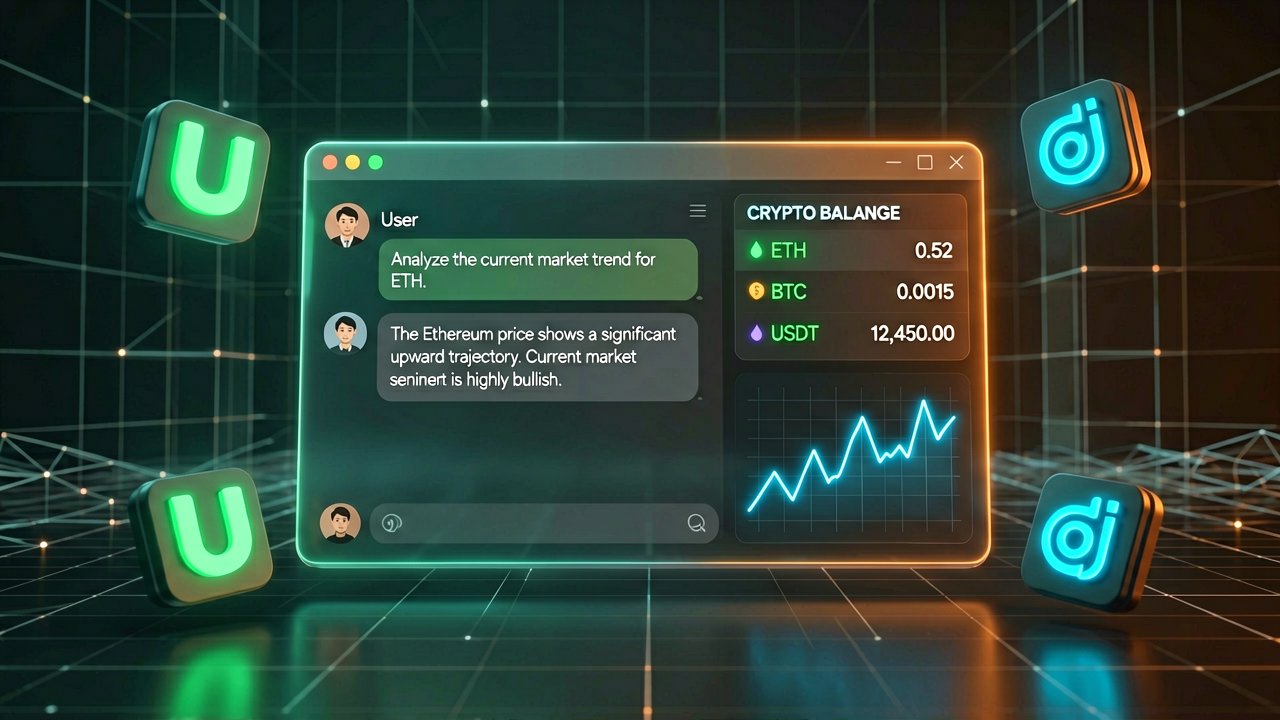
The traditional internet interface is quietly dying, and Coinbase’s Layer-2 network is building the new front door. On May 26, 2026, Base rolled out Base MCP, a developer tool utilizing Anthropic's open-source Model Context Protocol to seamlessly integrate onchain crypto wallets directly into conversational AI environments. By breaking down the barrier between complex smart contract infrastructure and large language models, this tool turns standard consumer AI interfaces like ChatGPT, Claude, and the developer-centric Cursor into functional crypto portals. Instead of relying on a proprietary web dashboard, users can now instruct an agent to look up their portfolio balance, swap tokens, or shift liquidity entirely within a chat window.
What Most Reports Miss: The Death of the DApp Front-End
Behind the Scenes: The launch of Base MCP isn't just a minor technical upgrade for crypto hobbyists; it signals a monumental paradigm shift away from traditional decentralized application (dApp) front-ends. For the past decade, using decentralized finance (DeFi) required navigating a fragmented landscape of single-purpose websites, connecting web3 browser extensions, and manually signing confusing cryptographic hex strings. According to , Base MCP acts as a unifying translation layer, removing the need for users to hop between isolated apps or understand the underlying plumbing of disparate protocols. When an AI client natively understands the Base network, the user's natural language becomes the universal interface, radically compressing the user experience and lowering the steep learning curve that has long hindered mainstream crypto adoption.
This technical evolution leans heavily on the foundational open standard introduced by Anthropic in late 2024, which normalized how AI models interact with secure data silos and external tools. Rather than building separate API integrations for every emerging AI app, Base tapped into this existing, rapidly growing ecosystem to gain immediate distribution across mainstream developer platforms. Industry analysts note that this approach solves a massive discovery problem for web3 builders, as reported by CoinDesk, allowing decentralized protocols to simply "show up" inside the software where developers and retail users are already spending most of their time. The initial batch of launch plugins already includes major liquidity hubs like Uniswap, Aerodrome, Morpho, and Moonwell, proving that the heaviest hitters in DeFi are moving quickly to occupy this new conversational real estate.
Security, Sovereignty, and the Guardrails of Agentic Finance
However, empowering a digital assistant to move real money introduces an entirely new vector of consumer risk, forcing Coinbase to walk a fine line between autonomy and security. As detailed by Fortune, Coinbase’s Head of AI Product, Lincoln Murr, emphasized that while Base MCP gives AI agents unprecedented versatility, it does not mean users are handing over blank checks. Every single transaction generated by an AI agent still requires explicit, manual approval from the human owner before any funds can leave the wallet. This strict guardrail ensures that even if an AI model suffers from a hallucination or interprets a prompt incorrectly, it cannot drain a user's life savings without them noticing the confirmation prompt.

Furthermore, this architecture redefines what it means to hold an "agentic wallet" by anchoring the asset portfolio to the user rather than isolating it within a terminal. Coinbase’s vision ensures that a user’s historical data and crypto balance sync seamlessly across the Base ecosystem, whether they are executing commands in an IDE like Cursor or checking their mobile app on the go. By pairing this release with their existing infrastructure—such as AgentKit and the x402 micropayment standard—Base is laying the foundations for an internet where software doesn't just suggest economic actions, but securely participates in them.
The traditional internet interface is quietly dying, and Coinbase’s Layer-2 network is building the new front door. On May 26, 2026, Base rolled out Base MCP, a developer tool utilizing Anthropic's open-source Model Context Protocol to seamlessly integrate onchain crypto wallets directly into conversational AI environments. By breaking down the barrier between complex smart contract infrastructure and large language models, this tool turns standard consumer AI interfaces like ChatGPT, Claude, and the developer-centric Cursor into functional crypto portals. Instead of relying on a proprietary web dashboard, users can now instruct an agent to look up their portfolio balance, swap tokens, or shift liquidity entirely within a chat window.
What Most Reports Miss: The Death of the DApp Front-End
Behind the Scenes: The launch of Base MCP isn't just a minor technical upgrade for crypto hobbyists; it signals a monumental paradigm shift away from traditional decentralized application (dApp) front-ends. For the past decade, using decentralized finance (DeFi) required navigating a fragmented landscape of single-purpose websites, connecting web3 browser extensions, and manually signing confusing cryptographic hex strings. According to CoinMarketCap, Base MCP acts as a unifying translation layer, removing the need for users to hop between isolated apps or understand the underlying plumbing of disparate protocols. When an AI client natively understands the Base network, the user's natural language becomes the universal interface, radically compressing the user experience and lowering the steep learning curve that has long hindered mainstream crypto adoption.
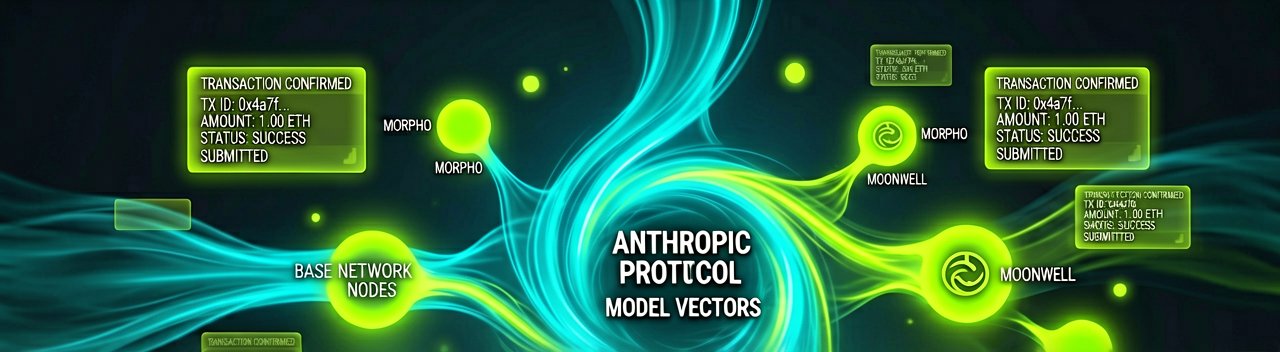
This technical evolution leans heavily on the foundational open standard introduced by Anthropic in late 2024, which normalized how AI models interact with secure data silos and external tools. Rather than building separate API integrations for every emerging AI app, Base tapped into this existing, rapidly growing ecosystem to gain immediate distribution across mainstream developer platforms. Industry analysts note that this approach solves a massive discovery problem for web3 builders, as reported by CoinDesk, allowing decentralized protocols to simply "show up" inside the software where developers and retail users are already spending most of their time. The initial batch of launch plugins already includes major liquidity hubs like Uniswap, Aerodrome, Morpho, and Moonwell, proving that the heaviest hitters in DeFi are moving quickly to occupy this new conversational real estate.
Security, Sovereignty, and the Guardrails of Agentic Finance
However, empowering a digital assistant to move real money introduces an entirely new vector of consumer risk, forcing Coinbase to walk a fine line between autonomy and security. As detailed by Fortune, Coinbase’s Head of AI Product, Lincoln Murr, emphasized that while Base MCP gives AI agents unprecedented versatility, it does not mean users are handing over blank checks. Every single transaction generated by an AI agent still requires explicit, manual approval from the human owner before any funds can leave the wallet. This strict guardrail ensures that even if an AI model suffers from a hallucination or interprets a prompt incorrectly, it cannot drain a user's life savings without them noticing the confirmation prompt.
Furthermore, this architecture redefines what it means to hold an "agentic wallet" by anchoring the asset portfolio to the user rather than isolating it within a terminal. Coinbase’s vision ensures that a user’s historical data and crypto balance sync seamlessly across the Base ecosystem, whether they are executing commands in an IDE like Cursor or checking their mobile app on the go. By pairing this release with their existing infrastructure—such as AgentKit and the x402 micropayment standard—Base is laying the foundations for an internet where software doesn't just suggest economic actions, but securely participates in them.
The Realities of the AI-to-Onchain Pipeline
Reading Between the Lines: The industry-wide exuberance surrounding Base MCP glosses over a fundamental tension between crypto's core ethos and the corporate reality of large language models. Web3 has long evangelized censorship resistance, permissionless access, and trustless infrastructure. Yet, by channeling this entire financial paradigm through AI clients controlled by highly centralized tech giants like OpenAI and Microsoft, the industry is effectively outsourcing its front-end sovereignty to gatekeepers who can rewrite platform terms or block specific prompts at a whim.
This dynamic introduces a stark logistical contradiction regarding user friction and security design. Coinbase rightly champions the safety net of human-in-the-loop transaction confirmation to prevent catastrophic losses. However, forcing a user to manually approve every micro-transaction directly defeats the ultimate value proposition of autonomous, hands-free AI agents. If an investor must constantly babysit a chat window to click 'approve' on twenty consecutive DeFi rebalancing steps, the experience is merely a repackaged version of the old web browser extension, offering negligible efficiency gains disguised as a futuristic breakthrough.
The broader vision of an independent agentic economy also presumes a high level of mathematical precision from models that remain notoriously prone to basic logic failures. Entrusting a conversational AI with the task of parsing volatile gas fees, routing slippery token swaps, or monitoring liquidation thresholds requires a level of deterministic accuracy that current LLMs simply do not possess. Until these models transition from unpredictable creative partners to flawless execution engines, the intersection of conversational AI and real capital allocation remains an expensive experiment in public beta testing.
We are officially entering the era where your AI can hallucinate a market crash, draft an algorithmic recovery plan, and prompt you to sign away your assets before you have even had your morning coffee.
Artūras Malašauskas is an AI Systems Integrator with 20+ years of production-grade web engineering experience. He has designed, shipped, and scaled enterprise Python/PHP systems for logistics, SaaS, and public-sector clients. For the past year, he has focused exclusively on AI integrations: deploying open-source LLMs, building generative media pipelines (image, audio, video), and engineering multi-agent workflows for real production environments. His standard: reproducibility, security, cost-efficient inference—no vaporware. He documents and evaluates emerging AI tooling, separating verified capabilities from marketing noise. Technical editor at: muza-ai.eu, ai-verslas.lt, ai-naujinos.lt Connect on LinkedIn
Comments