The Machine in the Sandbox: Ubisoft’s Far Cry 7 R&D Signals a Hard Shift in Game Design

Ubisoft is steering its flagship franchises directly into the controversial waters of machine learning, fundamentally shifting how the industry approaches high-budget game development. In its May 2026 financial earnings report, the French publishing giant confirmed that it is actively "accelerating investments" into generative artificial intelligence to streamline production pipelines and craft novel, player-facing experiences. Rather than confining these experiments to sterile laboratories, the company has integrated its emerging in-house generative AI tools directly into the live development sandbox of the highly anticipated Far Cry 7.
The strategy came to light when prominent industry insider Tom Henderson revealed that Ubisoft developers have been actively prompting and testing these automated tools within early builds of the unannounced shooter. While the company publicly framed the initiative as a way to manage the escalating complexity and financial strain of modern game design—hot on the heels of a staggering €1.3 billion fiscal loss—the reality on the ground highlights the rough edges of tech-driven automation. According to reporting by TheGamer, early internal results of these AI experiments were described as looking incredibly unpolished, illustrating a widening chasm between corporate efficiency goals and genuine creative execution.
Flagship Titles as Corporate Test Beds
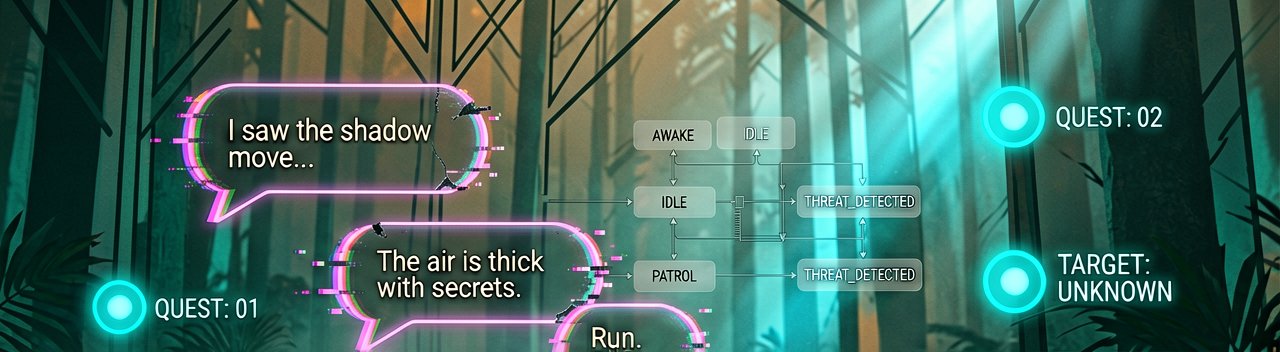
Historically, publishers developed algorithmic tools and behavior models in isolated research divisions like Ubisoft’s La Forge before attempting to scale them. By using a massive, active production environment like Far Cry 7 as an evaluative R&D sandbox, Ubisoft is altering the traditional lifecycle of game engineering. The studio is betting heavily on proprietary, in-house infrastructure to automate repetitive dialogue and dynamic non-player character responses, attempting to bypass expensive third-party licensing fees. However, introducing volatile, unproven tools into a mainline game structure introduces serious timeline risks, especially for a franchise desperately trying to reinvent its formula after years of player fatigue.
The Search for Soul in Automated Worlds
While industry analysts note that nearly ninety percent of major studios leverage some form of automated tooling to cope with ballooning development costs, the public pushback remains fierce. Gamers and creators alike worry that replacing human creative writing and bespoke systemic design with automated pipelines will result in sterile, repetitive environments. For a company like Ubisoft, which is trying to stabilize its financial trajectory while regaining community trust, the line between helpful developer assistance and low-quality automation is razor-thin. This aggressive push into generative systems proves that the business models governing blockbuster gaming are changing, even if the technology isn't entirely ready for prime time.
The Hidden Cost of Automated Creativity
Behind the corporate spreadsheets: Ubisoft’s aggressive reliance on automated pipelines is less about sudden technological enlightenment and more about a frantic bid for survival. Over the past decade, the Far Cry series became the poster child for what critics call the "Ubisoft formula"—massive, icon-stuffed maps that feel less like organic worlds and more like repetitive checklists. By embedding generative systems directly into Far Cry 7, leadership hopes to break this monotony mechanically without paying the massive human payroll typically required to handcraft thousands of unique, unpredictable encounters. It is a high-stakes gamble that tries to solve a creative problem with an engineering solution.
This paradigm shift has sparked intense friction within Ubisoft’s global network of studios, where veteran designers find themselves transforming into machine supervisors. Internal sources suggest that instead of writing nuanced character arcs or designing intricate puzzle spaces, developers spend a growing portion of their shifts reviewing, correcting, and filtering raw, often bizarre AI outputs. This shift in daily labor changes the very nature of game craftsmanship, fueling an underlying anxiety that creative intuition is being systematically replaced by algorithmic optimization. The tension between the developers protecting their artistic craft and executives demanding faster turnaround times has created a palpable divide across production teams.
Historically, the industry has always used automation to conquer scale, utilizing procedural generation for vast landscapes in games ranging from Diablo to No Man’s Sky. The critical difference here lies in automating human expression—specifically dialogue, behavioral quirks, and emotional beats. When a machine handles environmental geometry, players rarely object, but when a machine dictates the emotional core of a narrative, the illusion of a living world often shatters. Ubisoft’s current experimentation risks alienating a core fanbase that is already hyper-sensitive to any drop in narrative quality or voice-acting authenticity.
The broader financial community is watching this experiment with a mix of optimism and skepticism, recognizing that success could redefine profit margins for AAA development across the entire industry. If Ubisoft successfully uses these internal tools to shave twelve months off a standard five-year development cycle, competing publishers will be forced to follow suit almost instantly to remain competitive. Conversely, if Far Cry 7 launches as a disjointed, unpolished mess due to these automated shortcuts, it could severely damage the commercial viability of one of the industry's most valuable intellectual properties.
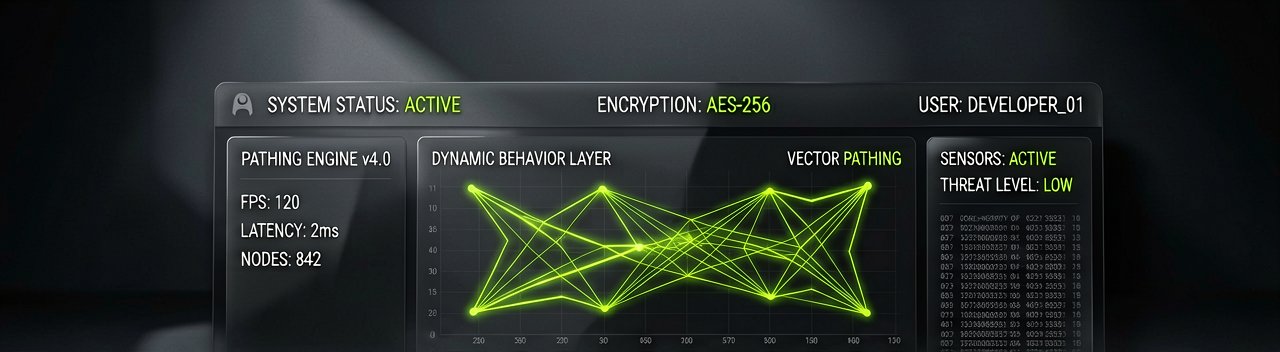
Ultimately, the sandbox of Far Cry 7 is serving as a definitive battleground for the future of interactive entertainment. The project is no longer just a video game sequel; it is a live-fire stress test of whether machine learning can genuinely capture the chaotic, emergent magic that makes open-world games compelling. As the release window approaches, the industry will soon discover whether automated systems can truly replicate the soul of human game design, or if they merely build prettier, emptier cages for players to run around in.
The Paradox of Algorithmic Chaos
Reading between the lines: There is a profound irony in Ubisoft using highly structured, mathematical models to generate the signature lawlessness of the Far Cry universe. The franchise built its reputation on systemic unpredictability, where a stray wildfire or a sudden predator attack could derail a player's mission in a glorious cascade of emergent gameplay. Attempting to manufacture this organic chaos using generative algorithms overlooks the fact that great game design relies on deliberate, human-authored tension. Machine learning models excel at predicting patterns based on past data, which is precisely the opposite of delivering a truly surprising, disruptive gameplay experience.
Furthermore, Ubisoft's public positioning contains a glaring contradiction regarding player engagement and community trust. Executives frequently champion these automated tools as a means to deliver deeper, more personalized worlds that respond uniquely to every individual player action. Yet, the current state of generative technology suggests the exact opposite outcome: a homogenous blur of content where quality is sacrificed for infinite, forgettable quantity. By replacing curated, memorable set-pieces with endless variations of algorithmically generated filler, the publisher risks exacerbating the exact consumer fatigue that tanked its recent release slate.
The long-term labor implications also reveal a deeply flawed corporate logic that could backfire spectacularly during the game's post-launch cycle. While automating early production pipelines looks incredibly cost-effective on a quarterly financial report, debugging a game driven by volatile generative systems is an engineering nightmare. When a traditional, hand-coded script breaks, a programmer can track the logic error to a specific line of code. When an interconnected web of machine learning models produces a game-breaking glitch or offensive dialogue, finding the root cause within a black-box system becomes a monumental, time-consuming task that could easily wipe out any initial budgetary savings.
Ultimately, this technological pivot highlights a broader crisis of identity plaguing the upper echelons of AAA development, where corporate strategy treats art as a pure data-scaling problem. Ubisoft is treating generative systems as a magic bullet to solve a crisis of creative stagnation, rather than addressing the structural management issues that have paralyzed its studios for years. If Far Cry 7 fails to convince a highly skeptical public that these automated systems enhance the player experience, it will stand as a stark warning to the rest of the industry that software efficiency cannot substitute for a coherent creative vision.
"In their tireless quest to automate the creative process, video game executives seem to have forgotten that players can instantly spot a world devoid of human touch. We are rapidly approaching an era where games will be effortlessly written by machines, programmed by algorithms, and subsequently played by absolutely no one."
Artūras Malašauskas is an AI Systems Integrator with 20+ years of production-grade web engineering experience. He has designed, shipped, and scaled enterprise Python/PHP systems for logistics, SaaS, and public-sector clients. For the past year, he has focused exclusively on AI integrations: deploying open-source LLMs, building generative media pipelines (image, audio, video), and engineering multi-agent workflows for real production environments. His standard: reproducibility, security, cost-efficient inference—no vaporware. He documents and evaluates emerging AI tooling, separating verified capabilities from marketing noise. Technical editor at: muza-ai.eu, ai-verslas.lt, ai-naujinos.lt Connect on LinkedIn
Comments