Gigabyte’s AORUS MASTER 16 Blur the Lines Between Elite Gaming and Pro Creation
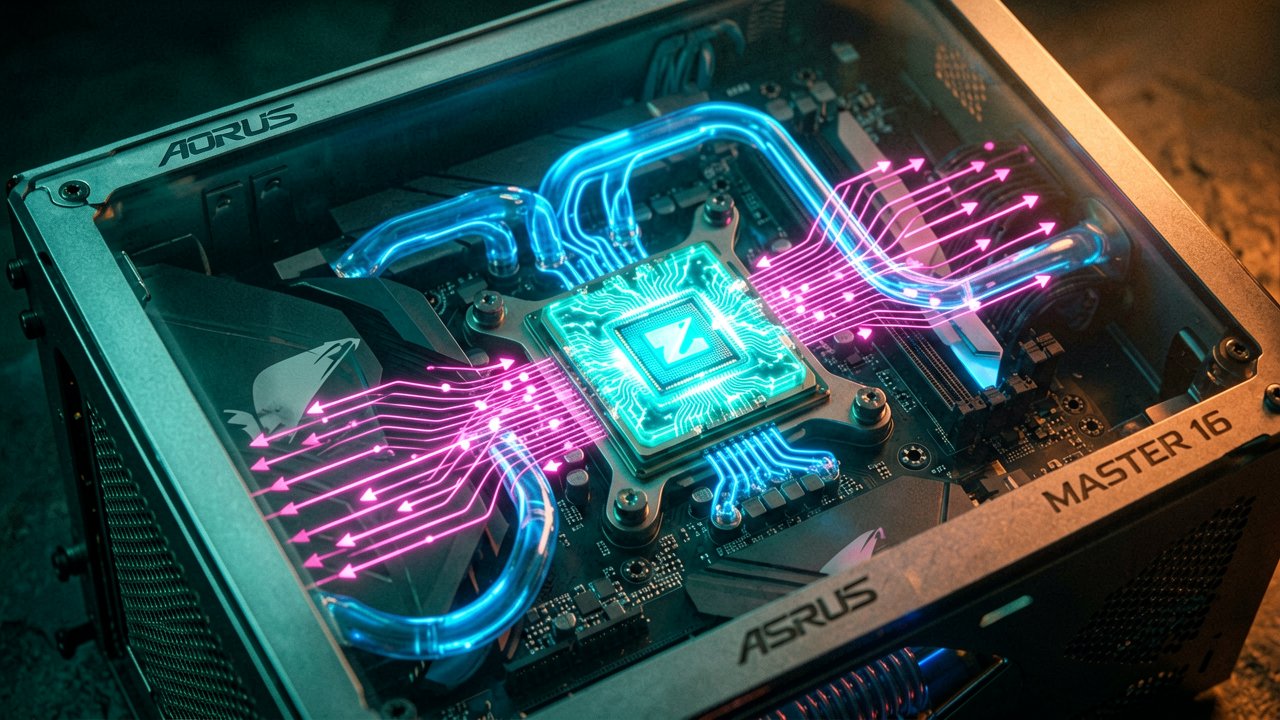
Gigabyte kicked off the year by rewriting its high-end portable playbook, officially pulling the wraps off the AI-powered AORUS MASTER 16 at the start of 2026. This machine target gamers who want blistering frame rates and creators who demand absolute color accuracy. Rather than just tossing a faster chip into an old chassis, the engineering team went back to the drawing board to build a powerhouse focused heavily on specialized local machine learning hardware.
It is clear that the hardware manufacturer is throwing its full weight behind the silicon arms race. The laptop comes in two distinct architectural flavors designed to turn heads. Power users can opt for the Intel variant packed with the Core Ultra 9 275HX processor, or swing toward the AMD edition which features the powerhouse Ryzen 9 9955HX3D Processor complete with advanced 3D V-Cache technology. Detailed breakdowns on Wccftech highlight how these processors work alongside NVIDIA GeForce RTX 50 Series Laptop GPUs to offer some of the highest local AI compute performance found in a mobile form factor today.
Uncompromised Cooling Meets Cinematic Visuals
Shoving desktop-tier hardware into a 16-inch frame usually turns a laptop into a mini space heater, but the updated thermal assembly handles the heat gracefully. The proprietary WINDFORCE Infinity EX cooling array relies on a dense vapor chamber layout and asymmetric fan blades to manage up to a massive 230-watt thermal design power. This setup allows the system to squeeze every ounce of performance out of the heavy-hitting components without forcing you to wear noise-canceling headphones during an intense render or gaming session.
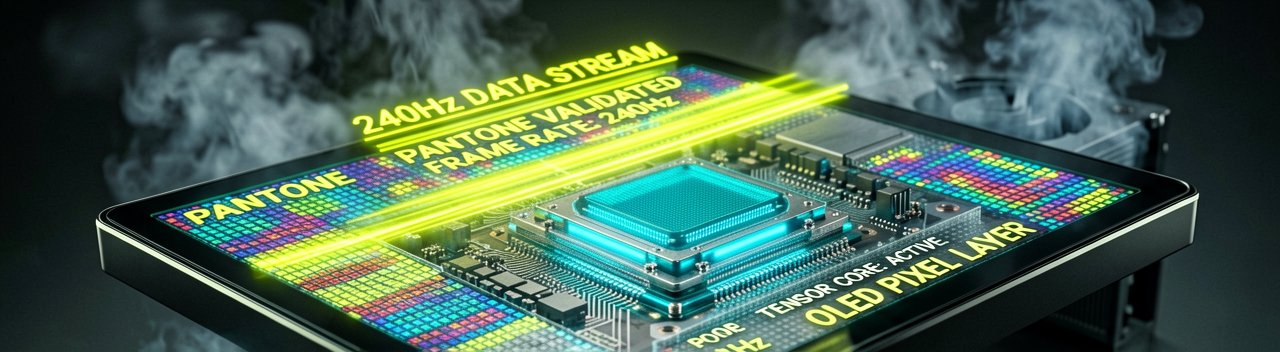
The screen is another area where this machine commands attention. Gigabyte equipped it with a 16-inch, 16:10 aspect ratio WQXGA OLED display pushing a silky smooth 240Hz refresh rate. It hits a 1,000,000:1 contrast ratio, carries VESA DisplayHDR True Black 500 certification, and comes factory pre-calibrated with Pantone Validation. This combination means you can transition from grading HDR video profiles with perfect accuracy straight into high-end competitive shooters without needing an external monitor.
Smart Automation and Next-Gen Connectivity
On the software side, the user experience revolves around GiMATE, a dedicated local AI management application. Instead of relying on rigid, pre-set performance profiles that require manual switching, this intelligent assistant constantly monitors system demands to adjust core clocks, fan curves, and display parameters dynamically. It acts as a digital co-pilot that keeps the machine running efficiently whether you are typing a script in total silence or pushing a complex 3D render to its limits.
The physical layout does not skimp on modern utilities either. The machine is fully future-proofed with Wi-Fi 7 wireless capabilities and a premium I/O layout that includes cutting-edge Thunderbolt 5 connectivity for lightning-fast external drive arrays. Coupled with an expansive 99Wh battery designed to maximize unplugged longevity and a robust quad-speaker audio system tuned by Dolby Atmos, it balances raw computing muscle with genuine everyday usability.
Behind the Silicon Strategy: Why Hardware Matters More Than Ever
What most reports miss about Gigabyte's latest flagship is that it represents a philosophical shift in laptop design, moving away from the "thin-at-all-costs" trend that dominated the last decade. Industry insiders have long whispered about the frustration of buying a top-tier mobile processor only to watch it throttle to half its speed within five minutes of heavy workloads. By engineering a chassis capable of sustaining a 230-watt thermal load, the hardware maker is catering to a growing class of professionals who care far more about sustained peak performance than saving a few millimeters of desk space.
This design choice highlights a quiet battle occurring between chip architectures. For years, choosing between Intel and AMD was a matter of minor performance deltas, but the implementation of AMD's 3D V-Cache alongside Intel's high-efficiency thread scheduling splits the market into distinct use cases. Creators leaning heavily on massive data sets or memory-bound simulation tasks are eyeing the AMD variant, while those relying on traditional single-threaded software pipelines find a familiar powerhouse in Intel's architecture. It is a brilliant play by the manufacturer to offer both flavors in identical premium housing, effectively capturing both sides of a deeply divided enthusiast market.
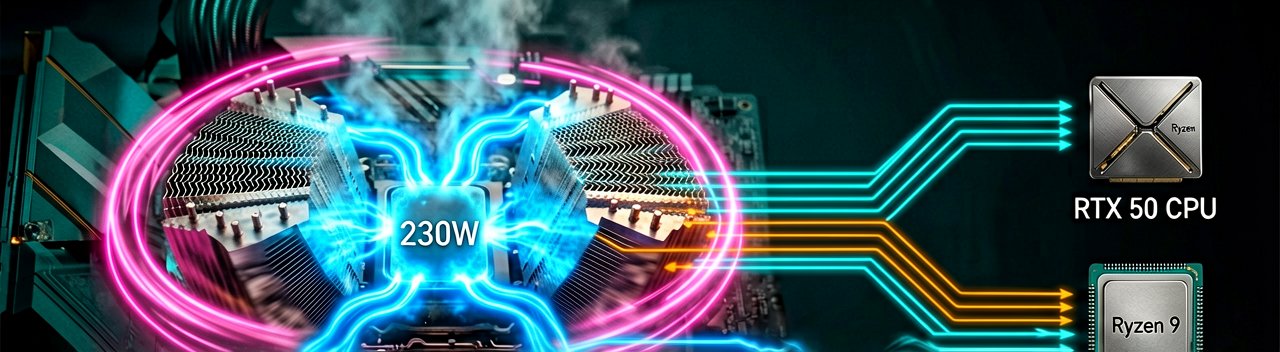
The addition of NVIDIA's GeForce RTX 50 Series silicon adds another layer of complexity to this launch. Early tester feedback suggests that the real breakthrough isn't just raw rasterization in games, but how the dedicated tensor cores handle local AI model training and video upscaling. Independent software developers are increasingly moving away from cloud-based AI tools due to subscription costs and privacy concerns, driving an unprecedented demand for localized, high-bandwidth VRAM that this machine happily provides.
Historically, products trying to bridge the gap between creative studios and hardcore gaming setups ended up compromising on the display, usually forcing buyers to choose between high refresh rates or perfect color accuracy. The inclusion of a Pantone-validated, 240Hz OLED panel marks the maturity of display manufacturing, signaling an era where a single screen can genuinely satisfy a professional colorist during the day and a competitive esports player at night. It eliminates the need for expensive secondary monitoring hardware, which heavily offsets the premium price tag for freelance professionals.
Ultimately, the success of this machine will hinge on how well the proprietary GiMATE software manages the hardware without becoming intrusive. Early adopters of AI-driven system utilities have historically complained about software bloatware interfering with manual overclocks or causing micro-stutters during intensive tasks. If this automated ecosystem delivers on its promise of invisible, background optimization, it could set a new benchmark for how high-performance laptops balance thermal limits, acoustic comfort, and raw processing power going forward.
Reading Between the Lines: The Reality of Marketing the Ultimate Hybrid
The tech industry loves a good narrative about democratization, but a cold look at the hardware reveals a distinct contradiction in the market positioning. Gigabyte is pitching this machine as a master-of-all-trades, yet the very engineering feats required to satisfy both worlds introduce friction. Hardcore gamers crave raw frame rates and microscopic input latency, while professional creators demand rock-solid driver stability and massive memory pools. Packing desktop-grade silicon into a portable chassis means balancing on a razor's edge, where a single unstable firmware update can alienate one half of the target audience while trying to appease the other.
Furthermore, the heavy emphasis on local AI capabilities feels like a calculated gamble against an uncertain software landscape. While marketing materials paint a future of seamless, localized machine learning, the vast majority of consumer-facing AI tools still rely heavily on cloud infrastructure. Forcing users to pay a steep premium for high-compute local hardware right now assumes that developers will rapidly transition to local-first applications. If cloud-based models remain the industry standard due to their sheer scale, early adopters may find themselves holding incredibly expensive, underutilized silicon that eats into battery life without providing a tangible day-to-day return on investment.
There is also the inevitable elephant in the room: thermal reality versus marketing physics. A 230-watt thermal design power is an impressive engineering milestone for a 16-inch laptop, but physics cannot be entirely outsmarted. Sustaining that level of power draw inherently means drawing massive amounts of current, which inevitably limits peak performance to when the machine is tethered to a bulky power brick. The promise of untethered, elite-tier creation on a train or in a cafe remains mostly a myth, as running these components at full tilt on battery power would likely drain the cell in under an hour while severely throttling the hardware to prevent catastrophic overheating.
Ultimately, this powerhouse represents a fascinating crossroad for the industry, pushing the boundaries of what mobile workstations can achieve while highlighting the diminishing returns of raw power scaling. As components demand more electricity to yield incremental performance gains, the definition of a "laptop" continues to warp into something closer to a transportable desktop. It is a brilliant showcase of engineering prowess, but it serves as a stark reminder that true portability and uncompromising, desktop-class performance remain fundamentally at odds.
Purchasing a machine like this is the ultimate commitment to modern paradox: you are spending thousands of dollars on a state-of-the-art portable powerhouse, only to keep it permanently plugged into a wall outlet because the sheer joy of rendering an AI-upscaled video in record time completely vanishes the moment your battery indicator starts dropping by one percent every sixty seconds.
Artūras Malašauskas is an AI Systems Integrator with 20+ years of production-grade web engineering experience. He has designed, shipped, and scaled enterprise Python/PHP systems for logistics, SaaS, and public-sector clients. For the past year, he has focused exclusively on AI integrations: deploying open-source LLMs, building generative media pipelines (image, audio, video), and engineering multi-agent workflows for real production environments. His standard: reproducibility, security, cost-efficient inference—no vaporware. He documents and evaluates emerging AI tooling, separating verified capabilities from marketing noise. Technical editor at: muza-ai.eu, ai-verslas.lt, ai-naujinos.lt Connect on LinkedIn
Comments