How Philanthropy’s $500 Million AI Bet Is Rewriting the Rules of Drug Discovery

For decades, drug discovery has been an agonizingly slow grind, a game of biological trial-and-error where billions of dollars go to die in wet labs. But we're witnessing a massive paradigm shift that might just compress decades of medical breakthroughs into mere months. In late April 2026, the Chan Zuckerberg Biohub—the biomedical research group spearheaded by Meta CEO Mark Zuckerberg and Dr. Priscilla Chan—flipped the switch on a massive five-year, $500 million endeavor called the Virtual Biology Initiative. It isn't just another tech-bro promise to disrupt healthcare; it's a structural rethink of how the global scientific community unravels disease mechanisms.
The core philosophy here is simple yet incredibly bold: if you want to build artificial intelligence capable of predicting how a human cell reacts to a complex drug cocktail or a rare genetic mutation, you need an unfathomable amount of high-resolution, multi-modal data. The tech industry has plenty of compute, but biology is notoriously messy and unstandardized. By pouring $400 million into their own cutting-edge imaging and molecular measurement systems, and deploying another $100 million to seed global scientific collaborations, Biohub is building what amounts to an open-source "digital laboratory." They've even brought in heavyweight engineering power, partnering with computational giants like Nvidia to anchor the massive GPU infrastructure required to train these next-generation world models of human cells.
Flipping the Script on Proprietary Pharma
What makes this philanthropy-backed model a true wildcard in the biotech industry is its absolute refusal to play by traditional pharmaceutical rules. Instead of hoarding chemical secrets or walling off proprietary algorithms to maximize stock value, Biohub is actively democratizing their stack. They're making their frontier software tools—like VariantFormer for translating genetic mutations and CryoLens for unsupervised structural analysis—completely free and accessible to researchers worldwide through platforms like Biohub. By putting these predictive tools directly into the hands of underfunded academic labs and nimble biotech startups, philanthropy is effectively absorbing the immense financial risk that usually prevents scientists from chasing radical, out-of-the-box therapeutic ideas.
Naturally, some old-school immunologists and clinical trial veterans remain deeply skeptical that a virtual immune system can magically cure every human ailment this century. They aren't wrong to point out that simulated cellular behavior doesn't always perfectly match the chaotic reality of a living human body. Yet, even the harshest critics concede that this collaborative data push will be utterly transformational for identifying precise drug targets early on. While traditional pharmaceutical giants focus on profitable pipelines, this AI-driven philanthropic engine is systematically building the open-source infrastructure for the next era of medicine.
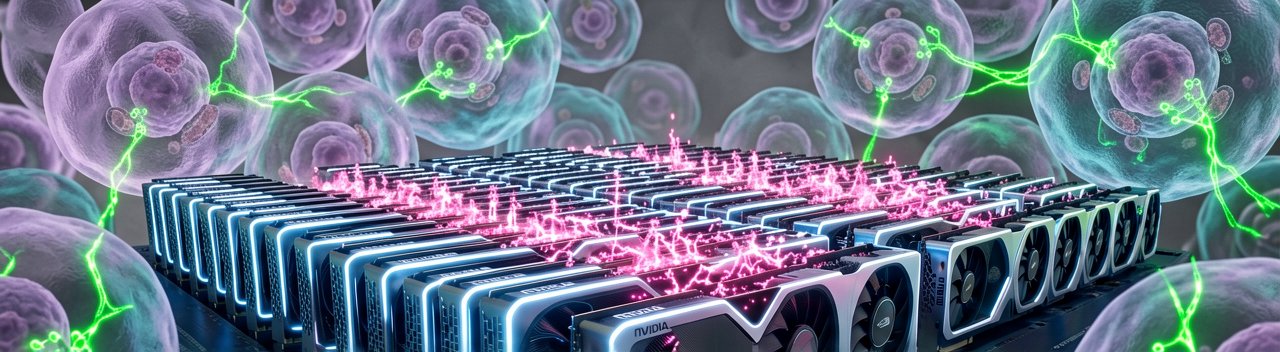
What Most Reports Miss: The true bottleneck in AI-driven medicine is not a shortage of raw computing power or clever software engineers, but the historical absence of clean, deeply standardized biological data. For decades, academic labs and commercial entities have generated data in disparate formats, effectively speaking different cellular languages. By dedicating $400 million specifically to scale internal technology infrastructure, the Chan Zuckerberg Biohub is forcing a standardization crisis onto the scientific community in the best way possible. They are generating massive, multi-modal datasets—tracking cellular behavior, genomic shifts, and protein structures under a singular, unified framework that can finally feed hungry neural networks without weeks of manual preprocessing.
This aggressive, engineering-first mentality marks a definitive pivot for the broader Biohub Network, which has spent nearly a decade laying the foundational groundwork of basic science. Early philanthropic efforts in biotech often mirrored traditional venture capital, sprinkling smaller grants across hundreds of independent academic labs. By shifting their primary resources entirely toward this central "frontier AI plus frontier biology" nexus, the organization is acknowledging that individual, siloed discoveries simply cannot scale fast enough to meet their deadline of managing all major diseases by the end of the century. The goal has evolved from merely funding discoveries to actively building the mathematical infrastructure required to simulate the entire human immune system.
The Real-World Friction of Simulated Science
Yet, bridging the gap between digital simulation and messy human biology introduces massive operational friction that elite tech teams routinely underestimate. Veteran immunologists frequently point out that a cell inside a synthetic lab organoid reacts fundamentally differently than a cell navigating a living human tissue network plagued by inflammation. The challenge lies in ensuring that models like VariantFormer do not suffer from biological hallucinations—generating elegant, theoretically sound chemical predictions that collapse the moment they encounter a real-world clinical trial. To mitigate this risk, the initiative is intentionally keeping wet labs tightly integrated with computational teams, treating every AI prediction as a hypothesis that must be immediately tested on living tissue matrices.
There is also an undeniable undercurrent of geopolitical and economic anxiety surrounding who ultimately controls the keys to these foundational biological models. While the initiative's current blueprint champions open-source collaboration, the sheer financial reality of drug manufacturing means that multi-billion-dollar pharmaceutical corporations will eventually step in to monetize the targets discovered through these free tools. However, the collaborative group maintains that absorbing the initial, highly volatile risk of target identification is precisely where philanthropic capital delivers the highest societal return. By taking on the expensive, failure-prone early stages of exploration, they are effectively flattening the financial barriers that historically kept life-saving rare disease research grounded before it could ever reach a patient.
Reading Between the Lines: The tech industry's favorite playbook is to treat human biology as just another messy legacy codebase waiting for a clever software patch. This software-centric hubris assumes that if you throw enough graphics processing units and deep learning parameters at a cell, the underlying mechanics will naturally decode themselves. However, this worldview fundamentally minimizes the stark reality of biological exceptionalism, where living systems do not behave like deterministic logic gates. Silicon Valley’s rapid iteration cycle of "move fast and break things" works wonders for smartphone applications, but breaking things in biological research usually results in toxic clinical failures and wasted decades.
This creates a glaring contradiction at the very center of the initiative's open-source philosophy. While the organization is widely praised for democratizing its predictive AI models, the actual capacity to utilize these tools remains heavily consolidated. Running massive, multi-modal simulations requires an extraordinary amount of localized computational infrastructure and niche engineering talent. Consequently, the primary beneficiaries of this public-spirited data dump may not be the underfunded academic researchers in developing nations, but rather the ultra-wealthy pharmaceutical conglomerates who possess the capital to operationalize these open-source models into profitable, patented therapies.
The Disconnect of Long-Horizon Capital
Furthermore, the initiative's strict timeline exposes a profound cultural mismatch between Silicon Valley's desire for immediate milestones and the sluggish reality of global regulatory approvals. Training an AI model to identify a novel disease pathway takes weeks, but shepherd-guiding that discovery through preclinical validation, safety profiling, and multi-phase human clinical trials still takes the better part of a decade. No amount of algorithmic optimization can accelerate the literal time it takes for a biological organism to metabolize a drug or manifest long-term side effects. As a result, the venture risks entering a frustrating plateau where digital breakthroughs outpace clinical execution by a factor of ten.
Ultimately, the true measure of success for this $500 million gamble will not be the elegance of its neural networks, but its ability to break through the deeply entrenched economic incentives of the healthcare sector. If these foundational models simply help legacy pharma companies optimize their existing pipelines for lifestyle drugs rather than tackling neglected tropical diseases or rare genetic conditions, then philanthropy has merely subsidized the research and development budget of Wall Street's favorite sector. For this massive technological pivot to truly reshape global health, the open-source infrastructure must be paired with an equally radical rethink of how life-saving medicine is priced, manufactured, and distributed worldwide.
"We have officially entered an era where an AI can accurately predict how a synthetic cell will react to a theoretical molecule in a fraction of a second, yet it still takes three weeks of bureaucracy and two distinct carbon-copy forms just to get a physical prescription approved by an insurance provider's legacy fax machine."
Artūras Malašauskas is an AI Systems Integrator with 20+ years of production-grade web engineering experience. He has designed, shipped, and scaled enterprise Python/PHP systems for logistics, SaaS, and public-sector clients. For the past year, he has focused exclusively on AI integrations: deploying open-source LLMs, building generative media pipelines (image, audio, video), and engineering multi-agent workflows for real production environments. His standard: reproducibility, security, cost-efficient inference—no vaporware. He documents and evaluates emerging AI tooling, separating verified capabilities from marketing noise. Technical editor at: muza-ai.eu, ai-verslas.lt, ai-naujinos.lt Connect on LinkedIn
Comments