Zuckerberg’s Biohub Cracks the Code: How the New Virtual Biology Initiative Is Supercharging Drug Discovery
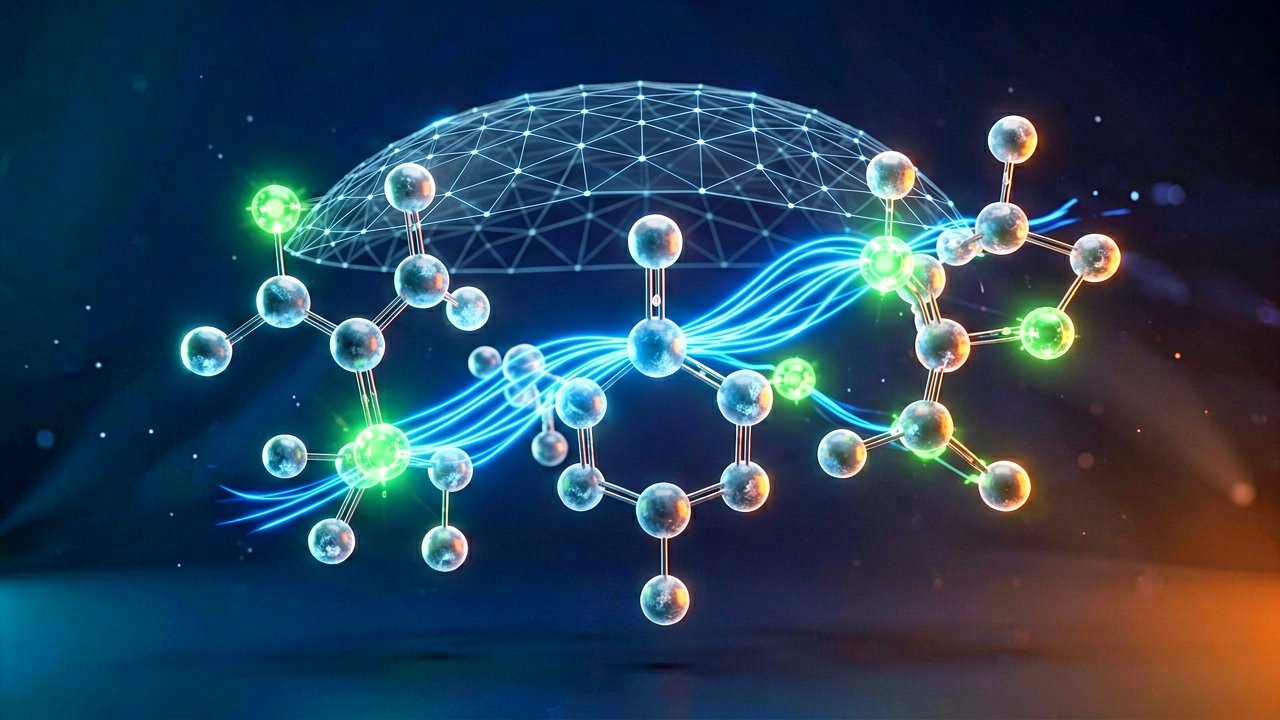
Silicon Valley has spent years trying to disrupt healthcare, but Mark Zuckerberg and Priscilla Chan might have just moved the needle from incremental to warp speed. Their philanthropic research organization, the Chan Zuckerberg Biohub, recently turned the medical world on its head by launching a massive computing blitz aimed at simulating human cells. It is a bold play to eliminate the agonizingly slow trial-and-error phase of traditional drug discovery, replacing months of wet-lab experiments with digital simulations that run in a fraction of the time.
The core of this breakthrough is the newly unveiled Virtual Biology Initiative, a heavily backed five-year program designed to build predictive AI models of human life. Announced in late April 2026, the project aims to construct high-fidelity digital representations of molecules and genomes. By allowing scientists to test billions of cellular interactions inside a computer, the initiative promises to shave years off the typical timeline required to find and validate new medical treatments.
The $500 Million Engine Fueling the Medical Shift
This is not just another tech-bro manifesto written in a vacuum. The initiative comes armed with a massive $500 million financial anchor designed to force collaboration across an industry notorious for its silos. According to official strategy updates shared by the Chan Zuckerberg Biohub, the funding split directly addresses biology's biggest bottleneck: data scarcity. While $400 million is earmarked for the Biohub’s internal development of next-generation atomic-resolution imaging tools, the remaining $100 million is being actively deployed to global research partners to build a shared, open-source dataset.
Heavy Hitters and Digital Twins
The technical architecture behind this speed breakthrough relies on an aggressive marriage between frontier AI and experimental biology. The Biohub has successfully united elite computational talent with prominent scientific bodies, including the Broad Institute, the Allen Institute, and the Wellcome Sanger Institute. To provide the sheer processing horsepower needed to model millions of cells simultaneously, tech titan Nvidia has stepped in as the primary infrastructure partner, supplying specialized clusters that treat complex cellular biology like a rendering problem.

By deploying specialized AI tools like VariantFormer and the newly launched Virtual Immune System framework, researchers can now simulate how specific genetic mutations alter tissue behavior. This ability to generate highly accurate single-cell data in silico means that predicting drug toxicity or therapeutic efficacy can happen before a single physical petri dish is even prepped in a lab. It is a fundamental shift that moves medicine away from reactive treatments and closer to a future where therapies are entirely programmable.
Reading Between the Lines: The Friction Between Silicon Valley Speed and Clinical Reality
Reading between the lines of this computational triumph reveals a familiar Silicon Valley hubris: the assumption that biology is merely a software problem waiting to be debugged. Tech evangelists love to talk about "digital twins" and instantaneous simulations, but human physiology possesses a stubborn, chaotic complexity that refuses to neatly align with Moore’s Law. Discovering a promising molecule on a screen in a matter of hours is a massive engineering feat, yet it does absolutely nothing to alter the glacial pace of human biology. A simulated cure must still undergo years of unpredictable phase-one safety trials, patient recruitment struggles, and the bureaucratic labyrinth of regulatory approval, meaning the actual pipeline to the pharmacy shelf remains stubbornly bottlenecked.
There is also a glaring contradiction in the open-source ethos driving this initiative. While the Biohub intends to democratize the early-stage discovery process, the immense computing infrastructure required to actually run these massive foundational models remains heavily centralized. Reliance on proprietary, high-end hardware ecosystems means that true power stays concentrated in the hands of a few tech behemoths and hyper-funded institutes. This creates a bizarre paradox where the raw scientific data is proudly public, but the specialized computational lenses required to make any sense of that data are locked behind a very exclusive, incredibly expensive digital gate.
Furthermore, the reliance on AI-generated data introduces the terrifying prospect of a technological echo chamber. If these predictive models begin training on data that was itself simulated rather than observed in a physical lab, the system risks compounding minor algorithmic biases into catastrophic errors. Skeptical immunologists are already warning that an over-reliance on virtual screening could cause researchers to overlook unconventional, highly complex biological mechanisms that the AI dismisses as mere statistical anomalies. If the industry moves too fast toward a completely virtual paradigm, it risks trading slow, deliberate medical progress for a fast-paced illusion of certainty.

"Ultimately, teaching a supercomputer to simulate a trillion cellular interactions is the easy part; the real challenge begins when that immaculate digital logic collides with the messy, unpredictable reality of a human patient who forgot to take their pills."
Artūras Malašauskas is an AI Systems Integrator with 20+ years of production-grade web engineering experience. He has designed, shipped, and scaled enterprise Python/PHP systems for logistics, SaaS, and public-sector clients. For the past year, he has focused exclusively on AI integrations: deploying open-source LLMs, building generative media pipelines (image, audio, video), and engineering multi-agent workflows for real production environments. His standard: reproducibility, security, cost-efficient inference—no vaporware. He documents and evaluates emerging AI tooling, separating verified capabilities from marketing noise. Technical editor at: muza-ai.eu, ai-verslas.lt, ai-naujinos.lt Connect on LinkedIn
Comments