Algorithmic Autonomy: Robinhood’s AI Pivot Triggers a New Era for Retail Capital
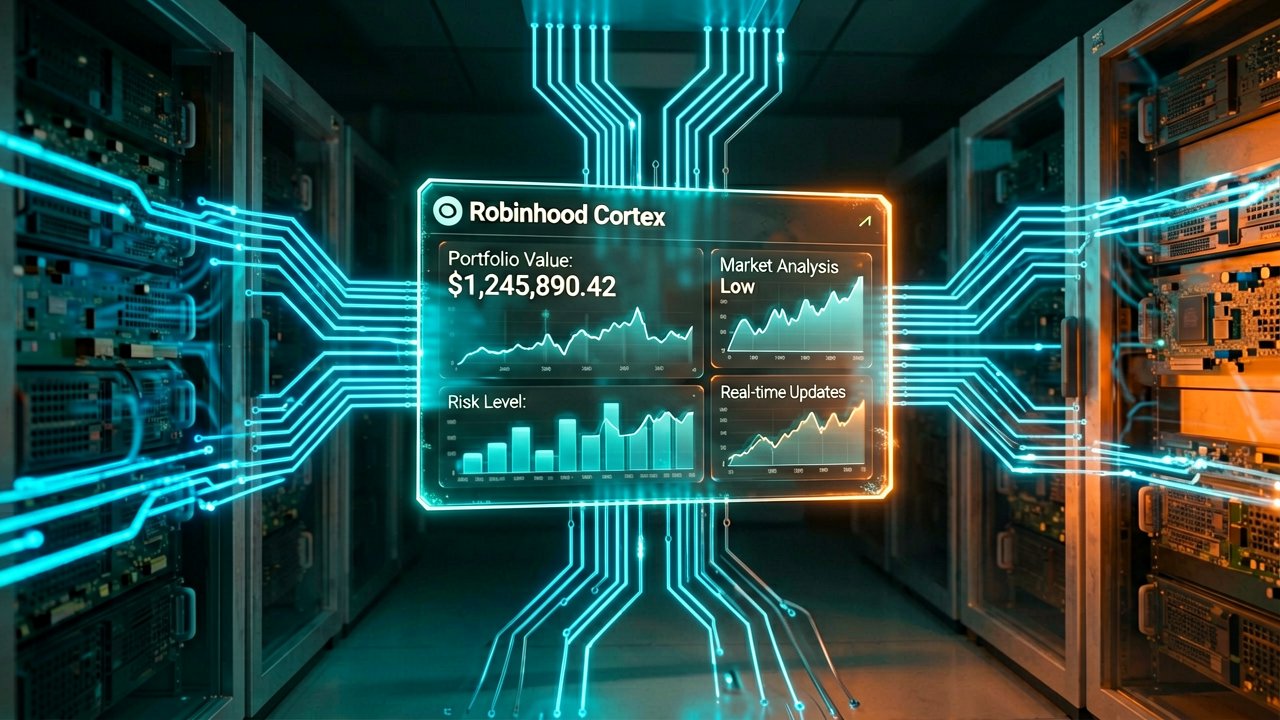
The financial technology frontier just crossed a definitive line into algorithmic automation. In a move that alters how everyday consumers interact with Wall Street, retail trading giant Robinhood opened its platform pipelines directly to autonomous AI agents. The silicon valley disruptor rolled out specialized capabilities enabling automated bots to execute trades and manage custom financial portfolios without constant human oversight. It is no longer about humans using digital interfaces to buy assets; it is about delegating capital to software engines that process market dynamics at a pace humans cannot replicate.
This integration is not an isolated development but rather the culmination of a aggressive, multi-year technological push. The retail brokerage spent the past two years systematically assembling an AI infrastructure. This roadmap accelerated significantly when the firm acquired the AI-driven investment platform Pluto Capital and brought on its engineering talent to spearhead localized intelligence models. Following that acquisition, the company introduced its custom-indicator engine, Robinhood Cortex, which allowed users to translate natural English commands into professional-grade market scanners. By building out these core layers, the platform effectively laid the groundwork for full agentic deployment.
From Active Research to Autonomous Execution
The transition from software providing advice to software executing transactions marks a profound psychological shift in personal finance. For years, the fintech landscape relied on robo-advisors to rebalance basic index funds on a fixed monthly schedule. The new architecture operates under an entirely different paradigm. These newly deployed AI agents analyze multi-structured data streams, sift through real-time SEC filings, and react instantly to breaking macroeconomic indicators. By providing virtual frameworks like specialized transaction controls, the brokerage has given autonomous code the institutional keys to retail brokerage accounts.
The strategic timing of this rollout aligns with massive structural shifts across the broader financial industry. Traditional wealth managers are currently preparing for a generational wealth transfer estimated to exceed $100 trillion over the next few decades. Legacy institutions often rely on manual, human-centric relationships to retain these assets, but the upcoming demographic of investors exhibits a clear preference for hyper-personalized, digital-first infrastructure. Platforms that offer automated, data-driven execution at a minimal cost are positioned to capture the bulk of this shifting capital.

The Realities of Systemic Synchronization
While the elimination of coding barriers and manual research democratizes complex trading strategies, it introduces unprecedented systemic dynamics to the broader market. Industry experts point out that the true danger of widespread agentic finance is not simple market volatility, but rather the synchronization of thousands of autonomous bots. When multiple independent algorithms optimize for identical micro-signals using similar underlying large language models, the financial ecosystem loses the natural friction generated by human hesitation. This uniformity can lead to localized liquidity drains or sudden, recursive price drops when identical triggers fire simultaneously across thousands of retail accounts.
Regulatory frameworks are struggling to keep pace with this sudden migration toward synthetic decision-making. Lawmakers are already floating liability frameworks to address instances where automated financial bots provide problematic guidance or execute flawed trades. Despite these lingering legal and structural questions, the market trajectory remains clear. The barrier between retail traders and sophisticated quantitative execution has permanently dissolved, leaving investors to figure out how much control they are willing to cede to the machines.
The Hidden Architecture of the Agentic Shift
Behind the Algorithm: The sudden democratization of agentic finance is not just a triumph of software engineering, but a radical reshaping of market microstructure. For decades, high-frequency trading firms and quantitative hedge funds jealously guarded their proprietary execution pipelines, utilizing private fiber-optic networks to front-run retail sentiment. By embedding autonomous agents directly into user accounts, fintech platforms are essentially offering institutional-grade programmatic execution to retail capital. This paradigm shift forces a massive reallocation of computing power, moving complex data synthesis from back-alley server farms straight to consumer-facing applications.
Industry insiders note that the core battleground is no longer the brokerage interface, but the underlying application programming interfaces, or APIs, that feed data to these silicon brains. If an AI agent relies on delayed public data streams, it risks executing trades on outdated information, leading to severe slippage in fast-moving markets. To combat this, infrastructure providers are quietly racing to secure low-latency data feeds specifically optimized for machine consumption rather than human reading. The profitability of an autonomous portfolio now hinges almost entirely on the speed and accuracy of the context windows provided to the underlying large language models.
This technological leap heavily disrupts the traditional unit economics of wealth management. Legacy advisory firms historically justified their steep management fees by pointing to the labor-intensive nature of portfolio optimization, tax-loss harvesting, and fundamental research. When a localized AI engine can perform those identical operations across thousands of accounts simultaneously for a fraction of a cent in cloud computing costs, the traditional percentage-of-assets model collapses. Wall Street incumbents are suddenly forced to re-evaluate their value proposition, shifting their focus from portfolio construction to complex estate planning and emotional behavioral coaching.
From a regulatory standpoint, the compliance burden is shifting from post-trade auditing to real-time algorithmic guardrails. Financial watchdogs are deeply concerned about the phenomenon of "hallucinatory trading," where an AI model misinterprets a satirical social media post as a material corporate announcement and triggers a massive sell-off. To prevent systemic flash crashes, developers are implementing hard-coded circuit breakers within user accounts, creating artificial friction that forces an agent to pause if unexpected volatility thresholds are crossed. These synthetic safety nets represent the final frontier of risk management, acting as the digital brakes for an ecosystem moving at the speed of code.
Ultimately, the long-term success of this architectural revolution will be measured by investor trust during prolonged market downturns. It is relatively easy for retail users to praise automated systems during a historic bull run when almost every asset class trends upward. The real test occurs during structural bear markets, where algorithms must make agonizing trade-offs between capital preservation and realized losses. Whether everyday consumers possess the psychological fortitude to remain hands-off while automated agents systematically liquidate underperforming assets remains the ultimate unscripted variable in this grand financial experiment.
The Paradox of Universal Alpha
Reading Between the Lines: The intoxicating promise of retail agentic finance rests on a fundamental mathematical contradiction. Fintech marketing materials paint a picture of a world where every individual investor wields a personalized, hyper-optimized AI hedge fund in their pocket, consistently outsmarting the broader market. However, financial markets are inherently competitive, zero-sum arenas of price discovery. If every retail participant deploys an autonomous agent optimized on similar datasets and trained on identical financial economic theories, the resulting uniformity effectively cannibalizes any competitive advantage, transforming what was supposed to be a tool for outperformance into a highly complex, automated index fund.
This reality exposes a glaring vulnerability in the democratization narrative popularized by Silicon Valley. When everyone possesses institutional-grade execution capabilities, the institutional advantage simply migrates to a higher plane of abstraction. True market anomalies and mispriced assets will not be left for retail bots to discover; they will be swept up by massive, proprietary enterprise models operating on quantum-adjacent infrastructure long before a consumer-facing agent can even parse the headline. The retail trader is not being elevated to the status of a hedge fund manager; rather, the baseline for entry is merely being raised, forcing users to pay software maintenance fees just to keep pace with an increasingly automated crowd.
Furthermore, the industry’s current obsession with speed and autonomy overlooks the critical value of human stubbornness and irrationality in market dynamics. Financial history shows that some of the most profitable investment theses occurred because a human manager actively defied prevailing quantitative consensus, enduring months of ridicule before being proven right. Algorithms, by their very nature, optimize for the highest statistical probability based on historical precedents. By outsourcing portfolio conviction to mathematical models, the market risks purging the eccentric, contrarian instincts that occasionally save capital during unprecedented black swan events, leaving an ecosystem beautifully optimized for a past that may never repeat itself.
The societal implications of this shift extend far beyond individual account balances and into the collective psychology of wealth accumulation. For generations, investing was viewed as an active, albeit flawed, educational journey that forced citizens to understand the mechanics of global commerce, supply chains, and corporate governance. Delegating this entire intellectual process to background software turns capital allocation into a passive utility, akin to paying a water bill. We are rapidly approaching an era where the average citizen owns a piece of the global economy but possesses absolutely no understanding of how it functions, relying entirely on synthetic proxies to navigate the material world.
The ultimate irony of the algorithmic revolution is that after spending decades demanding a seat at the Wall Street table, retail investors have finally achieved their dream—only to immediately hand their forks over to a piece of software and ask it to eat the dinner for them.
Artūras Malašauskas is an AI Systems Integrator with 20+ years of production-grade web engineering experience. He has designed, shipped, and scaled enterprise Python/PHP systems for logistics, SaaS, and public-sector clients. For the past year, he has focused exclusively on AI integrations: deploying open-source LLMs, building generative media pipelines (image, audio, video), and engineering multi-agent workflows for real production environments. His standard: reproducibility, security, cost-efficient inference—no vaporware. He documents and evaluates emerging AI tooling, separating verified capabilities from marketing noise. Technical editor at: muza-ai.eu, ai-verslas.lt, ai-naujinos.lt Connect on LinkedIn
Comments