The Structural Shift: How Reallusion and Seedance 2.0 Are Fixing AI’s Deepest Flaw
For the past few years, AI video generation has felt like a thrilling but chaotic magic trick. You type a prompt, hold your breath, and hope the engine spits out something beautiful that doesn't completely dissolve into structural nightmare by frame sixty. It's a fun novelty for a tech demo, but for actual filmmakers trying to tell a coherent story, that unpredictability is an absolute dealbreaker.
That era of erratic guesswork is officially drawing to a close. On May 25, 2026, 3D animation heavyweight Reallusion announced its brand-new AI Studio, forging a powerful creative alliance with ByteDance’s highly sophisticated Seedance 2.0 multimodal video generation model. By bridging the absolute geometric precision of 3D software with the texturing and stylistic magic of generative AI, this collaboration effectively tames the wild west of AI cinematography.
The Death of Warp: Why 3D Layout Changes Everything
Traditional text-to-video tools struggle with spatial awareness. When you ask them to execute a complex panning shot or a multi-axis camera orbit around a moving character, the background often warps, geometry bends, and perspective shatters. They don't actually understand the physical reality of a room; they are just guessing what the next pixel should look like based on statistical probability.
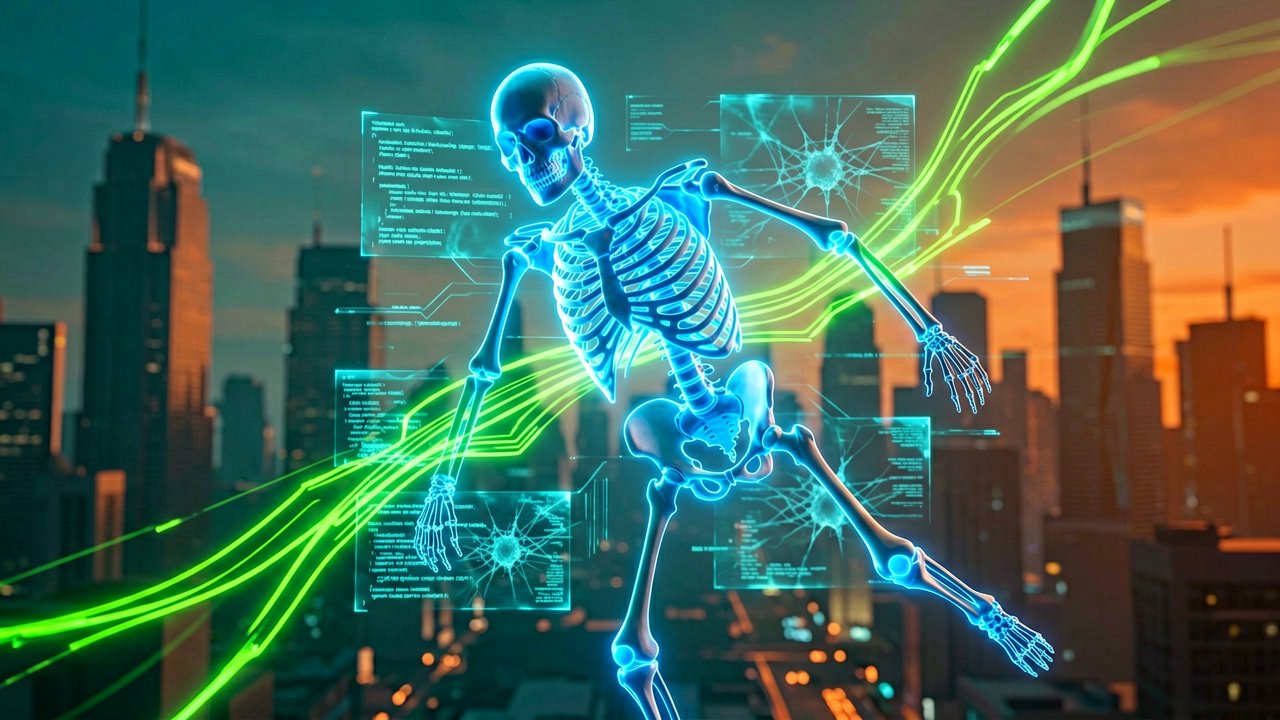
The alliance handles this by establishing a rigid structural foundation. Creators can use Reallusion’s flagship software, iClone, to map out exact scene layouts, choreograph character skeletons, and program precise camera paths using a massive library of over 5,000 pre-visualization assets. Seedance 2.0 then interprets this underlying data, acting as a hyper-intelligent digital renderer that applies gorgeous textures, atmospheric lighting, and cinematic effects over a spatially accurate 3D skeleton. The result is a shot that adheres to real-world physics and camera mechanics without any of the typical AI jitter.
Director-Level Control and Native Multi-Shot Storytelling
What truly elevates this workflow is the multimodal versatility baked directly into the model. Instead of relying solely on text prompts, filmmakers can pass up to twelve distinct assets into a single generation, blending reference images, 3D skeletal data, and even native audio tracks. This unlocks unprecedented control over continuous sequences and character identity.
If you need an intricate action sequence featuring instant camera cuts or tracking shots, the model naturally honors the exact spatial timing established in the 3D viewport. Character consistency is protected because the engine references dedicated character sheets alongside the structural layouts, preventing the frustrating "face-melting" glitches that typically plague multi-shot AI generation. Furthermore, the framework supports native audio-video joint generation, meaning the AI synchronizes mouth movements to dialogue tracks or matches visual pacing directly to the beat of an imported audio reference.
A Professional Pipeline Built for Real Work
This development signals a profound philosophical shift in how the tech industry approaches creative automation. It moves away from the idea of replacing artists with a single text box and leans heavily into empowering them with refined, hybrid pipelines. By removing the randomness of environment generation and locking down perspective through a 3D blueprint, the platform allows directors to spend less time rolling the dice on prompt iterations and more time focusing on genuine cinematic composition.
Behind the Scenes: The Engineering Pivot Behind the Hybrid Workflow
The convergence of 3D layout engines and generative models represents a massive course correction for an industry that initially tried to build everything out of text prompts. In the early days of generative video, the prevailing tech-industry thesis was that a powerful enough neural network could eventually figure out perspective, lightning, and physics entirely from scratch. However, hollywood technical directors and veteran animators quickly realized that deep learning models lacked a fundamental understanding of physical permanence. By embedding a 3D structural backbone like iClone directly into the pipeline, developers have effectively acknowledged that traditional computer graphics are still vastly superior at handling structural geometry, and that AI is best utilized as a hyper-efficient stylistic renderer.

This hybrid approach elegantly solves the long-standing "temporal consistency" problem that has plagued creators since the inception of neural video synthesis. When an animator sets up a scene in a traditional 3D environment, the location of every wall, light source, and character joint is locked down by absolute mathematical coordinates. Passing these depth maps and skeletal rigs directly to the AI model ensures that the generated textures, clothing folds, and facial details are pinned to a concrete physical asset rather than floating freely across the screen. For independent studios operating on tight budgets, this drastically cuts down the hours spent on tedious rotoscoping, clean-up, and frame-by-frame manual corrections.
From a historical standpoint, this evolution mirrors the industry's previous technological leaps, such as the transition from hand-drawn cell animation to digital compositing, or the adoption of real-time virtual production environments like Unreal Engine. Each of these milestones was met with initial skepticism regarding the potential erasure of human artistry, yet each ultimately expanded the creative canvas for filmmakers who embraced the change. The current integration does not replace the director's eye; instead, it eliminates the technical friction of asset creation, allowing small teams to achieve a level of visual grandeur that previously required the backing of a major visual effects house.
The broader implications for pre-visualization and rapid prototyping are already reshaping how film projects are pitched and greenlit. Directors can now build incredibly dense, stylized proof-of-concept trailers in a fraction of the time, providing executives with an exact visual representation of a film's final look rather than relying on abstract mood boards. By turning complex rendering processes that used to take days into a near-instantaneous creative loop, the industry is entering an era where the speed of imagination is the only real constraint left on the production floor.
Reading Between the Lines: The Illusion of Total Control
While the marriage of 3D layout engines and generative video promised to tame the erratic nature of AI cinematography, the industry must reckon with a glaring contradiction in this hybrid workflow. Promoters claim this workflow gives directors absolute precision, yet the technology still relies heavily on a probabilistic black box to generate the final visual output. A filmmaker can lock down a character's skeleton to the millimeter, but the model still decides how a coat folds, how a shadow falls across a face, or how ambient dust catches the light. This creates a strange paradox where the creator acts simultaneously as an absolute dictator of geometry and a passive spectator of style, constantly wrestling with a tool that remains fundamentally incapable of taking exact direction.
Furthermore, this workflow introduces a new kind of creative bottleneck that the tech industry rarely acknowledges. By requiring a fully realized 3D pre-visualization layout before the AI can even begin its work, the process strips away the effortless, casual speed that made text-to-video tools appealing in the first place. Independent filmmakers who hoped to completely bypass the steep learning curve of traditional 3D software will find themselves right back where they started—navigating complex viewports, rigging skeletons, and placing virtual cameras. The technical barrier to entry hasn't disappeared; it has simply been relocated, demanding a highly specialized skill set that many traditional writers and directors do not possess.
There is also the impending crisis of visual homogenization to consider. Because the AI model acts as the primary aesthetic engine, it relies on its training data to decide what "cinematic lighting" or "photorealistic textures" look like. If thousands of creators begin using the same handful of commercial models to skin their 3D skeletons, the independent film landscape risks falling into a monotonous, AI-defined house style. The democratization of high-end visual effects may inadvertently lead to a world where every low-budget sci-fi film shares the exact same digital DNA, trading the unique flaws of human indie filmmaking for a glossy, uniform corporate aesthetic.
Ultimately, the long-term success of this hybrid pipeline will depend on whether it can evolve past the novelty stage into a reliable, legally compliant enterprise solution. Major Hollywood studios remain intensely risk-averse regarding intellectual property and copyright transparency within generative training sets. Until these tools offer ironclad guarantees regarding the provenance of their data, the most sophisticated AI-driven pipelines will likely remain confined to pre-visualization rooms, video game cinematics, and digital marketing, rather than capturing the silver screen.
We were promised a world where an iPad and a clever text prompt could birth the next Citizen Kane, but instead, we got a system that requires a master’s degree in 3D rigging just to make sure the main character’s ears stay attached to their head across a simple panning shot. Welcome to the future of cinema, where the computers do the painting and the humans are stuck doing the math.
Artūras Malašauskas is an AI Systems Integrator with 20+ years of production-grade web engineering experience. He has designed, shipped, and scaled enterprise Python/PHP systems for logistics, SaaS, and public-sector clients. For the past year, he has focused exclusively on AI integrations: deploying open-source LLMs, building generative media pipelines (image, audio, video), and engineering multi-agent workflows for real production environments. His standard: reproducibility, security, cost-efficient inference—no vaporware. He documents and evaluates emerging AI tooling, separating verified capabilities from marketing noise. Technical editor at: muza-ai.eu, ai-verslas.lt, ai-naujinos.lt Connect on LinkedIn
Comments