Artemis Platform Redefines Enterprise AI Governance: Kore.ai’s Bold Move in Scaling AI Agents
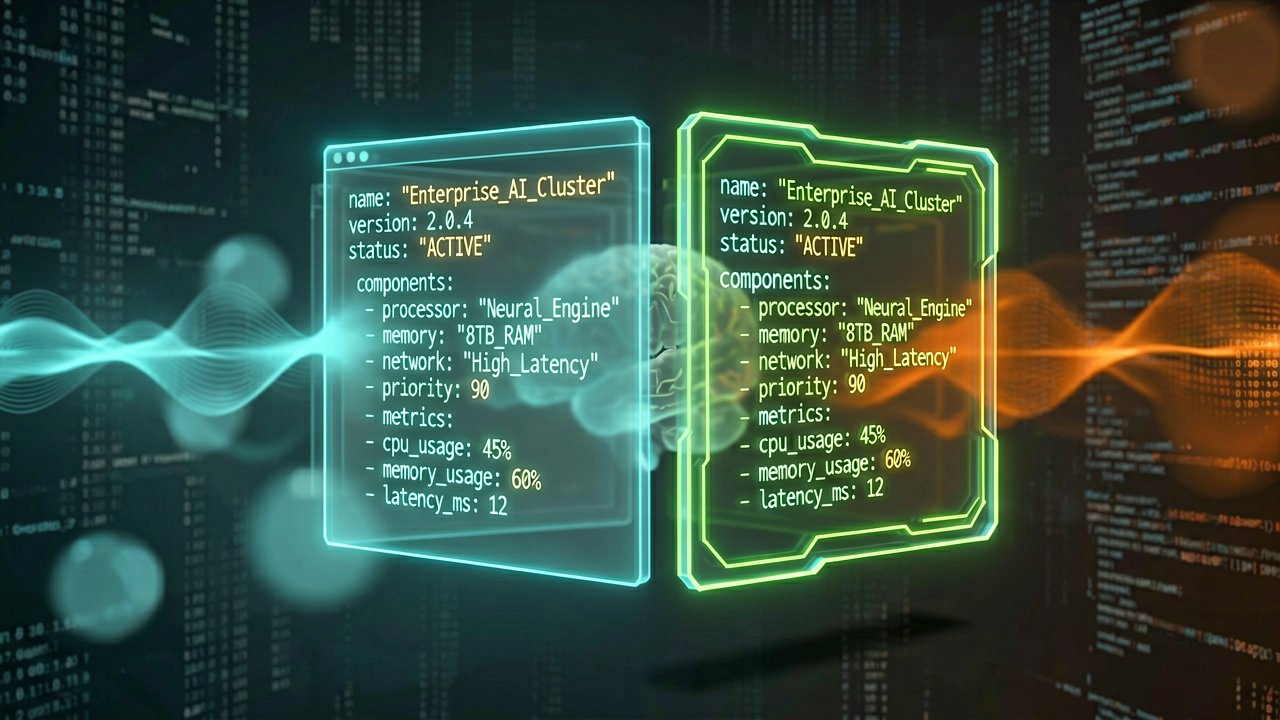
The enterprise artificial intelligence landscape shifted decisively on May 21, 2026, when conversational and agentic AI pioneer Kore.ai launched its next-generation platform edition, code-named Artemis. Designed to transition businesses away from chaotic prompt-chaining, Artemis introduces an AI-native foundation that builds, governs, and optimizes multi-agent workflows using a highly structured, declarative architecture. By focusing on strict operational boundaries and standardizing execution, the release directly addresses the compliance and reliability anxieties that have stalled large-scale corporate AI deployments for years.
At the center of this launch is a calculated challenge to traditional cloud and CRM heavyweights like Salesforce, ServiceNow, and Google. Operating initially via a strategic deployment partnership on Microsoft Azure, the platform aims to centralize fragmented corporate systems into a single, cohesive management layer. By enforcing deterministic safeguards outside the volatile underlying LLM model layers, the technology attempts to establish a neutral infrastructure framework where enterprises can scale automated digital workers with actual operational confidence.
Behind the Scenes: Architectural Safeguards and the Blueprints of Automation
What most industry reports miss is that the true battleground for enterprise AI isn't the sophistication of the underlying LLM, but the predictability of its orchestration. To solve this, the technology debuts its proprietary Agent Blueprint Language (ABL)—a YAML-based, compiled language that strips away the erratic nature of natural language prompting in favor of standardizing how agents interact. Instead of relying on a prayer that an AI agent will follow instructions, developers and business analysts can now use ABL to map out six precise orchestration structures, including supervisor delegation, fan-outs, and multi-agent federation. It treats AI behavior less like a black-box conversation and more like compiled software code that can be audited, versions-controlled on platforms like GitHub, and fully vetted before deployment.
To bridge the gap between human intent and rigid code, the system deploys an internal agent architect called Arch. This companion engine takes plain-english business objectives from executives and autonomously compiles them into production-ready ABL blueprints, effectively minimizing traditional hand-coded engineering timelines from months to days. Crucially, the platform manages execution through a unique dual-brain runtime. One half of this digital brain focuses on cognitive reasoning and contextual adaptation, while the other side acts as an unyielding, deterministic traffic cop that forces the agent to stay within the hard boundaries of corporate policy and compliance.

This structural division represents a significant pivot from the early days of conversational bots. Prominent analyst groups, including Everest Group, have noted that standardizing agent generation and embedding platform-level governance is what will distinguish sustainable enterprise AI from fleeting experimental tools. By logging and tracing every micro-decision via an unalterable system layer, C-suite executives are finally getting the granular visibility required to satisfy risk management mandates in highly regulated sectors like healthcare and finance.
Reading Between the Lines: The Illusion of Total Autonomy
Despite the flawless automation promised in tech keynotes, a healthy skepticism reveals that Artemis is as much an admission of AI’s current limitations as it is a leap forward. By wrapping AI agents in the tight straightjacket of a compiled blueprint language, the system subtly acknowledges that raw, LLM-driven autonomy remains far too hazardous for corporate balance sheets. The industry-wide marketing push promises fully autonomous corporate workflows, yet tech leaders are actively building sophisticated cages to keep these agents from hallucinating or making unsanctioned financial decisions. It exposes a fascinating irony: to make AI agents truly useful to the enterprise, engineers must spend less time making them smarter, and more time making them narrower.
Furthermore, the positioning of this platform underscores an intense structural conflict brewing in the enterprise software ecosystem. Tech vendors like Salesforce argue that data and workflows should live entirely within their respective CRM walls, while enterprise IT departments are panicking over the prospect of managing a dozen different, siloed agent networks. This platform attempts to play the role of a neutral intermediary, offering a unified orchestration layer that hooks into everything from Jira and GitHub to HubSpot. However, whether major cloud empires will gracefully cede control of this lucrative infrastructure layer to a neutral party remains a highly contentious question, especially as every vendor races to own the primary interface of enterprise operations.
Ultimately, the long-term viability of this approach hinges on the true operational costs of running an "AI building and governing AI" model. While compiling blueprints via an automated architect reduces upfront development hours, the computing overhead of running real-time, parallel dual-brain oversight on every single employee and customer transaction could introduce a whole new category of hidden cloud infrastructure expenses. If the marginal cost of monitoring an AI agent matches or exceeds the value it creates, the dream of compounding enterprise automation may hit a very real fiscal ceiling before it ever reaches full scale.

"We are told that the future of work belongs to autonomous AI agents capable of running entire corporations, yet our most advanced engineering breakthroughs are designed to prevent them from speaking freely or wandering off script. It turns out that the corporate ladder of the future is just a very expensive series of digital guardrails."
Artūras Malašauskas is an AI Systems Integrator with 20+ years of production-grade web engineering experience. He has designed, shipped, and scaled enterprise Python/PHP systems for logistics, SaaS, and public-sector clients. For the past year, he has focused exclusively on AI integrations: deploying open-source LLMs, building generative media pipelines (image, audio, video), and engineering multi-agent workflows for real production environments. His standard: reproducibility, security, cost-efficient inference—no vaporware. He documents and evaluates emerging AI tooling, separating verified capabilities from marketing noise. Technical editor at: muza-ai.eu, ai-verslas.lt, ai-naujinos.lt Connect on LinkedIn
Comments