Silicon Valley’s New Soul: Why the Vatican’s AI Encyclical Changes Everything

For years, the tech sector operated on a simple, unspoken rule: move fast and break things, then let corporate governance PR clean up the mess. But the Vatican is throwing a wrench into that relentless machine. With the release of Pope Leo XIV’s landmark encyclical, Magnifica Humanitas, the Holy See isn't just offering passive commentary on algorithms. It's issuing a direct, philosophical challenge to the world's most powerful tech companies, demanding a profound shift from unrestrained innovation to absolute moral accountability.
This isn't a sudden whim from Rome. The document follows an intentional historical lineage, signed exactly on the 135th anniversary of Rerum Novarum, the 1891 encyclical that defended worker rights during the industrial revolution. By aligning AI with the dawn of industrial capitalism, the Vatican frames generative tech not as a collection of cool software updates, but as an epochal shift threatening the core of human identity. It targets a fundamental industry blind spot: the tendency to equate human worth with computational efficiency and economic productivity.
A Stunner in Global Governance
What makes this intervention different from standard policy whitepapers is its willingness to cross the aisle and force strategic market shifts. In an unprecedented move, the Vatican invited Christopher Olah, the co-founder of AI safety darling Anthropic, to help present the document, as detailed by The Guardian . This partnership indicates that the Holy See's framework is already piercing the bubble of commercial development, moving past toothless corporate ethics pledges to reshape how labs think about systemic risk.
Beyond the Corporate Ethics Echo Chamber
For a decade, tech giants managed AI anxiety by creating internal ethics boards, many of which were quietly dismantled when profit motives or computational races escalated. The Vatican's model bypasses these fragile corporate frameworks by treating human dignity as an absolute, non-negotiable metric. According to analysis from the Future of Life Institute, the encyclical relies on a rigorous "see, judge, act" methodology designed to hold developers personally accountable for the societal fallout of their creations, from deepfake-driven misinformation to automated warfare.
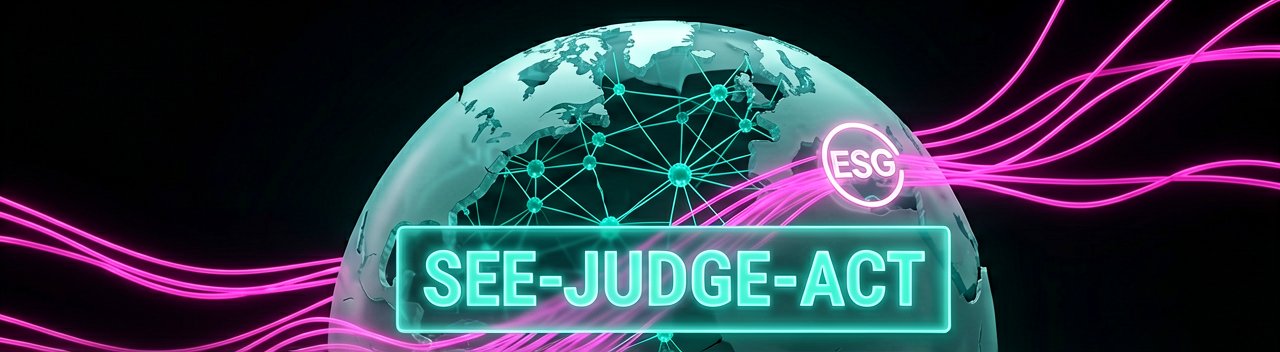
By elevating the conversation to an anthropological level, the papal text changes the stakes for global regulators. It provides a universal moral vocabulary that can influence international treaties, offering a cohesive alternative to fragmented state regulations. Tech executives are finding out that the Vatican's ancient perspective might just be the most modern guardrail the industry has ever faced.
What Most Reports Miss: The real leverage of the Vatican’s intervention does not lie in canon law, but in its potential to alter the flows of global venture capital and institutional investment. While the tech industry is accustomed to ignoring toothless ethical manifestos, it cannot easily ignore the financial reality of Environmental, Social, and Governance (ESG) mandates. By formalizing a theological doctrine around AI safety, the Holy See effectively provides a definitive checklist for faith-based investment funds, pension boards, and socially responsible asset managers who collectively control trillions of dollars. A company deemed in violation of these human dignity standards could suddenly find itself facing aggressive shareholder resolutions or outright divestment.
The Backroom Consensus in Silicon Valley
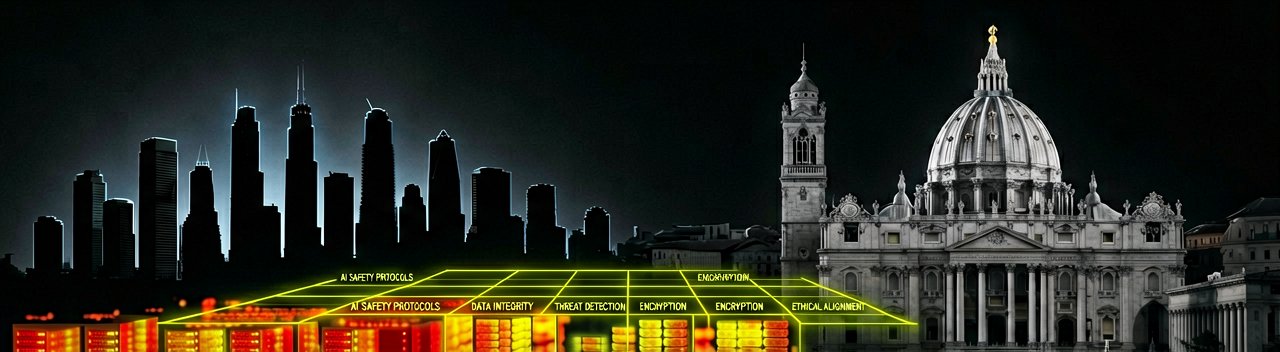
Inside the engineering hubs of San Francisco and Seattle, the encyclical is being met with a surprising mix of relief and anxiety. For years, researchers at top-tier labs have privately expressed alarm over the breakneck pace of model deployment, often feeling trapped in a prisoners' dilemma where slowing down means losing to competitors. The Vatican’s framework offers these internal factions a powerful secular shield disguised in spiritual language. It legitimizes the concerns of alignment researchers by elevating their technical safety problems into global existential priorities, effectively giving workers more leverage to push back against reckless commercial releases.
However, this religious framework also introduces a stark geopolitical friction point, particularly between Western development models and state-driven AI initiatives in non-Western nations. While Silicon Valley giants might feel public pressure to align with the Pope's vision, state-backed entities in jurisdictions that do not recognize papal authority face no such moral constraints. Tech executives are already pointing out this asymmetry in private policy circles, arguing that unilateral restraint based on Western or Christian humanism could inadvertently cede technological supremacy to nations with entirely different governance philosophies.
Tracing the Lineage of Tech Resistance
This tension underscores a broader historical pattern where institutional faith steps into the vacuum left by slow-moving regulatory bodies. When the industrial era disrupted labor, secular governments took decades to establish basic safety nets, leaving workers exposed to brutal exploitation. By referencing that specific history, the Vatican is attempting to preempt a similar multi-decade lag in the digital age. The Holy See views the current generation of generative models not as standard software, but as automated engines of social sorting that require immediate, proactive containment before they become too deeply embedded in global infrastructure to change.
Ultimately, the success of this papal push hinges on whether international regulatory bodies adopt its vocabulary. If the European Union’s enforcement agencies or independent standards organizations begin utilizing the Vatican’s definitions of cognitive liberty and human dignity, the tech sector will have no choice but to comply. The industry is rapidly learning that engineering supremacy is no longer enough to guarantee market dominance, as the oldest institution in the Western world has successfully reframed the AI race from a test of computational power into a struggle for moral legitimacy.
Reading Between the Lines: The grand irony of Silicon Valley embracing a papal encyclical is the deep-seated contradiction between theological absolutism and the fluid, hyper-capitalist nature of software development. While tech executives eagerly pose for photos with Vatican envoys to bolster their corporate social responsibility profiles, the core business models of these companies remain fundamentally antithetical to the encyclical’s goals. An industry that monetizes human attention and relies on massive, non-consensual data scraping cannot easily pivot to prioritizing human dignity without dismantling its primary engines of revenue generation. This reality suggests that much of the initial corporate enthusiasm is less an ethical awakening and more a calculated exercise in reputation management.
The Alignment Paradox
Furthermore, the tech sector's sudden infatuation with religious frameworks exposes a profound failure of secular governance. For nearly a decade, international bodies like the United Nations and the OECD have drafted endless variations of ethical AI principles, yet these documents have largely failed to alter corporate behavior. That tech giants are now turning to an ancient religious institution for guidance reveals a desperate search for external legitimacy rather than a genuine desire for regulation. By leaning on the Vatican’s moral authority, tech leaders can subtly deflect accountability, framing systemic algorithmic biases not as regulatory failures to be penalized by law, but as complex spiritual challenges to be contemplated over time.
This dynamic introduces a dangerous double standard into global tech policy, where compliance becomes a matter of moral theater rather than legal enforcement. Companies can easily adopt the vocabulary of human dignity while continuing to deploy opaque, predatory algorithms in developing markets where regulatory oversight is weak. The Vatican's global reach is vast, but its enforcement mechanisms are entirely voluntary, meaning that the companies most willing to vocalize compliance may simply be using the papacy as a shield against binding, hard-coded legislation from the European Union or the United States.
A Fragmented Digital Order
Projecting this trend forward suggests a deeply fragmented global tech ecosystem split along ideological and theological lines. If Western tech companies integrate these specific humanist guardrails into their foundational models, they risk making their products less competitive, less agile, and more restricted than systems developed in regions completely indifferent to Vatican doctrine. This could accelerate a digital cold war, where the open internet is carved up into spheres of influence defined not just by national borders, but by competing moral and philosophical frameworks encoded directly into the software that powers daily life.
It seems Silicon Valley has finally discovered an authority higher than the venture capitalist, though tech founders may be disappointed to learn that salvation cannot be achieved through a software patch, and that the Vatican’s concept of a higher power doesn't come with an equity stake or an exit strategy.
Artūras Malašauskas is an AI Systems Integrator with 20+ years of production-grade web engineering experience. He has designed, shipped, and scaled enterprise Python/PHP systems for logistics, SaaS, and public-sector clients. For the past year, he has focused exclusively on AI integrations: deploying open-source LLMs, building generative media pipelines (image, audio, video), and engineering multi-agent workflows for real production environments. His standard: reproducibility, security, cost-efficient inference—no vaporware. He documents and evaluates emerging AI tooling, separating verified capabilities from marketing noise. Technical editor at: muza-ai.eu, ai-verslas.lt, ai-naujinos.lt Connect on LinkedIn
Comments