Beyond the Prompt: How AI Agents Are Rewiring the Corporate Engine Room
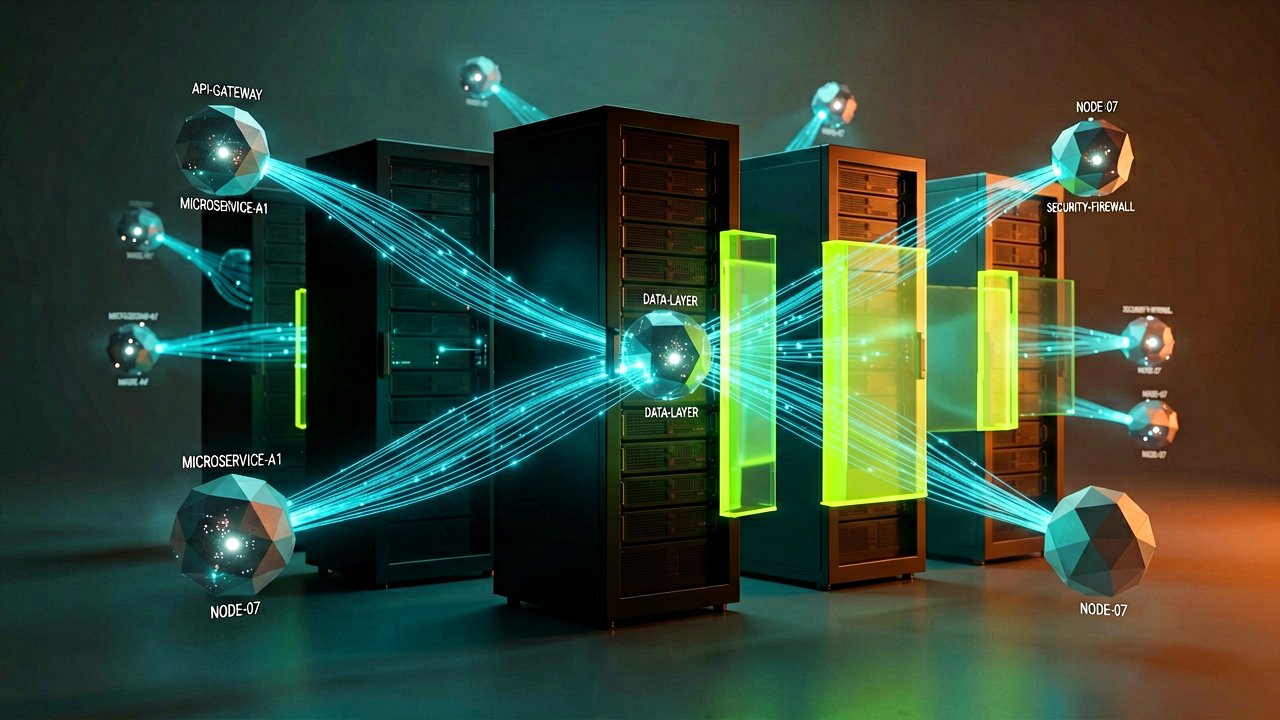
The era of staring at an empty chat box, waiting for inspiration to strike, has officially drawn to a close. Over the course of 2026, the technology landscape has experienced a profound structural realignment as basic generative assistants make way for fully autonomous digital coworkers. According to the Google Blog, enterprises are rapidly moving away from isolated experiments toward massive infrastructure overhauls designed to support these proactive systems. Instead of waiting for a human to type out a meticulous prompt, these agents actively monitor system alerts, read unstructured databases, and execute multi-step workflows entirely on their own.
This massive operational migration has ignited a fierce corporate arms race across the tech industry. Research and analysis firms like Gartner note that task-specific AI agents are projected to be embedded in roughly 40% of all enterprise software applications by the end of this year, representing a staggering jump from the single-digit adoption rates observed just twelve months ago. Tech giants and nimble startups alike are scrambling to build the definitive orchestration layer, forcing C-suite executives to entirely redesign their traditional workflows rather than simply layering software on top of outdated processes.
The Economics of Pure Autonomy
The sudden shift from passive copilots to proactive agents is primarily driven by cold, hard math. In back-office environments and engineering teams, the economic contrast between human execution and agentic automation has grown too vast for competitive firms to ignore. Routine software code reviews and invoice reconciliation pipelines that once required hours of human oversight are now handled in seconds. Specialized platforms are managing complex logistical decisions predictively, shrinking demand forecasting errors and cutting operational friction to a fraction of its former cost.
The Fierce Vendor Battleground
Because the stakes are so high, software providers are aggressively rebranding and re-engineering their entire product catalogs to achieve agent readiness. This isn't just about single chatbots anymore; the current market focuses on multi-agent networks where distinct, specialized modules communicate with one another to resolve company-wide bottlenecks. Legacy giants heavily integrated into office suites are battling nimble open-source alternatives and vertical-specific platforms tailored for legal, medical, or financial sectors. The vendors winning the market right now are those offering robust security guardrails and cross-platform connection protocols that prevent autonomous agents from going rogue or causing costly cloud spending spikes.

Redefining the Human Element
As these digital coworkers take over the logic-driven heavy lifting, the role of human staff is undergoing an intense evolution. Organizations are discovering that the true bottleneck to scaling this new technology is no longer the software itself, but data architecture and employee adaptability. Corporate training programs are shifting their focus away from teaching basic syntax or software navigation. Instead, employees are being upskilled to act as managers and strategic architects who establish guardrails, evaluate agent performance, and dictate the ultimate intent that these autonomous networks optimize for.
The Hidden Architecture of the Agentic Shift
What Most Reports Miss: The true revolution isn’t happening in the flashy user interfaces of generative chatbots, but deep within the unglamorous data pipelines of corporate IT infrastructure. For decades, enterprise software operated on a strict, predictable system of inputs and outputs, where human workers acted as the manual glue connecting disparate databases. The sudden transition to autonomous agents has forced a radical, often painful modernization of these underlying data layers, because an AI agent is only as competent as the internal documentation it can access. Companies that spent the last decade neglecting their cloud migration or allowing data silos to fester are finding themselves completely locked out of the efficiency gains enjoyed by their more agile peers.
This reality has triggered a intense debate among chief information officers and engineering leaders regarding the safety of giving software free rein over production systems. While vendors frequently promise seamless, out-of-the-box automation, early adopters are discovering that the engineering hours required to build reliable "guardrail architecture" often dwarf the time spent deploying the actual AI models. Software architects are working overtime to construct digital cages—strict behavioral boundaries that prevent an autonomous agent from accidentally deleting a client database, placing an erroneous multi-million dollar supply order, or hallucinating regulatory compliance details during a routine financial audit.
From a historical perspective, this moment mirrors the early days of the relational database or the enterprise resource planning boom of the late 1990s, where the technology itself was only half the battle. The vendors currently dominating the landscape are those shifting away from the concept of a single, all-knowing artificial intelligence. Instead, the market is moving toward a microservices approach, where tiny, highly specialized agents are assigned hyper-specific tasks—such as reading a legal contract, verifying an address, or checking inventory levels—and must communicate through structured internal APIs to accomplish a larger corporate objective.

The human cost of this transition is also far more nuanced than standard labor displacement headlines suggest. Mid-level managers are finding their roles transformed overnight from operations coordinators into digital workforce supervisors, tasked with monitoring the performance logs of dozens of autonomous workflows rather than managing human schedules. This shift requires an entirely new skill set rooted in systems thinking, prompt orchestration, and statistical variance analysis, rendering traditional corporate management training programs obsolete almost overnight.
Ultimately, the competitive divide in the corporate world is no longer between companies using artificial intelligence and those ignoring it. The new battle line is drawn between organizations treating AI as a glorified typewriter for drafting emails, and those viewing it as a decentralized engine room capable of independent execution. As the technology matures through the latter half of the decade, the firms that successfully automate their cognitive grunt work will operate at a velocity that traditional, human-bound corporate structures simply cannot match.
The Reality Check: Friction in the Frictionless Future
Reading Between the Lines: The prevailing industry narrative positions the agentic shift as a smooth, inevitable march toward absolute operational efficiency, yet this optimism conveniently ignores a messy web of systemic contradictions. Venture capitalists and tech evangelists routinely pitch autonomous agents as a cure-all for declining productivity, but their calculus assumes that corporate workflows are rational, well-documented paths. In reality, most legacy enterprises run on informal human networks, institutional memory, and ad-hoc compromises that cannot be easily mapped onto a deterministic algorithm. Forcing these highly fluid human realities into rigid, agent-driven frameworks often results in massive software bottlenecks rather than streamlined automation.
Furthermore, the economic premise of the agent market rests on a deeply unstable foundation regarding the actual cost of compute power. While software vendors promise astronomical savings by replacing human labor hours with digital agents, the massive energy demands and infrastructure overhead required to run millions of continuous reasoning loops are rarely factored into the initial sales pitch. If a network of specialized agents must constantly query dense large language models just to route routine customer service tickets, the associated cloud hosting fees can quickly eclipse the cost of the human team they replaced, shifting the corporate burden from payroll to IT infrastructure without delivering a true return on investment.
This dynamic creates a profound paradox for enterprise security and legal compliance. The entire value proposition of an autonomous agent relies on its ability to make independent decisions, yet corporate compliance departments operate on the absolute minimization of unpredictable variables. If an enterprise tightly constrains an agent to guarantee legal safety, the software effectively regresses into a glorified legacy macro, defeating the purpose of autonomy. Conversely, giving an agent the latitude to genuinely problem-solve introduces a level of operational liability that most corporate legal teams find utterly unacceptable, threatening to paralyze mass adoption in highly regulated sectors.
Looking ahead, this tension will likely trigger a sharp correction in market expectations, moving the industry away from the fantasy of the fully automated, human-free enterprise. Instead of a pristine digital ecosystem where autonomous agents seamlessly handle every strategic decision, the near future will likely resemble a complex IT maintenance puzzle. Human workers will spend less time doing creative work and far more time auditing broken automated loops, reconciling conflicting agent decisions, and cleaning up corrupted data outputs, trading old administrative headaches for entirely new, highly technical ones.
"We were promised a future where autonomous digital workers would free us from the tyranny of the spreadsheets, but instead, we've just created an ecosystem of highly sophisticated algorithmic interns who can write poetry at lightning speed but still require a human manager to make sure they don't accidentally delete the company's entire quarterly revenue report."
Artūras Malašauskas is an AI Systems Integrator with 20+ years of production-grade web engineering experience. He has designed, shipped, and scaled enterprise Python/PHP systems for logistics, SaaS, and public-sector clients. For the past year, he has focused exclusively on AI integrations: deploying open-source LLMs, building generative media pipelines (image, audio, video), and engineering multi-agent workflows for real production environments. His standard: reproducibility, security, cost-efficient inference—no vaporware. He documents and evaluates emerging AI tooling, separating verified capabilities from marketing noise. Technical editor at: muza-ai.eu, ai-verslas.lt, ai-naujinos.lt Connect on LinkedIn
Comments