Beyond the Hype Cycle: How the 2026 AI Top 50 is Rewriting Corporate Productivity
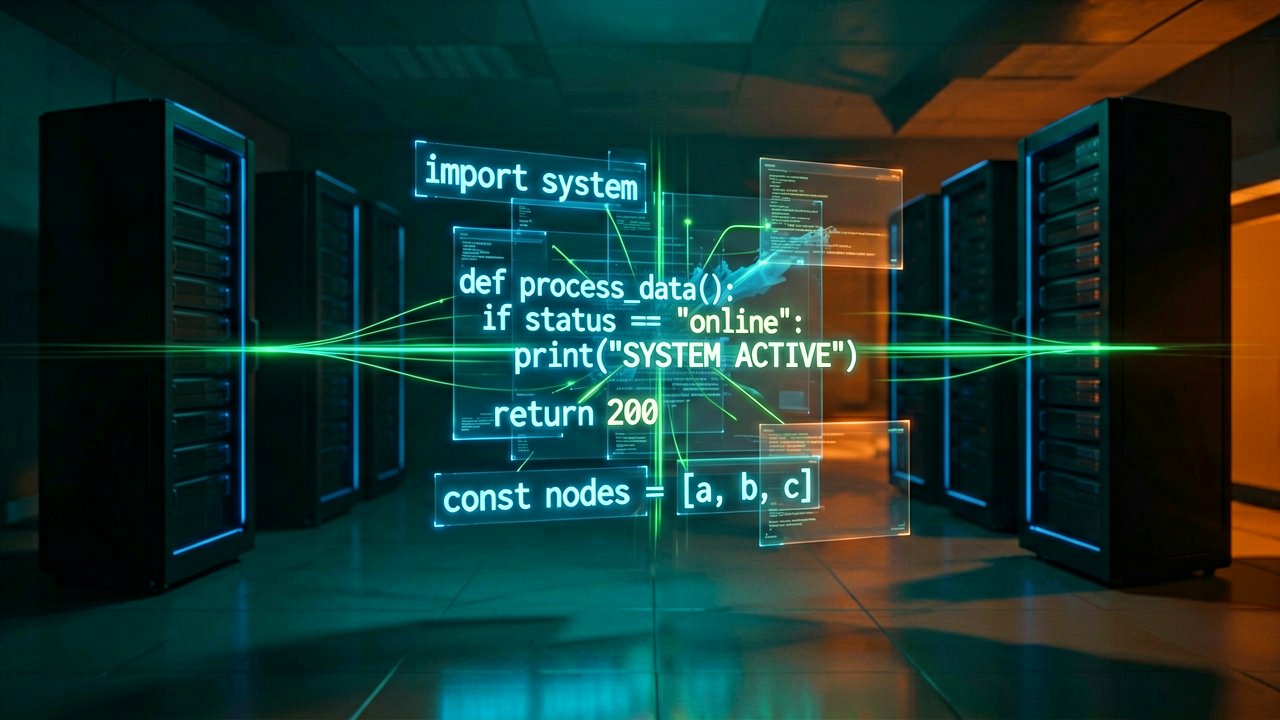
There was a time when deploying artificial intelligence in the workplace meant staring at a chatbot, crossing your fingers, and hoping the hallucination rate wouldn't tank your quarterly report. Those days are officially in the rearview mirror. The newly unveiled Forbes AI Top 50 roster for 2026 makes one thing clear: the narrative has flipped from experimental novelty to hard-nosed, measurable return on investment. Silicon Valley's finest are no longer just building bigger large language models; they're engineering hyper-focused, agentic workflows that plug directly into corporate infrastructure and actually do the heavy lifting.
This seismic shift in the tech landscape isn't just about giving knowledge workers a smarter digital assistant. It is about restructuring how industries like law, finance, and software development function at their core. Instead of fragmented, standalone tools that require employees to hop between dozens of open tabs, the standout innovators of 2026 are focused on native integration and autonomous problem-solving. This deep dive unpacks the leading productivity trends and dominant companies shaping the modern enterprise economy.
The Rise of the Autonomous Coding Giants
If you want to see where productivity gains are turning into cold, hard cash, look no further than the software engineering sector. For the past year, the industry watched in awe as Anysphere, the creator of the AI-native code editor Cursor, shattered growth records. By seamlessly embedding intelligent contextual awareness into standard development environments, it became the fastest B2B software vendor to scale its annualized revenue into the billions. This isn't simple autocomplete technology anymore; these systems actively debug, refactor, and build entirely functional application features based on abstract human intent.
Deep Vertical Integration Over Broad Chatbots
The generalized chatbots that dominated early enterprise pilots are rapidly losing ground to highly specialized, vertical platforms. In the legal sector, heavyweights like Harvey are executing multi-step automation workflows that mimic the analytical reasoning of junior associates. Rather than querying a generic engine, corporate legal departments use these systems to cross-examine internal contract repositories, draft compliance documentation, and audit regulatory risks instantly. This direct application of foundational intelligence to niche business logic is precisely why venture capital is flooding toward targeted enterprise solutions rather than baseline infrastructure builders.

The Shift Toward Agentic Infrastructure
What really separates the 2026 class of innovators from previous cohorts is the transition to agentic AI. Companies like Glean and Sierra are championing this evolution by deploying autonomous agents that do not wait around for a prompt. They monitor corporate data streams, connect disparate legacy databases, and resolve operational bottlenecks behind the scenes. Whether it is an agent updating an enterprise resource planning system or automating a complex customer service pipeline, the goal is clear: stripping away the repetitive manual labor that keeps human workers tethered to spreadsheets, allowing them to focus entirely on strategic execution.
Behind the Scenes: The Invisible Infrastructure Powering the Shift
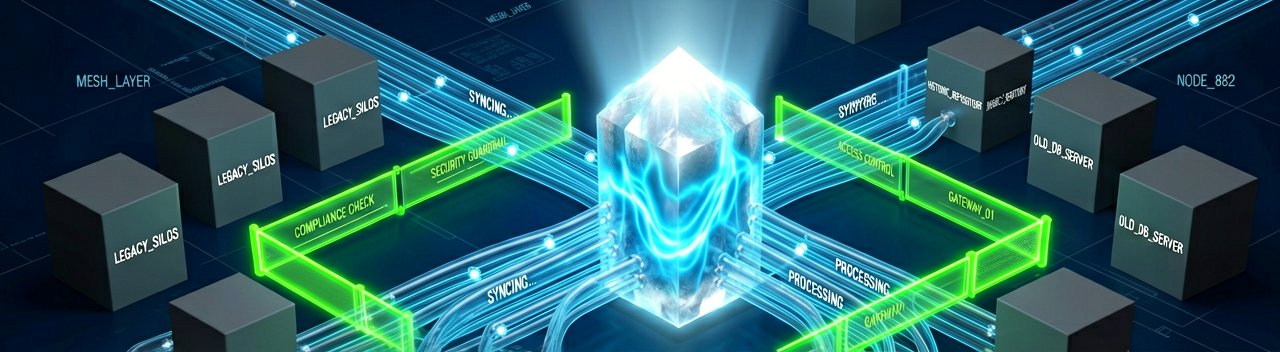
The glossy marketing brochures of the 2026 AI Top 50 focus heavily on the end-user magic—the legal briefs generated in seconds or the pristine lines of code deployed without human intervention. However, tech veterans looking past the dashboard wrappers know the real battle is being fought in the unglamorous trenches of data plumbing. The sudden enterprise-wide viability of these productivity tools is entirely dependent on a massive, quiet overhaul of corporate data architecture. Companies are finally moving away from messy data lakes and investing heavily in real-time vector databases and semantic layers that allow autonomous agents to navigate legacy systems without triggering catastrophic security permissions.
Chief Information Officers who spent 2024 and 2025 greenlighting pilot programs have shifted their focus to the grueling realities of governance and liability. A recurring sentiment among enterprise tech buyers is that an AI tool is only as good as its containment wall. This caution has given rise to a secondary boom within the Top 50: specialized middleware providers that act as digital guardrails. These platforms sit between proprietary corporate data and external LLM APIs, scrubbing personally identifiable information, auditing output accuracy, and ensuring compliance with rapidly evolving global AI regulations. Without this invisible layer of defensive engineering, the much-touted productivity boom would grind to a halt under the weight of legal liabilities.
This structural evolution is also fundamentally shifting the power dynamic between Silicon Valley’s foundational model builders and the application layer. In the early days of the generative boom, the consensus was that OpenAI, Anthropic, and Google would capture all the value by renting out their raw intelligence. Instead, the 2026 market proves that domain-specific context is king. The companies commanding the highest premiums are those that own the workflow integration. By embedding themselves into the daily habits of employees, these enterprise applications make the underlying model interchangeable, effectively turning raw compute into a commoditized utility while retaining the high-margin enterprise relationship.
Looking ahead, the labor market implications of these hyper-productive workflows are prompting a massive reassessment of corporate training and talent acquisition. Rather than eliminating junior-level roles entirely, forward-thinking organizations are rewriting job descriptions to focus on systemic oversight. The entry-level analyst of 2026 is less of a researcher and more of an editor, tasked with auditing the work of dozens of specialized digital agents. This requires a profound shift in the educational pipeline, forcing universities to move away from teaching rote technical execution and toward systems thinking, critical skepticism, and advanced prompt engineering architectures.
Reading Between the Lines: The Productivity Paradox of the Agentic Era
The prevailing narrative surrounding the 2026 AI Top 50 is one of unmitigated efficiency, but a closer examination of enterprise balance sheets reveals a more complicated reality. While organizations are eagerly reporting thousands of hours saved on routine tasks, those savings are frequently being offset by the staggering costs of API calls, premium software licensing, and cloud compute overhead. The hidden contradiction of the current boom is that while human labor is being optimized, the capital expenditure required to achieve that optimization is skyrocketing. Many mid-sized enterprises are quietly discovering that replacing a three-person data entry team with an advanced agentic workflow can occasionally result in a net-neutral impact on the bottom line once the infrastructure bills are tallied.
Furthermore, the assumption that automated productivity automatically translates to market competitiveness ignores the reality of technological democratization. When every corporate legal department uses the same elite vertical AI platform to draft contracts, and every tech startup uses the same advanced code editor to build software, the baseline for operational speed shifts for everyone simultaneously. This systemic flattening means that productivity gains are rapidly commoditized. Instead of creating a permanent competitive advantage, adopting these top-tier AI tools has simply become the cost of staying in the game, leaving executives scrambling to find new, non-automated ways to differentiate their businesses.
There is also a mounting psychological toll within the newly optimized workplace that tech journalists rarely quantify. The elimination of friction and "busywork" has inadvertently stripped away the natural cognitive pauses that workers historically used to recharge throughout the day. Employees are now expected to operate at the relentless pace of the software feeding them tasks, managing an endless stream of AI-generated drafts, code snippets, and data summaries. This hyper-accelerated workflow risks creating a new breed of executive burnout, where the bottleneck is no longer the technology's inability to process information, but the human brain's inability to review and approve it fast enough.
"We have successfully automated the mundane tasks that used to take up eighty percent of our week, which is fantastic news, except it means we now have five times as much time available to attend hyper-efficient virtual meetings about how to optimize the remaining twenty percent."
Artūras Malašauskas is an AI Systems Integrator with 20+ years of production-grade web engineering experience. He has designed, shipped, and scaled enterprise Python/PHP systems for logistics, SaaS, and public-sector clients. For the past year, he has focused exclusively on AI integrations: deploying open-source LLMs, building generative media pipelines (image, audio, video), and engineering multi-agent workflows for real production environments. His standard: reproducibility, security, cost-efficient inference—no vaporware. He documents and evaluates emerging AI tooling, separating verified capabilities from marketing noise. Technical editor at: muza-ai.eu, ai-verslas.lt, ai-naujinos.lt Connect on LinkedIn
Comments