Beyond the Prompt: Inside Ubisoft’s High-Stakes AI Experimentation with Far Cry 7
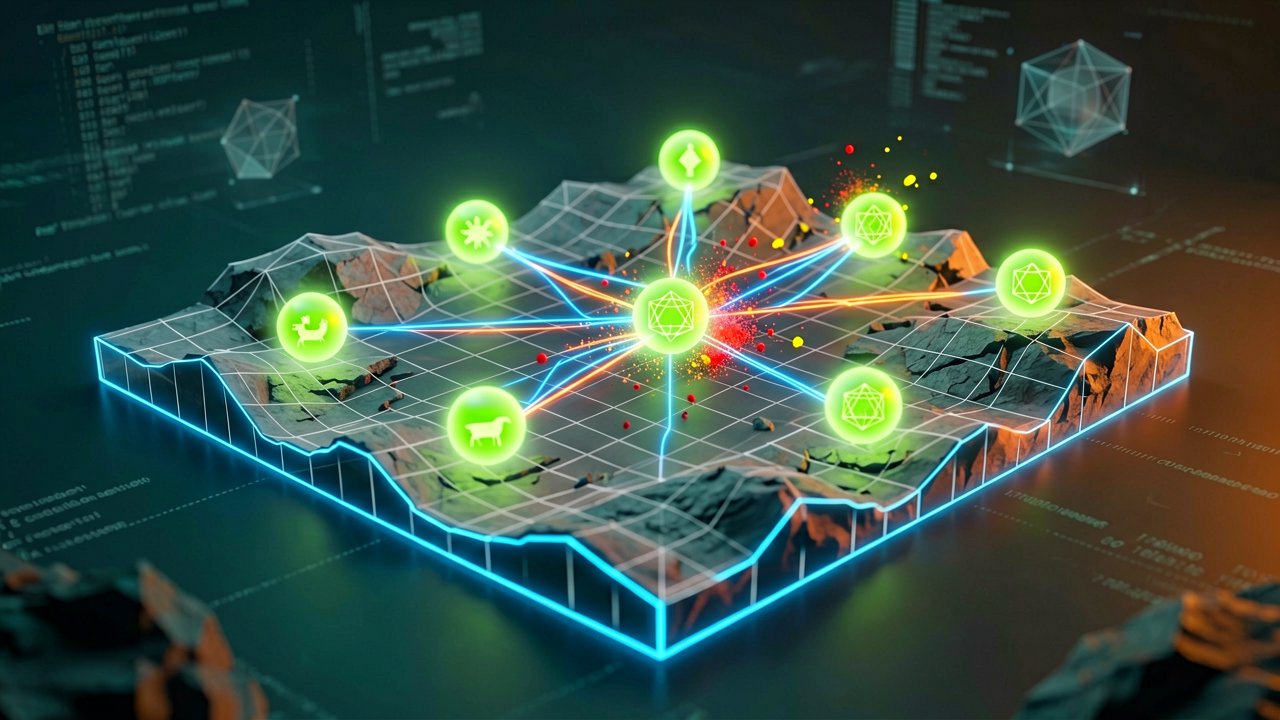
The intersection of generative artificial intelligence and triple-A game development has felt less like a harmonious partnership and more like an impending turf war. Every headline about a major publisher automating its creative workflow sparks a fresh wave of anxiety among developers and players alike. Ubisoft, a publisher that has rarely shied away from tech-forward experimentation, found itself squarely in the crosshairs after its latest financial earnings report revealed a sharp acceleration of internal investments into playable generative AI experiences. Whispers immediately began circulating that an early build of the unannounced Far Cry 7 was being used as an intensive, real-world sandbox for these emerging technologies.
The knee-jerk reaction from the gaming community was entirely predictable, fueled by reports from industry insiders who noted that early testing parameters yielded incredibly low-quality results. But looking past the initial alarmism reveals a far more nuanced reality. Ubisoft isn't using Far Cry 7 to quietly replace its writers, designers, or environmental artists with an automated "make game" button. Instead, the publisher is leveraging the massive, systemic playground of the Far Cry franchise to Stress-test algorithms meant to handle the grueling technical debt of modern game pipelines, allowing human creatives to actually focus on inventing better games.
The Sandboxed Sandbox: R&D Versus Shipped Slop
To understand what is happening behind the scenes, you have to separate a development sandbox from a commercial product. Reports tracking the project indicate that while text prompts and generative algorithms have been introduced into internal testing builds of the next Far Cry, these experimental features are strictly built for research and development purposes. It's a technical training ground. According to coverage by TheGamer, industry insiders clarified that the raw AI prompt testing isn't meant for the consumer version of the game itself, putting to rest the fear that the title will ship filled with generic, machine-generated assets.
Using a massive open-world franchise as a lab makes perfect sense from an engineering perspective. The Far Cry series is famous for its systemic chaos, where wildlife, enemy patrols, fire physics, and weather systems constantly collide. If you want to train an internal algorithm to understand how a dynamic game world behaves, you don't do it in a linear corridor shooter. You drop it into a chaotic simulation and watch where it breaks. This sandbox approach is explicitly designed to refine internal benchmarking utilities and automate the deeply tedious process of quality control, rather than automating the artistry.

Augmenting the Pipeline, Not the Portfolio
The true bottleneck in modern game development isn't a lack of human imagination; it's the sheer complexity of building modern digital worlds. As games scale up, the time required to build basic structures, map collision detection, and debug infinite asset interactions skyrockets. This is where Ubisoft’s organic AI strategy enters the frame. The corporate strategy focuses on deploying automation to manage the swelling complexity of production pipelines, freeing up human developers from repetitive digital labor.
Think of it as an incredibly advanced administrative assistant for game engines. Instead of a developer spending three days manually tweaking how non-player characters pathfind around a newly placed rock formation, an algorithm can map those iterations instantly. This frees up the designer to do what humans do best: build compelling narratives, choreograph memorable combat encounters, and inject genuine personality into the world. The goal is to build tools that eliminate the friction between a creative director's vision and the technical limitations of the hardware.
The Road to Smart Worlds and "Teammates"
While Far Cry 7 acts as the invisible laboratory, Ubisoft's consumer-facing AI ambitions are moving along a completely separate track. The publisher's latest corporate updates emphasize a standalone initiative code-named "Teammates," which is slated to be their first fully playable, consumer-ready generative AI experience. Rather than rewriting a standard campaign, this project explores how machine learning can create deeply responsive, unscripted companion characters that react to a player's idiosyncratic playstyle in real time.
This distinct separation of church and state is crucial for the company's long-term strategy. By funneling raw generative experiments into R&D sandboxes and keeping player-facing innovations contained within specific experimental projects, the studio is trying to walk a very fine line. They want the efficiency of automation without sacrificing the prestige and handmade soul of their premier franchises. It's a high-wire act, but if it saves developers from burnout and helps break the creative stagnation that has plagued open-world games for years, it might just be a risk worth taking.
Behind the Scenes: The internal struggle over this technology within Ubisoft’s global studio network highlights a classic rift between corporate efficiency mandates and the fierce protective instincts of ground-level developers. Long-time engineers and designers at studios like Ubisoft Montreal and Toronto have spent decades perfecting their craft, and many initially viewed the intrusion of generative algorithms with immense skepticism. Veteran leads remember the messy transition periods of past technological shifts—such as the early days of procedural world generation during the creation of Assassin's Creed—where initial management promises of "lighter workloads" frequently mutated into even longer crunch hours as production scale ballooned to fill the newly automated capacity.
To mend this bridge, technical directors have had to pivot their messaging internally, framing these new machine-learning models not as replacement artists, but as sophisticated scaffolding tools. The consensus building among team leads is that the current generation of tools can act as an advanced foundation layer, handling the tedious geometry math and basic physics mapping that traditionally eats up the first year of pre-production. By automating the foundational heavy lifting, developers are theoretically handed a half-built playground that they can immediately begin detailing, tuning, and injecting with the bespoke narrative quirks that define the franchise's identity.
From an industry-wide stakeholder perspective, Ubisoft’s strategy is a calculated gamble to solve the terrifying economic reality of modern triple-A development. With development cycles for major franchises now routinely stretching past six years and budgets ballooning deep into the hundreds of millions of dollars, the current model of game creation is pushing up against a financial ceiling. Publishers are desperate to find a pressure valve to contain these exploding costs without sacrificing the visual fidelity and sheer scale that consumers demand. If this sandboxed R&D pipeline successfully slashes technical debt, it could provide a viable blueprint for sustainable development across the entire gaming landscape.
Ultimately, the true test of this hybrid approach will be evident in the final texture of the gameplay experience itself. Gamers have developed a remarkably sharp instinct for detecting artificiality, quickly spotting the repetitive, uncanny valley patterns left behind by unpolished procedural generation or unguided algorithms. The editorial success of the project will rely entirely on how well Ubisoft protects the final, human-driven curation phase of development. If the technical automation successfully frees up creators to spend their final year purely polishing mechanics and writing unforgettable dialogue, the industry may see a renaissance of tighter, more innovative systemic sandboxes that feel anything but automated.
Reading Between the Lines: The corporate narrative of AI as a benevolent, labor-saving assistant conveniently glosses over a glaring paradox in how major publishers actually operate. Ubisoft argues that automating repetitive administrative and technical tasks will liberate creators to focus on high-level artistry, yet history suggests that corporate efficiency gains are rarely reinvested into creative indulgence. In a publicly traded company answers to shareholders always loom large, meaning that a 30 percent reduction in production friction is far more likely to result in leaner development teams or compressed production schedules rather than a localized golden age of creative freedom. The real danger isn't that robots will write the next game, but that human teams will be shrunk to the absolute minimum required to police the output of the machine.
Furthermore, there is a fundamental contradiction in using a chaotic sandbox environment like Far Cry to train automated quality assurance models. The entire appeal of the franchise relies on emergent gameplay—those unpredictable, beautifully broken moments where game mechanics collide in ways the developers never explicitly planned. If an algorithm is trained to identify and smooth out every single technical anomaly or unintended interaction to optimize stability, it risks sanitizing the very friction that makes the simulation entertaining. By teaching a system to perfectly predict and manage chaos, Ubisoft may inadvertently engineer the soul right out of its playground, replacing organic weirdness with a calculated, optimized corporate sheen.
Looking ahead, this technical pivot will fundamentally alter the career trajectory for the next generation of game developers. Historically, the grueling work of manual asset placement, basic bug hunting, and script editing served as the traditional entry point for junior designers looking to break into the industry and learn the ropes. If these foundational, entry-level tasks are permanently offloaded to machine-learning models, the industry risks destroying its own apprenticeship pipeline. Publishers will find themselves facing a talent vacuum, searching for experienced senior directors while having eliminated the very ecosystem where those seniors used to cut their teeth and develop their creative instincts.
"We are told that these brilliant algorithms will finally free our best human minds from the digital digital salt mines, giving them the infinite time and space to compose interactive masterpieces. Just remember to check the fine print, because in the triple-A ecosystem, 'saved time' has a funny habit of translating into shorter deadlines, smaller teams, and a mandate to build a map twice the size of Western Europe by next Tuesday."
Artūras Malašauskas is an AI Systems Integrator with 20+ years of production-grade web engineering experience. He has designed, shipped, and scaled enterprise Python/PHP systems for logistics, SaaS, and public-sector clients. For the past year, he has focused exclusively on AI integrations: deploying open-source LLMs, building generative media pipelines (image, audio, video), and engineering multi-agent workflows for real production environments. His standard: reproducibility, security, cost-efficient inference—no vaporware. He documents and evaluates emerging AI tooling, separating verified capabilities from marketing noise. Technical editor at: muza-ai.eu, ai-verslas.lt, ai-naujinos.lt Connect on LinkedIn
Comments