The Soul Remains Intact: Why Gaming Giants are Backing Away from the AI Replacement Narrative
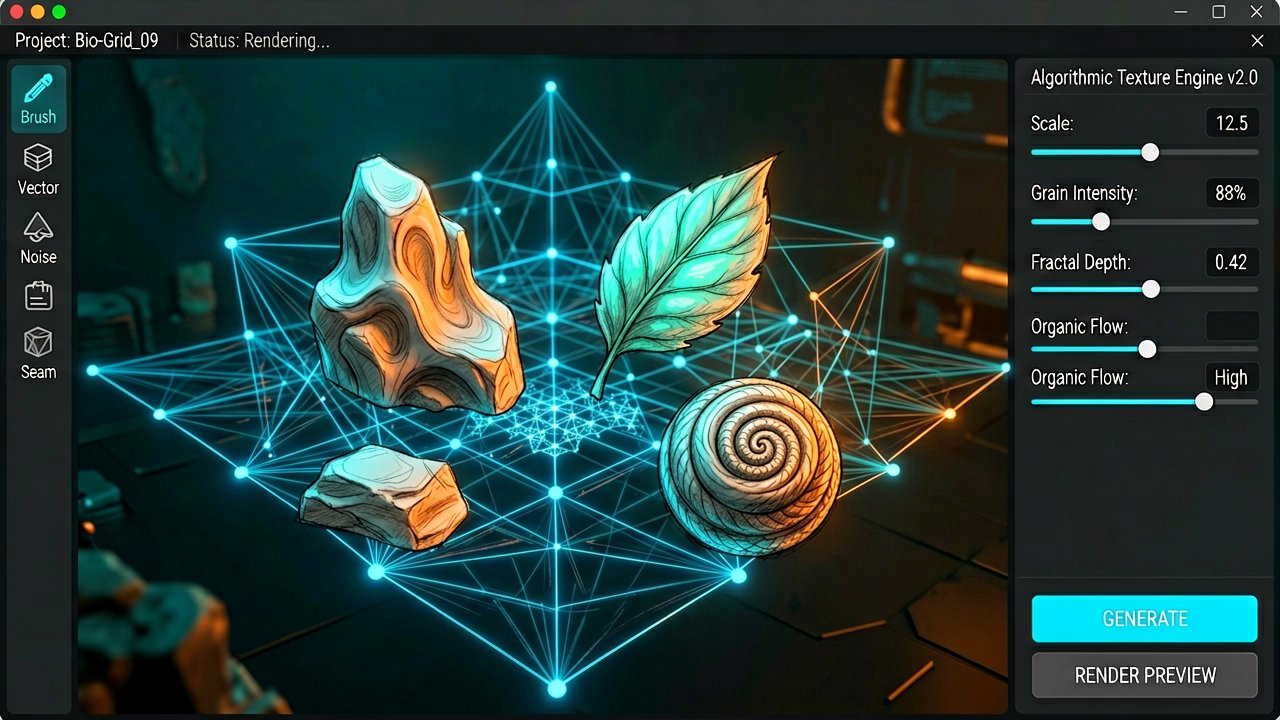
For the past couple of years, the suits in the boardrooms of major video game publishers seemed to be chanting from the exact same corporate script. The narrative was simple, clean, and entirely terrifying for anyone holding a stylus or writing a script: game development costs are skyrocketing, and generative AI is the silver bullet that will slash budgets by replacing costly human labor. But a funny thing happened on the way to the fully automated studio. The massive hype cycle has finally collided with reality, and the industry's heaviest hitters are quietly shifting their tone. Rather than aiming to replace human artists and writers, gaming giants are aggressively pushing back against the automation narrative, choosing instead to re-center human creativity in their workflows.
This course correction isn't happening out of pure corporate benevolence. It is a calculated survival tactic. Gamers are on a hair-trigger when it comes to anything resembling cheap automation, and the market has shown a violent allergic reaction to sterile, machine-made content. According to industry analysis on , prominent studios like Larian Studios have had to pivot sharply after facing immediate public backlash just for experimenting with generative tools in their creative concepts. The reality of 2026 is that a game with an unearned, AI-generated aesthetic feels instantly cheap, robotic, and entirely devoid of the human passion that transforms a commercial product into a cultural phenomenon. Publishers have realized that stripping the human soul out of game design means stripping away the very premium value that allows them to sell titles in the first place.
Instead of acting as a replacement for human staff, machine learning tools are finding their proper place in the background, handling the invisible, mechanical grunt work. As detailed in the Unity Gaming Report, the true utility of AI lies in support-focused workflows—such as compressing asset iteration, automating tedious quality assurance pipelines, and easing localization burdens. By offloading the boring, repetitive 80% of production to these algorithmic assistants, human creators are actually being freed to focus entirely on the imaginative 20% that matters. The conversation has fundamentally shifted from a threat of total displacement to a pursuit of workflow intelligence, ensuring that the final, critical creative vision always begins and ends with human intuition.
What Most Reports Miss: The Great Cultural Backlash
Behind the Scenes: The initial corporate rush toward generative automation completely underestimated the fierce tribalism and protective nature of the global gaming community. When a high-profile studio relies too heavily on algorithmic shortcuts, the pushback from consumers is swift and economically punishing. A notable example occurred with Embark Studios' blockbuster Arc Raiders, which faced intense scrutiny and online criticism simply because players noticed that some in-game background voices sounded auto-generated, as reported by the New Fortune Times . For an industry that relies heavily on pre-orders, community goodwill, and long-term player retention, alienating a hyper-connected core audience is a commercial death sentence.
Furthermore, developers themselves are drawing a hard line in the sand, treating their creative process as a matter of narrative and artistic sovereignty. The fear of copycat products and generic asset loops has made developers highly protective of their original worlds. As former Jagex engine developer Chris Knowles pointed out to BBC News, if human artists ultimately have to step in and fix a messy, sterile AI output anyway, it makes far more sense to harness their creativity from day one to build something authentically new that connects with players. This pushback has forced a healthy bifurcation in the market, drawing a clear boundary between pure data-driven technical optimization and genuine creative expression.
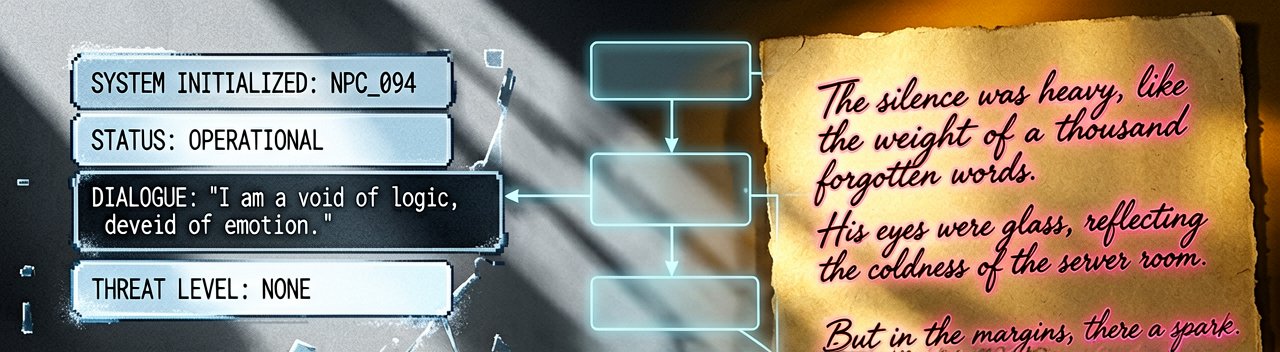
Ultimately, the latest industry trends prove that video games are an emotional medium masquerading as a tech sector. The most successful studios winning the current arms race are not those attempting to generate entire games with a single text prompt, but those using machine learning to build smarter, more adaptive systems. This includes creating persistent, memory-first NPC systems that remember player choices across gaming sessions, or utilizing real-time rendering enhancements to make human-designed environments pop. By treating AI as a sophisticated canvas rather than a substitute director, gaming giants are proving that while technology can scale production, only human imagination can build a world worth playing in.
The Tech-Hype Trap vs. Creative Reality
Reading Between the Lines: The sudden public pivot toward celebrating human artistry is a masterful public relations play, but it also glosses over a massive financial contradiction. Publishers are desperately attempting to manage two opposing forces: the need to appease a consumer base that loathes artificial shortcuts, and the relentless pressure from Wall Street to cut soaring game budgets. While executives happily take the stage to champion human voice actors and conceptual artists, the back-end engineering teams are still being instructed to integrate machine learning as deeply as possible. This creates an awkward corporate duality where a company might publicly renounce generative writing tools while simultaneously filing patents for automated level-generation algorithms behind closed doors.
This industry skepticism is entirely justified when looking at how easily corporate definitions of "creativity" can slide. A studio might genuinely protect its lead narrative designers, yet silently automate the work of hundreds of outsourced QA testers, environment detailers, and UI artists. The underlying danger is that by dismissing AI as a threat to "high-level creativity," the industry might inadvertently normalize the total eradication of entry-level production roles. This creates a severe pipeline problem, as the junior developers who typically cut their teeth on mundane, automated tasks will find fewer pathways to gain the experience required to become the celebrated creative directors of tomorrow.

The long-term implication is not a utopian renaissance of untethered human imagination, but a highly stratified development ecosystem. Independent, auteur-driven studios will likely use their lack of AI tools as a premium marketing badge of honor, commanding higher price points for "handcrafted" experiences. Meanwhile, mainstream AAA blockbusters will inevitably become hybrids—hollowed out by algorithmic efficiency in the middle tiers of production, but polished to a mirror sheen by a select few human creatives at the top. The pushback against AI is real, but it is ultimately a negotiation over the borders of automation rather than a total eviction of the technology.
"We will undoubtedly spend the next decade listening to executives praise the irreplaceable magic of the human spirit, right up until the exact quarter a new text-to-code algorithm promises to hit their profit targets six months ahead of schedule."
Artūras Malašauskas is an AI Systems Integrator with 20+ years of production-grade web engineering experience. He has designed, shipped, and scaled enterprise Python/PHP systems for logistics, SaaS, and public-sector clients. For the past year, he has focused exclusively on AI integrations: deploying open-source LLMs, building generative media pipelines (image, audio, video), and engineering multi-agent workflows for real production environments. His standard: reproducibility, security, cost-efficient inference—no vaporware. He documents and evaluates emerging AI tooling, separating verified capabilities from marketing noise. Technical editor at: muza-ai.eu, ai-verslas.lt, ai-naujinos.lt Connect on LinkedIn
Comments