The Machine in the Tropics: Ubisoft Tests Generative AI on Far Cry 7
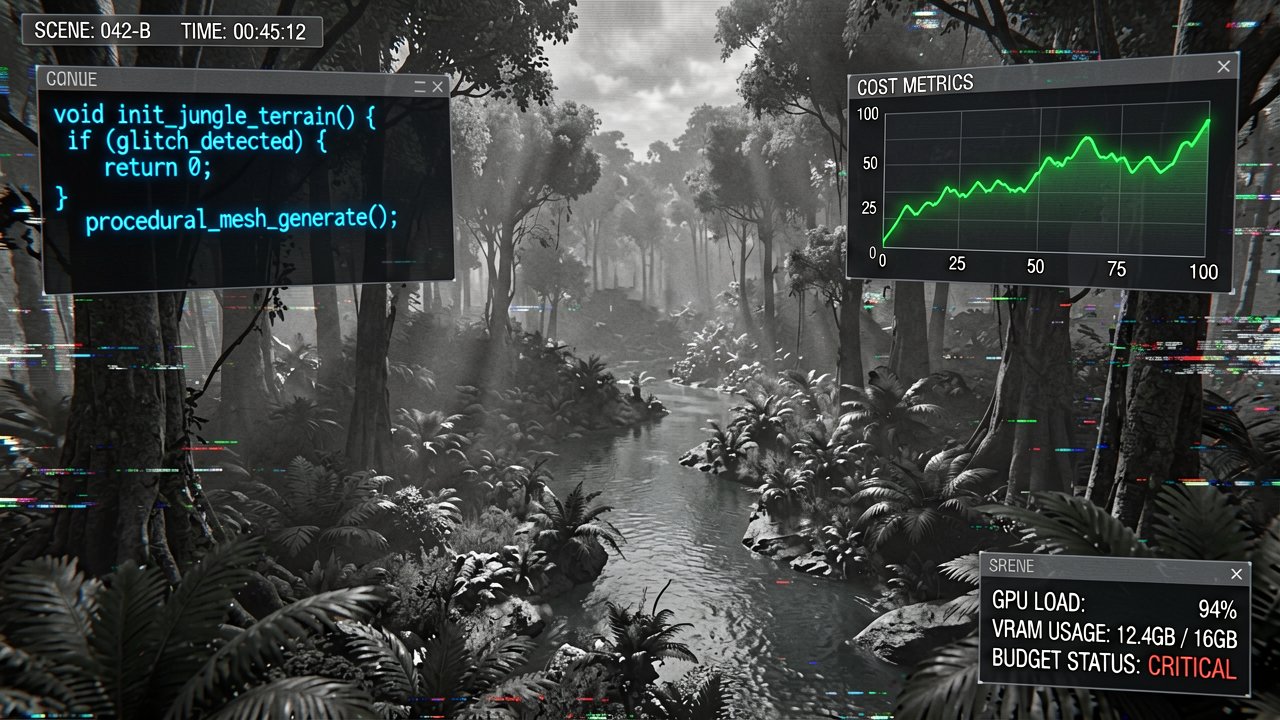
Ubisoft is aggressively steering into the storm of algorithmic development by turning its next major flagship open-world shooter, Far Cry 7, into an internal research and development sandbox for generative AI. According to information surfaced by industry insider Tom Henderson via VGC, developers have been feeding text prompts and testing core algorithms within an early build of the upcoming game. While the thought of a machine-engineered sandbox might trigger instant alarm bells for fans of the franchise, current data indicates these messy internal benchmarks are strictly experimental. The system's current iteration apparently "looks like shit," serving as an unpolished engineering playground rather than a blueprint for the final retail package.
The operational logic behind this trial run aligns perfectly with corporate strategy. In its latest fiscal reports, the French publisher explicitly detailed an acceleration of investments toward building the industry's first fully playable generative AI experience. This consumer-facing initiative, currently under development as a standalone project named "Teammates," stems directly from the tech prototypes showcased at prior trade shows. Ubisoft leadership views these neural networks as a structural necessity to combat the ballooning, unsustainable complexity of modern AAA game design pipelines. By automating testing tools and giving non-player characters the ability to dynamically respond to unscripted player inputs, the studio hopes to slash development timelines and reduce overhead.
What Most Reports Miss: The Ghost in the Engine
Behind the Scenes: The realization that Ubisoft is throwing its heaviest intellectual property into the AI meat grinder should surprise absolutely no one who has been tracking their engineering trajectory over the last few seasons. This is not a sudden, desperate pivot to chase a silicon-valley trend, but rather the next logical phase of a long-term corporate thesis. For years, the publisher’s internal R&D division, La Forge, has been deploying machine learning to quietly streamline production friction. Longtime followers will recall the introduction of Ghostwriter, an internal AI tool highlighted on Ubisoft News designed to generate initial drafts for thousands of repetitive background NPC "barks." What started as a glorified spreadsheet assistant has rapidly evolved into a sprawling ecosystem of algorithmic asset generation and behavioral logic.
The true tension lies in the massive, ideological gulf separating studio executives from the creative staff tasked with keeping these franchises alive. Corporate presentations paint a pristine picture of "magic in, magic out" scenarios where players converse naturally with companions. On the ground, however, workers face an ongoing battle against "procedural fatigue" and the terrifying reality of creative automation. Insiders suggest that feeding prompts into a Far Cry ecosystem is less about creating a superior sequel and more about stress-testing how much a traditional, tightly scripted game engine warps when subjected to real-time machine generation. The result is a chaotic clash between handcrafted human intent and raw mathematical probability.

Furthermore, this aggressive experimentation occurs at a moment of extreme financial vulnerability for the publisher. Stagnating franchise sales and a massive deficit over the previous fiscal cycle have turned efficiency into an existential mandate. Management sees generative models as a silver bullet to solve the "AAA bottleneck"—the reality where building a massive open world now takes half a decade and hundreds of millions of dollars. Critics and labor advocates argue that substituting human designers with automated routines threatens to strip away the deliberate, chaotic charm that defined the franchise in its prime, replacing it with an endless sea of sterile, focus-tested assets.
The road from raw R&D tests in an unreleased Far Cry build to a seamlessly functioning ecosystem remains incredibly long and fraught with technical failure. While standalone initiatives like "Teammates" will likely serve as the public-facing litmus test for this technology before the end of the decade, the backend infrastructure is being built right now under the hood of your favorite shooters. The industry is locked in a frantic race to see who can successfully automate the production pipeline first. Ubisoft has made it abundantly clear that they intend to lead the charge, even if the early prototypes look like total garbage to the human eye.
Ubisoft is aggressively steering into the storm of algorithmic development by turning its next major flagship open-world shooter, Far Cry 7, into an internal research and development sandbox for generative AI. According to information surfaced by industry insider Tom Henderson via VGC, developers have been feeding text prompts and testing core algorithms within an early build of the upcoming game. While the thought of a machine-engineered sandbox might trigger instant alarm bells for fans of the franchise, current data indicates these messy internal benchmarks are strictly experimental. The system's current iteration apparently "looks like shit," serving as an unpolished engineering playground rather than a blueprint for the final retail package.
The operational logic behind this trial run aligns perfectly with corporate strategy. In its latest fiscal reports, the French publisher explicitly detailed an acceleration of investments toward building the industry's first fully playable generative AI experience. This consumer-facing initiative, currently under development as a standalone project named "Teammates," stems directly from the tech prototypes showcased at prior trade shows. Ubisoft leadership views these neural networks as a structural necessity to combat the ballooning, unsustainable complexity of modern AAA game design pipelines. By automating testing tools and giving non-player characters the ability to dynamically respond to unscripted player inputs, the studio hopes to slash development timelines and reduce overhead.

What Most Reports Miss: The Ghost in the Engine
Behind the Scenes: The realization that Ubisoft is throwing its heaviest intellectual property into the AI meat grinder should surprise absolutely no one who has been tracking their engineering trajectory over the last few seasons. This is not a sudden, desperate pivot to chase a silicon-valley trend, but rather the next logical phase of a long-term corporate thesis. For years, the publisher’s internal R&D division, La Forge, has been deploying machine learning to quietly streamline production friction. Longtime followers will recall the introduction of Ghostwriter, an internal AI tool highlighted on Ubisoft News designed to generate initial drafts for thousands of repetitive background NPC "barks." What started as a glorified spreadsheet assistant has rapidly evolved into a sprawling ecosystem of algorithmic asset generation and behavioral logic.
The true tension lies in the massive, ideological gulf separating studio executives from the creative staff tasked with keeping these franchises alive. Corporate presentations paint a pristine picture of "magic in, magic out" scenarios where players converse naturally with companions. On the ground, however, workers face an ongoing battle against "procedural fatigue" and the terrifying reality of creative automation. Insiders suggest that feeding prompts into a Far Cry ecosystem is less about creating a superior sequel and more about stress-testing how much a traditional, tightly scripted game engine warps when subjected to real-time machine generation. The result is a chaotic clash between handcrafted human intent and raw mathematical probability.
Furthermore, this aggressive experimentation occurs at a moment of extreme financial vulnerability for the publisher. Stagnating franchise sales and a massive deficit over the previous fiscal cycle have turned efficiency into an existential mandate. Management sees generative models as a silver bullet to solve the "AAA bottleneck"—the reality where building a massive open world now takes half a decade and hundreds of millions of dollars. Critics and labor advocates argue that substituting human designers with automated routines threatens to strip away the deliberate, chaotic charm that defined the franchise in its prime, replacing it with an endless sea of sterile, focus-tested assets.
The road from raw R&D tests in an unreleased Far Cry build to a seamlessly functioning ecosystem remains incredibly long and fraught with technical failure. While standalone initiatives like "Teammates" will likely serve as the public-facing litmus test for this technology before the end of the decade, the backend infrastructure is being built right now under the hood of your favorite shooters. The industry is locked in a frantic race to see who can successfully automate the production pipeline first. Ubisoft has made it abundantly clear that they intend to lead the charge, even if the early prototypes look like total garbage to the human eye.
The Calculus of Corporate Desperation
Reading Between the Lines: The prevailing industry consensus treats this algorithmic push as an inevitability, yet a colder look at the numbers suggests it is born entirely out of executive panic. The fundamental contradiction here lies in what players actually buy versus what executives want to fund. For a decade, the core critique of the publisher's design philosophy has been its formulaic, copy-paste architecture—the infamous map-cleaning checklist that turns art into homework. Intentionally introducing generative neural networks into this mix feels less like a technological breakthrough and more like doubling down on the very homogenization that poisoned the well in the first place.
There is a distinct irony in attempting to automate spontaneity. The franchise built its entire reputation on emergent, unscripted chaos—a leopard suddenly attacking a guard post while a player snipes from a hillside. This beautiful unpredictability was meticulously engineered by human level designers who understood how to trigger intersecting systems. Delegating that subtle behavioral friction to a language model trained on internet scrapings treats player engagement as a mere statistical probability. It presumes that players cannot differentiate between genuine creative eccentricity and an endless, hallucinated horizon of corporate-approved procedurally generated padding.
The financial implications are equally paradoxical for an industry terrified of escalating budget deficits. While automation promises to drastically cut down on headcount and development years, it introduces massive, unpredictable cloud computing overhead and a logistical nightmare in quality assurance. A human designer creates predictable bugs that can be reproduced and patched before launch. A generative model creates unique, unpredictable failures for every individual player, effectively turning the entire consumer base into a permanent, unpaid quality control department. Ultimately, this paradigm shift risks trading a known, manageable production bottleneck for an uncharted labyrinth of software instability.
"We are rapidly approaching a future where a multi-billion-dollar publisher will proudly use cutting-edge, trillion-parameter artificial intelligence to automate the precise placement of identical wooden crates across five hundred square miles of virtual jungle."
Artūras Malašauskas is an AI Systems Integrator with 20+ years of production-grade web engineering experience. He has designed, shipped, and scaled enterprise Python/PHP systems for logistics, SaaS, and public-sector clients. For the past year, he has focused exclusively on AI integrations: deploying open-source LLMs, building generative media pipelines (image, audio, video), and engineering multi-agent workflows for real production environments. His standard: reproducibility, security, cost-efficient inference—no vaporware. He documents and evaluates emerging AI tooling, separating verified capabilities from marketing noise. Technical editor at: muza-ai.eu, ai-verslas.lt, ai-naujinos.lt Connect on LinkedIn
Comments