Silicon Valley, Meet the Vatican: Pope Leo XIV’s Looming AI Encyclical
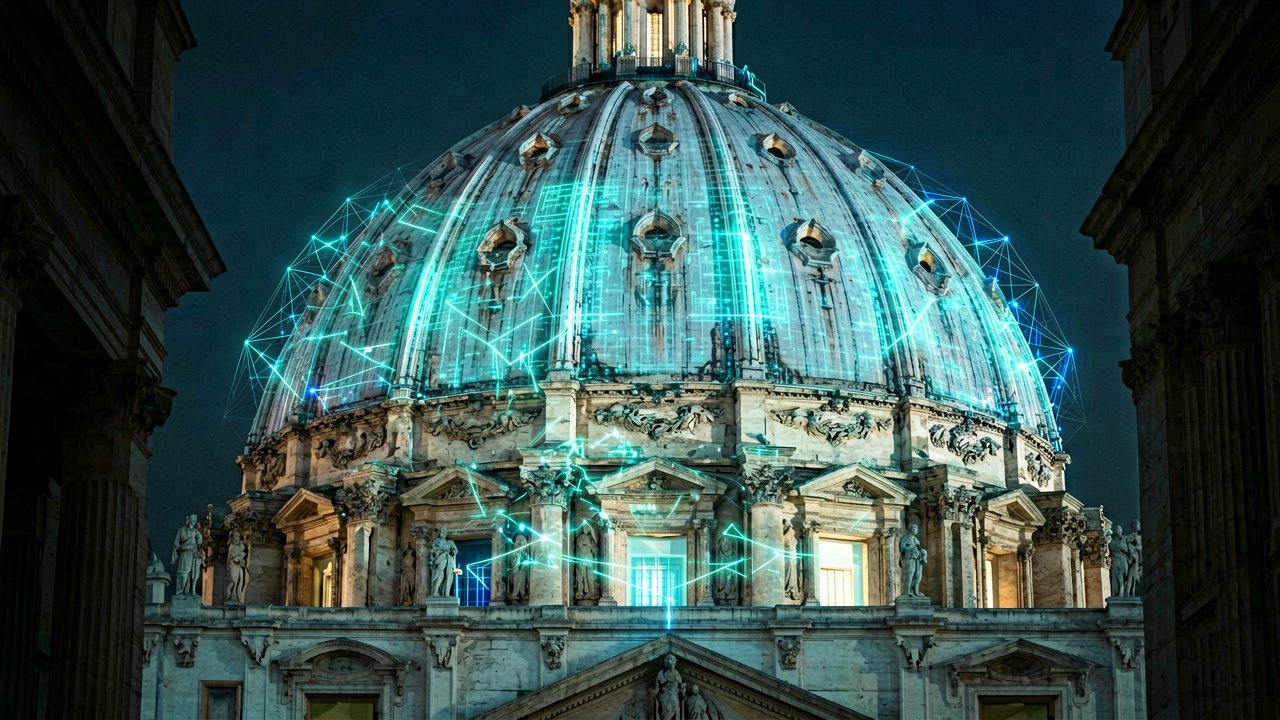
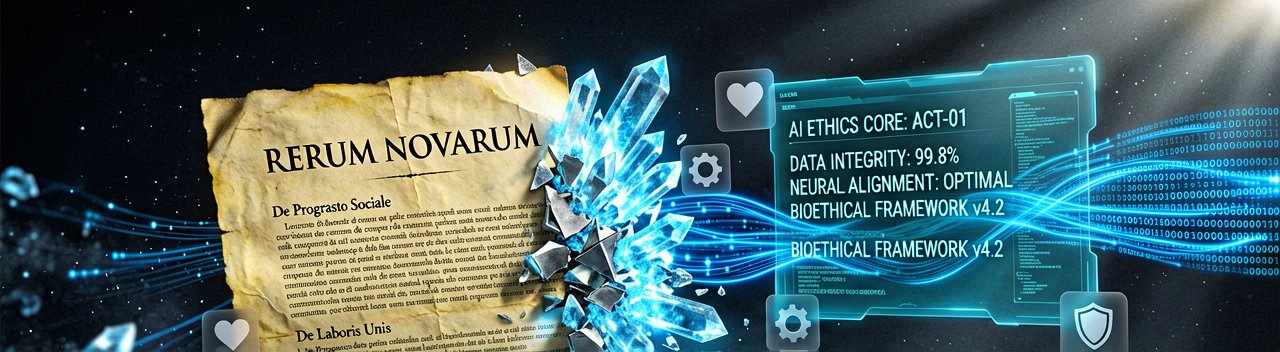
The Vatican is about to drop what might be the most fascinating piece of tech policy this year. On May 25, Pope Leo XIV will release his first encyclical, titled Magnifica Humanitas (Magnificent Humanity), completely dedicated to the rapid rise of artificial intelligence and the protection of human dignity. It is a massive statement from the 2,000-year-old institution, proving that Rome isn't content sitting on the sidelines while algorithms rewire the fabric of human interaction. The timing is entirely deliberate; the Pope signed the document on May 15, the 135th anniversary of Rerum Novarum, the landmark 1891 encyclical by Pope Leo XIII that tackled the brutal realities of the first Industrial Revolution. By linking his new text to that historic defense of workers' rights, the Pontiff is making a bold declaration: AI is our generation's steam engine, and it needs a moral framework before it runs completely off the rails.
According to an announcement covered by OSV News, this release will shatter typical papal traditions. Instead of just sending the document out via the usual bureaucratic channels, Pope Leo XIV is showing up in person at the Vatican press conference in the Synod Hall. Even more interesting is who is sitting on the panel next to him. Christopher Olah, the co-founder of the high-profile AI safety startup Anthropic, will be speaking alongside Vatican cardinals and theologians. It is a brilliant political move that gives the Vatican immediate credibility in the tech world. Bringing a Silicon Valley heavy-hitter to the altar signals that Rome isn't just throwing stones from a distance; they're actively engaging with the people building the future.
A Spiritual Counterweight to Silicon Valley
We shouldn't expect a Luddite manifesto, though. Pope Leo XIV, who actually holds a degree in mathematics, has built a reputation as a nuanced thinker on digital tech, earning him a spot on Time magazine's list of the most influential people in AI. He has previously noted that the ultimate challenge here isn't technological, but anthropological. Reports from Arise News indicate the encyclical will dive deep into how AI affects labor rights, the concentration of global wealth, and the terrifying prospect of automated decision-making in autonomous warfare. The Pope has spent months warming up for this, telling teenagers in sports stadiums to use AI so they don't forget how to think, and warning his own priests to stop using chatbots to write their Sunday homilies. He's worried that we are turning into passive consumers of "unthought thoughts," losing the very unique traits like voice, face, and empathy that define our relationships.
The Moral Boundary Lines
By treating AI as an issue of social justice rather than just a cold set of regulatory checkboxes, the Vatican is stepping into a vacuum left by gridlocked governments. As detailed by Vatican News , the presentation will feature a diverse lineup of global experts, including political theologians and AI safety researchers, to unpack the text. For a tech sector that often operates on the principle of moving fast and breaking things, Magnifica Humanitas will serve as an aggressive reminder that some things—like human agency, dignity, and authentic connection—are simply too sacred to be optimized away by a machine learning model.
Behind the Scenes: The Catholic Church's Deep Tech Roots
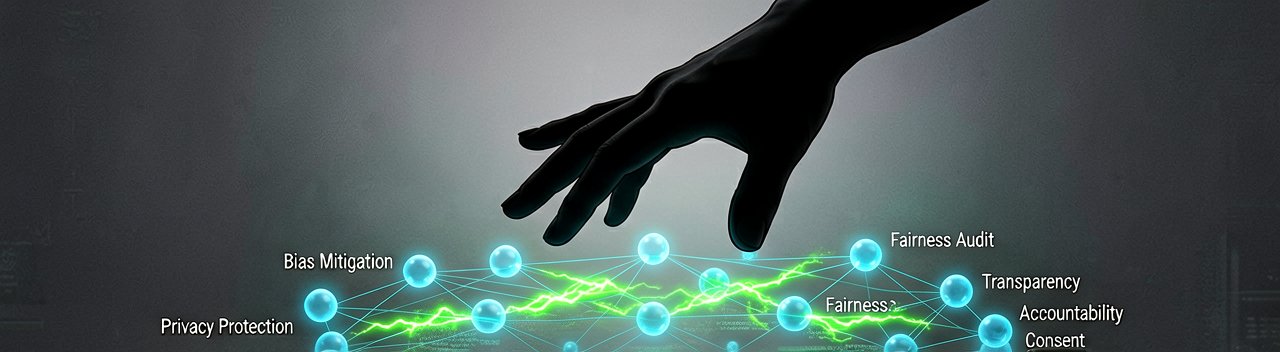
While the sudden announcement of Magnifica Humanitas might seem like a knee-jerk reaction to the generative AI boom, the Vatican has actually spent years quietly building a sophisticated intellectual infrastructure to handle the digital age. This encyclical is the culmination of a decade-long shift inside the Pontifical Academy for Life and the Pontifical Academy of Sciences, which have been bringing together computer scientists, ethicists, and tech executives long before ChatGPT became a household name. Insiders note that the Vatican’s strategy has always been to engage Silicon Valley directly rather than merely condemning it from afar, creating a unique diplomatic channel where the currency is ethics rather than regulatory compliance.
The choice of Christopher Olah of Anthropic as a keynote presenter highlights a deliberate alignment between the Vatican and the AI safety movement. Unlike tech leaders who advocate for unchecked acceleration, Anthropic was founded on the principle of "constitutional AI," making Olah a natural ally for a papacy seeking to embed human-centric values into machine learning architectures. Vatican sources suggest that the draft of the encyclical underwent multiple revisions after consultations with tech insiders to ensure the terminology was technically accurate. This prevents the document from being dismissed by engineers as out-of-touch theological musings, firmly establishing the Holy See as a serious stakeholder in global tech governance.
A critical nuance that most mainstream reports overlook is how Pope Leo XIV is reframing the concept of "labor" in an automated world. By explicitly linking this text to the 135th anniversary of Rerum Novarum, the Pope is addressing the very real fear of widespread economic displacement. The Vatican's position argues that work is not merely a means to earn a living, but a fundamental aspect of human dignity and self-expression. When algorithms replace creative and intellectual human output, the crisis is not just financial; it is existential. The encyclical is expected to challenge tech conglomerates to consider the human cost of optimization, urging a shift toward systems that complement human labor rather than entirely replacing it.
There is also a profound philosophical battle happening beneath the surface regarding the nature of truth and community. Pope Leo XIV has expressed deep anxiety over how AI-generated echo chambers and deepfakes erode the shared reality required for a healthy society. In pre-release discussions, Vatican theologians have pointed out that faith relies on authentic, physical witness—something a digital simulation can never replicate. By warning priests against using AI for homilies and advising youth to guard their capacity for independent thought, the Pope is drawing a hard line between data processing and actual wisdom, asserting that the spiritual core of humanity cannot be reverse-engineered by code.
Reading Between the Lines: The Friction Between Faith and Fast Tech
For all the masterfully orchestrated optics of a papal press conference featuring Silicon Valley’s elite, a deep ideological contradiction sits right at the heart of this initiative. The Vatican operates on a timeline measured in centuries, favoring slow, deliberate theological discernment before making definitive pronouncements. In stark contrast, the artificial intelligence sector operates on a frantic schedule of weekly software updates and a cutthroat "move fast and break things" ethos. Trying to govern a technology that changes fundamentally every six months using an encyclical meant to stand for decades is an inherently volatile experiment. There is a very real danger that by the time the ink dries on Rome's moral framework, the technical landscape will have shifted so dramatically that parts of the document could feel anachronistic.
Furthermore, the partnership between the Holy See and AI safety advocates like Anthropic reveals a highly selective alliance that might not hold up under sustained economic pressure. While it suits tech executives to stand alongside the Pope to project an image of ethical responsibility, the fundamental structural incentives of Silicon Valley remain unchanged. These companies are ultimately fueled by venture capital, hyper-growth targets, and intense geopolitical competition, none of which bow to theological ideals. When billions of dollars are on the line to achieve artificial general intelligence, the Vatican's moral appeals may find themselves quickly relegated to the status of a public relations shield rather than a true operational guide.
The long-term geopolitical implications of Magnifica Humanitas will likely test the limits of soft power in a highly polarized world. While the encyclical provides a beautifully articulated philosophical defense of human dignity, it completely lacks enforcement mechanisms. It lands in a fractured global landscape where the European Union favors heavy-handed regulation, the United States relies on corporate self-governance, and authoritarian regimes utilize AI for absolute social control. In this environment, a papal decree risks being warmly applauded by everyone while being practically ignored by the actors who actually hold the power to shape the future of computation.
It seems the Vatican has finally discovered that while it takes a conclave several days of secret voting and white smoke to choose a global leader, a neural network can generate a million simulated leaders before the first prayer is even finished. One can only hope Silicon Valley listens to the advice, if only because getting unceremoniously excommunicated by an algorithm sounds far more exhausting than the traditional method.
Artūras Malašauskas is an AI Systems Integrator with 20+ years of production-grade web engineering experience. He has designed, shipped, and scaled enterprise Python/PHP systems for logistics, SaaS, and public-sector clients. For the past year, he has focused exclusively on AI integrations: deploying open-source LLMs, building generative media pipelines (image, audio, video), and engineering multi-agent workflows for real production environments. His standard: reproducibility, security, cost-efficient inference—no vaporware. He documents and evaluates emerging AI tooling, separating verified capabilities from marketing noise. Technical editor at: muza-ai.eu, ai-verslas.lt, ai-naujinos.lt Connect on LinkedIn
Comments