Google’s New Checkout Push Is a Direct Shot Across Amazon’s Bow
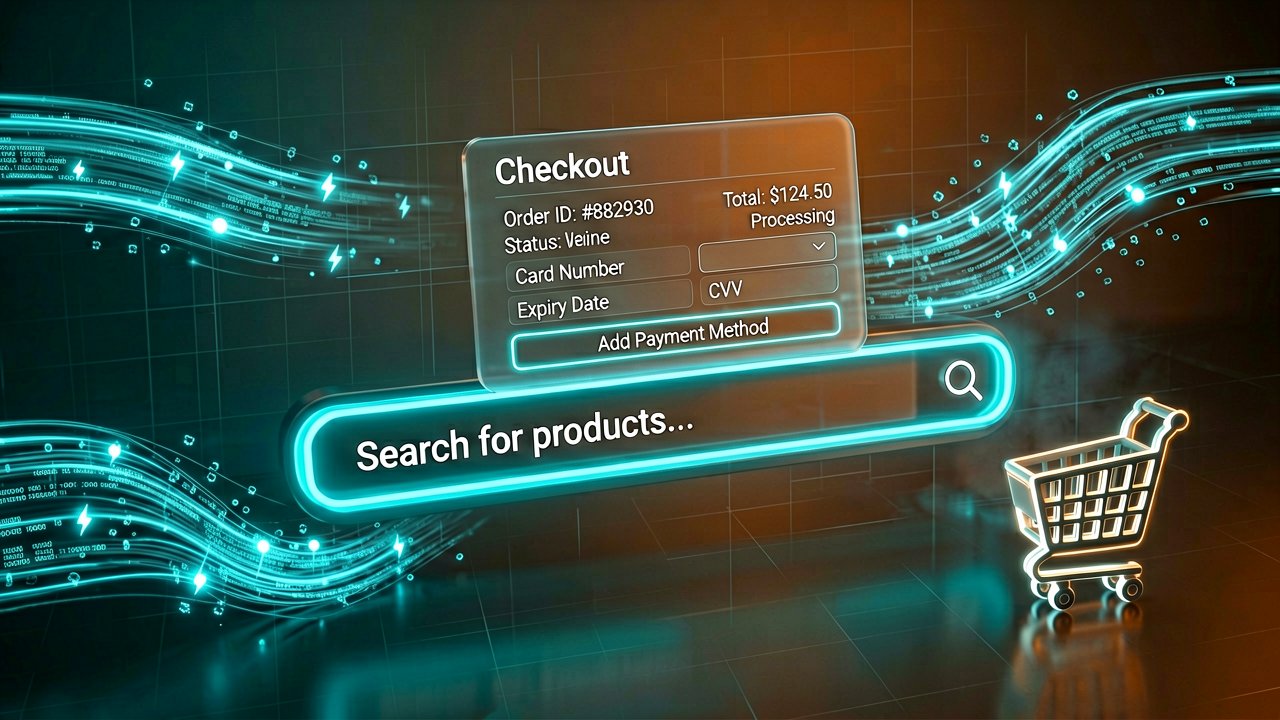
For years, Google and Amazon have engaged in a quiet, high-stakes cold war over how we find and buy things online. Google owned the top of the funnel where people discover products, while Amazon held a virtual monopoly on the actual transaction. But that neat division of labor has evaporated. In a bold move reported by Adweek, Google is rolling out a new native checkout experience alongside advanced AI-driven ad features. It is a blatant attempt to keep shoppers from jumping ship to Amazon when they are ready to swipe their digital credit cards.
This is not just a minor software update; it is a defensive necessity. The e-commerce landscape shifted dramatically when Amazon pulled its massive ad spend from Google Shopping auctions, signaling absolute confidence in its own ecosystem. Amazon realized it no longer needed to pay the Google tax because over half of all product searches already start directly on its marketplace. By keeping shoppers entirely within its own ecosystem via native checkout, Google is trying to claw back that commercial intent before it migrates to Amazon's walled garden.
The Frictionless Frontier
The biggest hurdle Google has always faced in retail is friction. On Amazon, buying a product takes one click. On Google, clicking a shopping ad usually means being redirected to a third-party website, dealing with a clunky mobile layout, and entering shipping details for the hundredth time. By embedding native checkout directly into its search results and AI-driven features, Google is removing those extra steps. They are trying to turn the entire internet into a single, seamless digital storefront. If you can buy that new water bottle directly from the search page with your saved credentials, the temptation to head over to Amazon drops significantly.
AI Overviews and the Battle for Discovery
This retail offensive is deeply intertwined with Google’s broader pivot toward generative AI. As search transitions into an answer engine, the tech giant is rethinking how ads fit into conversational interfaces. For merchants, this sea change is a double-edged sword. While AI overviews can summarize options and surface highly tailored product recommendations, they also risk lowering traditional web traffic. Google's new native checkout and AI ad explainers are designed to bridge this gap, ensuring that even if users do not click through to a merchant's website, a transaction can still happen right then and there. It is a high-stakes gamble to prove to advertisers that Google can still deliver actual sales, not just eyeballs, in an increasingly fragmented digital economy.

Behind the Scenes: The Invisible Infrastructure of the Retail War
What most reports miss is that Google’s assault on Amazon’s territory is less about software design and more about a desperate race to control consumer data pipelines. In the early days of the web, search data was the ultimate prize because intent translated directly into ad clicks. Today, that data has lost some of its premium value unless it is tied to an actual purchase history. Amazon knows exactly what you bought, when you bought it, and how often you need a refill. Google, on the other hand, has historically been left guessing what happened after a user clicked away from its search results page. This native checkout push is a calculated attempt to close that data feedback loop, giving Google the precise transactional insights it needs to train its retail AI models.
Merchant adoption remains the critical battleground where this strategy will either succeed or crater. From the perspective of independent retailers and mid-sized brands, Google’s native checkout presents a classic Faustian bargain. On one hand, merchants are desperate for any tool that lowers cart abandonment rates, which hover around seventy percent across the web. If Google can frictionlessly convert a browser into a buyer, sales will inevitably tick upward. On the other hand, merchants fiercely guard their direct customer relationships. When a transaction happens natively on Google, the search giant captures the customer email and the brand risk becoming a mere backend supplier, a painful lesson many brands already learned during Amazon’s rise.
Historically, Google’s attempts to build a shopping destination have been plagued by fits and starts, from the forgotten Google Express to various iterations of Google Shopping Actions. Each past effort struggled because Google lacked the robust fulfillment and logistics network that makes Amazon Prime a household necessity. Recognizing this limitation, Google is not trying to build warehouses this time around. Instead, it is positioning itself as a pure orchestration layer, relying on a complex web of partnerships with companies like Shopify and large regional shipping carriers. By handling the transaction and leaving the physical fulfillment to merchants, Google avoids the massive capital expenditures of logistics while still capturing the customer relationship.
This ongoing convergence of search and commerce is also forcing a radical shift in how marketing budgets are allocated inside major brands. Historically, companies divided their money into two distinct buckets: brand advertising on Google to build awareness, and trade marketing on Amazon to drive point-of-sale conversions. As Google embeds checkout directly into search, and Amazon expands its own DSP advertising network across the open web, that traditional boundary is completely dissolving. Chief marketing officers are now forced to treat both ecosystems as unified commerce networks, evaluating Google not just on its ability to drive traffic, but on its direct return on ad spend at the virtual cash register.

Reading Between the Lines: The Illusion of Frictionless Conquest
The tech industry loves to treat a frictionless checkout experience as a silver bullet for e-commerce supremacy, but this assumption glosses over a fundamental flaw in Google's strategy. Making a purchase easier does not automatically shift consumer habits that have been deeply ingrained over two decades. Shoppers do not flock to Amazon simply because they hate typing in credit card numbers; they go there because of the psychological safety net of unified tracking, effortless returns, and predictable shipping. Google can streamline the digital handoff as much as it likes, but until it resolves the fragmented, post-purchase customer experience delivered by thousands of independent merchants, its shopping ecosystem will remain a gamble for the average buyer.
There is also a glaring contradiction in Google's reliance on merchants to champion this new paradigm. Google is pitching native checkout as a weapon to help retailers fight back against Amazon’s dominance, yet the mechanics of the system require these same retailers to surrender their most valuable asset: first-party customer data. By keeping the transaction on Google's search page, merchants lose the opportunity to pull buyers into their own loyalty loops, cross-sell related products on their websites, or capture direct data for future email marketing. It is an ironic proposition where merchants are invited to escape the Amazon walled garden by helping Google build an entirely new one.
Projecting the long-term implications reveals an environment where the open web faces even greater marginalization. If Google successfully normalizes a search engine that doubles as a point of sale, the traditional web portal model dies a little faster. Websites that rely on affiliate links, product reviews, and referral traffic will see their business models upended as Google’s AI summarizes their content and handles the transaction without ever sending a user to their pages. Rather than democratizing e-commerce, Google's defense mechanism against Amazon could inadvertently starve the very digital ecosystem it was originally built to index.
Google is essentially trying to build a shopping mall where they own the entrance, the cash registers, and the security cameras, but leave the merchants to handle the inventory, the cleaning, and the angry customers at the return desk. It is a brilliant business model, assuming they can convince everyone that a digital receipt is just as comforting as a brown cardboard box waiting on the porch.
Artūras Malašauskas is an AI Systems Integrator with 20+ years of production-grade web engineering experience. He has designed, shipped, and scaled enterprise Python/PHP systems for logistics, SaaS, and public-sector clients. For the past year, he has focused exclusively on AI integrations: deploying open-source LLMs, building generative media pipelines (image, audio, video), and engineering multi-agent workflows for real production environments. His standard: reproducibility, security, cost-efficient inference—no vaporware. He documents and evaluates emerging AI tooling, separating verified capabilities from marketing noise. Technical editor at: muza-ai.eu, ai-verslas.lt, ai-naujinos.lt Connect on LinkedIn
Comments