The Quiet Monopoly of the Financial Widgets
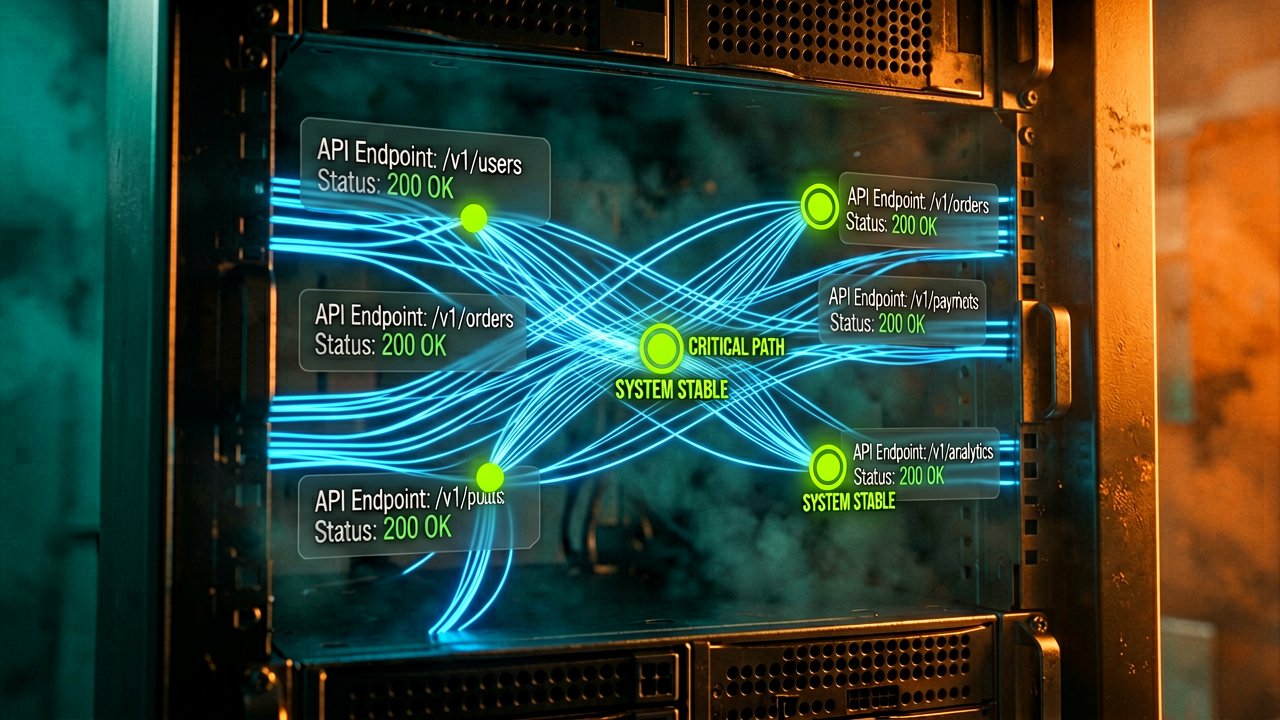
In the glitzy arena of tech journalism, we routinely obsess over the titans: the AI breakthroughs, the flashy social media conglomerates, and the hardware giants. But the real nervous system of the digital financial ecosystem lies in the unglamorous, highly profitable plumbing of data syndication. Enter FinancialContent, Inc., a company that has quietly turned stock market data, business news, and real-time widgets into a masterclass of digital distribution. By serving hundreds of millions of widgets and pageviews a month to thousands of media outlets, they have proven that controlling the content delivery pipeline is vastly more valuable than chasing fleeting online virality.
The business model is deceptively simple but incredibly sticky. Instead of trying to convince retail investors to visit a standalone portal, the firm syndicates localized, real-time tracking engines directly into the layout of local newspapers, global broadcasting sites, and niche trade publications. When major financial events shake the market—like the recent, massive real estate consolidation between AvalonBay Communities and Equity Residential—the web of syndicated pages updating across the internet relies on this identical infrastructure to push those updates instantly to millions of screens.
The Premium on Controlled Pipelines
There is a classic debate in digital media about whether the crown belongs to the content creator or the platform architect. While major media houses spend fortunes on newsrooms and editorial talent, the infrastructure players scale without the burden of heavy overhead. Every time a consumer checks an embedded stock ticker or reviews a market summary, a syndication loop registers an impression. This structural dominance proves that owning the programmatic pipe creates an enterprise value that remains completely immune to the standard cyclical downturns of traditional advertising.
The Real Estate of Digital Attention
What makes this sector particularly fascinating is its invisibility to the average user. Consumers believe they are interacting exclusively with their preferred news source, yet the underlying delivery engine remains uniform behind the scenes. This quiet integration into the background of mainstream media ensures a steady capture of B2B market share, building a high-barrier ecosystem that new startups find almost impossible to penetrate without massive capital expenditure.

Behind the Scenes: The Invisible Monopoly of API Aggregators
What most reports miss is the sheer vulnerability of the modern media landscape to minor disruptions in these data pipelines. While the average consumer views a financial news portal as a unified product, it is actually a fragile mosaic of third-party widgets and API streams. If an aggregator experiences a localized outage, hundreds of media properties instantly go dark or display broken layout placeholders. This reliance highlights a asymmetric power dynamic where the tech platform holds all the leverage, leaving legacy publishers to bear the reputational risks while paying premium licensing fees for data they cannot independently replicate.
The historical evolution of this sector reveals how traditional media companies willingly surrendered their digital autonomy. During the early web boom, publishers rushed to provide stock data without realizing that the infrastructure required to ingest, clean, and format real-time market data feeds from global exchanges was cost-prohibitive. By outsourcing this task to pioneering syndicators like FinancialContent, Inc., newsrooms saved millions in short-term engineering overhead. However, this convenience created a structural dependency that has locked publishers into long-term B2B relationships that are nearly impossible to dismantle without completely overhauling their content management systems.
From the perspective of advertisers, these embedded tickers represent the holy grail of high-intent digital real estate. Unlike generic display ads that users actively tune out, financial widgets attract active user interaction, longer dwell times, and repeated page refreshes during volatile trading hours. This premium environment allows infrastructure providers to command higher CPMs by bundling ad inventory across thousands of distinct media outlets. The aggregator effectively operates a shadow advertising network, leveraging the collective authority of established journalistic brands to monetize audience attention at scale.
This dynamic becomes particularly evident during major corporate movements, such as large-scale real estate merges or corporate restructurings like the AvalonBay and Equity Residential merger. When such announcements drop, a massive surge of simultaneous queries hits the syndication engines. The capacity to absorb these traffic spikes seamlessly across thousands of distinct regional domains without latency is a technical feat that requires sophisticated edge-caching and cloud infrastructure. It is this specific capability, rather than any proprietary news content, that cements the aggregator's position as an indispensable utility in the modern information economy.
Reading Between the Lines: The Illusion of Digital Pluralism
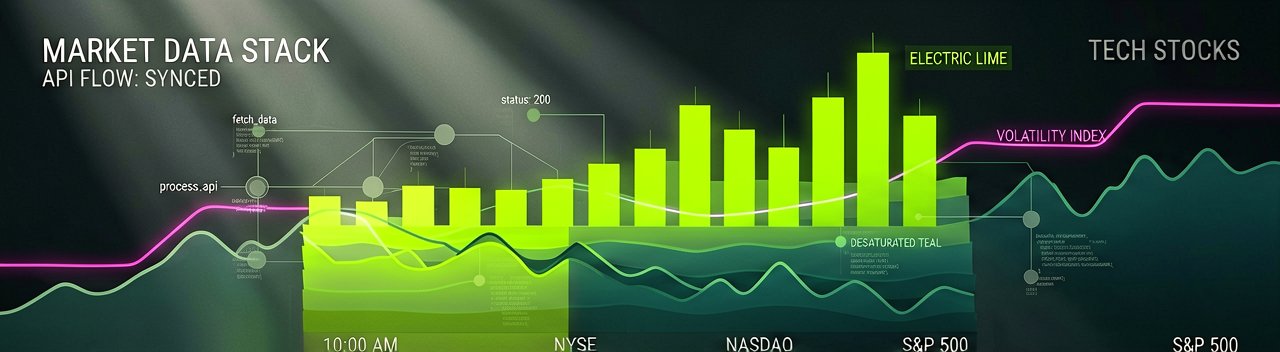
The standard industry narrative celebrates the internet for democratizing access to financial information, yet the underlying reality reveals a hyper-centralized bottleneck. While readers can choose between thousands of seemingly independent business blogs and local news portals, they are fundamentally consuming the exact same data packets, packaged in the exact same iframe containers, delivered by a handful of uncredited infrastructure monopolies. This architectural setup exposes a deep contradiction in modern tech journalism: we obsess over platform decentralization and web3 ideals while the entire financial web relies on a remarkably small, old-school network of data syndicators.
This centralization introduces subtle editorial biases that tech analysts frequently overlook. When a single provider determines the default sorting of market gainers, the specific technical indicators displayed, or the threshold for a "market alert," it subtly shapes the retail investor's worldview on a macro scale. If an aggregator prioritizes large-cap visibility within its standardized widget templates, smaller corporate entities face structural invisibility, regardless of their actual market performance or local economic impact. The tech platform does not just deliver the news; it dictates the visual hierarchy of economic importance.
Furthermore, the financial sustainability of this model remains highly vulnerable to the rise of generative AI and zero-click search interfaces. Syndicators have long thrived on the assumption that users need to visit a media webpage containing their embedded widgets. As large language models increasingly scrape these identical feeds to provide direct answers on search engine result pages, the traditional ad-supported impression loop faces systemic obsolescence. The infrastructure giants will eventually be forced to shift from a revenue-sharing model with publishers to an exclusive B2B data-licensing model with AI firms, potentially cutting off a critical revenue stream that local newsrooms have relied upon for decades.
This shift will likely widen the gap between premium financial news organizations and secondary regional outlets. Tier-one publications possess the capital to build bespoke data visualization tools and negotiate direct exchange feeds, ensuring their independence. Meanwhile, smaller publishers will find themselves trapped in an escalating monetization squeeze, unable to afford proprietary data pipelines yet losing their audience to automated platforms that bypass syndicated web pages entirely. The consolidation of corporate real estate, illustrated by events like the AvalonBay and Equity Residential consolidation, finds its digital parallel in the media ecosystem, where the platforms that control the underlying property ultimately dictate the terms of survival.
"We spend billions building the metaverse and debating the future of decentralized networks, only to realize that the global economy still runs on twenty-year-old data tables embedded in a local newspaper's sidebar. It turns out the true masters of the financial universe aren't the hedge fund managers or the AI visionaries, but the quiet mechanics who figured out how to charge a fraction of a cent every time someone looks at a flashing red arrow."
Artūras Malašauskas is an AI Systems Integrator with 20+ years of production-grade web engineering experience. He has designed, shipped, and scaled enterprise Python/PHP systems for logistics, SaaS, and public-sector clients. For the past year, he has focused exclusively on AI integrations: deploying open-source LLMs, building generative media pipelines (image, audio, video), and engineering multi-agent workflows for real production environments. His standard: reproducibility, security, cost-efficient inference—no vaporware. He documents and evaluates emerging AI tooling, separating verified capabilities from marketing noise. Technical editor at: muza-ai.eu, ai-verslas.lt, ai-naujinos.lt Connect on LinkedIn
Comments