Seoul’s New Blueprint: IOM Backs South Korea’s Ambitious Global AI Hub

South Korea is moving fast to cement its status as a top-tier artificial intelligence superpower, and the United Nations is officially buying into the vision. In a major diplomatic milestone in Seoul, Amy Pope, the Director General of the International Organization for Migration (IOM), formally committed her agency to the upcoming launch of a brand-new Global AI Hub hosted by the Republic of Korea. Grounded in the universal mantra of "AI for All, AI to Solve Global Challenges," this collaborative initiative signals a tactical shift away from isolated commercial tech development toward unified, human-centered governance. It is a massive play for South Korea, which wants to act as the primary bridge between Silicon Valley infrastructure and the localized needs of the Global South.
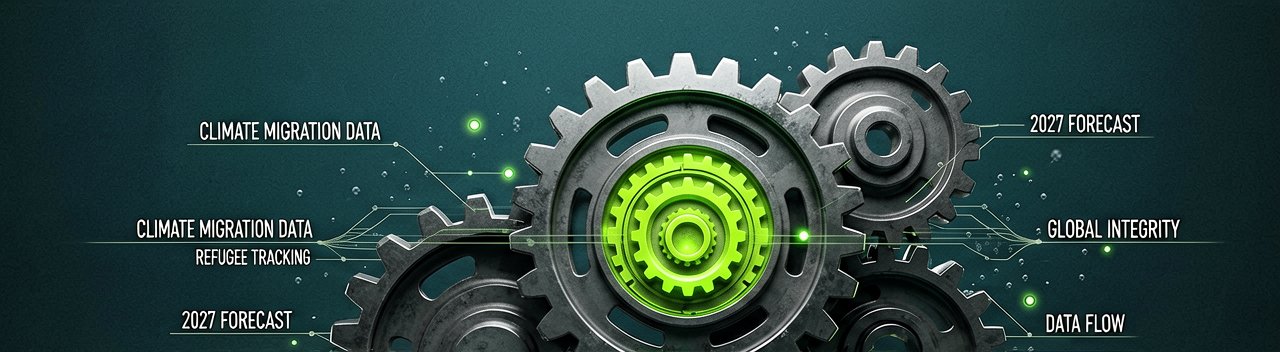
The announcement represents far more than just standard bureaucratic ink. According to details released by the International Organization for Migration, the new platform is structurally engineered to pool computing power, deep data registries, and cloud systems among an initial group of nine UN agencies and five multilateral development banks. Instead of mid-tier nations struggling to build proprietary AI models from scratch, they will get to tap into a shared engineering capacity designed to solve real-world crises. For the IOM specifically, this means deploying advanced predictive algorithms to handle complex challenges like climate-induced migration, refugee tracking, and emergency supply distribution during natural disasters.
From Aid Recipient to Infrastructure Provider
There is a poetic irony here that South Korean Prime Minister Kim Min-seok was quick to highlight during the declaration ceremony at the Grand Hyatt Seoul. Just a few generations ago, South Korea was entirely dependent on international aid; today, it is pledging to actively fund the foundational setup and operational costs of a global tech headquarters. The country's strategy leans heavily on its local hardware strengths, utilizing its dominant position in AI memory chips and high-bandwidth computing to anchor the hub’s physical infrastructure. By offering this heavy-duty computing backbone for free to participating UN bodies, Seoul effectively guarantees that international standards on AI safety and labor protection will be negotiated on its own home turf.
A Operational Horizon for 2027
While the initial groundwork was laid via a preliminary Letter of Intent signed back in March, this latest gathering established a concrete roadmap aimed at making the hub fully operational by 2027. Moving forward, specialized working groups will hammer out the legal framework for data sharing and cross-border accountability standards. The ultimate goal is to build an ecosystem that effectively balances rapid software innovation with public value, ensuring that vulnerable communities are not left behind in the private sector's relentless algorithms race. If South Korea can pull this off, the peninsula will not just be exporting smartphones and semiconductors—it will be exporting the literal blueprint for ethical global AI governance.
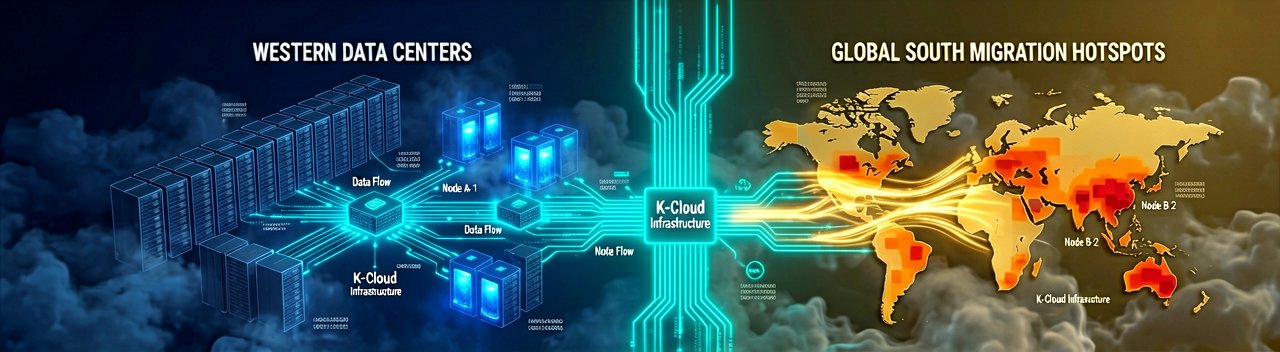
Deep-Dive: The Geopolitical Engine Powering Seoul’s AI Ambitions
What Most Reports Miss: This alliance between the IOM and Seoul is not just a feel-good humanitarian project; it is a calculated geopolitical chess move. By anchoring a UN-backed Global AI Hub on its soil, South Korea is deliberately positioning itself as a neutral, high-tech mediator in an increasingly fractured global landscape. As the tech hegemony remains locked in a fierce, bilateral tug-of-war between Washington and Beijing, mid-tier economies and developing nations are growing deeply anxious about digital colonization. Seoul is brilliantly exploiting this anxiety by presenting itself as a non-threatening, highly capable third option that respects international law and prioritizes public infrastructure over unilateral corporate dominance.
The historical trajectory of South Korea’s tech sector adds a layer of hard-earned credibility to this pitch. Unlike Western tech giants that scaled via unfettered consumer capitalism, South Korea’s economic miracle was built on tight, state-directed coordination with industrial conglomerates. This unique heritage gives Seoul a distinct advantage in understanding how to build tech infrastructure that serves nationwide, institutional goals rather than just quarterly shareholder returns. For UN leaders like Amy Pope, this model is incredibly attractive because it aligns perfectly with the bureaucratic reality of multilateral governance, where state sovereignty and public welfare must always be balanced against raw technological efficiency.
Inside the numbers, the financial architecture of this agreement reveals just how serious South Korea is about securing its seat at the head of the global governance table. The Ministry of Science and ICT has quietly hinted at a massive multi-year funding package to bankroll the hub’s initial compute requirements, utilizing next-generation domestic AI accelerators. By offering these computing resources as a form of digital official development assistance (ODA), Seoul is effectively bypassing the traditional, sluggish foreign aid channels. They are giving the Global South something far more valuable than cash: the computational sovereignty required to build localized climate and migration models without relying on expensive, proprietary software from foreign monopolies.
However, seasoned observers note that the path to 2027 is riddled with immense operational friction, particularly regarding data privacy and international law. The IOM deals with some of the most sensitive, highly classified demographic data on Earth, tracking vulnerable populations moving across legally fraught borders. Merging these incredibly sensitive data streams with a centralized AI hub requires an ironclad, foolproof cybersecurity framework that can withstand state-sponsored espionage. Government insiders acknowledge that negotiating the precise legal immunities for UN data sitting on South Korean servers will be a massive logistical headache, testing the limits of traditional diplomatic statecraft.
Ultimately, the success of this ambitious venture hinges on whether Seoul can convince other Western democratic allies to play ball without trying to hijack the narrative. If the hub is perceived as merely an extension of Western foreign policy, it will fail to gain traction in the very regions it aims to assist. But if South Korea can successfully maintain its editorial independence and keep the platform strictly focused on global problem-solving, it will rewrite the playbook for international tech diplomacy. The true test will not be the elegance of the algorithms built in Seoul, but whether those algorithms can actually save lives on the ground in the world's most vulnerable migration corridors.
Analytical Critique: The High Stakes and Hard Realities of Algorithmic Diplomacy
Reading Between the Lines: While the optics of a UN-backed AI sanctuary in Seoul are undeniably brilliant, the project rests on a deeply idealistic assumption: that artificial intelligence is inherently neutral enough to solve inherently political crises. Human migration is rarely just a logistics problem waiting for a faster algorithm; it is a chaotic byproduct of civil war, economic collapse, and border politics. Turning this human struggle into data points for a predictive model assumes that governments will actually act on the data rather than ignore it. In reality, knowing exactly where a climate-induced migration surge will happen three months in advance does very little good if sovereign nations simply choose to build higher walls rather than dispatch aid.
There is also a glaring contradiction in South Korea’s dual identity as both a global humanitarian tech provider and a fierce commercial competitor. The state-backed conglomerates anchoring this hub’s infrastructure are the exact same corporations locked in a cutthroat race to commercialize proprietary AI for maximum profit. This creates an inevitable conflict of interest regarding intellectual property and talent. It remains to be seen whether Seoul’s top machine learning engineers will willingly divert their best breakthroughs toward low-margin UN refugee tracking software when the commercial incentives to build lucrative consumer models are so overwhelmingly powerful.
Furthermore, relying on a centralized computing architecture introduces a single point of failure that could have catastrophic real-world consequences. By clustering data and cloud infrastructure from nine separate UN agencies into a single national ecosystem, the hub becomes a massive, glittering target for sophisticated cyber warfare. If a hostile state actor manages to breach these servers, the leaked data wouldn't just compromise commercial trade secrets; it would expose the precise coordinates, identities, and vulnerabilities of millions of displaced people worldwide. The ethical burden of safeguarding this digital fortress is immense, and it is a responsibility that South Korea’s domestic legal framework is not yet fully equipped to handle on an international scale.
The operational timeline to 2027 also feels dangerously ambitious when viewed through the lens of traditional multilateral bureaucracy. Bureaucrats and software engineers move at entirely incompatible speeds, with the former favoring years of cautious committee debates and the latter favoring weekly code deployments. Forcing nine distinct UN agencies—each with its own siloed legal departments, data protocols, and political agendas—to agree on a unified AI governance framework in just a few short years is an administrative nightmare. If the diplomatic red tape smothers the engineering speed, the hub risks becoming an obsolete museum of outdated tech by the time it finally goes live.
We are about to find out what happens when the unstoppable force of Silicon Valley-style iteration meets the immovable object of UN committee consensus—but if nothing else, at least the refugees will be tracked by the most computationally sophisticated, ethically certified, and beautifully optimized bureaucratic gridlock money can buy.
Artūras Malašauskas is an AI Systems Integrator with 20+ years of production-grade web engineering experience. He has designed, shipped, and scaled enterprise Python/PHP systems for logistics, SaaS, and public-sector clients. For the past year, he has focused exclusively on AI integrations: deploying open-source LLMs, building generative media pipelines (image, audio, video), and engineering multi-agent workflows for real production environments. His standard: reproducibility, security, cost-efficient inference—no vaporware. He documents and evaluates emerging AI tooling, separating verified capabilities from marketing noise. Technical editor at: muza-ai.eu, ai-verslas.lt, ai-naujinos.lt Connect on LinkedIn
Comments