The Learning Management Overhaul: Decoding Cornerstone’s Pivot to Workforce Intelligence
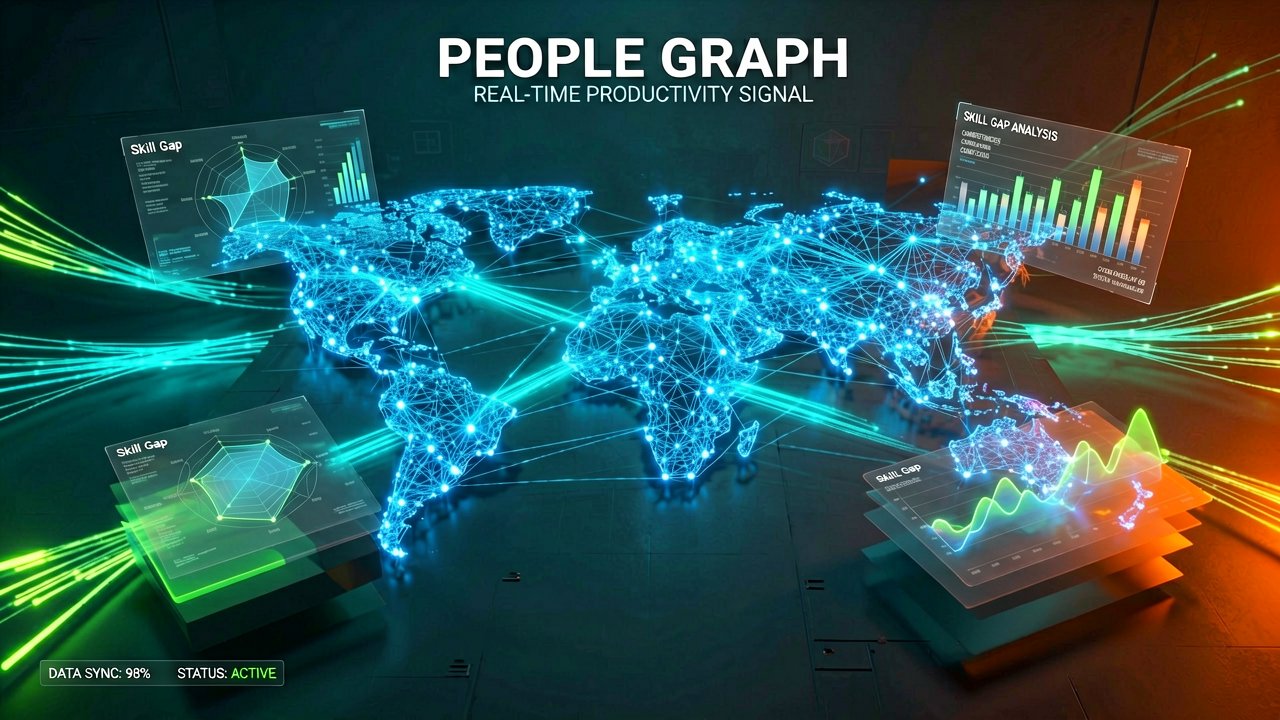
Behind the Scenes: Cornerstone OnDemand is staging an aggressive architectural evolution, shedding its traditional skin as a compliance-heavy learning management repository to emerge as an enterprise orchestration machine. Announced at its Connect 2026 global tour in New York, the introduction of Cornerstone Workforce AI marks a definitive tech industry shift toward agentic talent management. For decades, HR tech treated skills development as a linear check-the-box exercise. By marrying its core ecosystem to a proprietary data core known as the People Graph, the company attempts to solve the corporate tech world's most enduring headache: accurately connecting daily worker behaviors to tangible macroeconomic business outcomes.
The strategic engine under the hood relies heavily on data density, mobilizing a massive footprint of approximately 140 million users across 7,000 global organizations. Instead of expecting HR managers to manually construct rigid job taxonomies, the framework leverages its Skills Architect engine to silently infer worker capabilities. It ingests subtle signals from daily productivity software, real-time labor market trends, and historic training logs to map individual and team-wide proficiency gaps. Enterprise tech analyst Josh Bersin noted that while the architecture stops just short of being completely AI-native from inception, its deep integration of custom agents and automated administrative workflows heavily repositions corporate learning as a fluid, dynamic infrastructure on Josh Bersin Academy.
What differentiates this rollout from standard software marketing is its deliberate rejection of the typical "private preview" roadmap. Cornerstone introduced its workforce intelligence platform with immediate general availability, confirming active day-one adoption across ten enterprise customers. This bold move directly addresses a broader industry fatigue. As documented by technology analysis platform Constellation Research, enterprise buyers have grown deeply cynical of software vendors peddling vaporware and endless beta pilots that fail to survive real-world deployment. By ensuring immediate execution capabilities, the rollout aims to prove that AI can actively handle high-stakes corporate upskilling under strict enterprise-grade guardrails.
The Agentic Framework and HR’s Exhaustion Pandemic
The broader subtext of this rollout reflects a deep corporate anxiety regarding the breakneck speed of artificial intelligence integration. Tech executives at the Connect summit consistently noted that enterprises are suffering from a profound sense of operational thrashing. Many organizations initially overcorrected by executing frantic hiring sprees or aggressively slashing headcount in hopes that basic automation tools could replace human labor. These knee-jerk actions have left internal talent pipelines fragmented, with employees facing overwhelming burnout and erratic sleep cycles trying to keep pace with changing workflows.

To curb this chaos, the new platform introduces an ecosystem of Readiness Agents tailored to varying levels of technical maturity. Earlier-stage organizations can deploy plug-and-play agents that operate independently of a complex context graph, streamlining initial processes like basic onboarding navigation or regulated compliance management. More mature enterprises can utilize adaptive agents to manage intricate tasks like cross-departmental mobility, internal talent marketplace matching, and dynamic goal alignment. For specialized enterprise structures, a dedicated engineering team co-develops bespoke agents over a two-to-four-quarter window to integrate highly guarded talent frameworks.
Bridging the APAC Readiness Deficit
This massive infrastructural push arrives precisely as macroeconomic indicators show a stark disconnect between boardroom expectations and actual workforce proficiency. Enterprise research published via IT Brief Australia indicates that the AI readiness gap is widening rapidly across crucial international hubs, particularly within the Asia-Pacific region. Senior leadership groups routinely overestimate how prepared their rank-and-file employees are to work alongside autonomous tech, leading to severe underinvestment in practical operational training.
By transforming an internal learning portal into a headless enterprise layer, Cornerstone's platform allows intelligence data to flow directly into existing employee experience applications and standard collaboration tools. By injecting real-time labor market context directly into day-to-day work systems, the architecture intends to ensure that training targets operational deficiencies before strategic opportunities expire. Ultimately, the long-term success of this approach depends entirely on whether organizations treat these tools as true human-amplification engines or simply use them to optimize headcount numbers under a flashier name.
The Architectural Mirage of the Autonomous Enterprise
Reading Between the Lines: The corporate enthusiasm surrounding agentic HR architecture intentionally masks a fundamental, systemic contradiction: the ultimate efficacy of any AI-driven talent engine depends entirely on the cleanliness of the data it ingests. In the real world, enterprise data environments are notorious, siloed disaster zones. Employee profiles are chronically outdated, skills logs are fragmented across competing internal communication tools, and daily productivity signals are skewed by arbitrary performative metrics. By claiming that its People Graph can magically synthesize these chaotic inputs into actionable boardroom insights, Cornerstone relies on an overly optimistic assumption that automated software can fix deep-seated institutional dysfunction.

Furthermore, this aggressive push into automated skills architectures exposes a glaring operational hypocrisy within the modern C-suite. Global enterprises consistently voice loud concerns regarding worker burnout and retention deficits, yet they simultaneously rush to implement surveillance-adjacent analytics designed to monitor every micro-interaction on the company grid. There is an undeniable friction between fostering an environment that encourages "human potential" and deploying highly clinical Readiness Agents that continuously audit an individual’s performance gaps. When corporate learning becomes an aggressive, omnipresent optimization metric, the technology risks alienating the exact workforce it claims to empower.
This reality forces a highly skeptical evaluation of the platform's long-term utility for global organizations. If these advanced agents simply automate the creation of hyper-specific training pathways that employees lack the actual bandwidth to complete, then the platform is just generating high-tech operational theater. For enterprises operating across highly regulated or rapidly evolving international hubs, the platform's automated recommendations risk lagging behind real-time market disruptions, cementing obsolete skills under the guise of forward-thinking strategy. Software alone cannot engineer human adaptability, particularly when organizations view workforce readiness as a mathematical equation to be solved rather than a cultural foundation to be nurtured.
"Ultimately, the modern enterprise remains utterly obsessed with buying expensive software to find the perfect worker, consistently forgetting that the easiest way to bridge an artificial intelligence gap is still just giving a real human being enough time to read the manual."
Artūras Malašauskas is an AI Systems Integrator with 20+ years of production-grade web engineering experience. He has designed, shipped, and scaled enterprise Python/PHP systems for logistics, SaaS, and public-sector clients. For the past year, he has focused exclusively on AI integrations: deploying open-source LLMs, building generative media pipelines (image, audio, video), and engineering multi-agent workflows for real production environments. His standard: reproducibility, security, cost-efficient inference—no vaporware. He documents and evaluates emerging AI tooling, separating verified capabilities from marketing noise. Technical editor at: muza-ai.eu, ai-verslas.lt, ai-naujinos.lt Connect on LinkedIn
Comments