Breaking the Clinical Bottleneck: How CMU and Cleveland Clinic Re-Engineered Cardiac MRI Interpretation
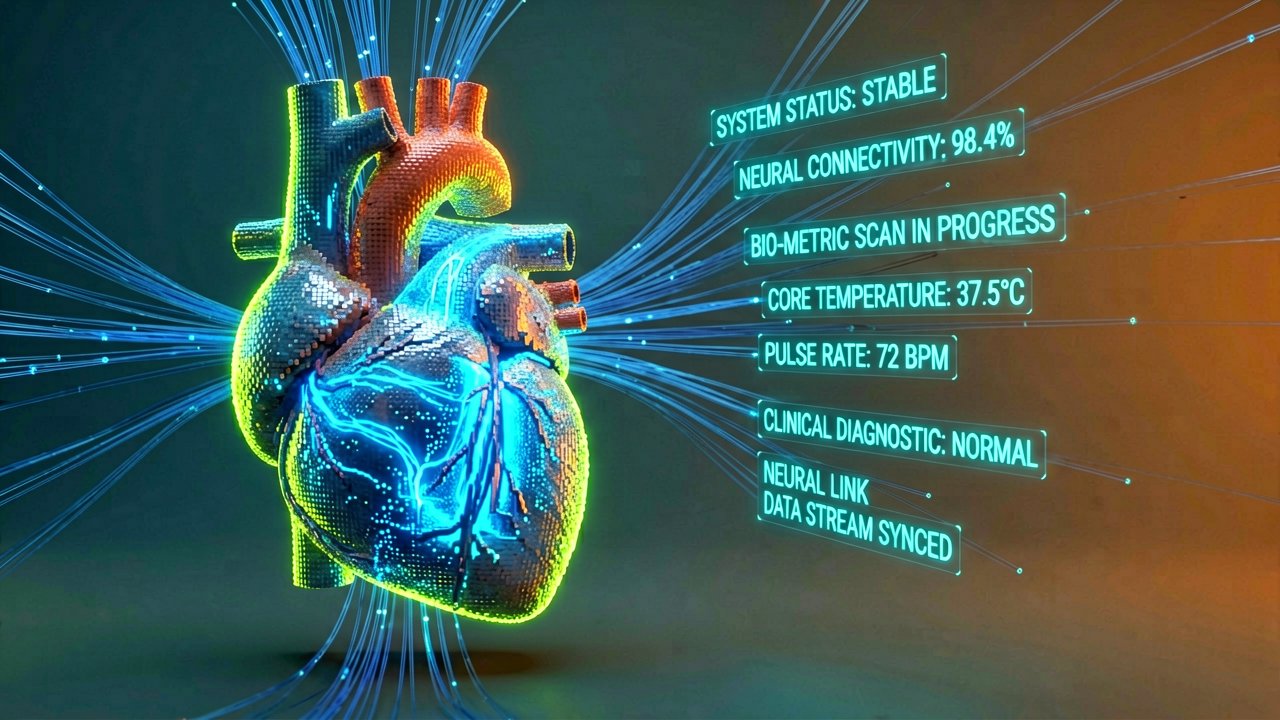
For decades, cardiac magnetic resonance imaging (MRI) has reigned as the gold standard for dissecting complex heart pathology. Yet, its clinical utility has long been bottlenecked by human constraints: analyzing a single multi-dimensional movie of a beating heart demands exhaustive manual labor and high cognitive load from specialized radiologists. In a paradigm-shifting breakthrough, researchers from Carnegie Mellon University and the Cleveland Clinic have unveiled an artificial intelligence framework called CMR-CLIP. This novel system interprets complex heart scans without requiring a single shred of manually labeled training data, circumventing the ultimate roadblock in medical machine learning.
By bypassing the standard, grueling requirement of hand-annotated medical imagery, the team trained their model on more than 13,000 historical patient studies. The underlying architecture operates by directly mapping moving cardiac pixels to the nuanced, free-text narratives within corresponding clinical radiology reports. When pitted against general-purpose AI models, CMR-CLIP demonstrated a staggering leap in utility, outperforming existing benchmarks by up to 35% in diagnostic accuracy and case retrieval. This represents a monumental step toward autonomous, high-fidelity clinical decision support that fits naturally into existing hospital workflows.
What Most Reports Miss: The Death of the Manually Labeled Dataset
The true genius of the CMR-CLIP framework lies in how it solves the infamous data bottleneck of medical AI. Historically, training a computer vision model to spot an aortic dissection or myocardial infarction required armies of radiologists to sit at monitors, painstakingly drawing borders around ventricles and labeling individual frames. It is a slow, prohibitively expensive process that limits model training to tiny, highly curated datasets. By leveraging contrastive language-image pre-training, the Carnegie Mellon and Cleveland Clinic team turned messy, historical, free-text hospital archives into an automated goldmine of training data.
This approach mirrors how human experts actually learn. A seasoned fellow does not stare at a sterile, isolated pixel loop; they read the clinical narrative, look at the patient's history, and connect the dynamic, moving pathology to clinical vocabulary. CMR-CLIP ingests raw, multi-slice cine MRI videos alongside unstructured radiology notes, learning the multi-modal grammar of the human heart implicitly. This design allows the software to capture subtle, non-linear pixel movements that traditional, rigid segmentation algorithms regularly overlook.
Leveling the Playing Field for Regional Healthcare
Beyond the raw engineering metrics, the real-world implications for patient care are profound. Interpreting a cardiac MRI is a highly specialized skill, often concentrated within elite academic medical institutions. Community hospitals and rural clinics frequently suffer from a shortage of expert readers, leading to delayed diagnoses or expensive, unnecessary patient transfers. A robust tool like CMR-CLIP can be deployed as an ambient clinical assistant, flagging urgent pathologies and generating standardized draft interpretations in seconds.
By standardizing the interpretation of free-text reports, this technology helps eliminate the subjective stylistic variations that introduce hidden errors into patient charts. Clinicians receive a highly structured, objective analysis that balances completeness with conciseness. The collaborative team has laid open a future where top-tier diagnostic precision is accessible on any standard scanner, effectively democratizing elite cardiovascular expertise globally.
Reading Between the Lines: The Illusion of Seamless Automation
The unbridled optimism surrounding autonomous diagnostics always ignores a gritty reality: medical AI models are notoriously fragile outside their native environments. While CMR-CLIP boasts an impressive jump in diagnostic accuracy on paper, its foundation is built entirely on historical data from the Cleveland Clinic—one of the world's most heavily funded cardiovascular institutions. The clinical narratives penned by world-class radiologists at an elite center are beautifully structured, highly uniform, and vocabulary-rich. Deploying that exact same model in a chaotic, understaffed regional hospital where doctors dictate shorthand notes into legacy software is an entirely different battle.
Furthermore, relying on free-text radiology reports introduces a subtle, circular contradiction. The AI learns to see what humans write, meaning it inherently inherits the biases, omissions, and systemic blind spots of the physicians who authored the original data. If a generation of radiologists consistently overlooked a specific, subtle structural anomaly in certain patient demographics, CMR-CLIP will learn to ignore it too. We are not yet building a flawless, objective mind; we are building an incredibly fast mirror of our own flawed, collective clinical habits.
The long-term regulatory hurdle also looms large over this technological triumph. The Food and Drug Administration (FDA) favors predictable, rule-based algorithms over fluid, multi-modal neural networks that interpret free text. When an AI changes its output based on the stylistic phrasing of a clinical report rather than a fixed pixel measurement, calculating risk becomes a legal nightmare. Until hospitals can definitively prove where the liability falls when a multi-modal model hallucinates a rare cardiomyopathy, these brilliant frameworks will remain restricted to a secondary role as overqualified proofreaders.
"Ultimately, the greatest threat to a flawless medical AI is the stubborn refusal of human biology—and hospital administrative software—to ever cooperate with the algorithm's perfect logic."
Artūras Malašauskas is an AI Systems Integrator with 20+ years of production-grade web engineering experience. He has designed, shipped, and scaled enterprise Python/PHP systems for logistics, SaaS, and public-sector clients. For the past year, he has focused exclusively on AI integrations: deploying open-source LLMs, building generative media pipelines (image, audio, video), and engineering multi-agent workflows for real production environments. His standard: reproducibility, security, cost-efficient inference—no vaporware. He documents and evaluates emerging AI tooling, separating verified capabilities from marketing noise. Technical editor at: muza-ai.eu, ai-verslas.lt, ai-naujinos.lt Connect on LinkedIn
Comments