Dirt, Data, and the Deep Learning Revolution: How AI is Saving Our Soils
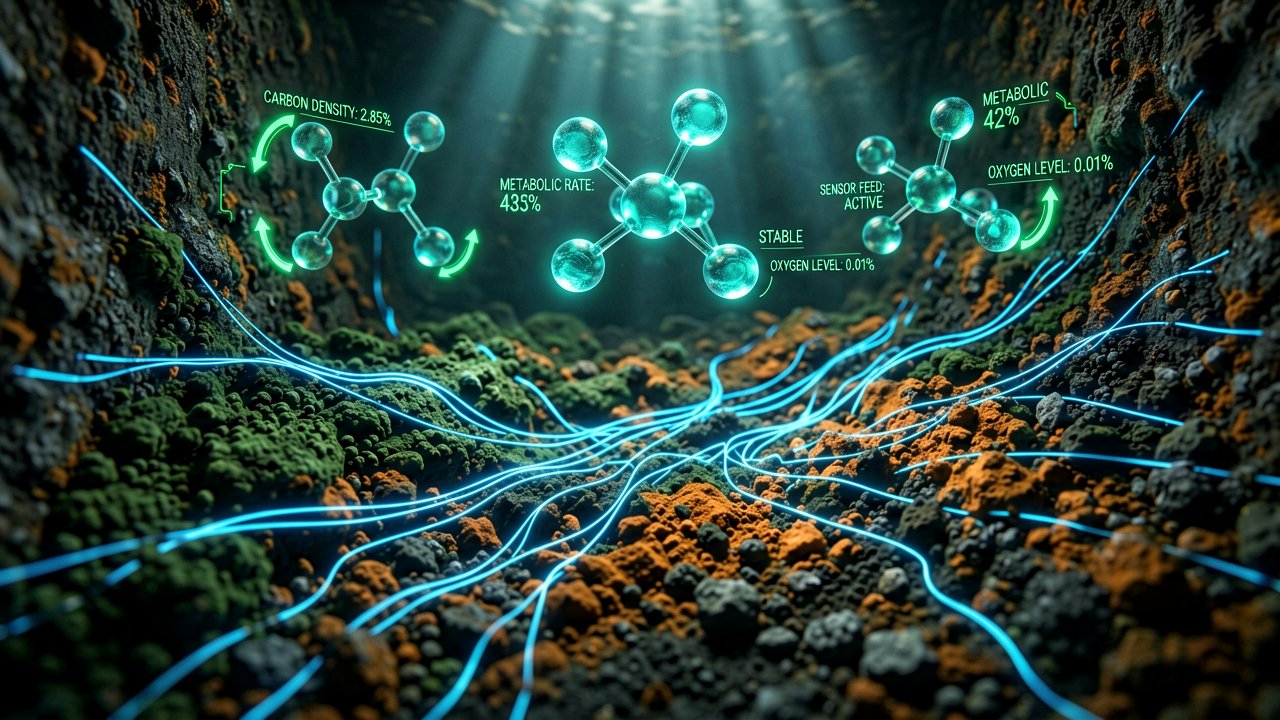
We don't tend to think about the mud beneath our boots unless it's ruining a clean pair of shoes, but the global food system is built on a finite, fragile resource that's rapidly slipping away. Traditional soil science has always been a painstakingly slow grind, relying on manually dug cores, sporadic laboratory testing, and regional guesswork that fails to capture the hyper-local complexity of the subterranean world. According to a landmark study highlighted by Phys.org , artificial intelligence is stepping into the trenches, offering multi-agent systems capable of mimicking scientific collaboration to map, monitor, and safeguard our planet's dirt at an unprecedented scale.
This technological shift couldn't have arrived at a more critical moment for agricultural survival. Decades of intensive farming, combined with volatile weather patterns, have stripped vast swaths of agricultural land of their natural vitality and structure. Instead of treating the ground as a black box, advanced deep learning models are deciphering how complex environmental variables interact below the surface. This pivot from reactive farming to proactive, predictive modeling allows land managers to pinpoint issues before they trigger widespread crop failure.
Building the Digital Twin of the Underworld
The true power of modern AI in this field lies in its ability to synthesize chaotic, heterogeneous datasets into something highly actionable. By fusing real-time feeds from internet-of-things (IoT) ground sensors, multi-spectral satellite imagery, and historical topography records, researchers are constructing highly accurate "digital twins" of regional soil ecosystems. These virtual environments allow scientists to simulate climate stress and experiment with various regenerative farming practices entirely in software before risking real crops in the field.
Furthermore, machine learning algorithms are dramatically scaling up our ability to track soil organic carbon, a critical metric for verifying the legitimacy of international carbon credit markets. Rather than waiting weeks for expensive lab analysis, smart systems use advanced pattern recognition to evaluate soil composition on the fly. These low-cost, automated verification frameworks are particularly life-changing for small and mid-sized farms, which were previously locked out of sustainability incentives due to the astronomical overhead costs of manual auditing.
The Vital Link Between AI and Human Oversight
While algorithmic tools excel at crunching massive datasets and spotting subtle ecological trends, they aren't ready to replace flesh-and-blood scientists. The actual value of these multi-agent AI platforms is that they take over the tedious, repetitive elements of mapping and processing, freeing up human researchers to do what they do best: apply contextual judgment and creative interpretation. Algorithms can still suffer from regional dataset biases and lack the nuanced understanding required to navigate localized agricultural politics or unpredictable environmental anomalies.
As the international community grapples with escalating food insecurity, scientist-led artificial intelligence provides a scalable framework to protect the world's arable land. Integrating these algorithmic decision partners into everyday agriculture ensures that we aren't just taking wild guesses at how to preserve our food supply. By translating raw mud into actionable digital insight, technology is turning our most undervalued natural resource into a predictable, resilient defense against a changing climate.
What Most Reports Miss: The Geopolitical and Infrastructure Friction Under the Surface
The glossy brochures for agricultural technology often paint a seamless picture of autonomous drones and real-time field optimization, but the reality on the ground is far more fragmented. While Silicon Valley developers dream up complex deep-learning models, the scientists trying to implement them face a foundational crisis: soil data is notoriously messy, highly localized, and guarded fiercely by regional stakeholders. Decades of historical records are locked away in decaying paper archives or incompatible legacy databases, meaning that before an AI can even begin to learn, human researchers must spend years cleaning and standardizing the inputs.
There is also a profound economic divide dictating who actually benefits from these algorithmic breakthroughs. Industrial mega-farms in the Global North possess the capital to deploy the dense IoT sensor networks and high-bandwidth connectivity required to feed hungry neural networks. Conversely, smallholder farmers in developing regions—who manage a massive percentage of the world’s arable land and bear the brunt of climate volatility—often lack basic cellular access, creating a dangerous technological gap where the communities needing predictive soil intelligence the most are the least equipped to receive it.
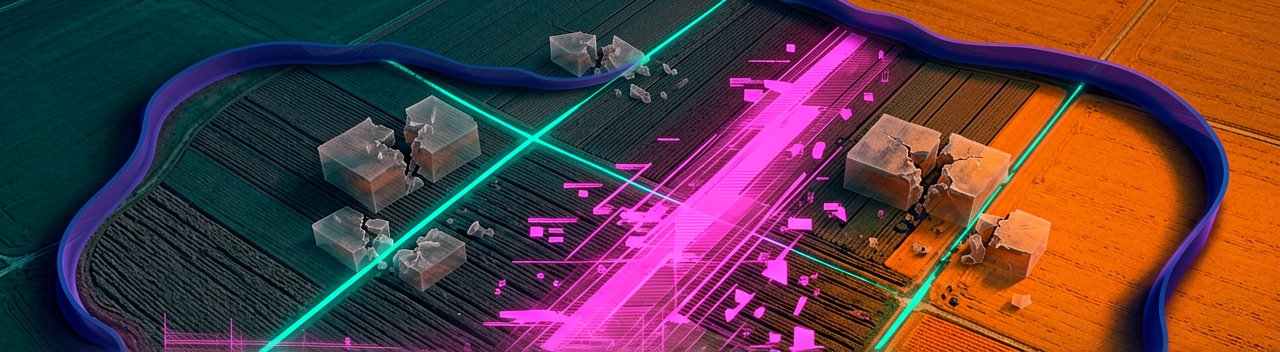
This imbalance is forcing a tactical shift toward passive, low-altitude remote sensing and open-source foundation models that don't rely on expensive in-field infrastructure. By utilizing public satellite data and training algorithms to infer subsurface moisture and nutrient density from macroscopic crop patterns, researchers are bypassing the need for physical sensors entirely. This clever workaround allows underfunded agricultural extensions to deliver actionable fertilizer and irrigation advice via simple SMS networks, leveling the playing field for vulnerable communities.
Beyond the technical hurdles, the push to digitize the underworld is running headfirst into complex issues of data sovereignty and corporate trust. Farmers are notoriously protective of their field data, fearing that multinational agribusinesses or carbon credit brokers might weaponize transparency to manipulate land values, hike insurance premiums, or dictate strict farming practices. Navigating this trust deficit requires strict decentralized data frameworks, where local cooperatives maintain ownership over their ecological datasets and use AI as a collective shield rather than an external corporate monitoring tool.
Ultimately, the marriage of soil science and artificial intelligence is not a silver-bullet software update, but a complex, decades-long institutional overhaul. The true metric of success won't be the complexity of the algorithms themselves, but how effectively these digital insights are translated into physical, regenerative practices on the ground. Only by addressing the unglamorous realities of data equity, infrastructure limitations, and rural trust can we turn these advanced predictive models into a practical safeguard for the world's food security.
Reading Between the Lines: The Danger of Treating Dirt Like Code
The enthusiasm surrounding soil-centric AI assumes that the ground behaves logically, but nature rarely conforms to a software engineer’s parameters. The prevailing industry narrative suggests that if we simply throw enough computing power at agricultural dirt, the algorithms will inevitably unlock a universal blueprint for climate resilience. This techno-optimism ignores a fundamental ecological truth: soil is a living, chaotic microbiome comprising billions of shifting organisms, many of which science has yet to identify or understand. Forcing this hyper-complex, dynamic biology into rigid mathematical models risks oversimplifying subterranean realities, leading to flawed automated recommendations that could easily backfire on a struggling farmer.
There is also a glaring contradiction in using energy-hungry data centers to solve an environmental crisis. Training massive deep learning models and running continuous simulations on global soil datasets requires an immense amount of electricity and water for cooling, contributing directly to the very carbon emissions scientists are trying to mitigate. Tech companies boast about how their algorithms optimize nitrogen fertilizer application to reduce greenhouse gases, yet the net environmental savings look far less impressive when weighed against the massive, carbon-intensive infrastructure hums silently in the background of the cloud.
Furthermore, relying blindly on AI-driven carbon verification models could warp the integrity of international carbon markets. Private carbon brokers eagerly push automated satellite tracking as a cheap way to verify soil organic carbon, bypassing the slow, costly process of physical field sampling. However, remote sensing models are ultimately sophisticated guessing machines that infer subsurface health from above-ground vegetation. Treating these virtual estimates as flawless, tradeable financial assets invites systemic greenwashing, where corporations buy unverified credits based on algorithmic hallucinations rather than actual, physically sequestered carbon.
This reliance on digital shortcuts threatens to erode the foundational expertise of human soil scientists, who are increasingly sidelined into roles as mere data-labelers for tech platforms. When funding shifts away from boots-on-the-ground fieldwork toward glitzy software dashboards, we risk losing the generational, tactile intuition required to understand land health. If an algorithm misinterprets a sudden, unprecedented shift in soil chemistry caused by a novel climate anomaly, a data scientist sitting in a city office won't have the instinctual context to catch the error before it translates into a failed harvest.
Ultimately, artificial intelligence is an incredibly powerful magnifying glass, not a magical steering wheel. For these systems to be genuinely useful, tech developers must temper their hubris and accept that some natural processes cannot be neatly captured in a spreadsheet or optimized by a neural network. If we treat AI as an absolute authority rather than a flawed, auxiliary tool, we risk trading our ancient, physical connection to the land for a digital illusion of control that could leave us hungry when the system crashes.
"We’ve spent the last decade teaching computers how to look at dirt, but the real test will be convincing humanity to look at the computers with a healthy dose of suspicion. After all, if an algorithm hallucinates a bad line of code, you get a broken app; if it hallucinates the state of the world's topsoil, we’re going to need a much bigger grocery budget."
Artūras Malašauskas is an AI Systems Integrator with 20+ years of production-grade web engineering experience. He has designed, shipped, and scaled enterprise Python/PHP systems for logistics, SaaS, and public-sector clients. For the past year, he has focused exclusively on AI integrations: deploying open-source LLMs, building generative media pipelines (image, audio, video), and engineering multi-agent workflows for real production environments. His standard: reproducibility, security, cost-efficient inference—no vaporware. He documents and evaluates emerging AI tooling, separating verified capabilities from marketing noise. Technical editor at: muza-ai.eu, ai-verslas.lt, ai-naujinos.lt Connect on LinkedIn
Comments