The Silicon Straw: Why the AI Boom Is a Climate Disaster in Disguise

We've been sold a beautifully clean lie about the cloud. For years, tech marketing convinced us that moving our lives online was an inherently green act, replacing heavy paper trails and exhaust-spewing commutes with weightless, ethereal data. But the reality is that the cloud isn't made of vapor; it's made of millions of pounding silicon processors trapped inside football-field-sized warehouses that eat electricity like a roaring blast furnace. Now that the tech industry has completely pivoted to artificial intelligence, that steady electrical hum has turned into a desperate, deafening shriek for raw power.
The problem is that generative AI doesn't just process information; it devours it with an insatiable appetite. Training a single massive language model or generating an endless stream of synthetic videos requires accelerated computing infrastructure that runs hot every second of the day. According to the latest data from the International Energy Agency, electricity demand from data centers surged by a massive 17% in 2025, heavily driven by frantic corporate investments in AI infrastructure. Silicon Valley giants poured over $400 billion into these facilities in just one year, with spending projected to skyrocket by another 75% in 2026. This isn't incremental growth; it's an unprecedented infrastructural land grab that's completely outpacing the expansion of our green energy grids.
The Dirty Reality Behind the "Clean" Algorithms
Tech companies love to flash their virtual power purchase agreements, claiming that their operations are entirely offset by wind and solar farms. It's a nice PR trick, but the physics of a power grid don't care about creative accounting. AI workloads run around the clock, while the sun sets and the wind dies down. When a data center experiences a sudden spike in demand because millions of users are suddenly prompting a new chatbot, it pulls whatever electrons are available on the local wire. All too often, those emergency electrons come straight from natural gas or coal-fired power plants. In places like Virginia and Texas, the sheer concentration of digital infrastructure is single-handedly breathing new life into aging fossil fuel systems that should have been retired years ago.
The environmental toll spills far past carbon emissions into another critical crisis: water scarcity. The chips running these neural networks become so scorching hot that traditional air conditioning can't keep up. Instead, facility operators rely on massive evaporative cooling setups that essentially operate like giant straws dipping into municipal water systems. A comprehensive review published in The Guardian pointed out that AI's global carbon footprint is pacing toward tens of millions of tonnes of CO2 annually, while its water use could consume up to 764 billion liters. That's a mind-boggling volume of resources being evaporated into the atmosphere just so we can generate surreal images or draft corporate emails we don't want to write ourselves.

Grids at the Breaking Point
We are already seeing the financial and structural consequences of this digital Gold Rush across the globe. Utilities are panicking as regional power systems buckle under the strain of unexpected gigawatt-scale connection requests. The energy crunch has become so severe that it is reshaping corporate consolidation; look no further than NextEra Energy's recent record-breaking $67 billion utility acquisition, a historic move triggered directly by the explosive growth of data center contracts. Grids that were supposed to be gradually transitioning toward net-zero goals are now being forced to adapt to a sudden, permanent baseload demand that leaves no room for error. If the current trajectory continues unchecked, the tech sector's obsession with artificial intelligence won't just slow down the global green transition; it could entirely derail it.
What Most Reports Miss: The Hidden Geopolitics of Carbon Shifting
The standard critique of the artificial intelligence boom focuses almost entirely on the absolute surge in global electricity demand. What seasoned industry insiders look at, however, is a much more calculated and insidious shell game of geographic shifting. Silicon Valley giants know that public pressure and municipal regulations in historical hubs like Northern Virginia are reaching a boiling point. In response, hyperscalers are quietly shifting their heaviest training workloads—the initial, massive data-crunching phases that take months and devour the most power—to regions with laxer environmental oversight or cheaper, dirtier grids. They leave the lighter, public-facing inference processing in the West to maintain an illusion of localized compliance, while their actual carbon footprint gets exported overseas.
This geographic arbitrage creates a bizarre paradox where the tech sector claims to be driving the green transition while actively crippling regional grids in developing digital economies. For instance, countries in Southeast Asia and parts of Latin America are offering aggressive tax incentives to attract data center investment, desperate for the tech prestige and infrastructure dollars. Yet, these regions often rely heavily on cheap, subsidized coal to maintain grid stability. When a tech conglomerate drops a 500-megawatt facility into a grid that is already struggling to meet local residential needs, it forces a cruel choice: either keep the lights on for the local populace using fossil fuels, or face catastrophic brownouts that halt economic progress.
The Nuclear Mirage and Grid Reality
To counter this growing backlash, tech executives have begun championing a glamorous new savior: nuclear energy. Wall Street has swooned over announcements of tech giants partnering with utility providers to revive dormant nuclear plants or invest in unproven Small Modular Reactors (SMRs). But this is a classic public relations smoke screen that ignores the brutal timelines of energy infrastructure. A new nuclear project or reactor deployment takes a decade or more to navigate regulatory approvals, environmental reviews, and actual construction. Meanwhile, the AI models being deployed today need gigawatts of power right now, creating an immediate supply gap that is inevitably filled by natural gas.
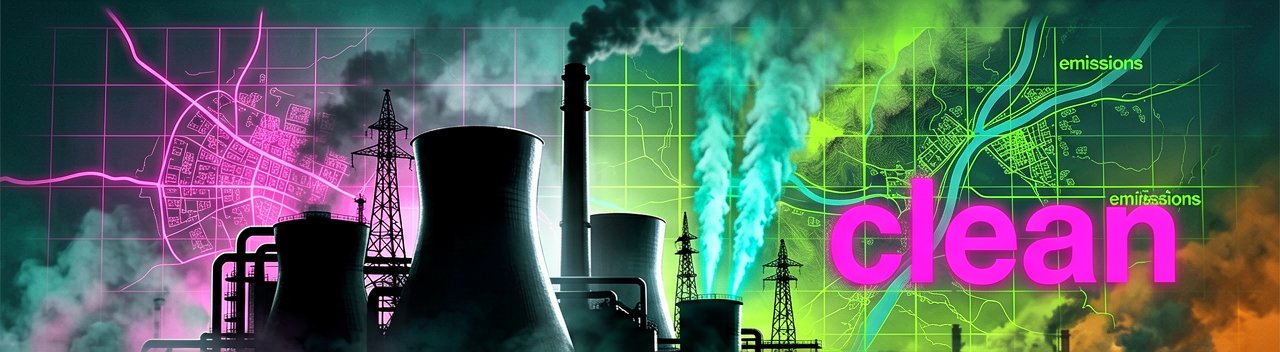
Furthermore, this corporate dash for nuclear power threatens to cannibalize the existing clean energy grid. When a tech company buys out the entire output of an existing, functioning nuclear plant, they aren't adding new green energy to the world; they are simply taking clean power away from the public grid. The everyday consumer and local small businesses are then forced to rely on whatever leftover energy remains, which is frequently generated by fossil fuels. It is a zero-sum game disguised as corporate climate leadership, where the tech industry secures clean energy for its algorithms by pushing the carbon burden onto the public.
The Silencing of Internal Dissent
The internal atmosphere at these tech giants reveals a deep ideological rift between corporate executives and the engineering rank-and-file. Many of the climate scientists and sustainability researchers hired by big tech during the late 2010s to help achieve net-zero goals are now being sidelined or quietly managed out of their roles. Internal whistleblowers suggest that sustainability teams are no longer being asked how to prevent carbon increases, but rather how to mathematically frame those increases through carbon capture credits and complex financial instruments to avoid violating SEC climate disclosure rules. The priority has shifted entirely from real-world mitigation to legal and reputational risk management.
This suppression of internal critique has led to a dangerous monoculture of optimization. Engineers are told that the solution to AI's energy crisis is simply better AI—more efficient algorithms, specialized neuromorphic chips, or software that dynamically shifts workloads to data centers where the sun happens to be shining. While these software optimizations are technically impressive, they represent a drop in the bucket compared to the exponential growth of the underlying models. We are witnessing a classic Jevons' Paradox play out in real time: as the technology becomes more efficient, it becomes cheaper and more accessible, which ultimately drives an even greater total explosion in resource consumption.
Reading Between the Lines: The Fallacy of the Self-Correcting System
The most pervasive myth circulating through tech keynotes is that artificial intelligence will eventually save more energy than it consumes. Proponents point to complex climate models, smart grid optimizations, and automated material science discoveries as proof of a net-positive future. It is a comforting, circular logic: we must tolerate an unprecedented surge in carbon emissions today so that the algorithms can figure out how to reduce them tomorrow. But this techno-optimistic framing fundamentally ignores the economic realities of the digital rebound effect, where minor software efficiency gains only serve to make compute cheaper, lowering the barrier to entry and driving a massive, aggregate explosion in global demand.
We see a profound contradiction when examining the core metrics used by tech firms to measure ecological progress. Companies celebrate cutting-edge data centers boasting ultra-low Power Usage Effectiveness (PUE) ratings, as if optimization inside the server room somehow neutralizes the massive physical footprint outside it. A hyper-efficient facility drawing half a gigawatt of dirty power from a regional grid is still a climate disaster, no matter how beautifully streamlined its internal cooling loops are. This fixation on efficiency ratios over absolute, raw volume consumption functions as a masterful misdirection, keeping the public focused on performance margins while the total planetary baseline continues to erode.
Projecting this trajectory forward reveals an even bleaker landscape for global sustainability targets. The industry is currently locked in an architectural arms race that rewards scale above all else, with next-generation cluster sizes expanding rapidly into multi-gigawatt territories. As these facilities exhaust local energy surpluses, they will increasingly encroach on municipal resources, forcing a zero-sum competition between the compute requirements of corporate neural networks and the basic utilities of nearby communities. The long-term implication is not a smarter, greener planet, but a deeply fragmented energy landscape where public infrastructure is steadily cannibalized to power an artificial digital echo chamber.
"We are effectively burning down the rainforests of our physical power grids just to build a virtual paradise where a chatbot can instantly hallucinate a marginally better corporate memo for a middle manager."
Artūras Malašauskas is an AI Systems Integrator with 20+ years of production-grade web engineering experience. He has designed, shipped, and scaled enterprise Python/PHP systems for logistics, SaaS, and public-sector clients. For the past year, he has focused exclusively on AI integrations: deploying open-source LLMs, building generative media pipelines (image, audio, video), and engineering multi-agent workflows for real production environments. His standard: reproducibility, security, cost-efficient inference—no vaporware. He documents and evaluates emerging AI tooling, separating verified capabilities from marketing noise. Technical editor at: muza-ai.eu, ai-verslas.lt, ai-naujinos.lt Connect on LinkedIn
Comments