Elon Musk’s New Talent Hack: Why SpaceXAI is Hiring Thinkers, Not Credentials
Elon Musk is shifting his talent acquisition strategy into a completely different gear. In a move that subverts the traditional Silicon Valley playbook, he announced a massive hiring push for his newly highlighted SpaceXAI division, explicitly stating that candidates need zero prior experience in artificial intelligence to apply. Instead, the billionaire is hunting for world-class engineers and physicists who possess raw, unadulterated problem-solving muscle. It is a brazen vote of confidence in foundational intelligence over specialized industry buzzwords, packaged in a characteristically blunt directive: "Smart humans figure it out fast."
The recruitment call, which Musk Broadcasted directly to his millions of followers, bypasses the usual human resources machine entirely. Applicants are instructed to bypass standard, multi-page resumes and instead submit exactly three bullet points demonstrating "evidence of exceptional ability" directly to a dedicated company inbox. According to reporting by Livemint, the focus is squarely on individuals who have successfully forced complex systems to do useful work, regardless of the academic or corporate banner they did it under. By stripping away the requirement for an AI degree, Musk is effectively widening his net to catch brilliant contrarians who are being locked out by traditional corporate gatekeepers.
The Orbital Ecosystem Convergence
This aggressive talent grab is far more than an eccentric executive whim; it is a calculated expansion of Musk’s deeply integrated technological empire. By looking for fundamental thinkers rather than pre-trained machine learning engineers, SpaceX is positioning itself to build AI pipelines natively adapted to massive, chaotic data sets. We are talking about optimizing next-generation rocket telemetry, coordinating the vast Starlink satellite constellation, and handling the staggering data loads required for autonomous space systems. In fact, details surfacing via Benzinga show this hiring push lands right alongside a blockbuster initial public offering filing for SpaceX, signaling to Wall Street that artificial intelligence will serve as a foundational pillar for the company’s future valuation.
A Direct Challenge to Big Tech
The timing of this campaign introduces a fascinating dynamic to the broader tech landscape. While legacy technology titans are laying off thousands of seasoned professionals or locked in hyper-expensive bidding wars for a limited pool of traditional machine learning academic talent, SpaceX is walking a radically different path. Musk is betting that an elite physicist or a brilliant mechanical systems architect can learn the software frameworks of modern AI faster than a traditional software developer can learn the unforgiving laws of physical engineering. It is an approach that values raw processing speed of the human mind above all else, daring the rest of the industry to rethink how they define a qualified technical workforce.
What Most Reports Miss: The Physics-First Cult of Personality
The standard media narrative frames this recruitment push as just another eccentric Silicon Valley hiring stunt, but seasoned industry observers recognize it as the pure manifestation of Musk’s "first principles" philosophy. In the aerospace world, traditional AI talent often struggles because machine learning models are typically built for digital-first environments where a software bug means a crashed app, not a obliterated $100 million rocket booster. By filtering out candidates who rely heavily on existing AI libraries and instead targeting individuals grounded in pure physics and hardcore mechanical engineering, SpaceX is building a team that understands the harsh, mathematical realities of the physical world before they ever write a line of neural network training code.
This approach introduces a fascinating cultural friction within the tech sector. Legacy aerospace giants have historically relied on hyper-specialized, siloed engineering departments where a single employee might spend five years optimizing a single valve component. SpaceXAI is actively rejecting this corporate inertia, choosing instead to bet on generalist polymaths who can jump from thermodynamic modeling to deep learning optimization over a weekend. Internal sources suggest that the ideal candidate for this group is someone who has built a complex physical system from scratch—like an amateur rocket or an advanced autonomous drone—and had to write the custom software to make it run because no off-the-shelf solution existed.
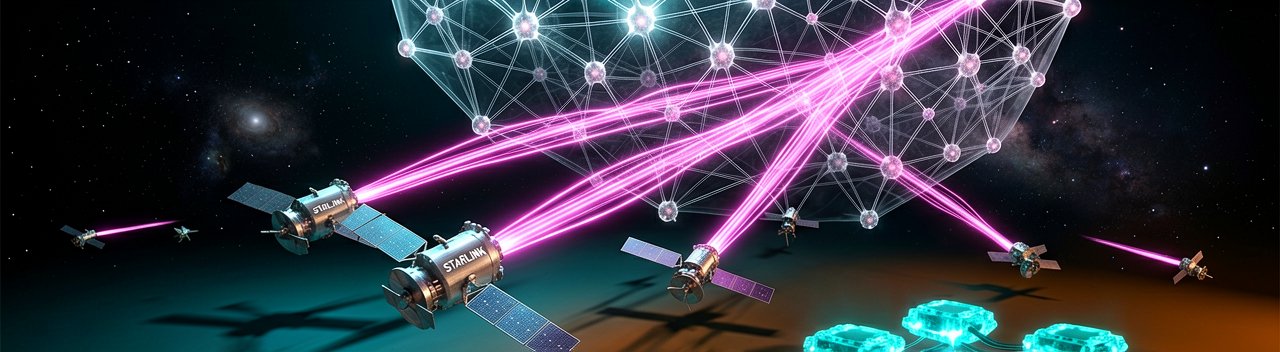
Furthermore, this hiring strategy is deeply intertwined with the operational realities of the Starlink network, which now dictates global satellite internet traffic. The sheer volume of real-time orbital data requires a fundamentally different flavor of artificial intelligence—one focused on low-latency, edge-computing environments where decisions must be made in milliseconds without relying on a distant ground-station server. By bypassing the traditional machine learning pipeline, SpaceX is attempting to bypass the bloated, resource-heavy architectures favored by consumer tech companies in favor of lean, highly optimized algorithmic frameworks that can run on constrained hardware traveling at 17,500 miles per hour.
From a macroeconomic perspective, this talent grab serves as a masterclass in corporate synergy across the broader Musk ecosystem. Engineers brought into SpaceXAI will inevitably cross-pollinate with teams at xAI and Tesla, creating an elite, fluid talent pool that can be deployed to solve the most pressing computational bottlenecks across multiple industries. This fluid ecosystem allows Musk to bypass the brutal, multi-million-dollar compensation wars currently paralyzing Google and Meta, instead attracting top-tier minds with the unparalleled allure of working on actual interplanetary hardware rather than optimizing advertising click-through rates.
Reading Between the Lines: The High-Stakes Gamble of Generalist Genius
While the prospect of bypassing traditional tech credentials sounds liberating, this unconventional strategy ignores the harsh reality of why artificial intelligence specialized in the first place. Musk’s underlying assumption—that a brilliant physicist can seamlessly pivot to cutting-edge AI architecture—glosses over decades of highly specific mathematical and structural progress in machine learning. There is a fine line between a first-principles breakthrough and reinventing the wheel at an exorbitant cost, especially when dealing with the incredibly nuanced edge cases of deep learning. By explicitly shutting out domain experts who understand the historical failures of specific neural network configurations, SpaceX risks wasting thousands of hours of elite engineering time on mistakes that an experienced AI practitioner would have spotted instantly.
There is also a glaring contradiction in the timing of this zero-experience recruitment drive. SpaceX is currently pushing toward aggressive Starship launch schedules while simultaneously preparing for a monumental public listing, environments that traditionally demand predictable, proven expertise rather than an experimental workshop of clever generalists. Deploying unproven AI architectures created by machine learning novices into critical aerospace telemetry systems introduces an entirely new layer of systemic risk. Wall Street may cheer the AI branding, but institutional investors may grow squeamish if this hyper-experimental hiring philosophy translates into costly, highly visible anomalies during high-stakes orbital deployments.
Ultimately, this hiring push functions just as much as a brilliant public relations maneuver as it does a legitimate talent acquisition strategy. By offering a direct pipeline to Elon Musk's inbox based on just three bullet points, SpaceX rejuvenates its mythos as the ultimate meritocratic playground for rogue geniuses, neatly counteracting recent industry chatter regarding burnout and intense corporate pressure across his various ventures. Whether these "smart humans" can actually out-engineer the massive, hyper-specialized AI divisions at legacy tech firms remains a massive gamble, but it ensures that SpaceX remains the loudest, most captivating voice in the global war for technical minds.
"Silicon Valley spent a decade telling us that only a hyper-specialized PhD could touch a neural network, only for SpaceX to suggest that a couple of bright physics grads with a high pain tolerance can figure it out over a long weekend—proving once again that in the Musk universe, the laws of physics are absolute, but the rules of corporate human resources are entirely optional."
Artūras Malašauskas is an AI Systems Integrator with 20+ years of production-grade web engineering experience. He has designed, shipped, and scaled enterprise Python/PHP systems for logistics, SaaS, and public-sector clients. For the past year, he has focused exclusively on AI integrations: deploying open-source LLMs, building generative media pipelines (image, audio, video), and engineering multi-agent workflows for real production environments. His standard: reproducibility, security, cost-efficient inference—no vaporware. He documents and evaluates emerging AI tooling, separating verified capabilities from marketing noise. Technical editor at: muza-ai.eu, ai-verslas.lt, ai-naujinos.lt Connect on LinkedIn
Comments